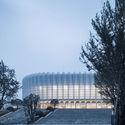
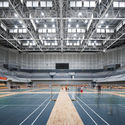
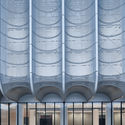
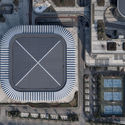
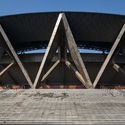
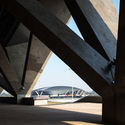
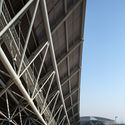
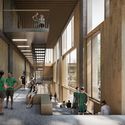
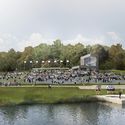
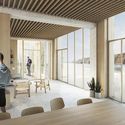
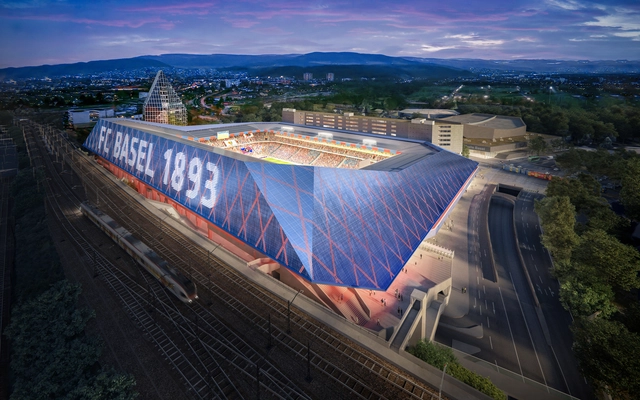
The Jakob-Park Stadium, home of FC Basel, is getting an update to extend its lifespan after 20 years of use. Originally designed by Herzog & de Meuron, the architecture reform aims to provide better hospitality to visitors by restructuring the access and optimizing security to keep the stadium open even on non-match days. The proposal also contemplates replacing the iconic facade with a sweeping roof to give the stadium a unified appearance and broadcast the events outside.
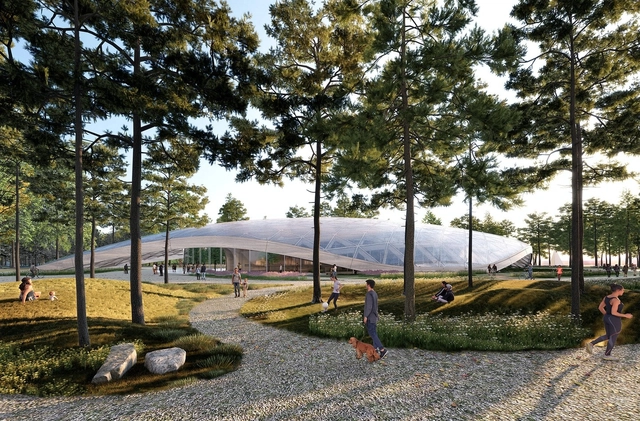
Cavatina Concert Hall by Cavatina. Image Courtesy of Cavatina
The diversity of civic spaces in cities and rural areas have continuously showcased how strongly they explore human connections regardless of program, construction technique, scale, and geography. Ranging from educational facilities and museums, to art centers, libraries, religious halls, and memorials, these projects have enriched urban fabrics with cultural programs that have provided members of the community with places to learn, entertain, create, and unwind.
This week’s curated selection of Best Unbuilt Architecture highlights cultural projects submitted by the ArchDaily community from across the world. From a water management system that targets the natural crises in Egypt to a structurally intertwined memorial in the United States, this round up of unbuilt projects showcases how architects responded to the contextual and spatial needs of their projects through innovative and local solutions. The article also includes projects from Italy, China, Uruguay, Poland, Iran, Hungary, Russia, and the United Kingdom.
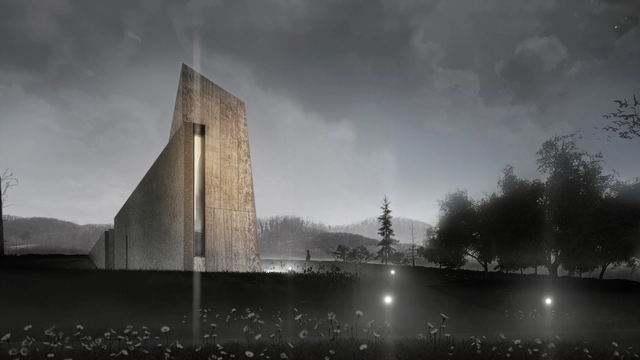
Zovik Chapel and Cemetery. Image Courtesy of Nenad Fabijanić
10 projects, 10 functions. Featuring a multitude of different programs, this week's curated selection of Best Unbuilt Architecture highlights diverse and innovative conceptual approaches. Submitted by our readers, this variety of proposals includes sports, religious, cultural, educational, and social purposes.
Compiling projects from all over the world, this article puts together a Buddhist temple in Bangkok, Thailand, a ring-shaped experience center and eco-tourism catalyst for Latvia, a cemetery in Bosnia and Herzegovina, and the biggest extreme sports park in Russia. Moreover, unconventional office spaces are underlined with an innovation start-up center in Vietnam, headquarters in Shenzhen, and Tirana's new municipality building.
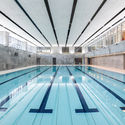
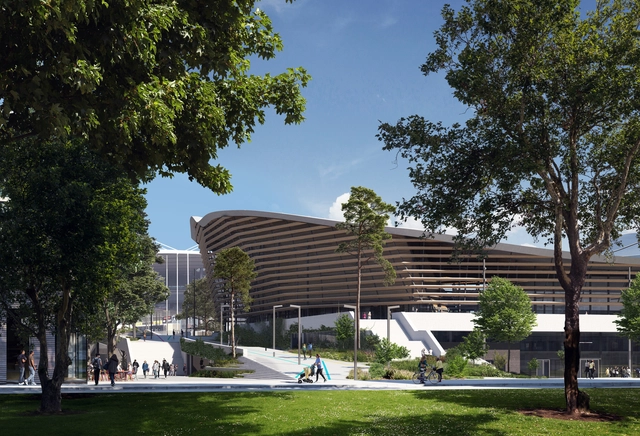
Dutch architectural office VenhoevenCS with its French partner Ateliers 2/3/4/ have won the competition to design the Aquatics Centre for the Olympics Games of 2024 in Paris. The innovative sports center, connected by a new pedestrian bridge to the existing “Stade de France”, will host competitions for water polo, diving, and synchronized swimming. It will also be transformed into a Boccia stadium during the Paralympics. Designed for multifunctional use, the only building to be built for the Games, will remain for the people in Saint-Denis, after the event.
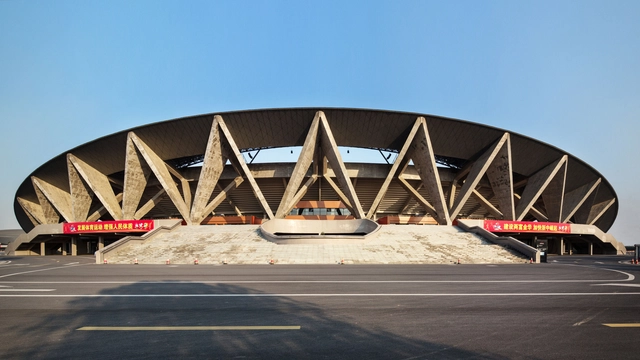
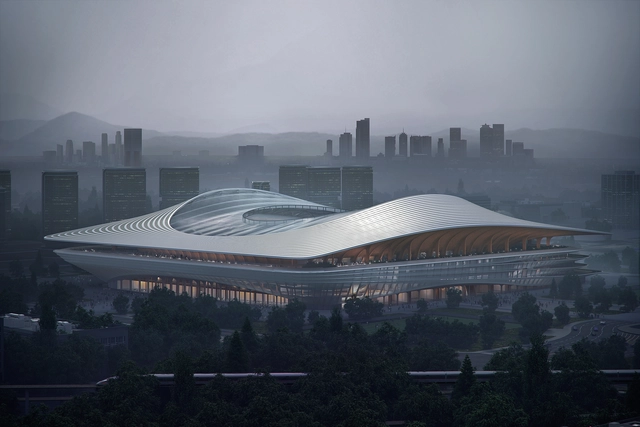
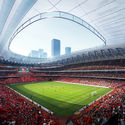
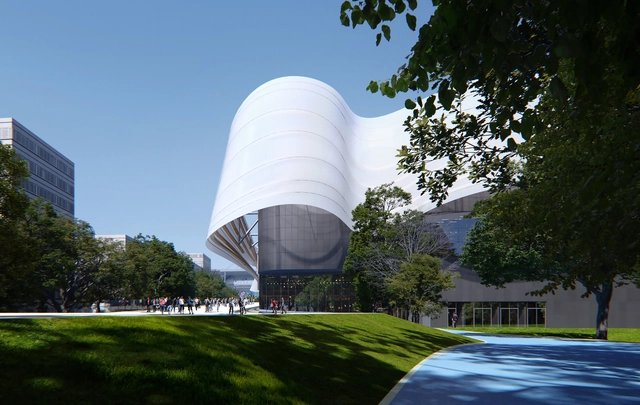
Zaha Hadid Architects has revealed images of the new Xi’an International Football Centre, to be ready by 2023, in time for the Asian Football Confederation (AFC) Asian Cup. The facility will include a stadium with a 60,000-seat capacity, along with civic, sports, and recreational spaces for the city.
MAD Architects has revealed its design proposal for the Aquatic Centre for the Paris 2024 Olympics. Envisioning the sports facility as an urban public artwork, showcasing the beauty and hope of Paris, the proposal was created in collaboration with three French architectural studios, Jacques Rougerie Architecture, Atelier Phileas Architecture, and Apma Architecture.
CHYBIK + KRISTOF ARCHITECTS & URBAN DESIGNERS have been selected as the winners of the public competition to design and build the Jihlava Multipurpose Arena. One of the largest sports and leisure complexes in the Czech Republic, the project, built on the city’s existing hockey stadium, is scheduled for construction in 2021, to be completed by 2023.
Ensuring a platform for everyone, ArchDaily is rounding up, every once in a while, a curated selection from our readers’ submissions. With proposals coming from all over the world, our aim is to feature the best Unbuilt Architecture out there.
In this article, we are highlighting proposals that were awarded the first prize in international competitions. Each one of these projects showcases a unique conceptual approach and responds to a different program. With a mixed-use project in France, a market in Helsinki, an aquarium in New York and a civic building in Norway, to name a few, the variety of these unbuilt interventions underlines the vast scope of the architectural field.
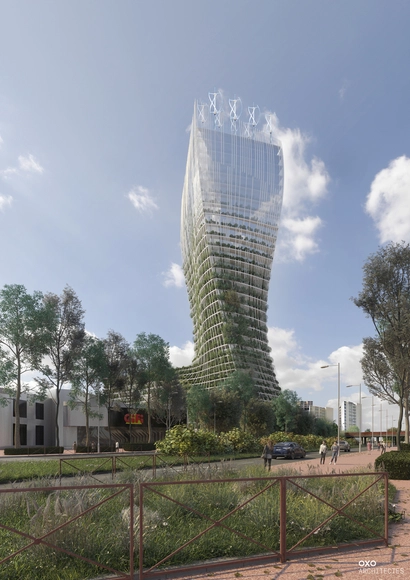
The importance of nature and sustaining it has become a crucial feature in most contemporary projects. While some architects sustain nature by constructing with environmental-friendly material, others make way for the greenery to intervene with the structure, blurring the boundaries between man-made and Earth.
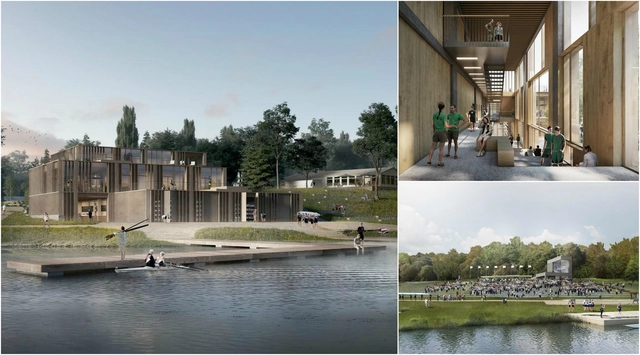
Denmark-based AART architects have been selected to design the country’s national rowing stadium, seeing off strong competition from prominent firms such as BIG and Kengo Kuma. Situated upon Bagsværd Lake on the outskirts of Copenhagen, the scheme seeks to allow the sporting elite and broader public to form a close interaction with picturesque natural surroundings.




_-_West_Elevation.jpg?1641304390 "So Close , So Far Cultural Center by Shahab Shariat. Image Courtesy of Shahab Shariat")








.jpg?1593765441&format=webp&width=640&height=580)
.jpg?1593765499 "© Monolot")
.jpg?1593765281 "© Monolot")
.jpg?1593765414 "© Monolot")
.jpg?1593765459 "© Monolot")
.jpg?1593765441)
.jpg?1563519226)
.jpg?1563519226 "© ANU Design Group")
.jpg?1563518433 "© ANU Design Group")
.jpg?1563518775 "© ANU Design Group")
.jpg?1563519897 "© ANU Design Group")
.jpg?1563518401)