Architectural professionals recognize how exterior design choices influence both perception and performance. A canopy is more than a functional overhang — it is a visual statement, a layer of environmental control, and a reflection of the project's overall design vision.
Among available materials, custom aluminum canopies have become a preferred choice in modern architecture for their resilience, adaptability, and sleek aesthetics. The following outlines their primary advantages.
Buildner, in partnership with the Government of Dubai, has announced the results of the 2024/25 House of the Future competition. Following the success of its inaugural edition in 2023, this second edition invited architects and designers worldwide to develop an affordable, expandable, and forward-thinking prototype home tailored to the evolving needs of Emirati families.
Organized in collaboration with the Mohammed bin Rashid Centre for Government Innovation and the Sheikh Zayed Housing Programme, the competition offered a total prize fund of €250,000 (1 million AED). Winning entries are now being reviewed for potential inclusion in the UAE's national catalogue of housing designs, which provides citizens with a selection of pre-approved, innovative home models.
Daylight is one of the most effective tools in architecture. It creates atmosphere, improves comfort, and reduces energy demand. However, integrating daylight successfully requires precision at every project stage, from the first sketches to detailed planning. VELUXBIM tools give architects the flexibility and verified data to make that possible.
Series 8670 Casement Window. Image Courtesy of Western Window Systems
Windows have long held an ambivalent role in architecture, as they both define and enclose interiors while simultaneously creating a link to the outdoors. This dual function goes beyond simply meeting construction needs or providing daylight, directly influencing how occupants experience and engage with the views. The 20th century saw the introduction of materials such as steel, aluminum, and glass, which enabled different types of windows with thinner frames and expansive panes, enhancing transparency and reinforcing the visual connection with the surrounding setting.
American architects such as Frank Lloyd Wright and Philip Johnson explored these possibilities to harmonize architecture with landscape. In Fallingwater House, windows and terraces seamlessly connect the house to the waterfall and surrounding forest, whereas the Glass House's minimal framing nearly dissolves the boundary between interior and exterior, bringing the natural environment to life inside the house. Through its evolution, windows have become an element that unites space, materials, and perception, opening new pathways for exploring the relationship between architecture and its environment.
https://www.archdaily.com/1034016/framing-interiors-and-landscapes-in-aluminum-and-glass-to-master-the-viewEnrique Tovar
One challenge connects every office: noise. HushGuide is a new resource from Hushoffice that takes on this ubiquitous design problem headfirst with clarity and detail. It offers a roadmap for fine-tuning any workplace into a quieter, healthier, more productive space using acoustic pods and complementary furnishings, thoughtfully planned. From step-by-step advice to technical guidelines and visual layout strategies, the guide bridges vision with implementation, promising to help architects, designers, and facility managers bring acoustic balance to their own office ecosystems.
Innovation is at the core of architecture, expressed through new approaches to design, material experimentation, and, of course, ways of living. As a result, the conception of buildings and indoor spaces is constantly evolving. This evolution is especially evident in regions with a rich cultural heritage, such as Spain, where innovation reinterprets traditional ways of relating to space. This attentiveness to memory and daily life extends into interiors, where each intervention has the potential to actively reshape how people experience a space and open new possibilities for living and interaction.
Example of the Nested Floor System capacities. Courtesy of Offsite Wood and Quebec Wood Export Bureau
The latest release of Offsitewood.org marks a significant step forward in making offsite wood construction more approachable for architects. Version 2.0 introduces a set of digital resources aimed at helping designers model, plan, and collaborate more efficiently.
Free downloadable libraries are a central and expanding feature of the site. Additionally, new applications and services are now available that include wood material e-sample viewers, an advanced panelization and framing toolbar for Revit, and a collaborative workspace for project optimization.
This year marks 20 years since the first VELUX Daylight Symposium—two decades of shared insights, ideas, and exploration into the role of daylight in our built environment. Since its humble beginnings in 2005, the symposium has grown into a leading international forum for cross-disciplinary dialogue on daylight.
The 10th edition, taking place in the heart of Copenhagen, will once again bring together researchers, architects, engineers, and policymakers to examine the evolving role of daylight in architecture and design. It's a space where science and practice meet to reflect on past learnings and look ahead to the future of daylight in our cities and spaces. Join the livestream on September 18th, 2025, from 09:00 to 17:30 (CEST).
Since its opening in 1987, Four Winds Field — home of the AA Minor League team South Bend Cubs — has undergone several transformations. In each of them, brick has remained a central architectural element, evoking tradition, permanence, and a distinct urban character. Now, with a major expansion underway, the stadium reaffirms this legacy while embracing innovative construction techniques, most notably, the integration of thin brick as a contemporary solution that honors the past without compromising technical performance.
In Plato's allegory of the cave, light symbolizes knowledge: it is what guides the human being out of the shadows of ignorance and toward truth. In many religions, light is also associated with divinity, as a manifestation of the sacred. Over time, light ceased to be merely a symbol of reason and became an instrument of sensitivity, a living material capable of shaping atmospheres, influencing perception, and revealing meaning.
Light is masterfully used in the quiet spaces of Tadao Ando, for example, where it seeps in like a sacred substance between concrete walls. In Alvar Aalto's buildings, it is delicately modulated to converse with the Nordic sky. In James Turrell's immersive installations, it becomes body, color, and experience. But light also manifests in the most ordinary gestures: in every precisely oriented window, or every shadow carefully drawn to reveal what is not immediately visible. Like a conductor before the score and the orchestra, the architect can compose with light accentuating volumes, softening boundaries, and giving rhythm and intensity to the spaces we inhabit.
The earliest stages of ideation can be both the most exciting and the most challenging part of the design process. Ideas flow quickly, but they can be abstract and difficult to communicate. This can lead to frustration and waste precious time.
Now, architects, designers, and artists can shorten the distance between the first sketch and a meaningful design decision by pairing traditional ideation techniques with AI-powered visualization tools designed to enhance — not replace — human creativity. Chaos tools keep creators firmly in the center of the process, empowering them with speed and clarity without sacrificing ownership or control.
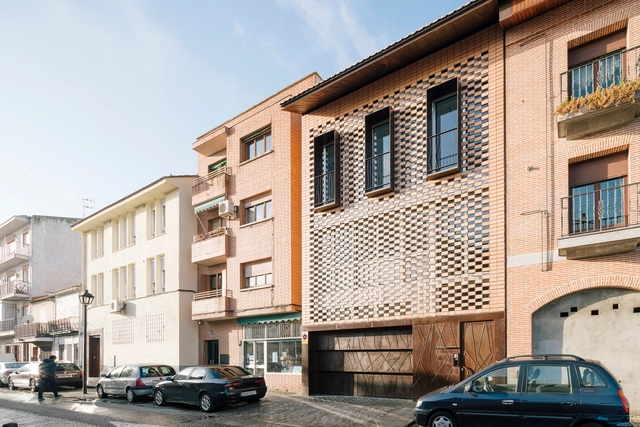
Spain combines cultural diversity and a long constructive tradition that is directly reflected in its architecture. The country is home to influential schools, a consistent body of theoretical production, an active generation of architects, and a well-established construction industry with strong capabilities in innovation, standardization, and export. Contemporary Spanish architecture is marked by a plurality of approaches and by the articulation between material tradition, technology, and performance.
In this context, materials play a central role in the conception, expression, and functionality of buildings. Steel, glass, brick, stone, and wood remain essential inputs in architectural practice, but their role goes far beyond raw matter. Once industrially processed, these materials unfold into a wide range of products and systems such as technical panels, ventilated façades, structural components, extruded cladding, and brise-soleil systems.
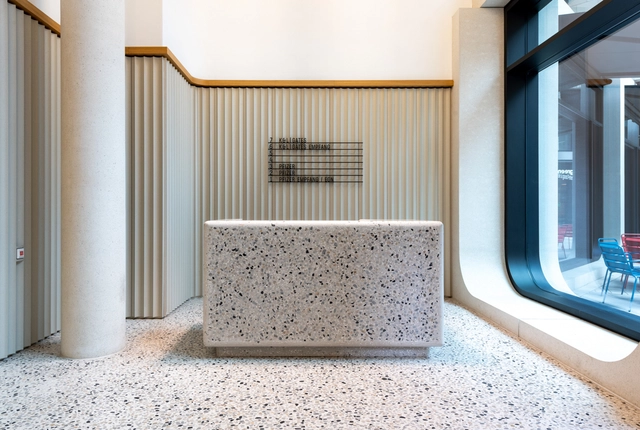
Stones hold time. Some are formed by the sudden solidification of magma, like basalt, whose dense structure and dark color result from rapid cooling at the surface. Others, such as granite, are born slowly in deep magmatic chambers, where gradual cooling allows the growth of visible crystals, creating unique patterns and colors. There are also sedimentary rocks, formed by the compaction of mineral and organic debris over millions of years, with tones that reflect their chemical composition and the environment in which they were deposited. Transforming this geological diversity into a single continuous surface, terrazzo is a cementitious or mineral composite in which fragments of marble, granite, quartz, basalt, and other lithologies are embedded in a binding matrix, then polished to reveal the structure and luster of each particle. Unlike a homogeneous surface, terrazzo acts as a mineralogical showcase, where each aggregate retains its identity while contributing to a coherent whole, which can become a floor, wall cladding, or even furnitures.
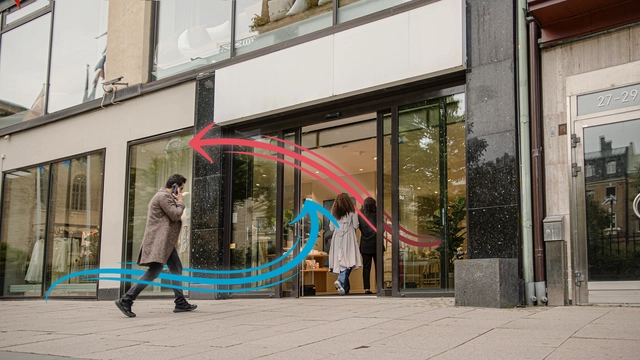
In Jacques Tati's Mon Oncle (1958), architecture itself becomes a character: sliding doors, an automatic fountain, gates that emit mechanical sounds, devices that both enchant and frustrate the inhabitants. The comedy arises precisely from the fact that these seemingly trivial systems silently shape everyday life. More than six decades later, the observation seems prophetic. In contemporary buildings, countless systems work autonomously and discreetly, going unnoticed when they function well. Among them, automatic doors, traditionally seen as secondary elements, are emerging as part of a new "invisible infrastructure": connected, efficient, and intelligent systems that support comfort, sustainability, and operational resilience.
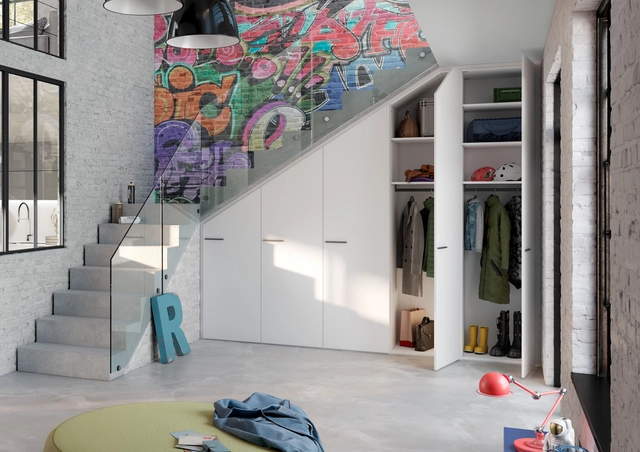
The capsule wardrobe concept, popularized in the 1970s by Susie Faux, proposes an exercise in synthesis: a compact set of versatile pieces, capable of combining in countless ways to suit different occasions. In visual culture, there are a few metaphors for this: in cartoons like Doug Funnie or Dexter's Laboratory, opening the closet revealed rows of identical clothes, ready to simplify life (and, in the case of animators, the work). In the real world, figures like Steve Jobs turned this logic into a method, adopting a daily uniform to eliminate the small but recurring decision of "what to wear?", freeing up time and energy for more important matters.
For others, however, this would be far from a burden. Choosing what to wear is a pleasurable moment, capable of setting the tone for the day and influencing one's mood. In this sense, the wardrobe is also an extension of identity, a space where practical and symbolic choices meet. Unsurprisingly, expressions like "coming out of the closet" or "skeleton in the closet" are deeply rooted in language, revealing the cultural dimension of this element of the home. In contemporary interior design, this notion has gained new layers: the wardrobe can define the character of a space, guide circulation, influence perception, and even shape the atmosphere of an environment.
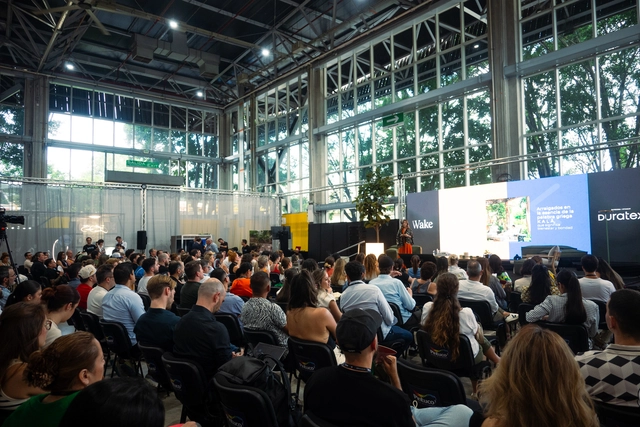
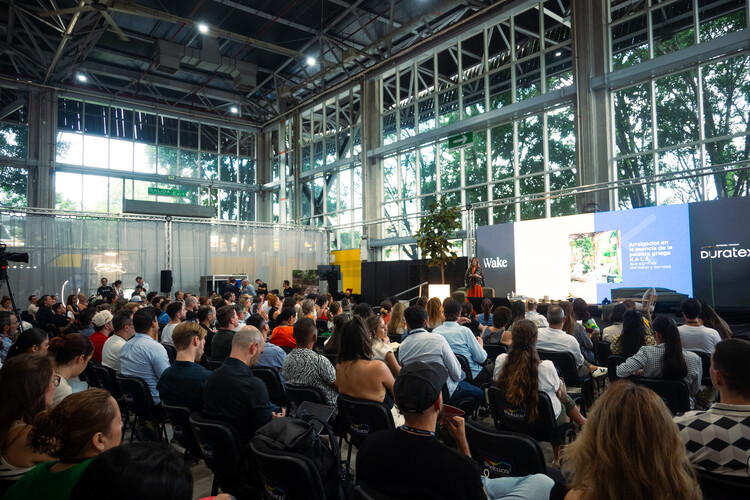
Asking questions is the first step toward challenging what we take for granted and opening up new possibilities for planning and building. These questions, valuable in themselves, gain new strength when shared and examined through different perspectives. As they intersect with the experiences of professionals and brands, they weave together viewpoints that enrich the discussion. Design fairs and events around the world have become spaces where these conversations gain momentum, fostering connections and encouraging collaborative dynamics. In this landscape, Colombia has emerged as a hub, serving as a platform that promotes architecture and design across Latin America and the Caribbean while bringing the region's voice to the global stage.
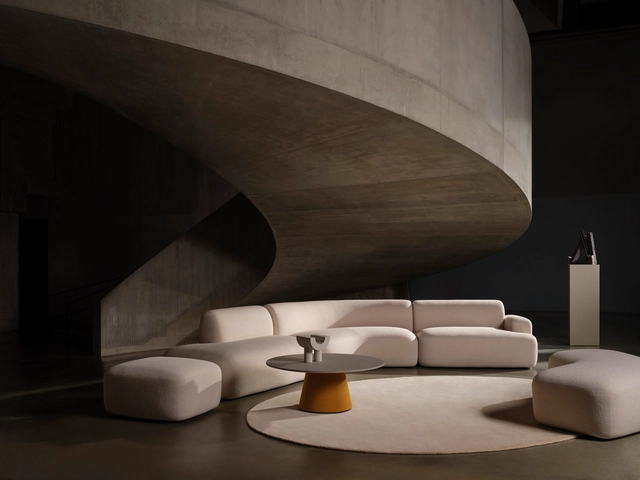
Does architecture alone define how we inhabit a space? It's becoming increasingly clear that it does not. The objects within a space—particularly furniture and other design pieces—not only serve functional purposes but actively shape the spatial and human experience. As schools, homes, and offices evolve to accommodate new ways of working, living, and socializing, furniture accompanies these transitions, prompting conversations that extend beyond functionality and engage the corporeal dimension implied in its use.
Several decades ago, British architects Alison and Peter Smithson were already exploring the relationship between the body, everyday experience, and space at an architectural scale. Since then, contemporary concepts of flexibility and comfort have expanded this framework to include other scales, such as furniture. These transformations have fostered the consolidation of modular seating systems whose flexibility and adaptability respond to diverse ways of living and relating to space. Emerging from this context are forward-thinking proposals, such as Beau's comprehensive range of seating and table units—an expansive modular seating system designed for multiple possibilities, with a significant emphasis on comfort and sensory appeal.
https://www.archdaily.com/1031877/an-expansive-modular-sofa-system-reimagining-comfort-beyond-sitting-onEnrique Tovar
In architecture, the effect of color is rarely neutral. It has the power to calm or energize, to expand or compress space, to unify or divide. Far from solely being a decorative layer, color is a tool that architects, interior designers, and designers use to structure atmosphere and perception. Alongside light, material, and proportion, it is one of the most precise instruments available for guiding spatial experience. When treated deliberately, it becomes a system — one that allows designers to articulate relationships between spaces, establish moods, and create continuity across various scales.
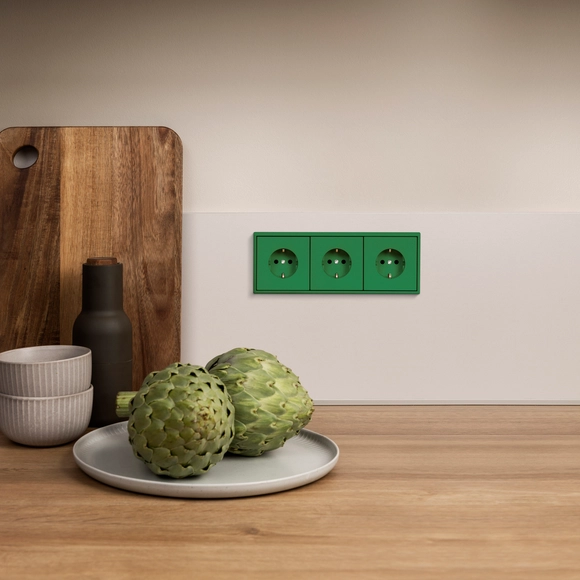
Color is not limited to paint. Surfaces, materials, finishes, and technical elements all carry chromatic weight. Yet in practice, color often remains uneven across the finest details — switches, sockets, intercoms — frequently appearing as neutral interruptions. This gap highlights a broader question: if color is to be considered a true architectural tool, should it not extend to every detail, no matter how small? Addressing this, German manufacturer JUNG has extended Le Corbusier's Polychromie Architecturale to electrical installations, allowing essential building components to speak the same language as the surrounding architecture.