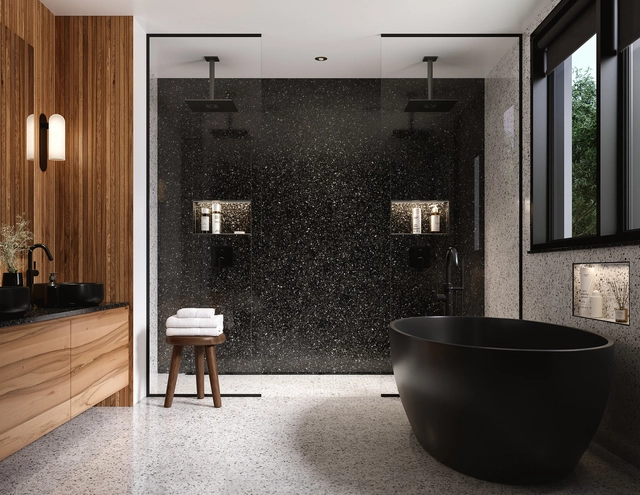
In contemporary bathroom architecture, the drain has evolved from a purely functional component into a design element that guides layout, accessibility, and long-term performance. When drainage, slope geometry, and waterproofing are designed as one system, the tiled surface achieves both visual refinement and reliable function—qualities that are critical for hotels, spas, and residences. Schluter® establishes the essential drain-to-waterproofing connection in a controlled factory setting, rather than relying on field assembly.
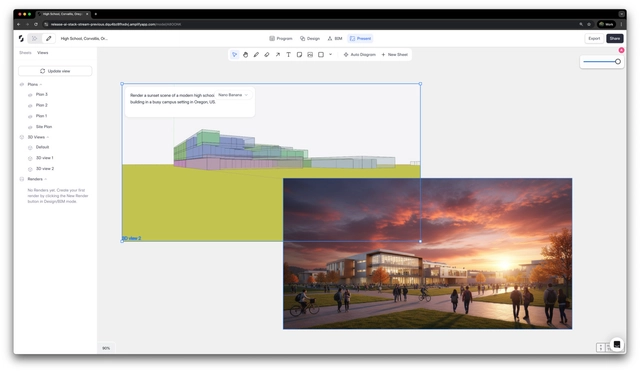
Snaptrude announced the launch of the Snaptrude Student Plan, a free offering that gives architecture students worldwide full access to Snaptrude's professional platform and intelligent AI workflows. The initiative reflects Snaptrude's commitment to strengthening architectural education and ensuring that emerging designers can build real-world skills while still in school. Full access to the professional platform and AI tools empowers students to design faster and build portfolio-ready work.
For over 125 years, Tarkett has been manufacturing linoleum flooring based on its original 1898 formulation. Trusted by architects worldwide, this natural floor covering is a benchmark in sustainability, durability, and timeless design. Today, Tarkett Linoleum is not only known for its heritage but also for its innovative application in modern architecture — particularly in the education sector. Learn more about the impact of Lino Materiale by Tarkett on today's spaces.
Architecture is being reshaped by artificial intelligence, climate change, and shifting social structures. At SCI-Arc, students learn to face these challenges head-on, using design to shape a rapidly changing world.
This fall, SCI-Arc's upper-level Vertical Studios bring the world into the studio. Each is led by a practicing architect working at the forefront of the field—from experimental fabrication to urban and environmental design. Drawing on real projects and professional experience, faculty challenge students to engage with the realities of the present and to design with precision, empathy, and imagination.
This international competition invited architects to design a boutique wellness retreat along the serene banks of the Vez River in northern Portugal. The project challenged participants to propose a space of tranquility and renewal that would harmonize with its extraordinary natural setting and complement a restored historic watermill already on site. The project partner, the site landowner, plans to construct one of the winning entries.
At voco Brussels City North, hansgrohe and Hydraloop unite for smarter water use. Image Courtesy of Hansgrohe
Water is the foundation of life. It shapes landscapes, regulates climates, and sustains every living organism. Yet on the only known inhabited planet, this essential resource faces a growing crisis: although 70% of Earth's surface is covered by water, less than 1% is actually available for human use. Most of it is consumed by agriculture and industry, while in households, activities like bathing and flushing use vast amounts of drinking water for non-essential purposes. The bathroom, therefore, has become a key space for innovation, where technology and design can help redefine how we use and reuse this vital element.
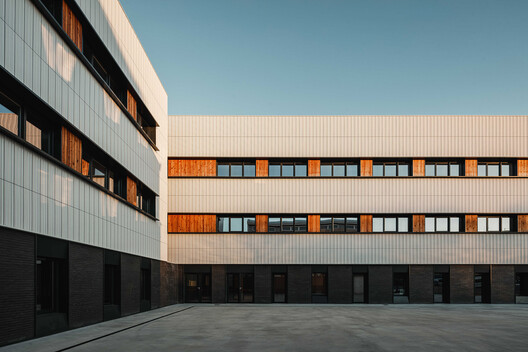
The new Muskiz Secondary School building (Vizcaya), designed by BAT Architecture studio, has become a leading symbol of sustainable architecture for educational centers. Designed in accordance with Passivhaus criteria and built using cross-laminated timber (CLT), the project combines innovation and comfort with environmental care.
In this equation, Faveker's tiled ventilated facade, tailor-designed using its GA16 system as a basis, plays a key role. This precise, luminous tiled skin enhances the building's energy efficiency and infuses it with a unique architectural personality that harmonizes with the surrounding natural setting.
Nearly three years after artificial intelligence captured the world's attention, architecture is still searching for stable ground in the conversation. Between confident claims and cautious trials, many professionals still question whether—and how—AI is truly changing everyday practice.
A new white paper from Chaos addresses this through practitioner interviews and in-depth internal research, revealing how the technology is beginning to reshape productivity, authorship, and creative identity across the industry.
The white paper offers a closer look at where AI creates value, where it falls short, and how architects can navigate what comes next.
Dedicated to high-end lighting specification, the UK's trade show LiGHT 25 will return to the Business Design Center in Islington, London, on November 19–20, 2025. Following LiGHT 24, which attracted more than 5,500 visitors, this year's edition will feature an expanded program of innovation, education, and networking opportunities. Key highlights for 2025 include the introduction of the Technical Zone, the return of the Associations Lounge, and a new large-scale immersive light art installation.
The event invited designers to reflect on one of architecture's oldest and most symbolic elements: the stair. Beyond its functional role as a connector of levels, the stair was positioned here as a medium of architectural storytelling—an invitation to explore ideas of procession, sequence, space, and form.
For this first edition, participants were asked to conceptualize a stair not as a technical solution but as an expressive artifact—an embodiment of their design sensibility and architectural values. There were no constraints on site, scale, material, or program. Instead, designers were challenged to reimagine the stair as a sculptural, poetic, and even philosophical construct—one that could provoke, question, or elevate our understanding of vertical space.
Buildings must change faster than they were built to. Shifting tenant needs, tightening climate policies, and rising office vacancies expose the cost of static stock: waste, noise, downtime, and—in the worst case—stranded assets. The consequence is clear: buildings across typologies must be designed to adapt over time. The inaugural Adaptable Building Conference (ABC), taking place on January 22, 2026, at the Nieuwe Instituut in Rotterdam, brings the industry together to turn adaptability from principle into practice.
For architects and specifiers, selecting the right cladding system is both a technical and creative act, connecting material science with architectural intent. More than simple visual envelopes, façades today are high-performance systems that balance protection, insulation, and expression. As the first barrier between exterior and interior, the right cladding system can define how a building behaves and ages over time, affecting its thermal comfort, acoustic performance, fire safety, and overall durability.
Among the most commonly used façade materials are wood, metal sheets, composites, and aluminum systems. Within this range, single-skin metal panels and extruded aluminum panels are particularly notable for their blend of strength, precision, and architectural appeal. While both benefit from aluminum's inherent lightness and corrosion resistance, they differ significantly in structural logic, performance characteristics, and ideal applications. Companies such as Parallel Architectural Products—specialized in extruded aluminum cladding systems and architectural finishes—have played an important role in advancing these technologies, combining precision engineering, aesthetic flexibility, and local manufacturing.
The VELUX Group is launching the next step in its Action Leadership agenda as an experiment to explore how existing buildings can better serve both people and planet. The experiment builds on decades of demonstration projects and research into healthy buildings, including Living Places, which achieved an ultra-low carbon footprint and first-class indoor climate in an affordable and accessible way. The next step shifts focus towards existing buildings, from new build to renovation—named Re:Living.
Re:Living is a forward-thinking experiment to reimagine renovation to be more than a technical upgrade, and instead as a holistic opportunity to improve human well-being, support biodiversity, and reduce environmental impact. It's part of VELUX's long-term commitment to lead the building industry toward healthier, more sustainable practices, driven by a belief that simply reducing harm is no longer enough.
SCI-Arc alumni continue to make an indelible mark on the global design landscape, pioneering new approaches in architecture, technology, and interdisciplinary practices. With a reputation for fostering radical experimentation, the school has produced graduates whose work challenges conventions and redefines spatial possibilities. Recent alumni achievements underscore SCI-Arc's role in shaping the next generation of architects and creative thinkers.
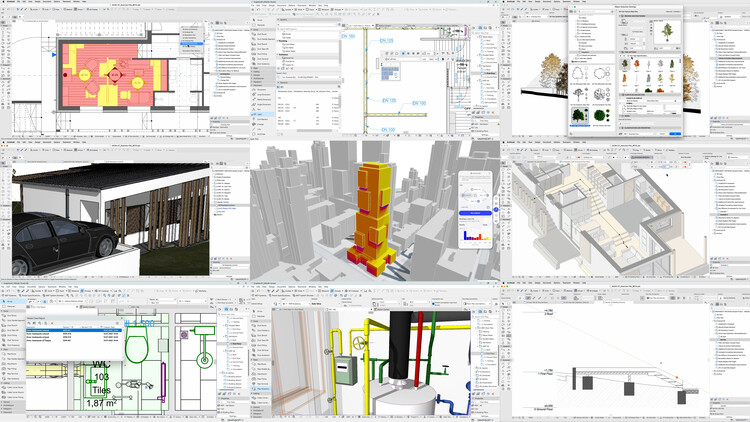
When architects are still students, a moment often marks a turning point: their first encounter with software. It's not just about learning a tool but discovering a space where ideas transcend physical models, taking shape in a digital environment and beginning a relationship many will carry throughout their careers. What happens next? Software keeps evolving, and with it, the design experience. In recent years, this evolution has accelerated—machine learning, AI, prompts, and integrated workflows have moved from the periphery to the core of design practice, becoming part of the shared language between software and users. As these tools take hold, a key question emerges: How will this reshape our experience of designing architecture in the future?
Rapid urbanization, driven by population growth, is among the powerful megatrends transforming how cities are built. The world is adding a city the size of Madrid every single week — and will do so for decades to come. To meet this demand sustainably, a collaborative, systems-thinking approach to construction is needed.
Architects and designers around the world are pushing the boundaries of modern design, and Corian® Solid Surface is being bent, curved, and twisted to help them realize their boldest visions.
In hospitality spaces, for example, every surface has the potential to shape a guest's experience from the first invitational moment. Visionary designers are using their talents to convey the story of a place, the emotion of an aesthetic, and the essence of a brand. With the right material, we can profoundly influence how a space feels and functions for guests, using everything from sleek, welcoming reception counters to soothing spa-like shower escapes to soaring backlit sculptural panels as our canvas.