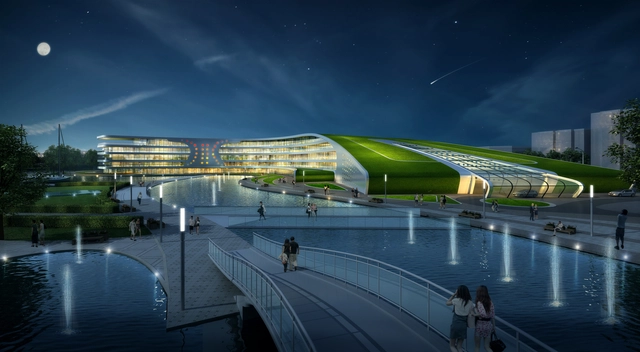
With their design approach treating the site as a work of art, GroupGSA’s proposal for a new hotel in Shanghai’s Fengxian District has been awarded 2nd prize in a recent competition. Located in the predominantly undeveloped Nangiao New City and part of the Yangtze River delta in south Shanghai, the Wanda Jinhai Lake Hotel aims to garner new interest in the region through the creation of a new social, cultural, and economic landmark.
At the center of the Jinhai Lake, the new hotel integrates into the site and provides scenic vistas of the surrounding waterscape. “Inspiration stemmed from the concept of Chinese Calligraphy, the stroke of a brush with its ink dripping in the water,” say the architects. “Our site is merely a piece of art and we plan to leave our mark via our architecture which is painted on the site following the lines and the movement of the surrounding context.”
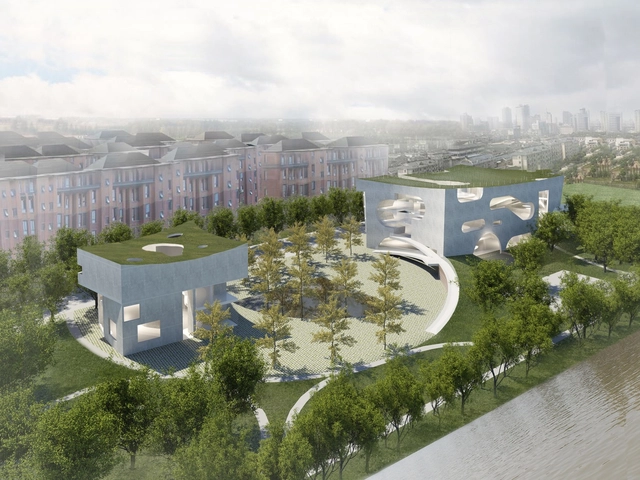
Steven Holl Architects has revealed plans for a new Cultural and Health Center to be located in Shanghai’s Fengxian District. Set into the public landscape, the two buildings will serve as a “social condenser” aimed at integrating the community of surrounding housing blocks together into a park along the Punan Canal.
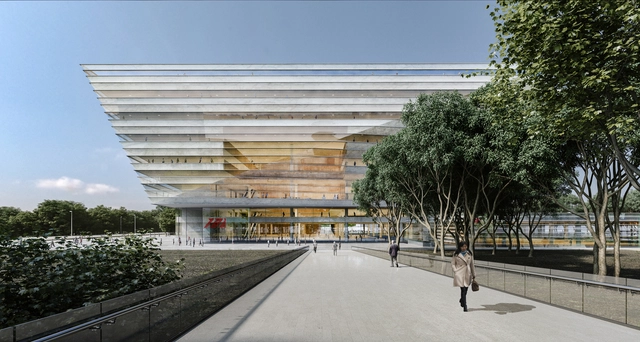
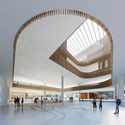
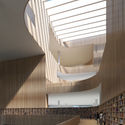
With nearly 25 million inhabitants the Chinese city of Shanghai is currently the most populous city in the world and, in addition, has a central library system that dates back to the mid 19th Century. A new city library, designed by Danish practice Schmidt Hammer Lassen and won following a two-stage international competition, will provide 110,000 square meters of space in the Pudong District and adjacent to Century Park – the largest green space in the city.
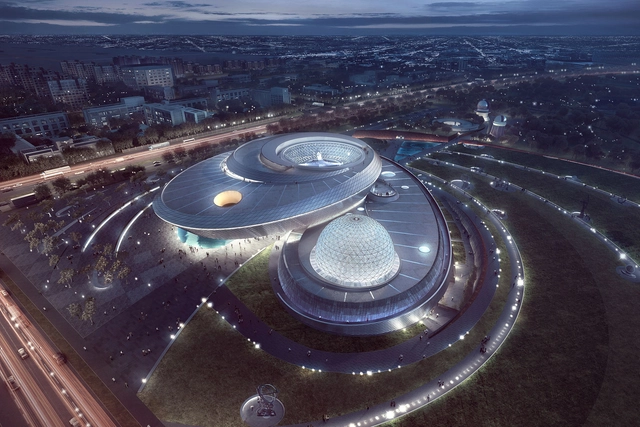
Inspired by astronomical principles, the design is centered on the concept of orbital motion. “Each of the building’s three principal forma—the oculus, the inverted dome, and the sphere—acts as an astronomical instrument, tracking sun, moon, and stars, and reminding visitors that our concept of time originates in distant astronomical objects."
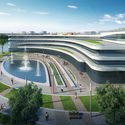
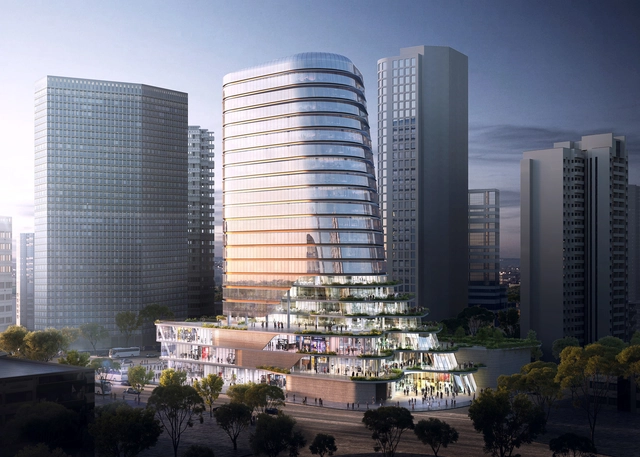
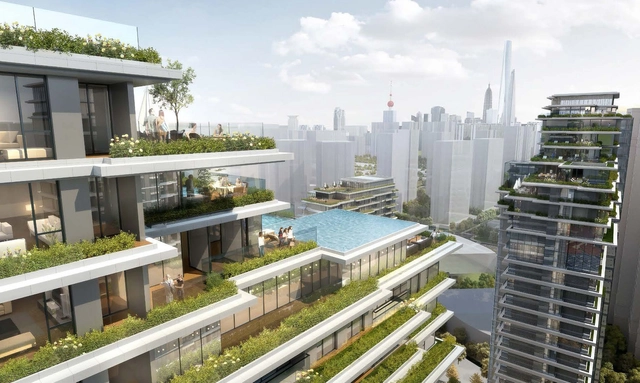
Aedas has unveiled plans for Gemdale Changshou Road, a new mixed-use project located within Shanghai’s urban city ring that will add 45,000 square meters (484,000 square feet) of terraced office and retail space within close proximity of a planned residential development.
Designed by Andrew Bromberg at Aedas, the design is nicknamed “Cloud on Terrace,” as it uses a series of green terraces as a visual and occupiable “bridge between the low-rise, residential developments to the south and Changshou Road to the north.”
The Council on Tall Buildings and Urban Habitat (CTBUH) has named Gensler’s Shanghai Tower as the 2016 Best Tall Building Worldwide, citing its “innovative design scheme in traditional Shanghainese architectural traditions.” The building was selected from among four regional winners, which included BIG’s VIA 57 West (Americas), Jean Nouvel’s The White Walls (Europe) and Orange Architects’ The Cube (Africa).
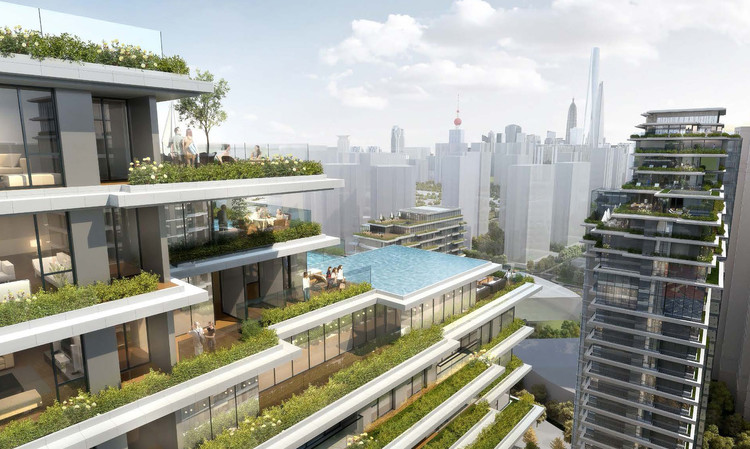
EID Architecture looks to the traditional side of Shanghai when designing CITIC Pacific's high-rise residential neighborhood. The Shanghai downtown area will see six new residential towers and amenities through the development.
Designs for the building encourage social interactions through its amenities, which include leisure facilities, a spa, meeting and conference spaces, and roof gardens overhead. Undulating terraces on the top of each building promote a sense of community in addition to responding to the site's preservation of sunlight.
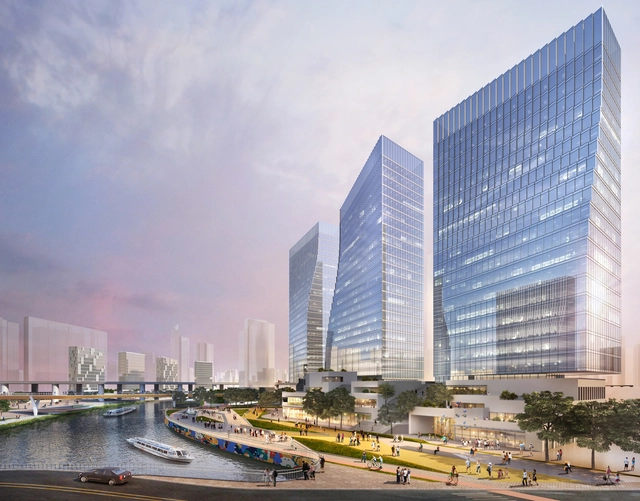
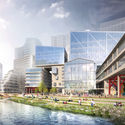
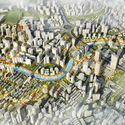
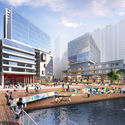
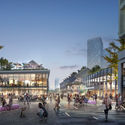
Design firm Benoy has just revealed its design for “Gala Avenue Westside,” a future mixed-use structure set within the iconic Lujiazui HARBOUR City development of Shanghai. Benoy (who recently created a green architectural design for Taiwan’s High-Speed Rail’s Hsin Chu Station Mall) have been appointed as the Masterplanner, Architect and Interior Designer of the Gala Avenue, set for completion in 2018.
U.S.-based firm Sasaki has won the international competition to redesign Suzhou Creek—also known as the Wusong River—in Shanghai, China, which was historically one of the city’s most vital water routes, but which, in recent decades, suffered severe pollution and neglect. After receiving a grant from the Asian Development Bank, the waterway has been cleaned and is now in the process of becoming a new centerpiece for Shanghai.

















Connie_Zhou.jpg?1478289537&format=webp&width=640&height=580)










.jpg?1474948068&format=webp&width=640&height=580)
.jpg?1474948040 "Courtesy of Benoy")
.jpg?1474948014 "Courtesy of Benoy")
.jpg?1474948114 "Courtesy of Benoy")
.jpg?1474948091 "Courtesy of Benoy")
.jpg?1474948068)

.jpg?1474441160&format=webp&width=640&height=580)
.jpg?1474444507 "© Peter Dixie")
.jpg?1474440899 "© Peter Dixie")
.jpg?1474441571 "© Peter Dixie")
.jpg?1474440915 "© Peter Dixie")
.jpg?1474441160)