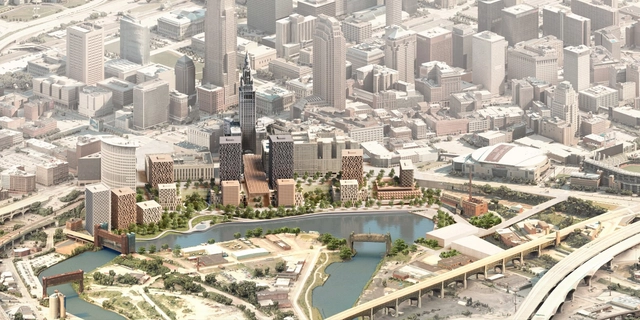
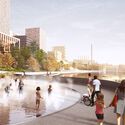
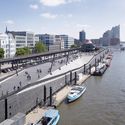
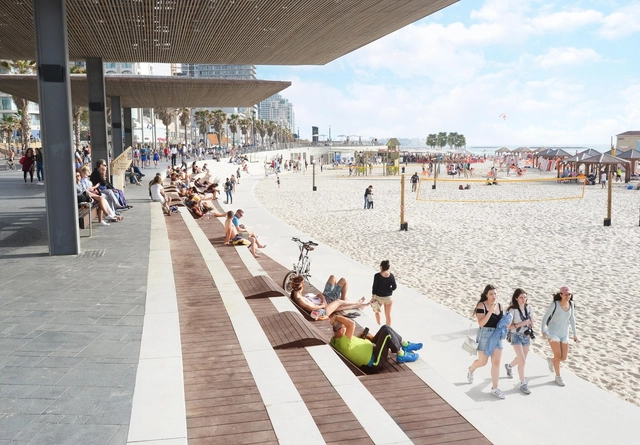
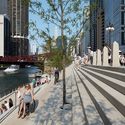
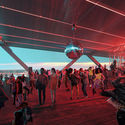
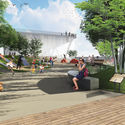
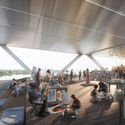
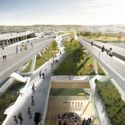
David Adjaye, in partnership with Bedrock and the city of Cleveland, unveiled the masterplan for the Cuyahoga Riverfront, a 15-to-20-year vision that will transform 35 acres of the riverfront to improve accessibility, equity, sustainability, and resilience of the downtown area. The design embraces the city’s rich history and connection to nature and creates a sustainable infrastructure that prioritizes pedestrian movement and activates open public spaces. David Adjaye, a British-Ghanian architect, has been awarded Britain’s Order of Merit, making him the fifth architect to be appointed the honor.
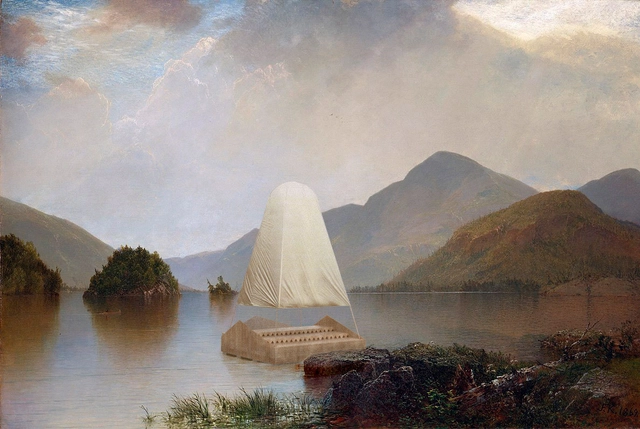
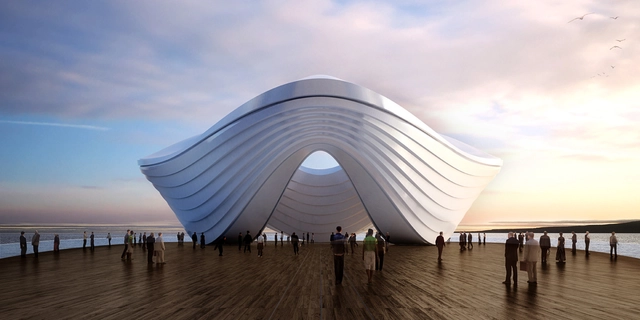
First Place - Federico Fiorino. Image Courtesy of The Outsider magazine and the City Municipality of Maribor
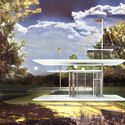
The Outsider magazine and the City Municipality of Maribor have announced the winners of the international competition “Floating Pavilion on the Drava River.” The purpose of the competition was to obtain an innovative design for a floating pavilion that would have two main functions: a space for smaller events during the Lent Festival and a space for contemplation by the river. The City Municipality of Maribor will invite the winning candidate to participate in the implementation of the project.
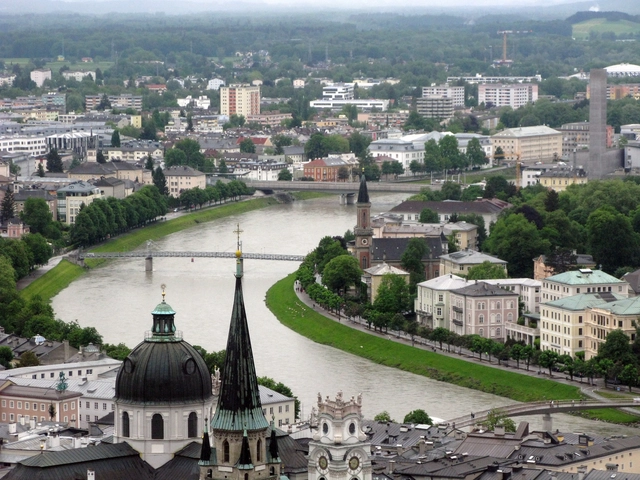
Salzburg seen from the Festung Hohensalzburg (Hohensalzburg Fortress). Image via Flickr User Janusz Sliwinski
Rivers have long been considered as Earth’s arteries, serving as the essence of urban communities as human settlements developed their shelters and crop beds around them. Centuries later, riverside architecture remained vital as these areas expanded beyond residential typologies, and harnessed dynamic mixed-use developments and public functions. As valuable as they may seem though, these landscapes come with the risk of unexpected floods, increased water levels, or complete droughts, which has forced architects to design built environments that are able to respond to these abrupt changes. So how were these settlements built in the past, and how has today’s urban densification and technological advancements influence the way they are built?
The area surrounding a river, lake, lagoon or sea coast acts as a transition zone between water and land. Therefore, turning the water banks into dynamic and appealing public spaces helps to establish a certain balance between the stiffness of the built environment and the fluidity of water.
A 500,000-square-foot office complex in Atlanta by RIOS. Image Courtesy of RIOS
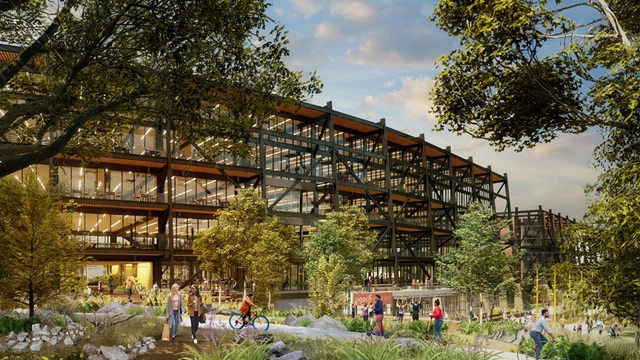
For years now, designers have been emphasizing natural lighting, ventilation, and connectivity to nature as ways to improve employee health and wellness. Now that the coronavirus is much more likely to be transmitted indoors—the risk is nearly 20 times greater, according to one study—a strong case could be made for moving some office work completely outside. “The benefits of light and fresh air are pretty self-evident, and the pandemic only reinforces that,” says Christopher McCartin, managing director of design and construction at real estate developer Tishman Speyer, which has been including “significant outdoor space” in all of its office developments nationwide.
https://www.archdaily.com/946114/post-covid-more-office-designs-include-permanent-outdoor-workspacesLydia Lee
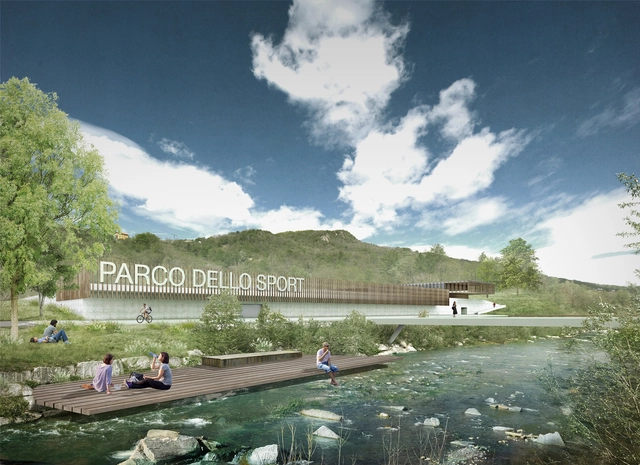
Focusing on the future of public space, and centering their approach on wellbeing and sport as drivers of sustainability, economic and social development, the Lugano Municipal Council in Switzerlandhas given the go-ahead for the planning of the new Pole of Sports and Events (PSE). Designed by LAND, the project dictates the direction for public spaces in the post-pandemic era.
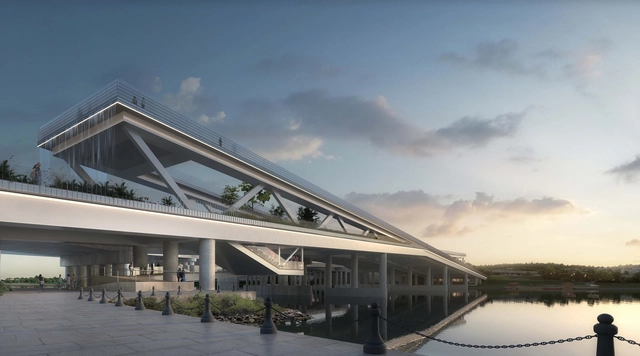
OMA / Jason Long’s 11th Street BridgePark was granted approval by the National Capital Planning Commission (NCPC) at the beginning of April. Designed by OMA, with landscape architects OLIN, and structural engineers WRA, the project is the winning entry of the design competition held back in 2014.
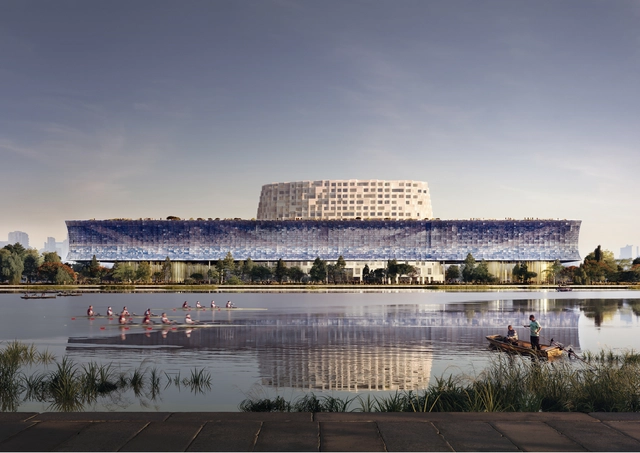
Waterfront View. Image Courtesy of Herzog & de Meuron
The Grand CanalMuseum Complex in Hangzhou, China designed by Herzog & de Meuron reflects on the importance of this area in Chinese cultural and natural landscapes. The project illustrates the story of the Grand Canal, through a continuous dialogue between the water and the museum.
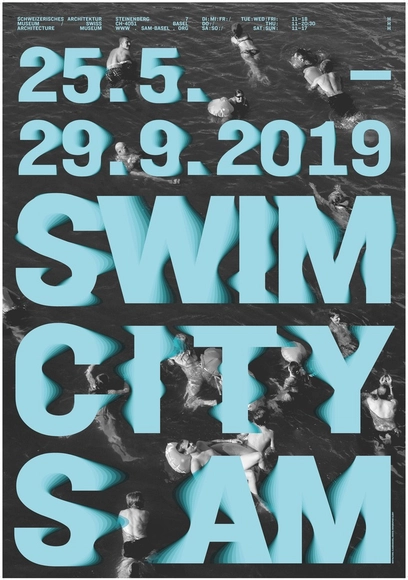
The exhibition «Swim City», held at the S AM Swiss Architecture Museum from the 25th of May to the 29th of September 2019, is the first to draw attention to a particular contemporary phenomenon in urban space: river swimming as a mass movement. Swiss cities have played a leading role in the development of this activity over the last few decades, gradually opening up the river as a natural public space within the built environment. The river has thereby become a place of leisure, open to all, located right in front of residents’ doors and seamlessly integrated into everyday life. The rest of the world looks on in awe at this bathing culture, seeing it as an example of how waterways in cities can be reclaimed for the people in order to sustainably improve the quality of life in urban centers.
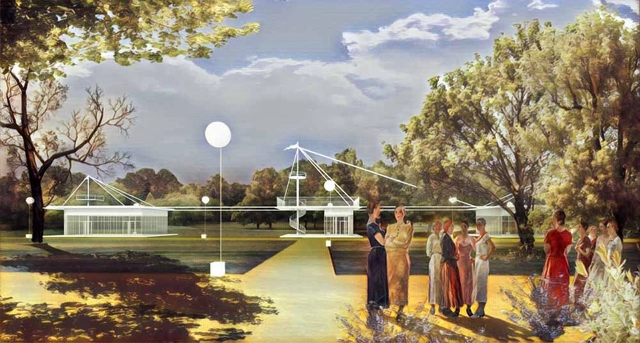
Kleinewelt Architekten in partnership with Citizenstudio / Gorozhane Group, created a re-design proposal for the Northern River Boat Station Park, also known as the Park of Five Seas, in Moscow. Built in the 1930’s, the current park is supposed to act as the city’s gateway to the five seas: the White, Baltic, Black, Azov, and Caspian Sea. However, the park is removed from city life and separates Moscow from it’s historic waterways.
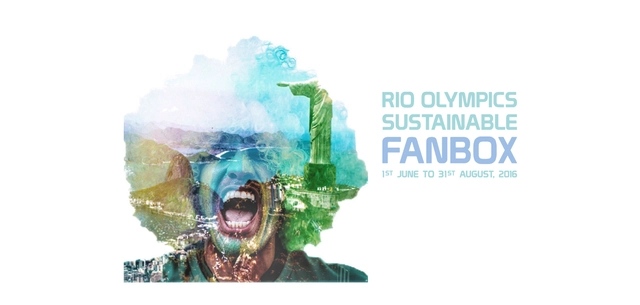
The biggest sporting showdown of the world, Summer Olympic and Paralympic Games 2016, will commence in Rio De Janeiro, Brazil from August 5. Around 10,000 participants from 204 nations are expected to descend in Brazil, unleashing fierce competition and rivalries.
UPDATE: The submission deadline has been changed to February 7th, 2016.
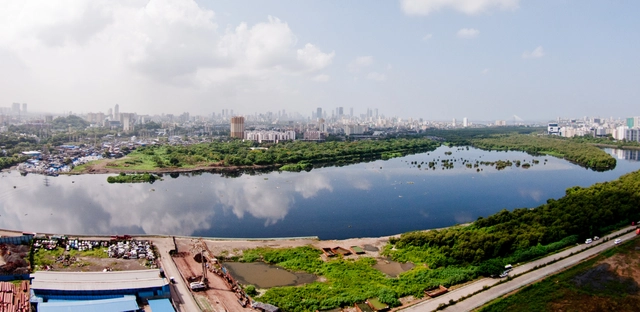
The Mumbai Metropolitan Region Development Authority (MMRDA) is looking for multi-disciplinary design teams that are capable of designing and delivering a technically demanding and environmentally sensitive makeover in the heart of India’s Financial Capital, Mumbai. There are no competition fees to be paid and all submissions will be exclusively done through the competition portal. Five shortlisted entries from the first stage will each receive Rs. 5,00,000 and the eventual winner will receive Rs. 50,00,000 as part of a contract.
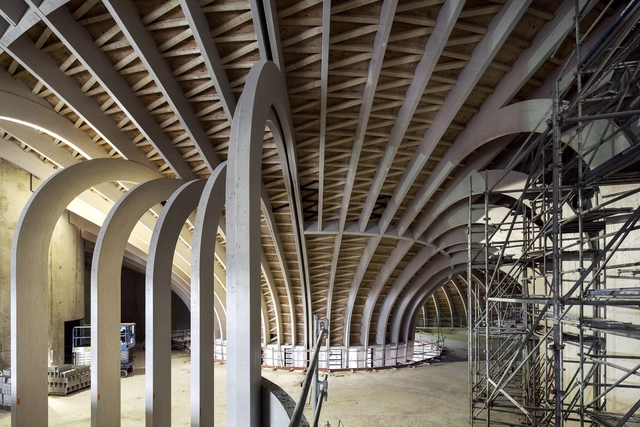
Wooden Structure. Image Courtesy of XTU Architects
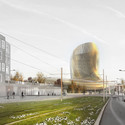
The BordeauxWineMuseum’s wooden structure has been completed, the first step in an ambitious project slated to open in 2016. Designed by XTU Architects, and situated along the coast of the river Garonne in Bordeaux, France, the museum aims to stand as a beacon and “guardian angel” against the skyline of the riverbank. Inspired by the timeless spirit of French wine, the building forms flow in a continuous space without corners, evoking the circular motion that awakens a wine before tasting.
Chun Qing Li, founder director of London-based KREOD, has revealed planes for a 1,200 square meter international trade pavilion for the 2016 Rio Olympics. Floating on a platform in the Barra de Tijuca lagoon, adjacent to Olympic Park, the pavilion is expected to bring together entrepreneurs and industry leaders from Brazil, the United Kingdom and China to discuss future of business and showcase their products.