.jpg?1421901250&format=webp&width=640&height=580)
.jpg?1421901228 "© Reinaldo Cóser")
.jpg?1421901406 "© Reinaldo Cóser")
.jpg?1421901495 "© Reinaldo Cóser")
.jpg?1421901439 "© Reinaldo Cóser")
.jpg?1421901250)
-
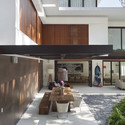
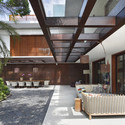
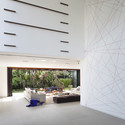
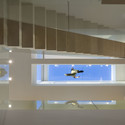
Architects: Diana Radomysler, Luciana Antunes, studio mk27 - marcio kogan
- Area: 312 m²
- Year: 2013
-
Professionals: Lar Construtora


.jpg?1421255847&format=webp&width=640&height=580)

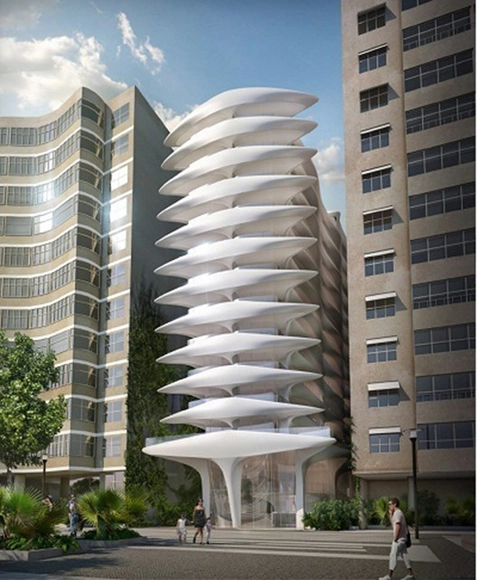
Images of Zaha Hadid’s first project in Brazil – and in South America -- have been revealed. The “Casa Atlântica” residential tower will have eleven floors and a rooftop pool and be built in Copacabana, Rio de Janeiro, according to local paper O Globo.
Located on Atlântica Avenue, “Casa Atlântica” will be the only building on its lot, yet seeks to complement the surrounding environment and neighborhood.
The project was commissioned by businessman, Omar Peres, who acquired the land for R$ 23 million ($8.5 million).
First inspired with a grand vision to transform Rio de Janeiro’s most notorious slum into a community united by color, artists Jeroen Koolhaas and Dre Urhahn of Haas&Hahn have found an ingenious and stunning way to empower some of the world’s most impoverished communities through art.

As the culmination of a 14-month initiative to examine new architectural possibilities for rapid growth in six megalopolises - Hong Kong, Istanbul, Lagos, Mumbai, New York, and Rio de Janeiro - the Museum of Modern Art is preparing to open Uneven Growth: Tactical Urbanisms for Expanding Megacities on November 22. The exhibition will present mappings of emergent modes of tactical urbanism from around the globe alongside proposals for a bottom-up approach to urban growth in the highlighted cities by six interdisciplinary teams made up of local practitioners and international architecture and urbanism experts.
Curator Pedro Gadanho, in collaboration with the Austrian Museum of Applied Arts (MAK), states:
“The exhibition features design scenarios for future developments that simultaneously raise awareness of the prevailing inequalities in specific urban areas and confront the changing roles of architects vis-à-vis ever-increasing urbanization. Each team in the exhibition was asked to consider how emergent forms of tactical urbanism can respond to alterations in the nature of public space, housing, mobility, spatial justice, environmental conditions, and other major issues in near-future urban contexts.”
A synopsis of each team’s work, after the break.
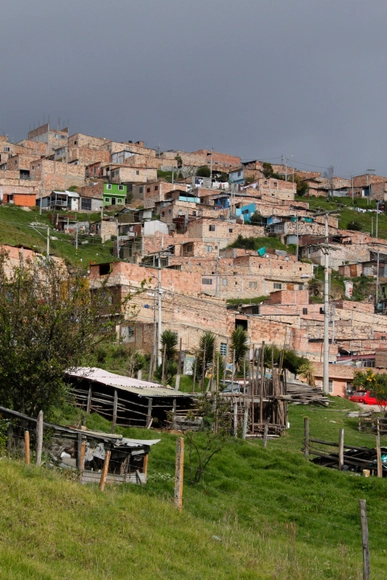
Perched behind the fog that conceals Bogotá’s mountains is William Oquendo’s house. It is a labyrinth of doors and windows, wherein a bedroom opens into the kitchen and a bathroom vents out into the living room.
Five thousand 5,000 kilometers away in Rio de Janeiro, Gilson Fumaça lives on the terrace level of a three-story house built by his grandfather, his father, and now himself. It’s sturdy; made out of brick and mortar on the ground floor, concrete on the second, and a haphazard combination of zinc roof tiles and loose bricks on the third. The last is Gilson’s contribution, which he will improve as his income level rises.
On the other side of the world in Bombay (Mumbai since 1995), houses encroach on the railway tracks, built and rebuilt after innumerable demolition efforts. “The physical landscape of the city is in perpetual motion,” Suketu Mehta observes in ‘Maximum City.’ Shacks are built out of bamboo sticks and plastic bags; families live on sidewalks and under flyovers in precarious homes constructed with their hands. And while Dharavi—reportedly the largest slum in Asia—has better quality housing, running water, electricity and secure land tenure, this is not the case for most of the new migrants into the city.
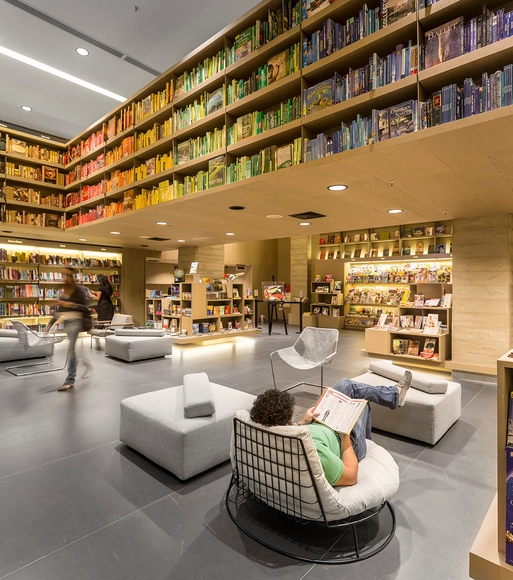
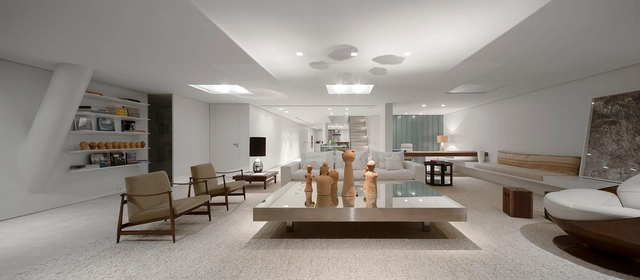
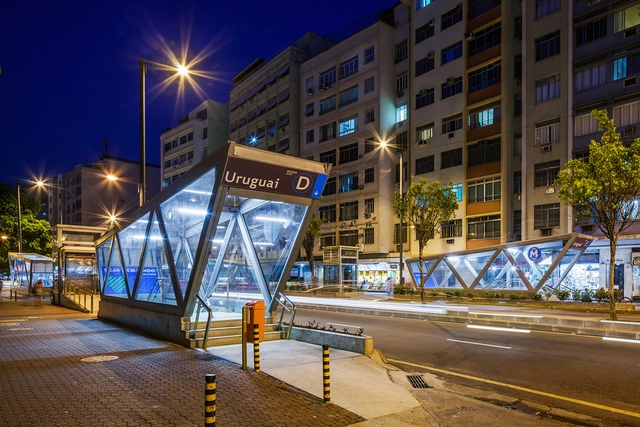
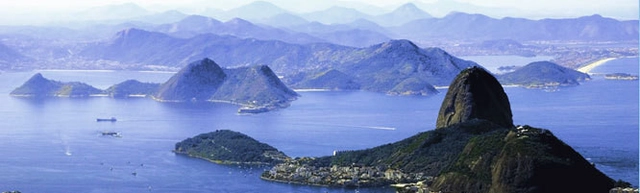
Rio de Janeiro has been selected to host World Congress of Architects UIA 2020, one of the world's most important architecture forums. The news was announced yesterday by one of the UIA's former presidents and current Secretary of the Session, Vassils Sgoutas, during the General Assembly of this year’s congress in Durban, South Africa. Rio's application was spearheaded by Brazil's most important architecture institution - Instituto de Arquitetos do Brasil (IAB). The South American city beat out two strong candidates: Melbourne and Paris.
After the presentations of the three candidate cities, two rounds of voting began. In the first round Rio got 85 votes, against Melbourne’s 73 votes and Paris’ 44 votes. In the second round Rio beat Melbourne with 107 votes against 95.
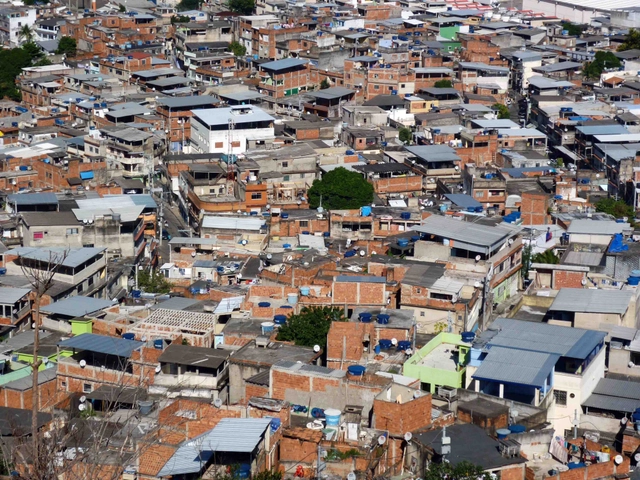
"Building a house takes time and money,“ said Marcio, a local resident of Complexo do Alemão, one of Rio de Janeiro’s numerous favelas, as he showed me around his house. This is why a house is often built over several generations: a floor may be laid, columns erected (rebar protruding), and a thin tin roof placed, but this is just to mark where the next builder should finish the job. "Constructing a roof with tiles is not a sign of wealth here — rather, it means that there’s not enough money to continue constructing the house,” explains Manoe Ruhe, a Dutch urban planner who has lived in the favela for the last six months.
An architect who has always been fascinated by the way people live, I had come to do a residency at Barraco # 55, a cultural center in Complexo do Alemão, in order to learn how its citizens went about building their communities. I had many questions: are there rules of construction? What are the common characteristics of each house? Do they follow the same typology? How are the interiors of the homes? What construction techniques and what materials are used?
.jpg?1421256024 "© MCA Estudio")
.jpg?1421256121 "© MCA Estudio")
.jpg?1421255882 "© MCA Estudio")
.jpg?1421255962 "© MCA Estudio")
.jpg?1421255847)