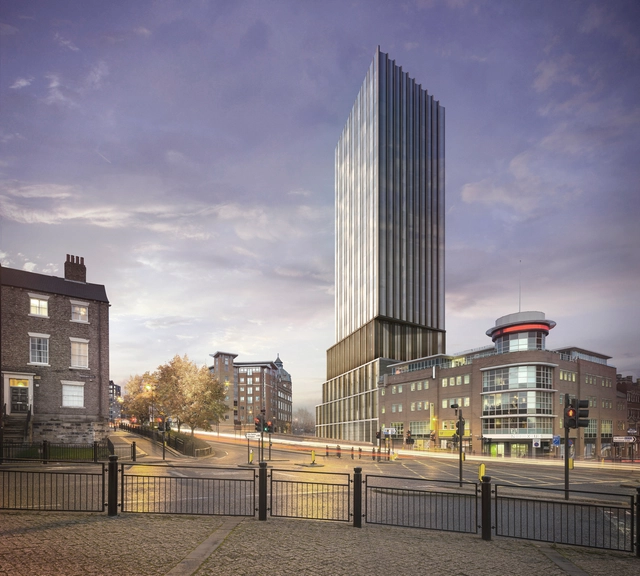
“We have worked extremely hard to design a building of the highest quality and we believe this development will create a positive landmark for the city, representative of its ambitious and forward thinking outlook,” said Paul Rigby, partner at FaulknerBrowns.
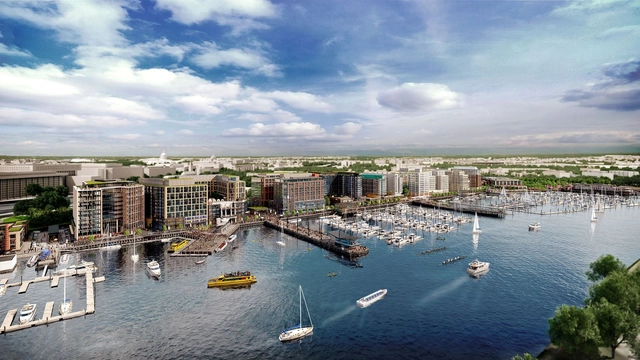
Eleven of the United States’ most prestigious architects have been selected by developers Hoffman-Madison Waterfront (HMW), to commence Phase 2 of The Wharf, a $2 billion neighborhood situated on the southwest waterfront of Washington D.C. The development is adjacent to the National Mall, spanning 24 acres of land and 50 acres of water.
“We have selected a diverse group of locally, nationally, and internationally renowned designers, knowing they will bring their talent and expertise to The Wharf, building a waterfront neighborhood that is an integral part of the city,” said Shawn Seaman, principal and Senior VP of Development at PN Hoffman.
https://www.archdaily.com/804824/eleven-practices-to-complete-2-dollars-billion-waterfront-development-in-washington-dcOsman Bari
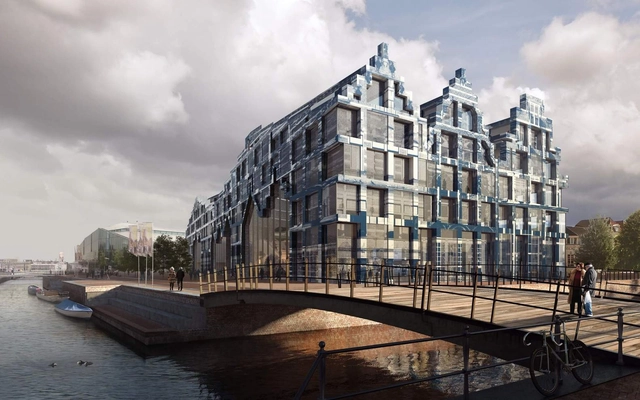
Three tall facades take inspiration from famous historic Delft dwellings. Image Courtesy of Van Dongen-Koschuch Architects and Planners
Van Dongen–Kuschuch Architects and Planners has released images for its ‘House of Delft’ mixed-use hub in the Netherlands. Located beside Delft Central Train Station, the scheme will act as a gateway to both the historic city center and the renowned University of Technology. The architectural intent behind the proposal is to celebrate the artistic, scientific and innovative achievements which came from the city throughout its history. As visitors step off the train, it will be both an introduction to the city, and an indicator of what it has to offer.
Vernacular architecture refers to designs which find their primary influence in local conditions: in climate, in materials, and in tradition. In a country as diverse as China, with 55 state-recognized ethnic minority groups and widely varying climates and topographies, many different vernacular dwelling styles have evolved as pragmatic solutions that accommodate the unique needs and limitations of their sites.
Rapid urbanization in China has favored high-rise apartment towers over traditional housing because of their ease of construction and the population density they enable, making vernacular dwellings increasingly rare throughout the country. Some firms, like MVRDV and Ben Wood’s Studio Shanghai, have taken note of the many benefits that vernacular dwellings provide, and have created projects that attempt to reconcile tradition with urbanization. Even if you aren't planning on building in China any time soon, the following housing styles have much to teach about what it means to live in a particular time and place. This is by no means an exhaustive list, but it does encompass the main types of vernacular dwellings seen throughout China.
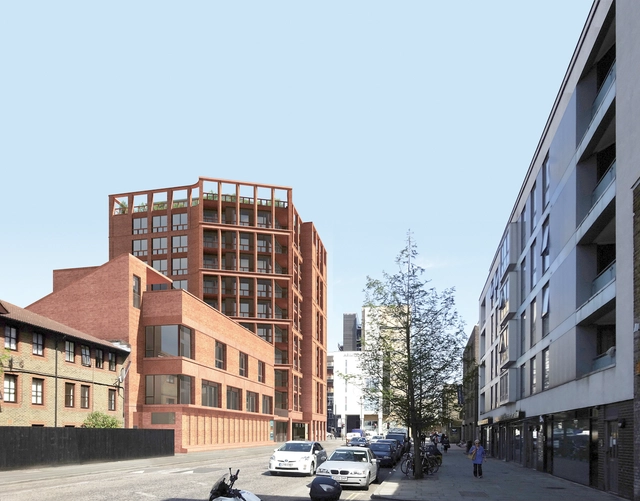
Looking east along Downham Road. Image Courtesy of Henley Halebrown
Henley Halebrown has released updates for their proposed mixed-use scheme in Hackney, London. 333 Kingland Road, previously occupied by a fire station, will soon be home to the Hackney New Primary School, commercial units, and dual aspect apartments. The scheme aims to address a need for school places and homes in London and to maintain a connection between learning and living in a dense urban environment.
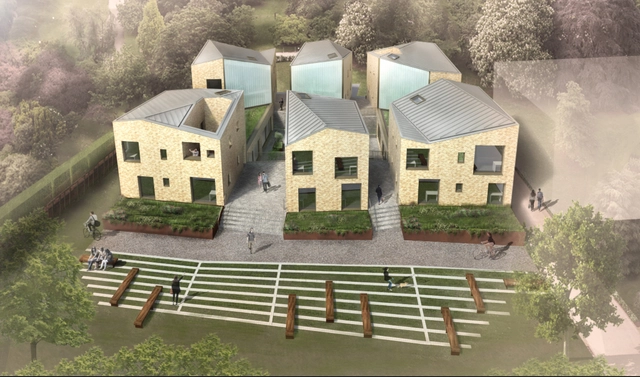
Belsize Architects has released the plans for 6 Pavilions, a new student accommodation project that will form a part of the University College’s larger masterplan in north Oxford.
To be built on the site of a Victorian residential home, the project will feature 30 units arranged within six pavilions around a central courtyard. Communal areas of the pavilions will be connected at the ground level.
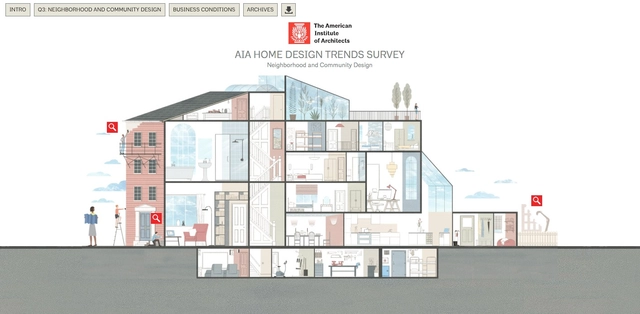
Courtesy of The American Institute of Architects (AIA)
The American Institute of Architects (AIA) has released its Home Design Trends Survey for the third quarter of 2016, which focuses on community and neighborhood design. According to the Survey, homeowners are generally expressing more interest in community development, as indicated by the popularity of thoughtful community design with access to amenities.
There is additionally, according to the Survey, a demand for walkable neighborhoods, access to public transportation, and multi-generational housing, as well as a demand for more and larger glass windows, driven by building technologies like smart glass windows.
MVRDV, working with co-architects KAI Architects, has designed a new Y-shaped residence in Northeast Tainan, Taiwan. Known appropriately as Y House, the 330 square meter (3,552 square foot) villa will become a standout addition to a new residential development aimed at becoming a weekend retreat for city workers.
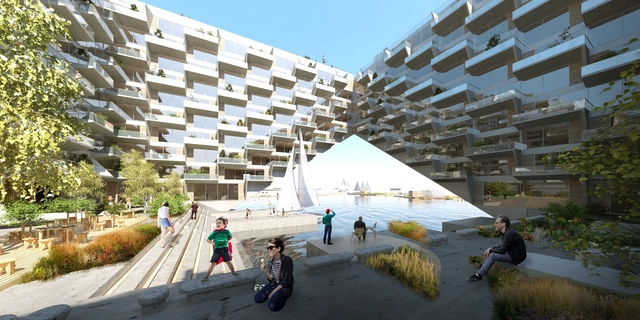
BIG and Barcode Architects have been selected as the winning team in a competition to design a new mixed-use building in the emerging district of IJburg Steigereiland in Amsterdam. To be known as Sluishuis (Lock House), the building will serve as a new icon connecting the neighborhood to Amsterdam’s historic center while providing 380 zero-energy residences, 4,000 square meters of commercial and public space, and a marina with space for up to 30 houseboats.
[In New York] there’s this math problem: 1.8 million small households and only one million suitable apartments. – Mimi Hoang, principal of nArchitects
Last year, nArchitectsreleased a trailer that teased the development of their winning adAPT NYC entry, Carmel Place (formerly known as My Micro NY). The competition sought to address the need for small household apartments in New York City. Now in a newly released video, the full story of the city’s tallest modular tower comes together in smooth timelapse to a dainty piano soundtrack.
Pneumatic Vacuum Elevators, LLC has created a series of air-powered, space-saving, “plug & play” elevators designed to be easily installed into home environments.
Ranging from a single-passenger to a three-passenger, wheelchair accessible model, the elevators—called Pneumatic Vacuum Elevators (PVE)—are self-supporting, and do not require equipment rooms or other additional spaces above or below the shaft. Similarly, the elevators are completely enclosed and are not built into the framework of the home around them, and thus it can easily be relocated.
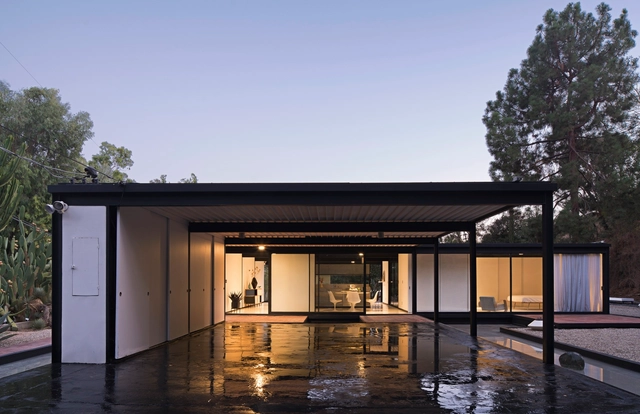
One of modernism’s most iconic houses, Case Study House 21 (Bailey House) by Pierre Koenig, is now on sale. The two-bed/two-bath Hollywood Hills landmark has been touted as among the finest of Arts & Architecture Magazine’s Case Study Houses, and one of the program’s few truly experimental projects to explore groundbreaking design and materials.
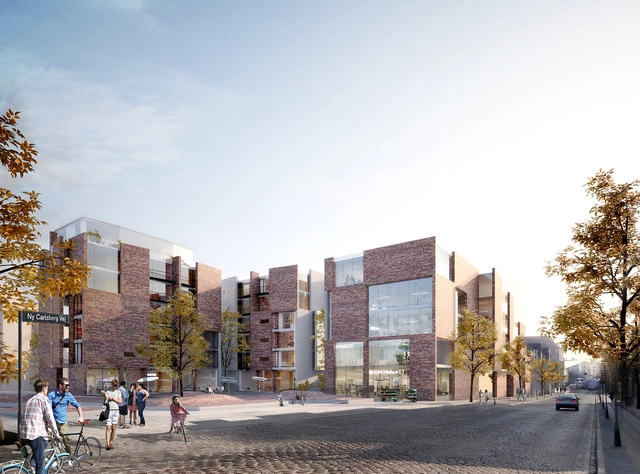
From the architect. The new plan for Copenhagen’s Carlsberg Byen development embraces the closeness of the old city, and aims to establish a vibrant new neighborhood on the site of a former brewery. White Arkitekter has developed a residential and commercial proposal which responds to the historical urban morphology of Copenhagen while making a literal connection to the old industrial context by utilizing bricks recycled from the demolition of some of it.
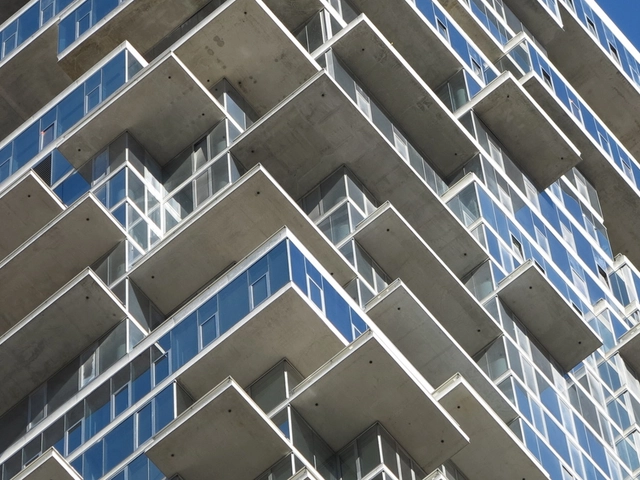
Photographer Paul Clemence of ARCHI-PHOTO has shared images of 56 Leonard Street by Herzog & de Meuron. Nearing completion, the 60-story residential tower will be the tallest structure in Tribeca when it opens later this year. The concept of 56 Leonard Street is to disrupt the monotony of typical high-rise city buildings with a more varied articulation achieved by stacking recognizable individual houses. Shifted floor slabs create differentiated corners, cantilever, and balcony conditions that provide apartments with their own unique characters. Developed from the inside out, the pixelated rooms are arranged such that the base of the tower reacts to the street conditions and ripples upward to merge with the sky.
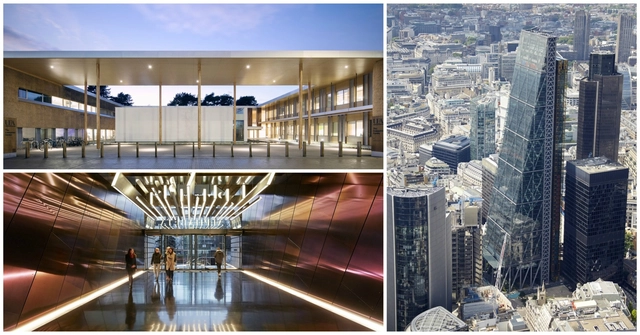
The British Council for Offices (BCO) has announced the winners of the 2016 National Awards. The BCO Awards program was established to recognize “ top quality office design and functionality and sets the standard for excellence across the office sector in the UK,” providing a benchmark for excellence in design and functionality. This year’s ‘Best of the Best’ winner was The Enterprise Center at the University of East Anglia by Architype.
“This year we have once again seen a fantastic range of diverse and innovative workplaces, highlighting Britain’s position at the forefront of the global office sector. The Enterprise Centre stands tall as both a dynamic and collaborative work and event space, and as a benchmark in sustainable design," said Emma Crawford, Managing Director of Central London Leasing at CBRE and BCO National Awards Chair.
I want you to let me do all the ideas I still have in my head.
In the latest installment of the In Residence series, NOWNESS visits the last house designed by legendary Mexican architect Luis Barragán, Casa Gilardi. By the time current homeowner Martin Luque and advertising agency partner Pancho Gilardi approached Barragán to ask for a house design in 1975, the architect had already formally retired. He originally declined to take on the project – until he made a visit the site, where he was captivated by a remarkably beautiful jacaranda tree. Changing his mind, Barragán remarked, “Don’t chop down this tree, because the house will be built around it.”
Check out the video to learn the rest of the story behind the masterwork and to see the vibrant house as it stands today.
Vancouver-based Leckie Studio Architecture + Design has founded the Backcountry Hut Company to bring affordable recreation structures to outdoor enthusiasts. Inspired by IKEA's philosophy of providing superior design at a moderate price point, the prefabricated hut prototype aims to embody the company's four cornerstones: function, quality, sustainability, and value.


























_smaller.jpg?1475205786&format=webp&width=640&height=580)


_smaller.jpg?1475205786)