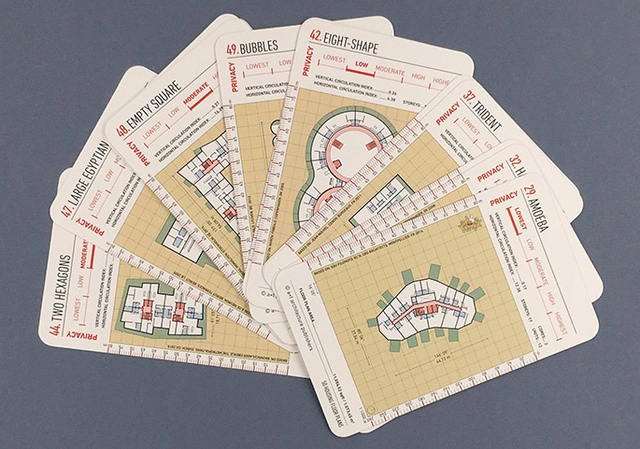
Following up on their series of urban block flashcards, Spanish publisher a+t architecture publishers recently launched a new deck of cards featuring architecture that "promote[s] the compact city and the desirable dwelling." Titled 50 Housing Floor Plans, this new version contains examples of recent collective living projects, featuring buildings constructed between 2000 and 20017.
Building and growing are two actions that should be considered more often than not at the same time. This is how the 2017 "Build to Grow" social housing competition, looked to establish bases that sustain a flexible way of living. The event took place in the Belén district in the city of Iquitos, on 3.7 hectares plot of land. The project that received first place proposed to locate 120 incremental homes, that alternatively allowed users to modify and expand it according to their needs and economic means. In short, a home with a solid nucleus formed by a structure that supports changing activities.
The MAS in Collective Housing is celebrating its 10th anniversary and they want to share their happiness for that achievement. After having 256 alumni from 38 different countries, and 70 international workshops, we are convinced that they are doing something right. The application period for the 2019 edition is already open.
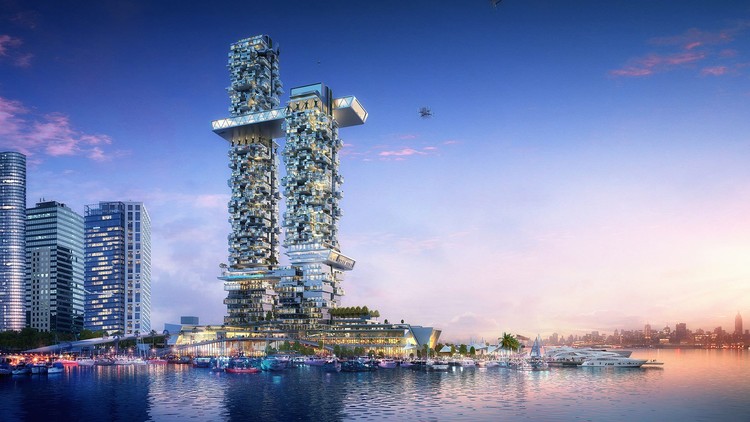
Humphreys and Partners, a Dallas-based architecture firm, presented a vision of future residential living at the 2018 International Builders’ Show earlier this year. Tackling current issues of affordable housing, sustainable design and how technology is changing the way we live, their futuristic vision Pier 2: Apartment of the Future consists of two soaring skyscrapers on the Manhattan waterfront.
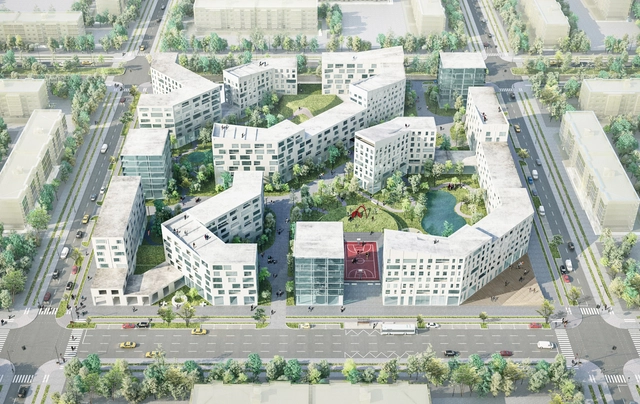
20 finalists have been announced for the Open International Competition for Standard Housing in Russia. With the plan to provide 30 million Russian residents with new homes by 2025, the competition aims to discover new innovative solutions to improve residential design and planning for the new developments. The competition was organized by the Government of Russian Federation, the National Institute for Housing Development Foundation, and the Russian Ministry of Construction working together to create a new standard for affordable housing.
BACKGROUND Rapid urban growth and growing inequality has created a global crisis in housing that increasingly segregates the rich from the poor. Though not fully understood, there is a clear and parallel relationship between the size of a city and its level of socio-economic disparity: the larger the city, the less equal it tends to be. Physical and social segregation, which both reflects and perpetuates socio-economic disparity within a city, is a growing concern in cities worldwide - including Mumbai. The long-term success of a city depends on the collective well-being of all its inhabitants. To what extent can architecture support social inclusion and break down spatial segregation within the megacity?
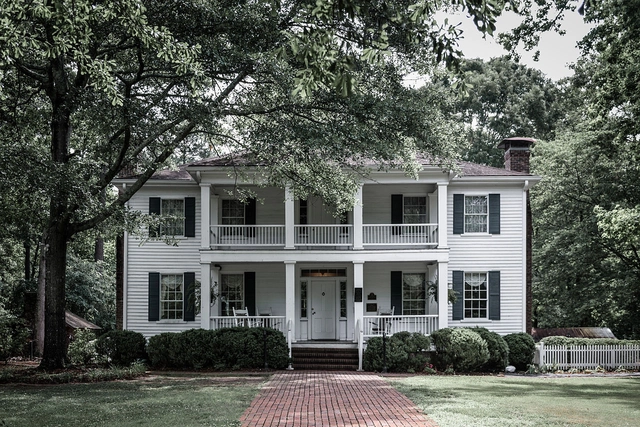
This short excerpt is from Places Journal's article "Prop and Property: The house in American cinema, from the plantation to Chavez Ravine," which in turn was adapted from John David Rhodes' book Spectacle of Property. The article, which investigates the many layers of property inherent in the production and viewing of movies, investigates in particular the films Gone with the Wind and To Kill a Mockingbird, revealing how their themes of race and property are made even more complex by the practicalities of Hollywood filmmaking.
Perhaps the most mysterious and desired feature of housing is the privacy of property, and especially the property of and in the house. Property, however, is fungible and alienable. Whatever is promised by the house is radically susceptible to violation, displacement, and loss. Often the experience of property’s violation or redefinition involves an unwelcome reminder that the house is not a very private place after all. Partly we know this: we have all spent time in living rooms, on porches, or in other spaces of the house in which it is nearly impossible to say where the public ends and the private begins. But when property’s inherent instability is experienced vividly—whether in “real life” or in representation—we are forced to confront the tenuous relationship between public and private, as well as the tenuousness of all property relations as such.
https://www.archdaily.com/886807/how-the-portrayal-of-houses-in-cinema-shows-uncomfortable-truths-about-hollywoods-relationship-to-raceJohn David Rhodes
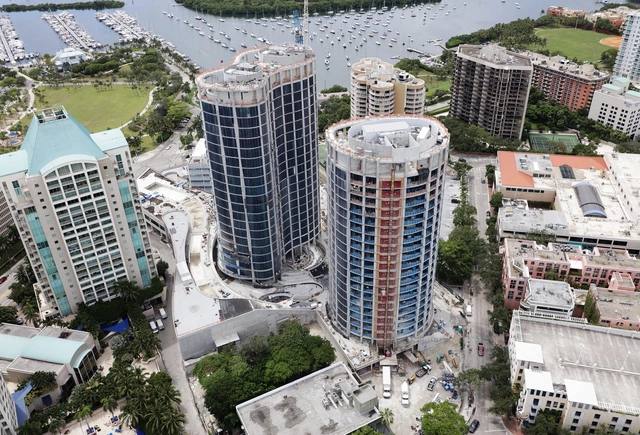
Construction photos - November 2017. Image Courtesy of OMA
New construction photos capture the progress of OMA’s Miami development, “Park Grove,” as the project’s details and finish begin to emerge.
Located next to the twisting towers of BIG’s recently completed “Grove at Grand Bay,”OMA’s trio of towers will consist of 1,000,000 square feet of luxury residential spaces with panoramic views of Florida’s Biscayne Bay.
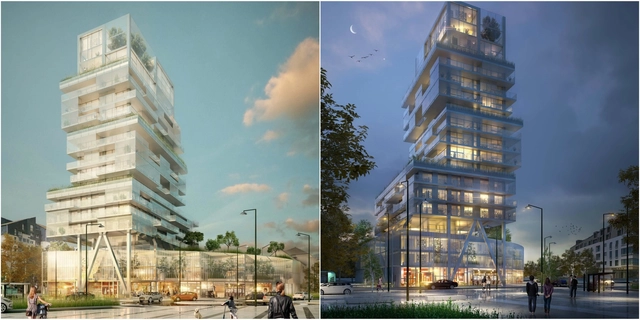
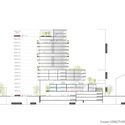
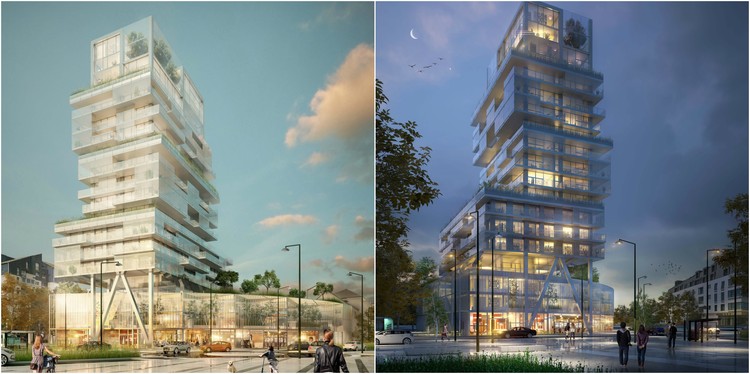
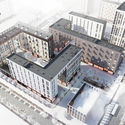
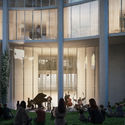
The mayor of Strasbourg, Roland Ries, has announced the winner of the architectural design competition for a residential tower. The site is located near the Rhine, within the ‘Strasbourg, Presqu’ile--Citadelle’ neighborhood -- dense with low-rises, not exceeding five levels. The winning design by KCAP Architects & Planners and OSLO Architectes is commended for its contextual sensitivity and formal relationship with Germany which sits just on the other side of the Rhine river.
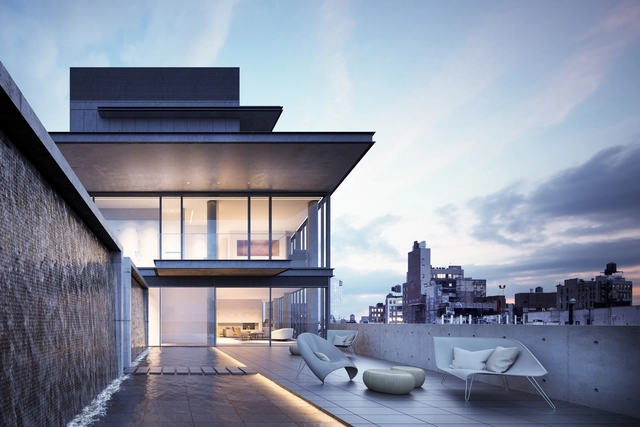
New renderings have been revealed of Tadao Ando’s first project in New York City, a luxury residential building known as 152 Elizabeth Street, that show the interiors of its exclusive multi-story penthouse for the first time.
Located outside of Saint-Malo’s train station, this soaring 55-meter beacon building will establish itself as an entrance to the city. The Semaphore is the product of French architects a/LTA + Ateliers Laporte and holds a strong identity and concept in creating a dynamic, engaging environment while blending harmoniously into its surrounding environment.
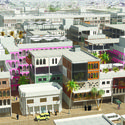
In Iraq, as an estimated 900,000 people return home to the city of Mosul after liberation, many of the returnees will only find desolation. The Tamayouz Excellence Award, Rifat Chadirji Prize focuses on bringing global awareness as well as global talent toward addressing the social issues Iraq faces through design.
This year’s theme, “Rebuilding Iraq’s Liberated Areas: Mosul’s Housing Competition” asked applicants design prototypes for affordable housing. The winning housing proposals selected by the jury are practical, inspiring, and scalable, while adding capacity and density. The competition received 223 submissions from 42 countries. The Top 20 entries will be featured in a traveling exhibition that will visit Amman, Baghdad, Boston, Beirut, Milan, and London. Read on to learn about the three winning proposals and seven honorable mentions.
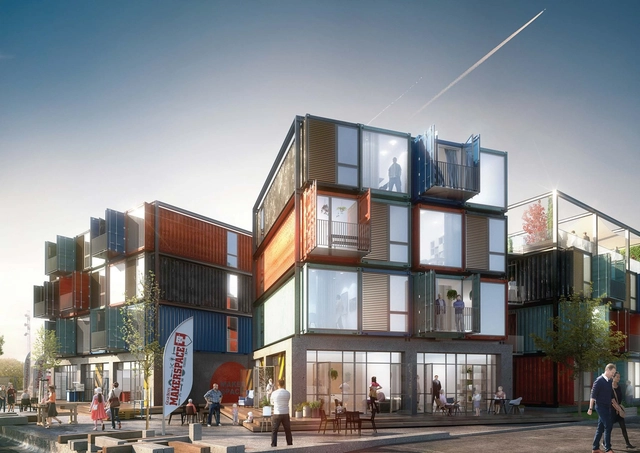
Beat Box: 30 apartments in 48 containers to transform the Danish neighborhood of Musicon, adjacent to the famous Roskilde Festival area. Designed by Arkitema Architects and constructed by Container Living, Beat Box is an integral part of Roskilde’s goal to revamp Musicon over the next 15 years by adding 1,000 jobs and 1,000 homes.










.jpg?1487894399 "© Joana França")
.jpg?1487895357 "© Joana França")
.jpg?1487894136 "© Joana França")
.jpg?1487895424 "© Joana França")













_Yam_Studio_for_KCAP-OSLO-SAS-3B_place.jpg?1510362904)