Residential Architecture: The Latest Architecture and News
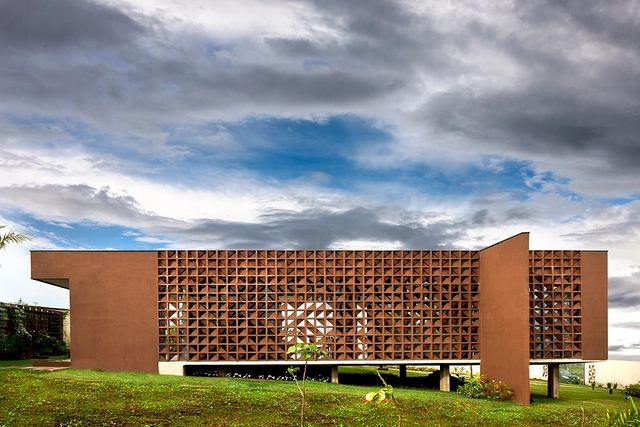
Clara House / SAINZ arquitetura



https://www.archdaily.com/867297/casa-clara-1-1-arquitetura-designSabrina Leiva
KPF's One Bayfront Plaza to Share Title of Miami's Tallest Tower
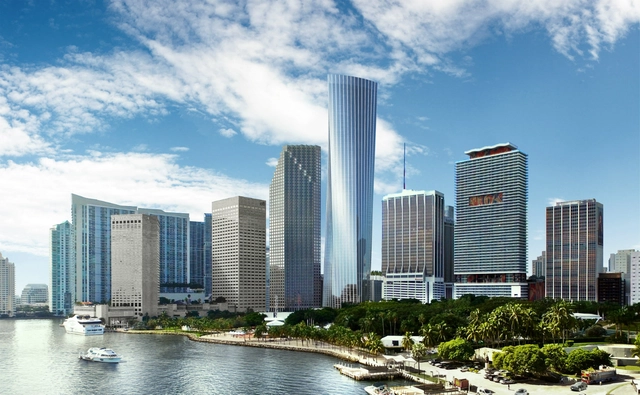
Renderings have been revealed of KPF’s One Bayfront Plaza, a 92-story mixed-use tower in downtown Miami that when completed will reach 1,049 feet tall, becoming one of 5 new buildings that will share the title of Miami's tallest tower.
The project is being developed by Florida East Coast Realty, and will bring 902 apartments, 200 hotels rooms, 532,000 square feet of office space and 104,000 square feet of retail to downtown Miami. Located at 100 South Biscayne Boulevard, the project will total 3.3 million square feet.


https://www.archdaily.com/867130/kpfs-one-bayfront-plaza-to-share-title-of-miamis-tallest-towerPatrick Lynch
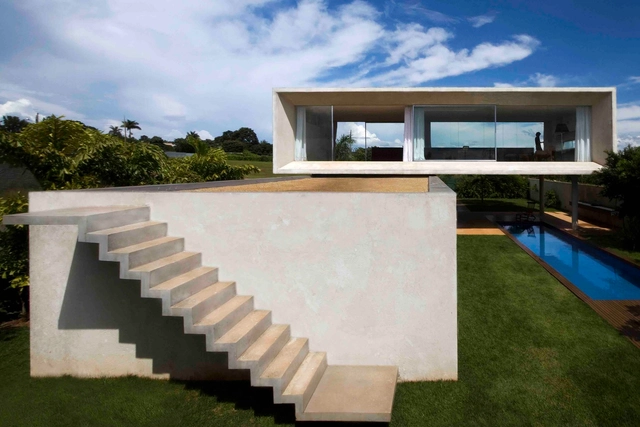
Osler House / studio mk27
.jpg?1488148039 "© Pedro Vannucchi")
.jpg?1488147841 "© Pedro Vannucchi")
.jpg?1488147594 "© Pedro Vannucchi")
.jpg?1488147620 "© Pedro Vannucchi")

-
Architects: Diana Radomysler, Suzana Glogowski, studio mk27 - marcio kogan
- Area: 270 m²
- Year: 2009
-
Professionals: ábaco engenharia
https://www.archdaily.com/806178/osler-house-studio-mk27-nil-marcio-kogan-plus-suzana-glogowskiSabrina Leiva
AD Classics: Park Hill Estate / Jack Lynn and Ivor Smith

From its hilltop vantage point in the east end of Sheffield, UK, the Park Hill Estate surveys the post-industrial city which sprawls westwards. Its prominent location makes the estate highly visible and it has, over time, become engrained in the popular consciousness – a part of the fabric of the city. Although today it divides opinion, following its completion in 1961 it was hailed as an exemplary model for social housing. Designed by architects Jack Lynn and Ivor Smith under the supervision of Sheffield’s visionary City Architect John Lewis Womersley, the estate now stands as testament to an era when young British architects were revolutionizing the field of residential architecture with radical housing programs.
The Park Hill Estate was part of Womersley’s strategy to introduce more high-density housing to Sheffield, which he believed would foster a stronger sense of community than the ubiquitous back-to-back terraces.[1] This policy went hand in hand with an urgent need for slum clearance; The Park, a slum so notorious for its high crime rate that it was known locally as ‘Little Chicago,’ was demolished to make way for the estate.


https://www.archdaily.com/791939/ad-classics-park-hill-estate-sheffield-jack-lynn-ivor-smithBart Bryant-Mole
Rafael Viñoly Adds to Miami's Luxury Residential Boom with New Tower Design

Designed by Rafael Viñoly Architects, 'One River Point' is set to be the latest addition to Miami’s ever-growing luxury real estate market. Comprised of two 65-story-tall towers, the project is a mixed-use residential development situated along the Miami River, in the city’s downtown core.


https://www.archdaily.com/803524/rafael-vinoly-adds-to-miamis-luxury-residential-boom-with-new-tower-designOsman Bari
10 Beautiful Brazilian Apartment Interiors
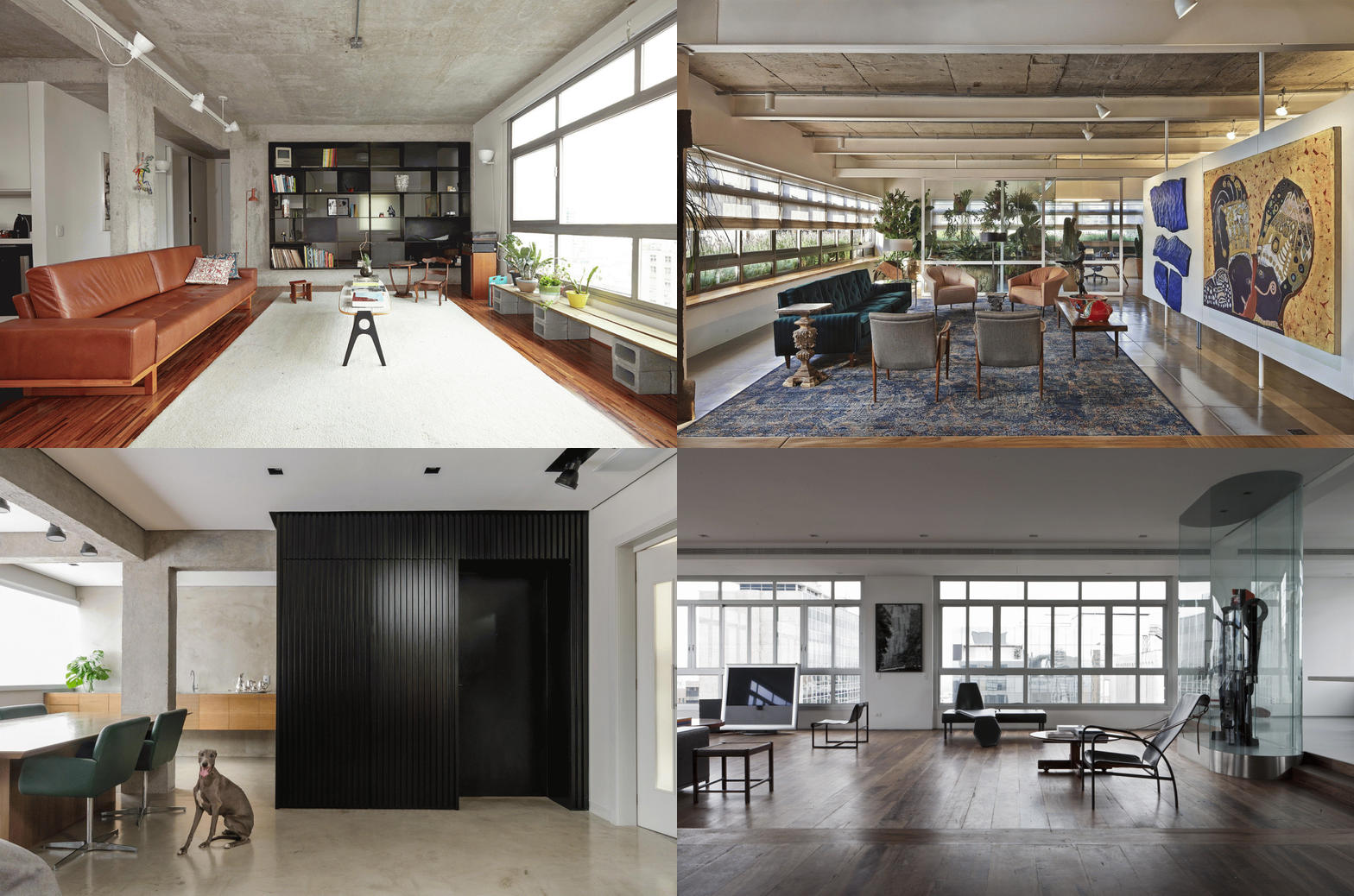
From Oscar Niemeyer's iconic Edifício Copan to Lina Bo Bardi's influential glass house, Brazil has long been notable for its residential architecture. Part of that success has been driven by the strength of Brazilian interiors, as many of the country's designers have an astute understanding of and appreciation for materials. Many designs sensitively fuse both rough, raw elements with luxurious details—an approach that is can be cleverly adjusted to suit a wide variety of clients and budgets. Here we showcase ten projects, published on both ArchDaily and ArchDaily Brasil, that respond to the needs of different clients and different ways of living to provide a cross-section of interior architecture in Brazil.


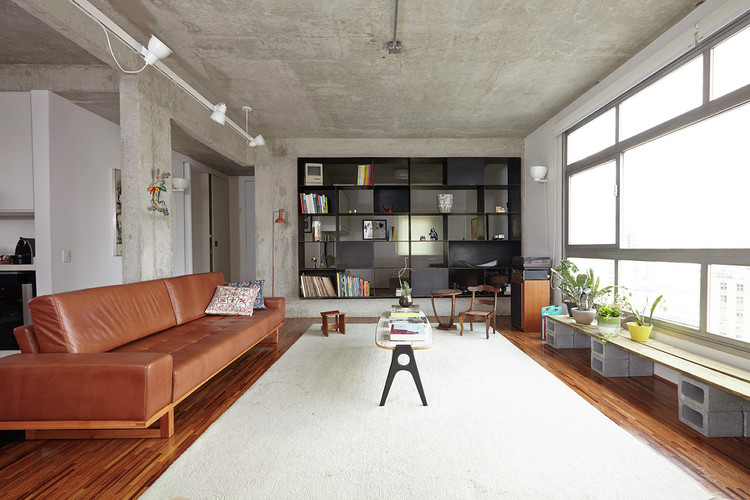
Below are the 10 selected projects.
https://www.archdaily.com/784290/10-beautiful-brazilian-apartment-interiorsVictor Delaqua
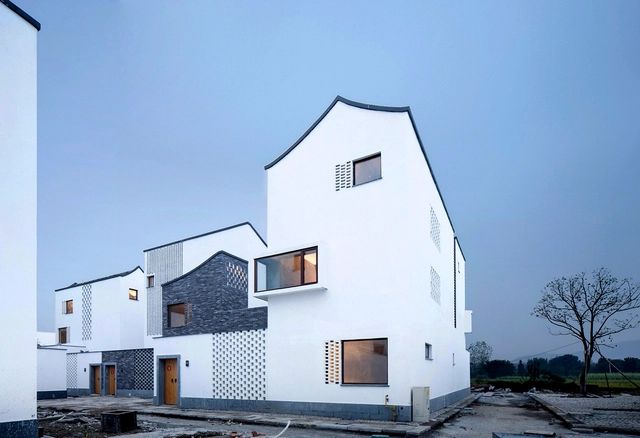
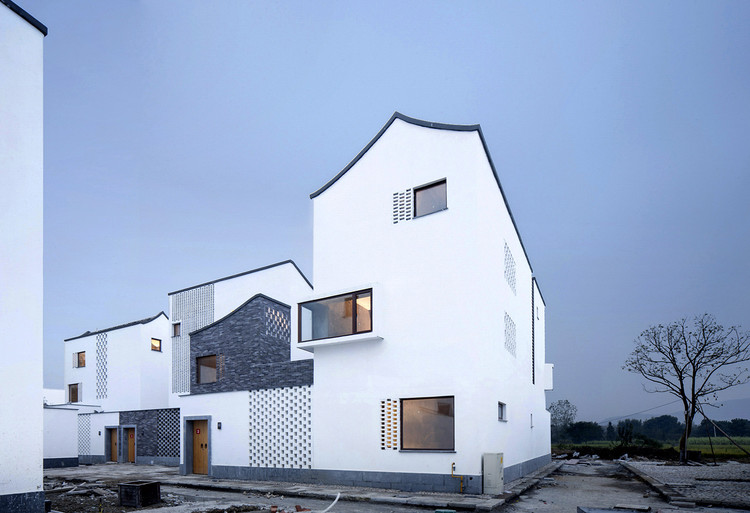
Dongziguan Affordable Housing for Relocalized Farmers / gad


https://www.archdaily.com/802369/contemporary-rural-cluster-dongziguan-affordable-housing-for-relocalized-farmers-in-fuyang-hangzhou-gad尚夕云
What Exactly is Matti Suuronen's Futuro House?

The Futuro House looks more like an alien spacecraft than a building. Designed by Finnish architect Matti Suuronen in 1968 as a ski chalet, the radical design was subsequently marketed to the public as a small prefabricated home, easily assembled and installed on virtually any topography. Its plastic construction and futurist aesthetic combined to create a product which is identifiable with both the future and the past.


https://www.archdaily.com/801269/what-exactly-is-matti-suuronens-futuro-houseLuke Fiederer
London's Aylesbury Estate: A Housing Project Then and Now
Originally built to house over 7,000 people in the 1970s, the Aylesbury Estate in South East London was once one of largest housing projects in Europe. In recent years it has "fallen into rapid decline" and, according to British filmmaker Joe Gilbert, "perfectly encapsulates the growing housing crisis and problems caused by gentrification." With narration by Tom Dyckhoff, this short film aims to capture the reality of a housing utopia which has de-evolved into an uncomfortable reality.
https://www.archdaily.com/801145/londons-aylesbury-estate-a-housing-project-then-and-nowAD Editorial Team
See How New York’s Pilot Scheme of Modular Microhouses Was Built
[In New York] there’s this math problem: 1.8 million small households and only one million suitable apartments. – Mimi Hoang, principal of nArchitects
Last year, nArchitects released a trailer that teased the development of their winning adAPT NYC entry, Carmel Place (formerly known as My Micro NY). The competition sought to address the need for small household apartments in New York City. Now in a newly released video, the full story of the city’s tallest modular tower comes together in smooth timelapse to a dainty piano soundtrack.


https://www.archdaily.com/799686/see-how-new-yorks-pilot-scheme-of-modular-microhouses-was-builtSharon Lam
House of Food Culture / Cobe

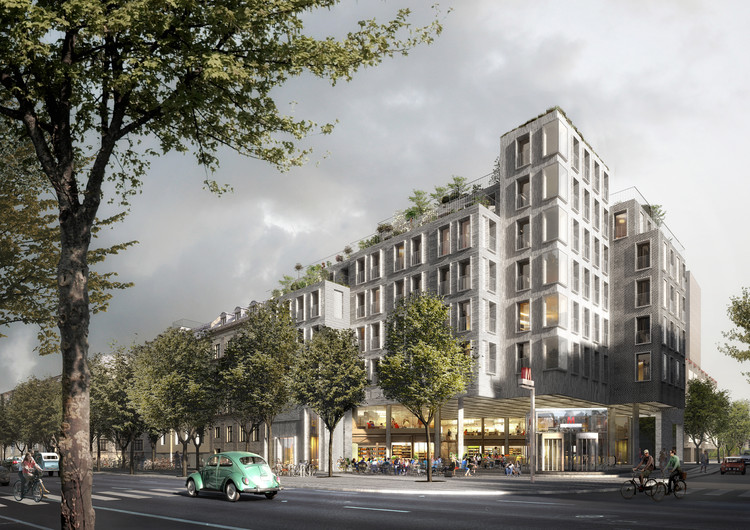
The City of Frederiksberg, along with Real-dania By and Byg Foundation have selected a team led by Danish architects COBE to develop the "House of Food Culture." The project will be constructed on top of the new metro stations in Copenhagen's new Metro City Ring. The House of Food Culture and its townhouses will be built in brick, imitating the neighbouring facade lines and keeping with the style of the historic surroundings.
The House of Food Culture is to be built on top of the entrance to the forthcoming metro station that will host a daily flow of 10,000 people, while focusing on making it the focal point for urban life and a central meeting place.
.jpg?1479828101 "Courtesy of COBE")


https://www.archdaily.com/799948/cobe-designs-housing-and-culinary-experiences-to-be-built-on-top-of-copenhagen-metro-stationAmanda Pimenta
Eunma Housing Development / UNStudio + Heerim

UNStudio, in collaboration with Korean firm Heerim Architects & Planners, has won the competition to design the 32 tower masterplan of Eunma Housing Development in the neighborhood of Daechi-Dong, Seoul. The unique project commission is being led by the residents of the Eunma Housing Development themselves, who have tasked the architects with redeveloping their current homes into a new, future-orientated eco-design that can be used as a blueprint for other resident-driven development projects.


https://www.archdaily.com/799572/unstudio-plus-heerim-win-competition-for-resident-driven-housing-development-in-seoulPatrick Lynch
Foster + Partners' Residential Highrise to Become Miami's Tallest Tower

Foster + Partners has released plans for a connected pair of skyscrapers that will provide 660 new luxury condos in the Miami’s Brickell neighborhood. Taking advantage of updated height limit regulations, "The Towers" will top out at 1,049 feet (320 meters), becoming one of 5 new buildings that will share the title of Miami's tallest tower.
Historically, building heights in Miami have been restricted due to proximity to the Miami International Airport.
https://www.archdaily.com/798538/foster-plus-partners-residential-highrise-to-become-miamis-tallest-towerPatrick Lynch
MVRDV Wins Competition in France with Residential Development Inspired by Rock Formations
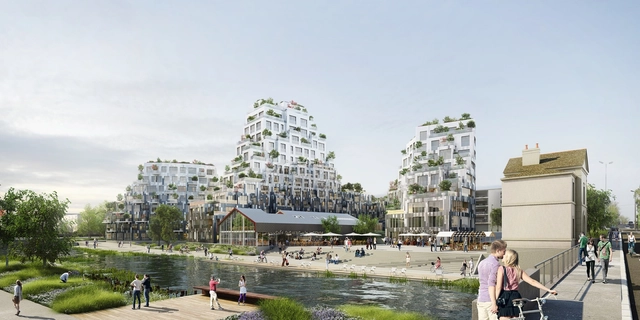
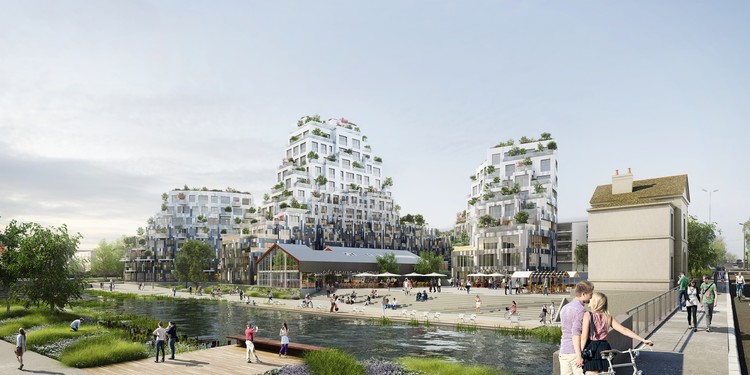
A team consisting of MVRDV, ALL + Giboire has won a competition for the project Ilot de l’Octroi, a new residential redevelopment in the city of Rennes, France that will transform the area into a socially adhesive green community along the Ille et Vilaine rivers.


https://www.archdaily.com/797871/mvrdv-wins-competition-in-france-with-residential-development-inspired-by-rock-formationsPatrick Lynch
12 Dollhouses That Trace 300 Years of British Domesticity

As part of a new exhibition at the National Building Museum in Washington D.C., twelve dollhouses tracing the history of British domesticity have been lent by London's Victoria & Albert Museum of Childhood. The show—Small Stories: At Home in a Dollhouse—spans 300 years and presents a miniature-sized, up-close-and-personal view of developments in architecture and design – from lavish country mansions, to an urban high-rise.


https://www.archdaily.com/797097/12-dollhouses-that-trace-300-years-of-british-domesticity-national-building-museum-vandaAD Editorial Team
Archimatika Architects Unveils Lively Plans for New Ukrainian Housing Project

Archimatika Architects has unveiled the plans for “Leopol Town,” a new housing project located on Styiska Street in Lviv, Western Ukraine. Overall, the project will include seven buildings, with 757 flats, shops, cafeterias, restaurants, and public access at the lower levels.
In an effort to combat the uncomfortable Soviet “sleeping neighborhood” feeling of the city, the project will feature open blocks, parceling, energy efficient systems, and sustainability principles to “invite nature in.”

s_balkonami_box2.jpg?1476151664 "Courtesy of Archimatika Architects")



https://www.archdaily.com/797083/archimatika-architects-unveils-lively-plans-for-new-ukrainian-housing-projectSabrina Santos
National Cities Confederation / Mira Arquitetos






-
Architects: Mira Arquitetos
- Area: 10488 m²
- Year: 2016
-
Manufacturers: Saint-Gobain, CPC Estruturas metálicas, Deca, Grademax, Hunter Douglas, +15
https://www.archdaily.com/796574/national-cities-congress-mira-arquitetosCristobal Rojas
a+u 2016:05 "Beginning with the House – 65 Architects’ Visions from Early Residential Works" (Special Issue)

This special edition of a+u takes an overview of early works, mostly houses, by 65 prominent architects around the world, including: Álvaro Siza, Richard Rogers, Glenn Murcutt, Valerio Olgiati, Lacaton & Vassal, Caruso St John, Smiljan Radic, ELEMENTAL, and Pascal Flammer. We asked each architect two questions – the visions they had when they designed the house, and how that vision has evolved over time.May 2016 Special Issue
https://www.archdaily.com/796008/a-plus-u-2016-05-special-issue-beginning-with-the-house-65-architects-visions-from-early-residential-worksRene Submissions