The museum and gallery visit has long been a highly curated experience. Visitors are guided through a carefully orchestrated sequence of rooms, with hand-picked works arranged to tell a specific narrative, supported by signage, graphics, scenography, and calibrated lighting. Even the rarely changed exhibitions - the permanent collections, also typically rely on a strong curatorial voice— led by noted artists or curators—to set institutional stance and shape interpretation.
At the same time, storage areas for museums and galleries are typically kept separately—often within the same building but under tightly controlled access, and not infrequently off-site in dedicated facilities, such as the Louvre Conservation Centre. These zones have long been understood as highly controlled spaces not only in terms of access, but also in relation to climate, humidity, archival order, handling protocols, maintenance, and repair. For fear of thefts and that the spatial, environmental, and sequencing requirements of the archive could be disturbed, storage has traditionally been somewhat secretive and primarily serves academic researchers and art practitioners by request. Rarely does the general public gain a comprehensive picture of the works safeguarded by any given institution.
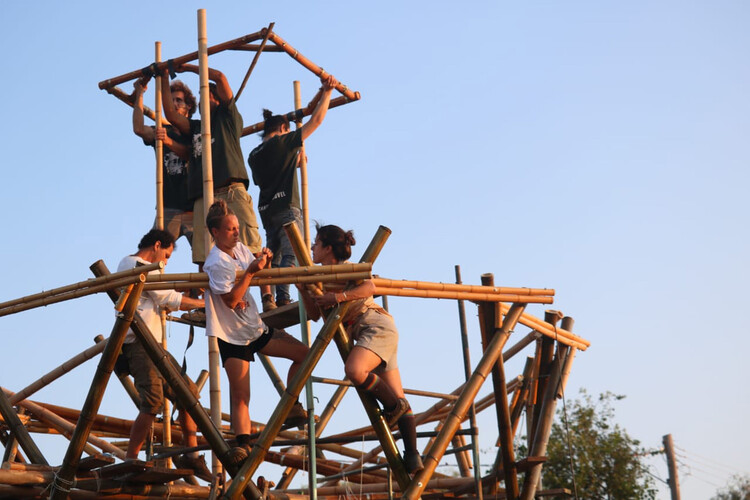
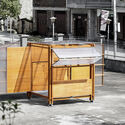
Construction group for the Circo-lô at the IDE Association, in Botucatu | SP. Photo: Tomaz Lotufo
Historically, the first universities in the contemporary model were established in Europe to educate elites for the State and the Church, rather than to promote social emancipation. With the rise of capitalism, they became privileged centers for producing and reproducing modern Western culture. However, from the 1960s onward—particularly after the student uprisings of May 1968—the academic focus shifted toward market-oriented values, displacing humanist and critical ideals. The humanities lost prominence, while technical fields gained central importance, often at the expense of reflecting on the social impact of their work.
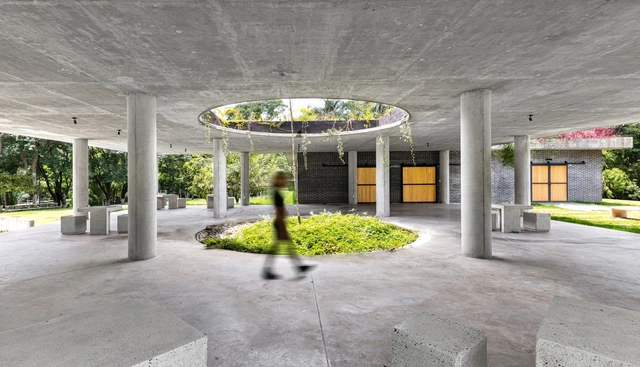
Community Development Center in Tapachula / Laboratorio de Acupuntura Urbana. Image
How do community centers emerge? Why do they often represent a need for the appropriation and development of society? In the pursuit of improving the quality of life in the most vulnerable communities, community centers present themselves as an alternative capable of providing healthcare, educational, cultural, and recreational services, along with spaces that contribute to the present and future development of communities. In Mexico, numerous community centers are created and supported by government institutions, civil foundations, or private companies, as well as co-management initiatives that aim to integrate children, youth, adults, and older adults into spaces for gathering, socializing, and recreation, where they can engage in activities from learning to developing individual and collective skills.
Sumayya Vally, architect, curator, and founder of Counterspace architecture office, joins the jury for the 2024 Obel Award. This international architectural prize, organized by the Henrik Frode Obel Foundation, honors projects that significantly impact people and the planet. The 2024 theme, "Architecture WITH," invites a re-examination of the architectural profession, emphasizing collaborative and co-creative processes that integrate diverse bodies of knowledge into the core of design. Vally's perspective on redefining architectural roles aligns with the theme's focus on non-hierarchical, co-creative approaches.
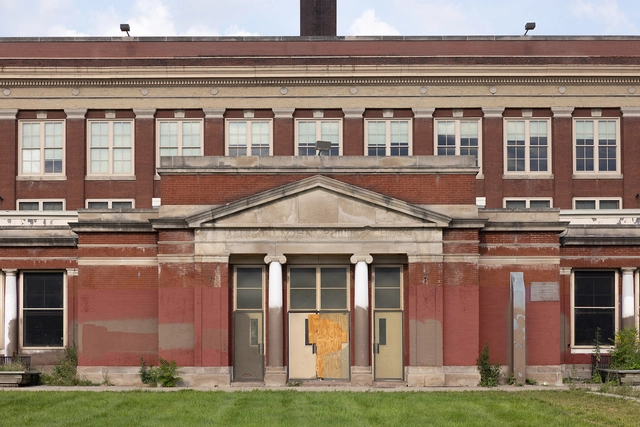
Borderless Studio, “Kohn School in Roseland,” Chicago, 2023. Digital photograph. Photo: David Schalliol. From the 2024 grant to Borderless Studio and MAS Context for the publication “Beyond Closure: Reimagining Possibilities for Chicago’s Closed Schools” . Image Courtesy of Graham Foundation
The Graham Foundation, based in Chicago, has allocated $390,000 in grants to support 33 innovative projects worldwide. These initiatives include exhibitions, publications, and presentations aimed at enriching the discourse in architecture and its role in society. The projects, undertaken by architects, artists, curators, and educators, span various cities such as Johannesburg, New York, Chicago, and others, reflecting a global perspective on contemporary architectural issues.
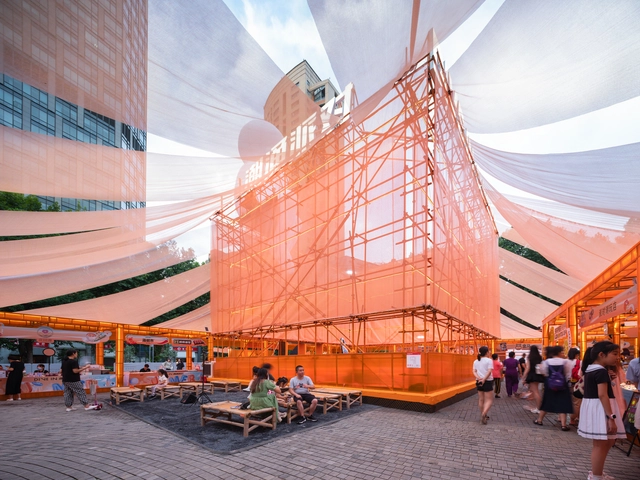
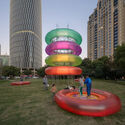
Ephemeral architectures, characterized by their temporary and flexible nature, have emerged as powerful tools for revitalizing urban spaces and fostering architectural creativity. These transient installations transform public areas, engaging communities, and prompting reflections on the potential futures of our cities. By temporarily transforming environments, ephemeral architectures encourage both architects and the public to reimagine the possibilities of urban living. This dynamic interplay, between the temporary and the permanent, challenges traditional architectural practices and opens up new avenues for sustainable and inclusive urban development.
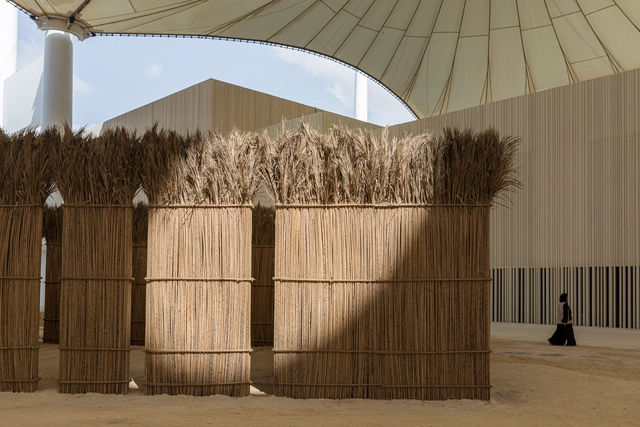
Courtesy of SCHOOL OF ARCHITECTURE AND URBAN PLANNING, NANJING UNIVERSITY
Reading a book is commonly seen as an individual activity, yet libraries have evolved to offer more than just book-lending services in the digital age. Public libraries have transformed into contemporary community centers, offering various social engagement opportunities while utilizing minimal urban space. Emphasizing the importance of building a sense of community, these institutions prioritize connecting individuals with common interests.
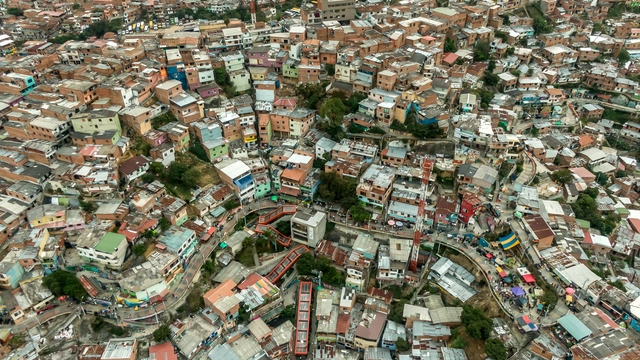
CityMakers, The Global Community of Architects Who Learn from Exemplary Cities and Their Makers, is working with Archdaily to publish a series of articles about Barcelona, Medellin, and Rotterdam. The authors are the architects, urban planners, and/or strategists behind the projects that have transformed these three cities and are studied in the "Schools of Cities" and "Documentary Courses" made by CityMakers. On this occasion, Victor Restrepo, Coordinator of CityMakers in Medellin, presents his article "Medellin: A Case Study".
Medellín stands as an inspiring example for many cities worldwide. It is a city that transitioned from deep collective fear to hopeful enthusiasm for urban and social life characterized by quality and coexistence. The city's crisis has always been associated with violence and drug trafficking. However, this crisis is more structural and profound, it responds to many more factors, some of which are associated with the accelerated growth of its population, as in many Latin American cities.
Moving away from top-down approaches, contemporary practices embrace more inclusive and participatory models and design processes. Participatory planning, a notion that prioritizes involving the entire community in the decision-making process, has earned widespread recognition and popularity globally. Cities across the world have interpreted participatory planning to fit their unique needs, using technology and government resources to expedite and enhance the process.
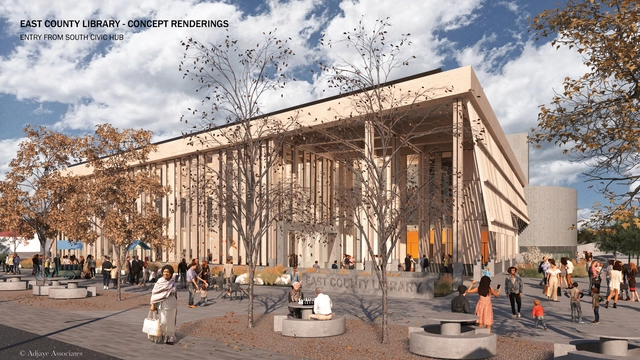
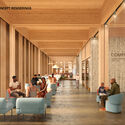
Adjaye Associates, in collaboration with Holst Architecture, the prime architect of record, have unveiled the first renderings for the new East County Library in Portland, Oregon, a new facility that will provide a diverse range of services and programming. The design of the 95,000-square-foot building is informed through extensive community engagement and feedback. Several local organizations aid these efforts by organizing public community events, focus groups, teen outreach, and surveys. As the project is currently in the schematic design phase, the images presented are early drafts, likely to change to reflect the input received.
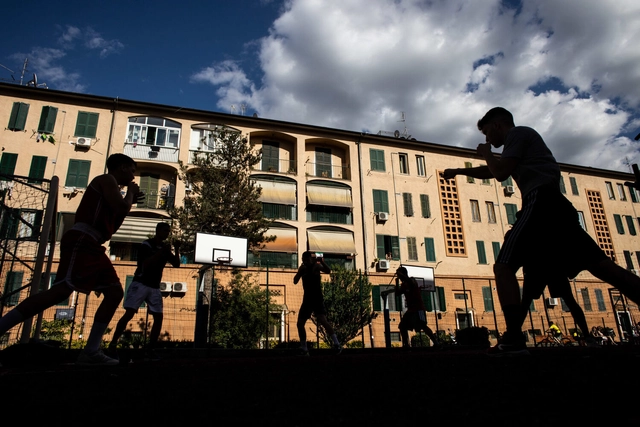
On first impression, Quarticciolo is a handsome district in Rome. A human-scaled public housing complex comprising red and yellow midrise buildings arranged around internal courtyards and gardens. Designed by architect Roberto Nicolini during the Fascist regime, this village feel isn’t found in the massive postwar residential schemes elsewhere in the capital. Like other rationalist architects, Nicolini was inspired by the ancient city. Basing the layout on a classical orthogonal grid pattern, he allowed just one tall structure, the Casa del Fascio (the Fascist party headquarters), a fortress tower that looms over the main square. Most of the buildings were constructed between 1938 and 1943 to house a working-class population that was forcibly moved from Rome’s historic center to the outskirts to make way for Mussolini’s grand public works.
https://www.archdaily.com/994464/rebuilding-and-destigmatizing-romes-quarticciolo-neighborhoodMarina Engel
When the Aga Khan Award for Architecture (AKAA) announced its winners of the 2022 edition, 20 projects were selected for their excellence in the fields of contemporary design, social housing, community development, and preservation and improvement of the environment. Among them, one project in Jhenaidah, Bangladesh, managed to capitalize on the strength of the local community to reverse the ecological degradation of its riverscape and create a functional and socially inclusive public space along the riverbanks. ArchDaily’s Managing Editor, Christele Harrouk, had the chance to interview Suhailey Farzana, and Khondaker Hasibul Kabir co-founders of Co.Creation.Architects, and Rubaiya Nasrin from Platform of Community Action and Architecture, POCAA, part of the team behind the Co-creation of Urban Spaces by the Nobogonga River, in Bangladesh. The project also won the 5th category of the UIA 2030 Award for the Access to Green and Public Spaces.
There are significant deficiencies in how our cities worldwide operate and serve the people who live in them. Bureaucracies, red tape, and other limiting processes that publicly drive our cities towards their futures are often the aspects that cause change to happen at such a slow pace that by the time an issue is addressed, five more have popped up in its place. Over time, society has come to accept that when the systems we have in place don’t do much to serve our needs, it forces us to turn to alternatives to advocate for change. Some urban issues have found the best solutions after initiating social movements and the formation of grassroots groups.
Lucía Nogales is the general coordinator of Ocupa tu Calle (Occupy your Street) —an UN-Habitat, Avina Foundation-supported initiative promoted by Lima Como Vamos— which focuses on 'citizen urbanism' for inclusive and resilient cities in Latin America.
Mogilevich’s study of how the Lindsay administration leveraged political and on-the-ground will to build pocket parks, stump for closing streets and introducing outdoor dining, and reducing racial economic inequality could point the way forward for modern architects and planners. Image Courtesy of Minnesota Press
In this week's reprint from the Architect's Newspaper, author Karen Kubey, an urbanist specializing in housing and health questions if the invention of Public Space is "Invented Or Agreed Upon?" Basing her ideas on a book by Mariana Mogilevich, The Invention of Public Space, the article asks if public spaces are a product of negotiation in the city.
When designing community spaces, the architectural concept can easily clash with the user's experience. Therefore, engaging the community and future users in the project development and design process is a way of adding different perspectives to the architect's vision towards a more intelligent architecture.
The terms space and place are often used interchangeably, but they can mean different things depending on the context in which they are used. Placemaking shows that the creation of places transcends the material dimension and involves aspects such as sociability, uses, activities, access, connections, comfort, and image, to create bonds between people and a sense of place.