If buildings could talk, what would they say about us? Cathedrals of Culture, a six part collection of films recently premiered at this year's Berlin International Film Festival, "offers six startling responses to this question". The project, filmed entirely in 3D, allows "six iconic and very different buildings to speak for themselves, examining human life from the unblinking perspective of a manmade structure".
Paris: The Latest Architecture and News
Six 'Cathedrals of Culture' Tell Their Stories in New 3D Film
https://www.archdaily.com/479699/filming-six-iconic-cathedrals-of-cultureJames Taylor-Foster
The 9 Most Controversial Buildings of All Time
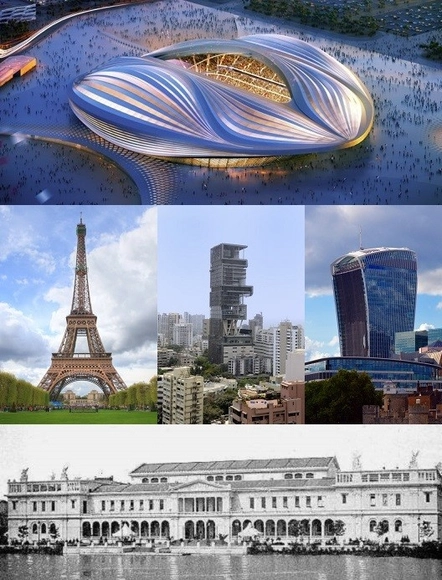
It is now just over a year since the unveiling of Zaha Hadid's Al-Wakrah Stadium in Doha, Qatar, and in the intervening twelve months, it seems like the building has never been out of the news. Most recently, remarks made by Hadid concerning the deaths of construction workers under Qatar’s questionable working conditions created a media firestorm of legal proportions. Hadid’s stadium has been widely mocked for its ‘biological’ appearance, not to mention the fact that the 2022 World Cup in Qatar, for which the stadium will be built, has encountered a storm of controversy all of its own.
The criticism surrounding Al Wakrah has prompted us to look far and wide for the world’s most debated buildings. Could Al Wakrah be the most controversial building of all time? Check out ArchDaily’s roundup of nine contenders after the break.
Find out which buildings top our controversial list after the break
https://www.archdaily.com/573271/the-9-most-controversial-buildings-of-all-timeFinn MacLeod
ZAC del Lilas Multi-Purpose Building / SCAPE
.jpg?1415937638&format=webp&width=640&height=580)
.jpg?1415937580 "© Francesco Mattuzzi")
.jpg?1415937827 "© Francesco Mattuzzi")
-(1).jpg?1415938058 "© Francesco Mattuzzi")
.jpg?1415937957 "© Francesco Mattuzzi")
.jpg?1415937638)
https://www.archdaily.com/567698/zac-del-lilas-multi-purpose-building-scapeDaniel Sánchez
Zac Boucicaut In Paris / Ameller Dubois
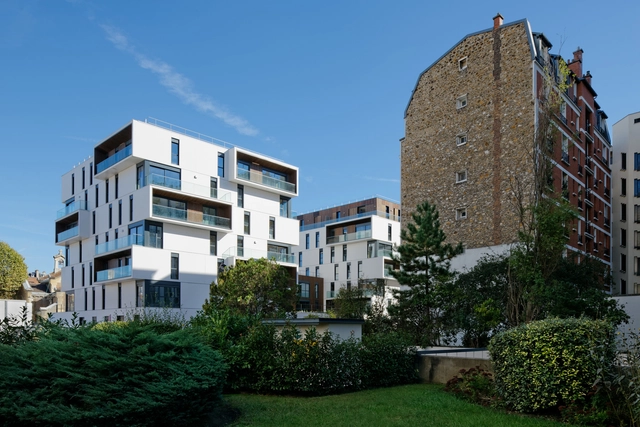


https://www.archdaily.com/568711/zac-boucicaut-in-paris-ameller-dubois-and-associes-architectesDaniel Sánchez
Paris' City Council Rejects Herzog & de Meuron's 180-Meter "Triangle Tower"

Widening the debate on whether or not Paris should preserve its 19-century skyline or “embrace innovation,” Parisian city council members have rejected the controversial, 180-meter “Triangle Tower” designed by Herzog & de Meuron. Despite the 83-78 vote, the fight carries on; Mayor Anne Hidalgo has declared the veto to be invalid and hopes a new round of balloting will rule in favor of the tower. Though, in a city that fears of loosing its “existing urban fabric to skyscrapers,” it seems unlikely that the tower will be built.
https://www.archdaily.com/568354/paris-city-council-rejects-herzog-and-de-meuron-s-180-meter-triangle-towerKarissa Rosenfield
Climb Inside Numen/For Use's Membrane of Packing Tape at Palais de Tokyo in Paris

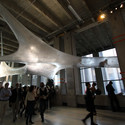
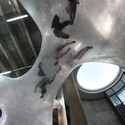
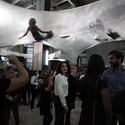
They began with a single roll of tape, frenetically navigating the space between columns with the help of a ladder and a lot of creativity. Ten days and twelve sets of hands later, Tape Paris was completed at Palais de Tokyo for 'Inside,' an exhibition of site-specific projects designed to be interactive and introspective. Tape Paris delves into the physical and psychological experience of interior space through an experiential model of exploration. Visitors travel through a matrix of elastic tunnels suspended precariously above the traditional exhibition space, as guests observe their movements from below. The biomorphic skin is a playground for the senses, offering opportunities to climb, relax, and discover.
Enter the elastic world of Tape Paris after the break

https://www.archdaily.com/567795/climb-inside-numen-for-use-s-membrane-of-packing-tape-at-palais-de-tokyo-in-parisFinn MacLeod
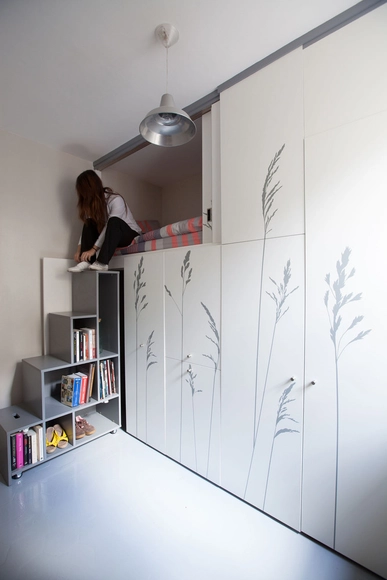
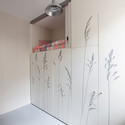
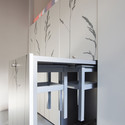
Tiny Apartment In Paris / Kitoko Studio



-
Architects: Kitoko Studio
- Area: 8 m²
- Year: 2014
https://www.archdaily.com/562119/tiny-apartment-in-paris-kitoko-studioKaren Valenzuela
"Surprise Us!" City of Paris Invites Architects To Propose Innovative Urban Projects
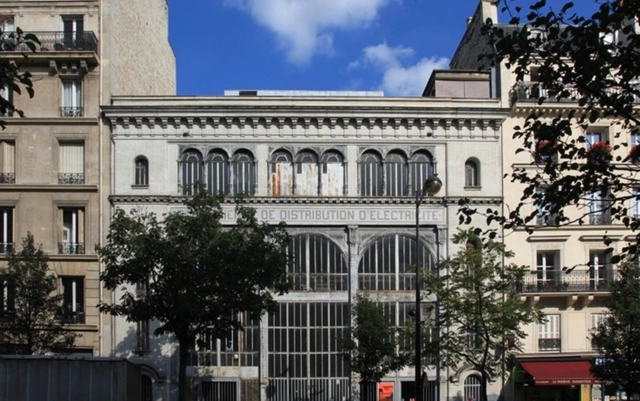
The City of Paris has called upon the architects of the world to propose "innovative urban projects" to reimagine the city's urban future. As the first competition of its kind in the world, Mayor Anne Hidalgo and her Deputy, Jean-Louis Missika, will "select and implement the new forms of buildings that will shape the future of Paris," putting innovation at the top of the criteria. Offering 23 sites, located in the centre of Paris and on the peripheries, the City is convinced that "the challenges faced by the world can be addressed through local answers." According to the Mayor, "from today, world creators are given carte blanche to reinvent the ways of living, working and trading in Paris." "Surprise us!"
https://www.archdaily.com/564483/surprise-us-city-of-paris-invites-architects-to-propose-innovative-urban-projectsJames Taylor-Foster
Centre Pompidou To Open Design and Architecture Gallery

Yesterday, during the opening of a new photography gallery, Centre Pompidou president Alain Seban announced the contemporary art museum will soon open a new design and architecture gallery inside the famed Renzo Piano- and Richard Rogers-designed building. “Eventually, there should be almost no offices in the building, and we'll keep only the technical facilities that are strictly indispensable," said Seban. “When allocating the spaces, the works and the visitors have to take precedence."
https://www.archdaily.com/564893/centre-pompidou-to-open-design-and-architecture-galleryKarissa Rosenfield
Cultural and Sports Center / Bruther
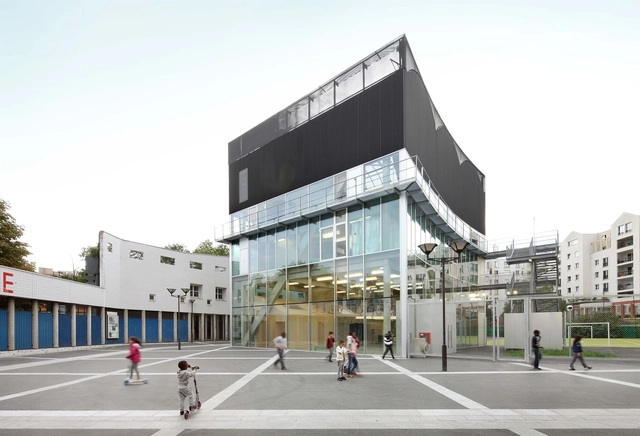


https://www.archdaily.com/559617/cultural-and-sports-center-brutherDaniel Sánchez
Video: French Cities Come to Life in Mayeul Akpovi's Time-Lapse Movies
These mesmerizing time-lapse videos by photographer Mayeul Akpovi allow you to see several French cities like never before. Combined with captivating soundtracks, the videos show the architecture of Paris, Marseille and Lyon throughout the day with changing light and varying levels of activity. Above, Part I of Paris in Motion displays shots of clouds moving across the sky, reflections on the Le Grande Louvre, La Grande Arche. Check out the remaining six videos after the break.
https://www.archdaily.com/563519/video-french-cities-come-to-life-in-mayeul-akpovi-s-time-lapse-moviesEvan Rawn
Diller Scofidio + Renfro's "Musings on a Glass Box" Opens in Paris
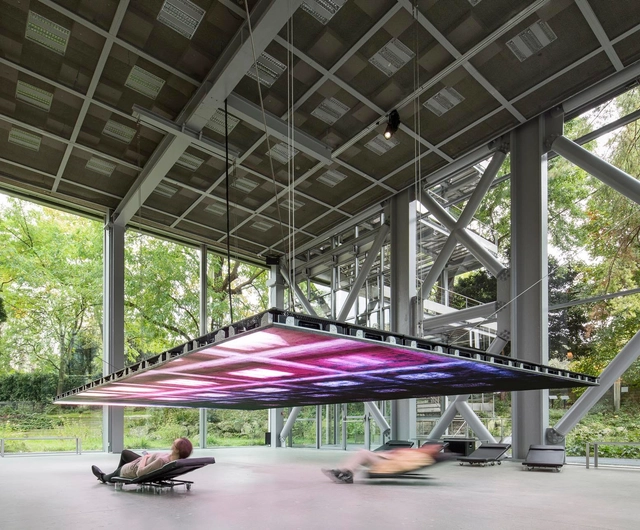
In celebration of the Fondation Cartier pour l’art contemporain’s 30th anniversary, Diller Scofidio + Renfro has installed an immersive exhibition that encourages visitors to experience the Jean Nouvel-designed, glass and steel museum building in an entirely new way.
“The Fondation Cartier building designed by Jean Nouvel will be used as raw material for their work, a first in the history of the institution. Musings on a Glass Box is a complex work occupying the entire ground floor of the Fondation Cartier, where a disturbance in the ceiling will trigger a surprising reaction. The result is an immersive environment, including an integral acoustic component by American composer David Lang and sound designer Jody Elff, that works with the building’s architecture to raise questions about transparency, perception, and one’s relation to space.”
A statement from Diller Scofidio + Renfro, after the break.
https://www.archdaily.com/563587/diller-scofidio-renfro-s-musings-on-a-glass-box-opens-in-parisKarissa Rosenfield
Paris- Quai de l'Oise / Agence VEA – Architects
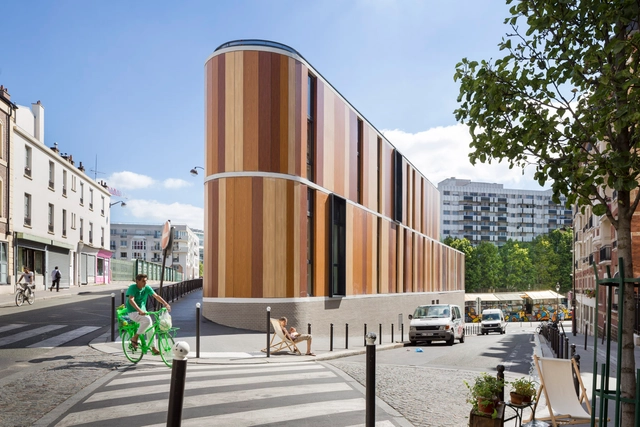

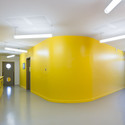
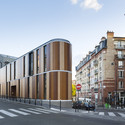
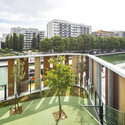

https://www.archdaily.com/560096/paris-quai-de-l-oise-agence-vea-nil-architectsDaniel Sánchez
Sou Fujimoto Constructs Inhabitable Nomadic Structure for Parisian Art Fair
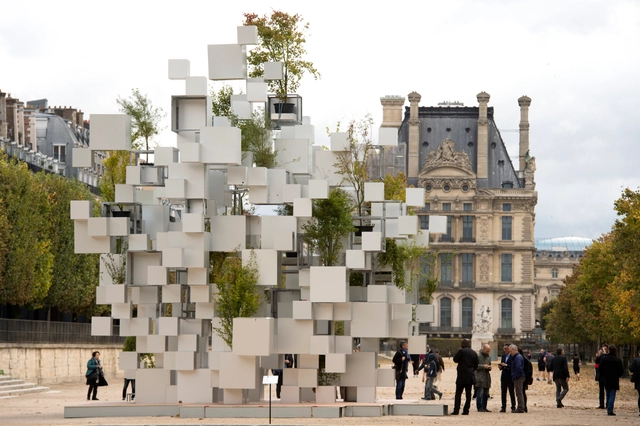
Over the weekend, Japanese architect Sou Fujimoto exhibited an inhabitable sculpture of stacked and suspended aluminum cubes as part of the FIAC art fair in the Parisian Jardins des Tuileries’ gardens. The installation, “Many Small Cubes” is his first project in Paris and was commissioned by the Philippe Gravier art gallery as an exploration of nomadic structures and Sou Fujimoto’s concept of bringing architecture closer to nature.
"The floating masses of Many Small Cubes creates a new experience of space, a rhythm of flickering shadows and lights like the sun filtering through leafy trees,” described Sou Fujimoto.
https://www.archdaily.com/561811/sou-fujimoto-constructs-inhabitable-nomadic-structure-for-parisian-art-fairKarissa Rosenfield
Strato Office Block / Hardel et Le Bihan Architectes

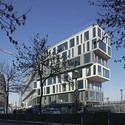

-
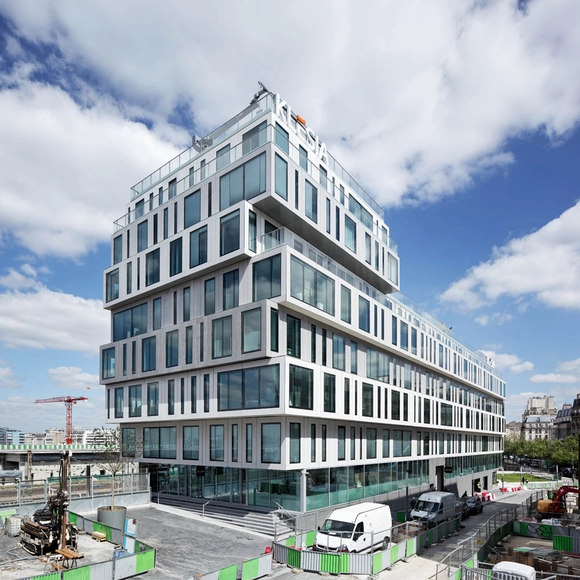
Architects: Hardel et Le Bihan Architectes
- Area: 12500 m²
- Year: 2014
-
Manufacturers: Alumet
https://www.archdaily.com/557751/strato-office-block-hardel-et-le-bihan-architectesDaniel Sánchez
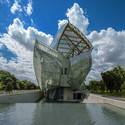
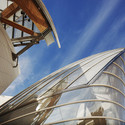
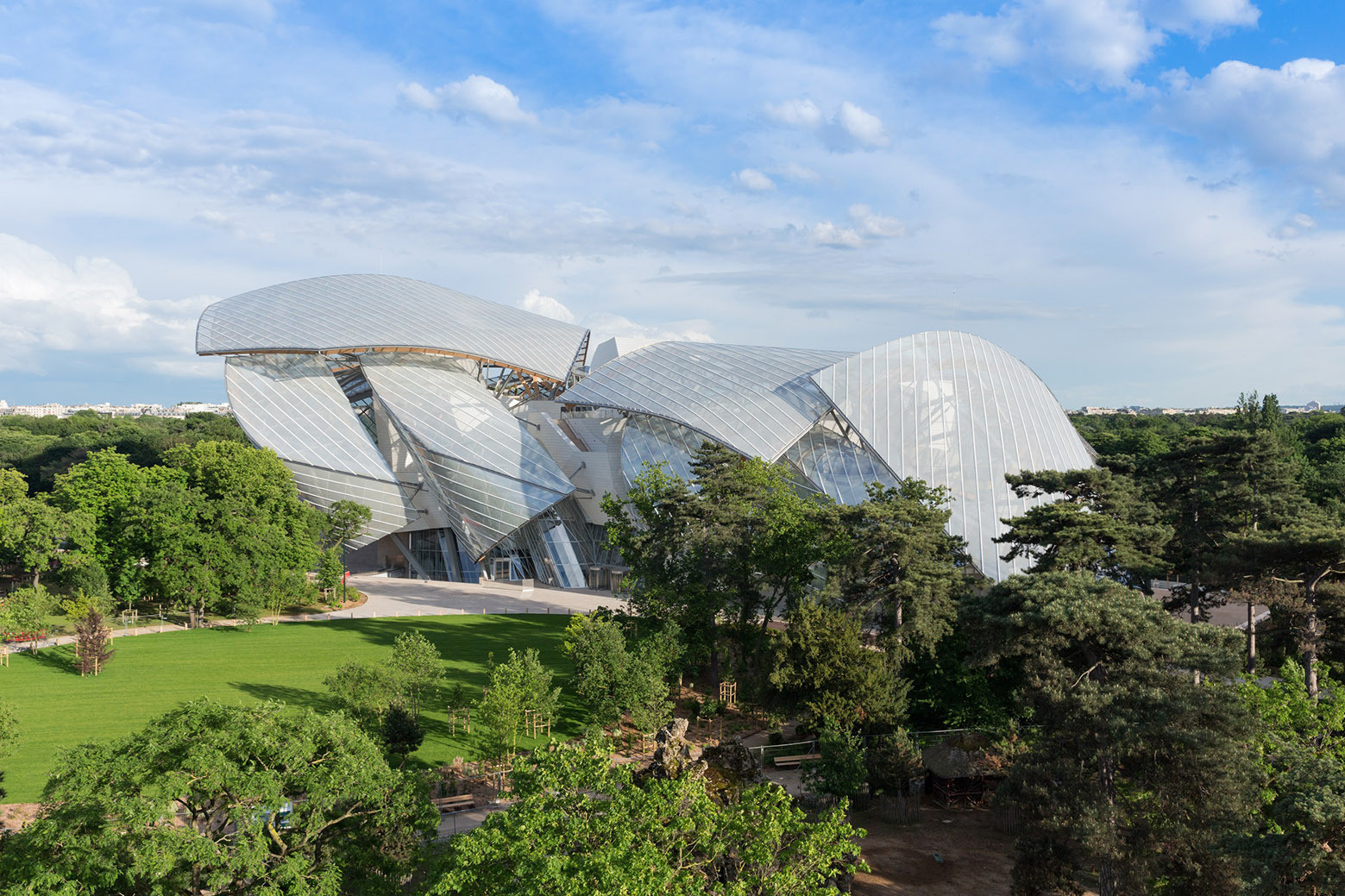
Gehry's Fondation Louis Vuitton in Paris: The Critics Respond
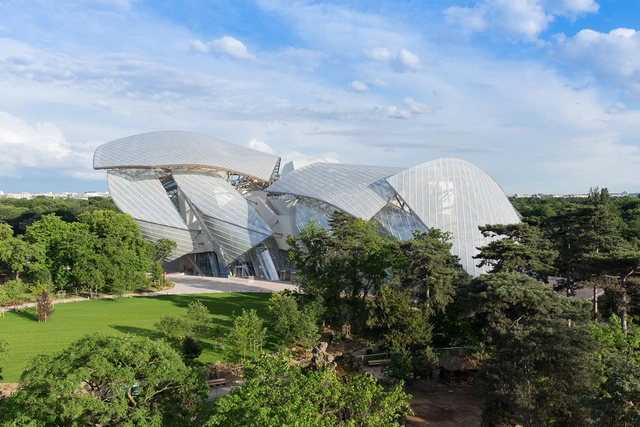
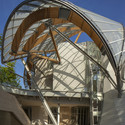
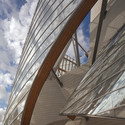
The people behind Frank Gehry's Fondation Louis Vuitton (FLV) in Paris, which is set to officially open on the 27th October 2014, recently invited a band of architecture critics to take a look around and pen their thoughts. Gehry's bold approach to architectural form, most evident in buildings like the Guggenheim Museum in Bilbao and the Walt Disney Concert Hall in LA, matches the foundation's aim to "promote and support contemporary and artistic creation" in France. According to their website, they in particular embody "a passion for artistic freedom." How, then, has the enormous sailed structure, challenged by local opposition from the outset, settled into its Parisian parkland surroundings?
See what The Guardian's Oliver Wainwright, The Observer's Rowan Moore, Vanity Fair's Paul Goldberger, The LA Times' Christopher Hawthorne, as well as the Architectural Digests' Mayer Rus, had to say about Gehry's latest completed building after the break.
https://www.archdaily.com/559473/gehry-s-fondation-louis-vuitton-in-paris-the-critics-respondJames Taylor-Foster
Preserving a Place for Protest in Paris

Following a three-year redesign, the Place de la République in Paris reopened this year, welcoming back the regular organized protests that make it one of the most important public spaces in Paris. For the designers of the space, TVK agency, it was important not to infringe on what many Parisians consider their inalienable right to protest - however a question remained over how the square could be more amenable to other uses at the same time. In this article, originally published by Metropolis Magazine as "Place for Protest," Veronique Vienne explores how TVK agency allowed Parisians to have their cake and let them eat it too.
In Paris, rituals of political discontent are traditionally celebrated on Place de la République. It is a favorite kick-off point for the countless marches that define democracy in the French capital. But before taking to the street in a slow-moving procession, crowds block traffic all around the esplanade, creating a gridlock that can cripple the city from Sacré Coeur to the Opéra. Meanwhile, citizens get to unfurl banners and shout slogans. It’s legal, good, clean fun.
Well, no more.
https://www.archdaily.com/557185/preserving-a-place-for-protest-in-parisVeronique Vienne
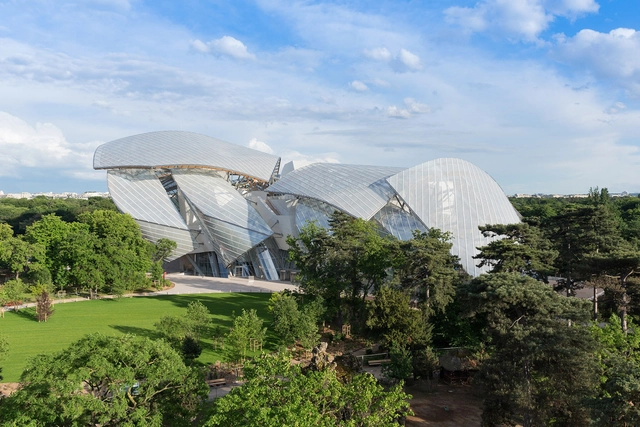
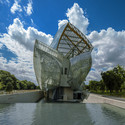
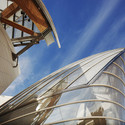
Fondation Louis Vuitton / Gehry Partners


-
Architects: Gehry Partners
- Area: 11700 m²
- Year: 2014
-
Manufacturers: Ductal®, HASSLACHER NORICA TIMBER, HESS TIMBER, Kuraray, Falcon Lifts, +6
-
Professionals: Vinci, Atelier Lieux Et Paysages, Gehry Technologies, L'Observatoire International, Ingelux, +6
https://www.archdaily.com/555694/fondation-louis-vuitton-gehry-partnersCristian Aguilar