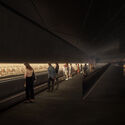
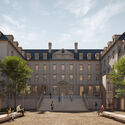
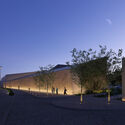
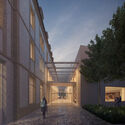
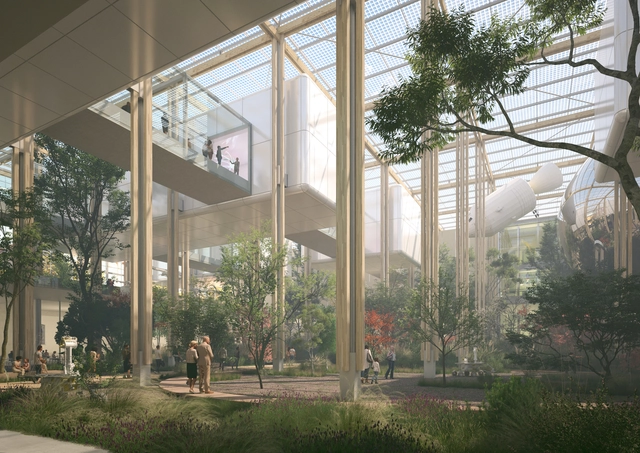
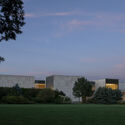
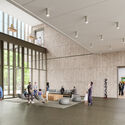
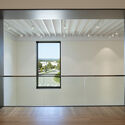
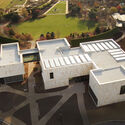
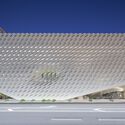
Diller Scofidio + Renfro (DS+R) has unveiled their proposal for the expansion of The Broad, a contemporary art museum founded in 2015 by philanthropists Eli and Edythe Broad on Grand Avenue in downtown Los Angeles. The project is set to adapt the existing museum, also designed by Diller Scofidio + Renfro, to the growing expectations of the public, as the institution has far exceeded its projections, now regularly attracting nearly four times more visitors than originally envisioned. The intervention aims to enhance public accessibility and offer the opportunity to host live performances and events, while also accommodating the institution’s growing collection. The expansion is expected to open before the 2028 Summer Olympics.
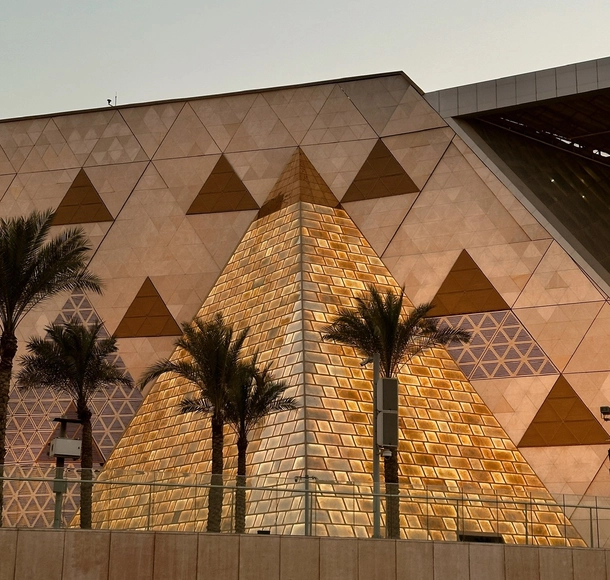
Showcasing millennia of Egyptian history and culture, the Grand Egyptian Museum is a monumental project in Cairo, Egypt, designed by the Irish firm Heneghan Peng Architects. Home to over 100,000 artifacts spanning Egypt’s storied past, the museum is on the brink of opening its doors to the public after multiple setbacks. Recent updates offer glimpses of the structure’s progress, with photographs captured by Egyptian photographer Farida Bustani providing sneak peeks of the architectural landmark.
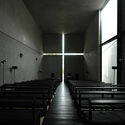
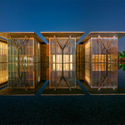
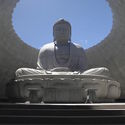
If there is any consistent factor in his work, says Pritzker-winning architect Tadao Ando, then it is the pursuit of light. Ando’s complex choreography of light fascinates most when the viewer experiences the sensitive transitions within his architecture. Sometimes walls wait calmly for the moment to reveal striking shadow patterns, and other times water reflections animate unobtrusively solid surfaces. His combination of traditional Japanese architecture with a vocabulary of modernism has contributed greatly to critical regionalism. While he is concerned with individual solutions that have a respect for local sites and contexts Ando’s famous buildings – such as the Church of the Light, Koshino House or the Water Temple – link the notion of regional identity with a modern imagining of space, material and light. Shoji walls with diffuse light are reinterpreted in the context of another culture, for instance, filtered through the lens of Rome’s ancient Pantheon, where daylight floods through an oculus. Ando’s masterly imagination culminates in planning spatial sequences of light and dark like he envisioned for the Fondation d’Art Contemporain François Pinault in Paris.
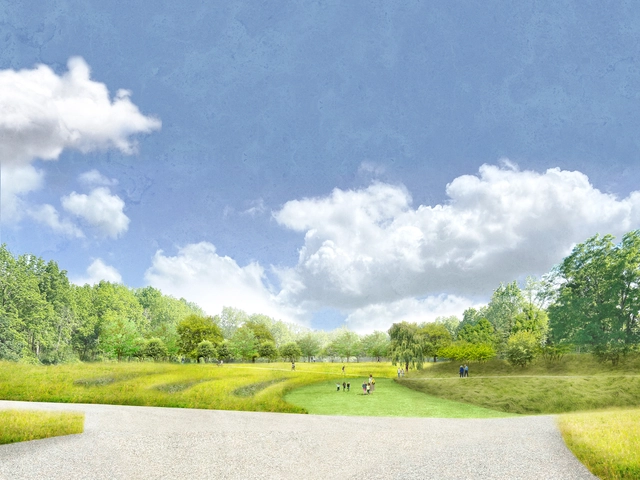
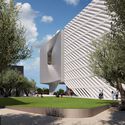
Rendering of Dia Beacon’s south landscape. Image Courtesy of Studio Zewde, 2024
Dia Art Foundation announced a major landscape project to reimagine the land at Dia Beacon, New York. Commissioned landscape architect Sara Zewde of Studio Zewde aims to go beyond the simple arrangement of attractive plants and integrate ideas of ecology, culture, and people into the design. Taking over the museum’s 32-acre campus, the project will create an expanded outdoor park, free to access for visitors and locals alike, complete with native meadows, sculptural landforms, and winding pathways. The project, which has been recently extended to also include the museum’s eight back acres, is expected to open to the public in 2025.
Brooklyn-based firm SO-IL has revealed the design for a new campus art museum at Williams College in Massachusetts, created to become a primary teaching resource for the institution renowned for its art history program. Since its inauguration in 1926, the Williams College Museum of Art has gathered an expansive collection of over 15,000 works. Through the design of SO-IL, the museum will be able to move into its first freestanding purpose-built home. In May 2024, the museum will present an exhibition on SO-IL’s design.
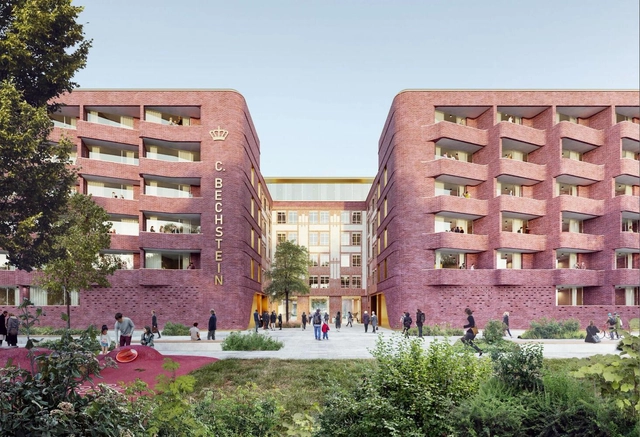
GRAFT Architects has just won the competition to design the new Carl Bechstein Music Campus. Located centrally in Berlin, the Carl Bechstein Foundation’s main goal with the campus is to create a cultural hub entirely devoted to piano music. Serving as a focal point for the Bechstein Brand, established in 1853 and known for its variety of Bechstein pianos, this campus will serve as a focal point and a new headquarters for the foundation.
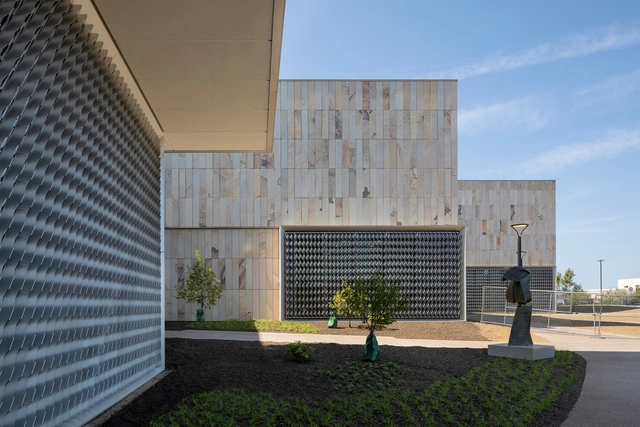
The Joslyn Art Museum in Nebraska announced that the restoration and expiation works led by Snøhetta and Alley Poyner Macchietto Architecture (APMA) are nearing completion, as the transformed institution is scheduled to reopen on September 10, 2024. The new 42,000-square-foot Rhonda & Howard Hawks Pavilion, designed by Snøhetta and APMA will add new gallery spaces to Nebraska’s largest art museum, becoming the centerpiece of the large-scale project for reimagining the visitor experience.
Many buildings often fall into disuse due to our cities' constant economic, social, and technological changes. The programmatic inconsistency of current times demands great versatility and adaptability from our infrastructures, increasingly leading projects to become uninhabited, and left to abandonment and decay.
Next, we present a series of 20 Latin American projects in which old warehouses, homes, prisons, mills, and markets were recovered and transformed into Cultural Centers, Museums, and Galleries.
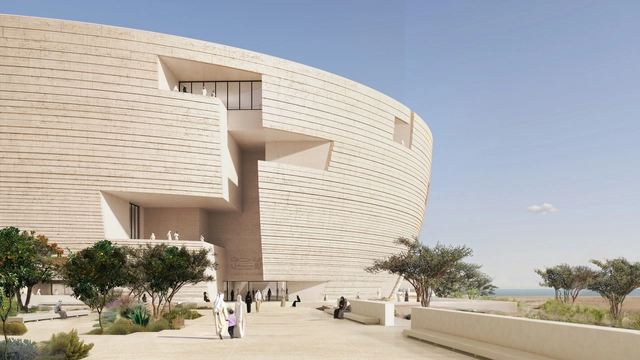
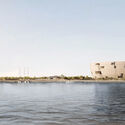
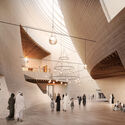
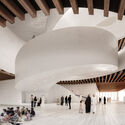
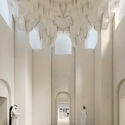
Qatar Museums has released renderings showcasing the future Lusail Museum, designed by Swiss architecture office Herzog & de Meuron. The museum will house one of the largest collections of Orientalist art, exploring the movement of people and ideas across the globe and over the centuries. The new institution also strives to provide opportunities for high-level study for scholars, academics, policymakers, and curators. Consequently, the building is conceived as “a vertically layered souk, or miniature city contained within a single building,” aiming to encourage conversations, debates, and meditation on global issues.
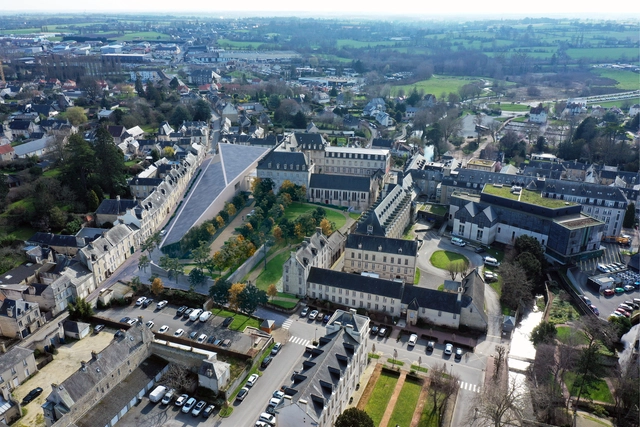
RSHP has unveiled the urban and architectural design for the new Bayeux Tapestry Museum. The intervention is created to house and display the Bayeux Tapestry, an embroidered cloth measuring 70 meters in length and depicting the events leading up to the Norman Conquest of England in 1066 and culminating in the Battle of Hastings. The almost 1000 years-old artifact is also included in UNESCO’s “Memory of the World” list. The project proposes a contemporary extension of the 17th-century seminary where the Musée de la Tapisserie de Bayeux is located.
Science Forest / ADAT Studio. Image Courtesy of ADAT Studio
In the contemporary context, museums face contradictory sets of ideas: becoming attractions on and of themselves but presenting an understated image that shifts the attention to the exhibits, creating a safe and protected environment for the artifacts, yet opening them up to the public, becoming repositories of history yet catalysts for innovation. Searching for the balance between all of these constraints has resulted in the flourishing of diverse types of museums and cultural institutions, from those dedicated to the remembrance of a single event or persona to temporary homes for cultural events or spaces that expand their cultural offering beyond exhibition areas.
This curated selection of Best Unbuilt Architecture highlights projects submitted by the ArchDaily community that demonstrate the fusion of art, technology, and innovation within the realm of museums and cultural centers. Among the featured designs are works from renowned architectural offices, including CAA architects, NextOffice – Alireza Taghaboni, and Fentress Architects, along with several emerging firms. Ranging from a sculptural art museum in Dubai to a local cultural and recreational complex in Senegal, or an immersive science museum in Rome, Italy, this diverse compilation strives to showcase the spectrum of scales and purposes of cultural institutions.
Designed by MAD Architects, the FENIX Museum of Migration is set to be inaugurated in 2025 in Rotterdam’s City Harbor. The purpose of the institution is to showcase and highlight the stories of global migration through encounters with art, architecture, photography, and history. The museum broke ground in 2020 when the first images of the proposal were also released. MAD Architects is working with Bureau Polderman for the restoration of the historic warehouse dating back to 1932, which now represents the base and starting point for the museum experience.
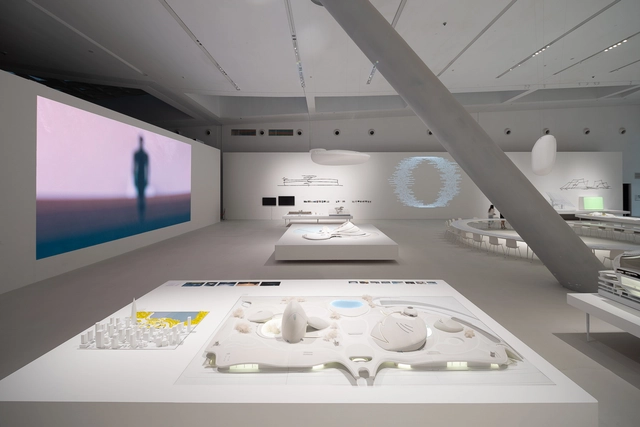
The Shenzhen Museum of Contemporary Art and Urban Planning in China (MoCAUP) has recently opened an exhibition titled “Ma Yansong: Landscapes in Motion.” This retrospective showcases the work of MAD Architects, led by Ma Yansong, Dang Qun, and Yosuke Hayano, spanning nearly two decades and 52 projects. Running until December 17, the display is envisioned as a platform for imaginative exploration of future urban life.
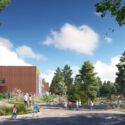
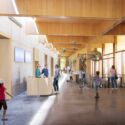
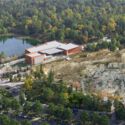
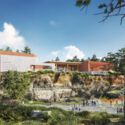
Ennead Architects and KSS Architects have just unveiled the design for the Jean & Ric Edelman Fossil Park Museum of Rowan University. The museum is located at the heart of a 65-acre fossil park in Mantua Township, New Jersey. Spanning 44,000 square feet, the program focuses on exploration, preservation, and education. Moreover, it allows citizens and scientists to have the unique opportunity to participate in fossil excavation alongside research actively. The visitor and the researchers will study the events leading to the fifth mass extinction, all within the confines of a 66-million-year-old former quarry. The project is scheduled to open its doors to the public in early 2024, positioning itself as a symbol of scientific exploration and environmental stewardship.
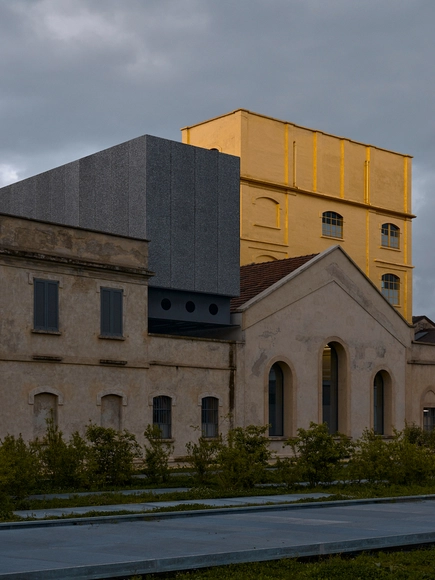
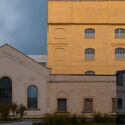
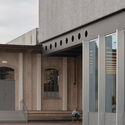
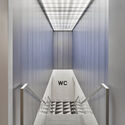
In 2018, OMA opened the Fondazione Prada in Milan, Italy, housed within a former gin distillery established in 1910. The project which includes a statement facade cladded in 24-carat gold leaf and camouflaged mirrors, comprises the renovation of seven buildings in the Largo Isarco industrial complex on Milan’s southern outskirts, making the foundation neither a preservation project nor a new architecture. Recently, photographer Bahaa Ghoussainy captured the infamous structure in his new architectural photo series.





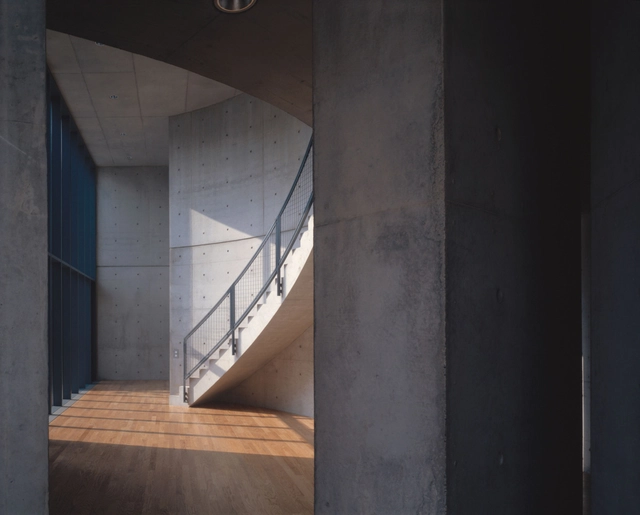
.jpg?1555434139 "Koshino House, Ashiya-shi / Japan. Image © Kazunori Fujimoto")