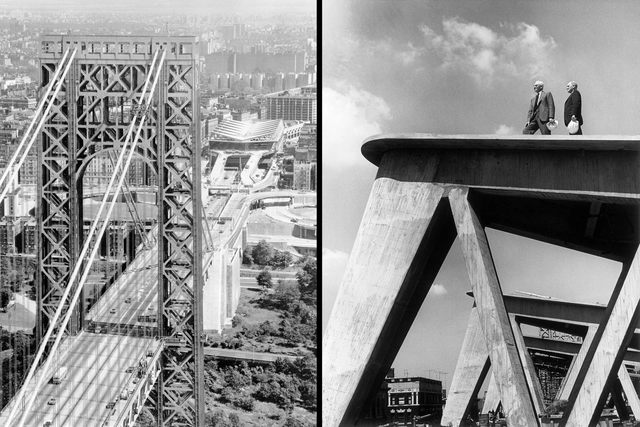
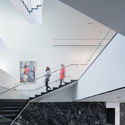
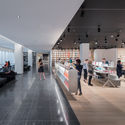
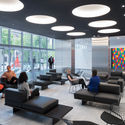
Building of the Day: The George Washington Bridge Bus Station (Credit: The Port Authority of New York and New Jersey)
During the month of October, a host of events will take place throughout the five boroughs of New York City as part of the month-long architecture and design festival, Archtober. The well-known Building of the Day series of walking tours continues with highlights including the Sea Glass Carousel, Freshkills Park, and the George Washington Bridge Bust Station.
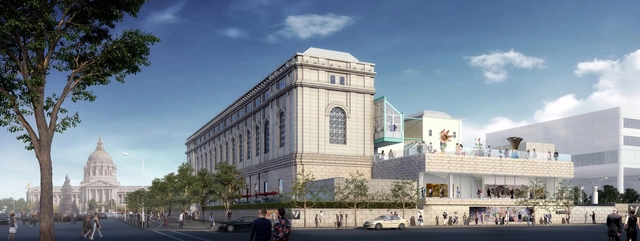
San Francisco’s Asian Art Museum has unveiled plans for a $38 million renovation and addition project that will transform the institution’s exhibition and educational programs while reconnecting the building to its Civic Center location. Designed by architect Kulapat Yantrasast of wHY, the project consists of a new 13,000-square-foot exhibition Pavilion and Art Terrace clad in a rusticated gray terracotta facade that echoes the design language of the original beaux arts building.
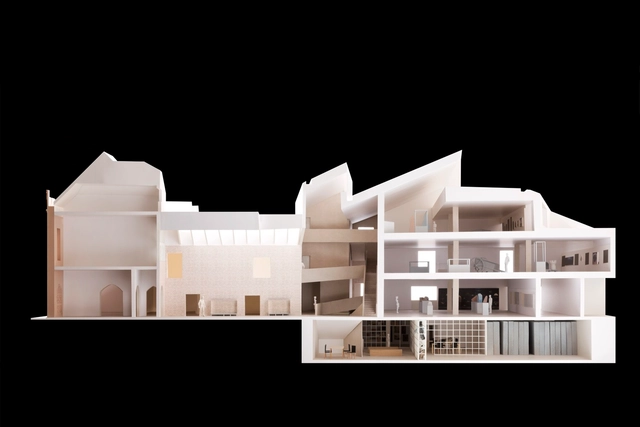
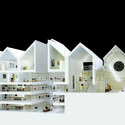
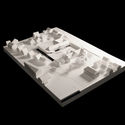
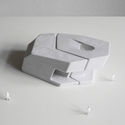
Model showing the approved renovation and addition. Image Courtesy of Carmody Groarke
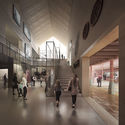
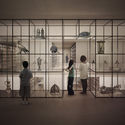
The Dorset County Museum in Dorchester, England has received full planning approval for a 2,500-square-meter renovation and expansion project led by London-based architects Carmody Groarke. The project will consist of a sensitive refurbishing of the historic museum as well as contemporary architectural interventions that will create four new stories of naturally-lit galleries and an improved circulation flow throughout the building.
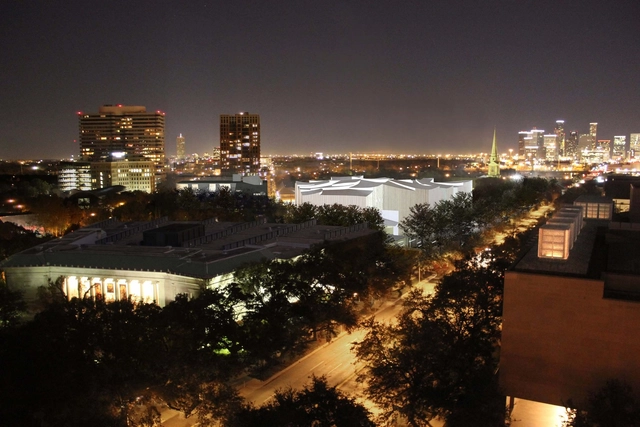
Steven Holl Architects has broken ground on the Nancy and Rich Kinder Building for Modern and Contemporary Art at The Museum of Fine Arts in Houston, Texas. Selected through an international competition in 2012 among finalists Snøhetta and Morphosis Architects, the winning proposal is a 164,000-square-foot museum building that will be one of the campus’s two newest additions. To expand and unite its campus as an integral experience, the Museum is also realizing a new Glassell School of Art also designed by Steven Holl Architects, totaling a 14-acre redesign led by the office.
At this morning’s press event, The Museum of Modern Art in New York (MoMA) unveiled the completed renovations to the east end of its museum campus, while also revealing for the first time the full design of their multi-year expansion project designed by Diller Scofidio + Renfro in collaboration with Gensler.
With the completion of the east wing renovation, which began in February 2016, the museum has created two spacious third-floor galleries by reconfiguring 15,000 square feet of space, allowing for better flexibility in installing the collection and temporary exhibitions.
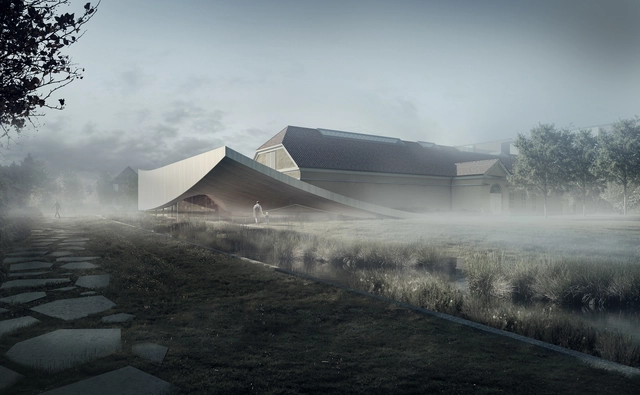
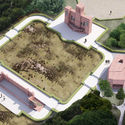
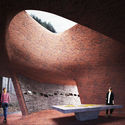
3XN Architects have released design plans for a new contemporary extension of the Historical Silkeborg Museum in Denmark. The museum houses some of the oldest and well-preserved bog bodies in the world: The Tollund Man and Elling Woman. Through the 1,858 square meter extension that includes a contemporary “roofscape” rising from the marshland, the design seeks to build a stronger identity for the museum through its architecture.
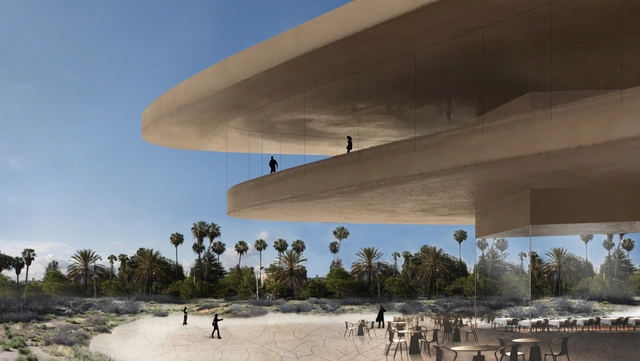
The Los Angeles County Museum of Art (LACMA) has released the newest renderings of their planned Atelier Peter Zumthor-led $600 million renovation, and one thing in particular stands out: the building is no longer black.
While the third major revision to the design sees the building retain the overall shape of its previous iteration, many aspects have changed, including how the floating mass touches the ground and the facade’s new sandy color.
The 10,000 square meter, three-story, multi-disciplinary space is designed to become a “hub for educational and research initiatives, while its wider programming embraces collaboration and partnerships with local, regional, and international artists, curators, and organizations.”
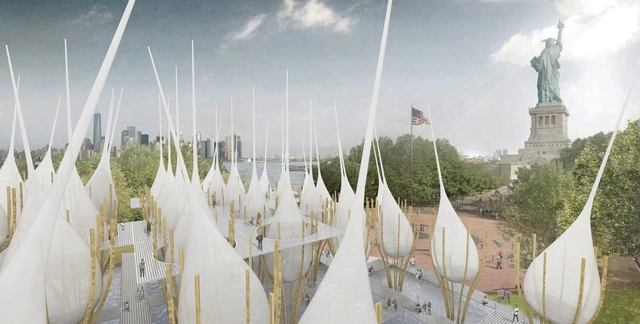
Jungwoo Ji (of EUS+ Architects), Bosuk Hur (of Folio:), and Suk Lee (a fourth-year student at Iowa State University) have won the Liberty Museum / New York competition with their speculative design for a museum at the site of the Statue of Liberty National Monument in New York City.
Inspired by the concept of civil candlelight marches against social injustice in Korea—the designers’ home country—the proposal is designed to be an architectural device that reflects human rights and social justice disparity in real time. When visitors send messages, namely tweets, about dire events in their cities to the museum with their phones, each unit of the proposal receives electronic signals and changes its position to point towards the region in question.
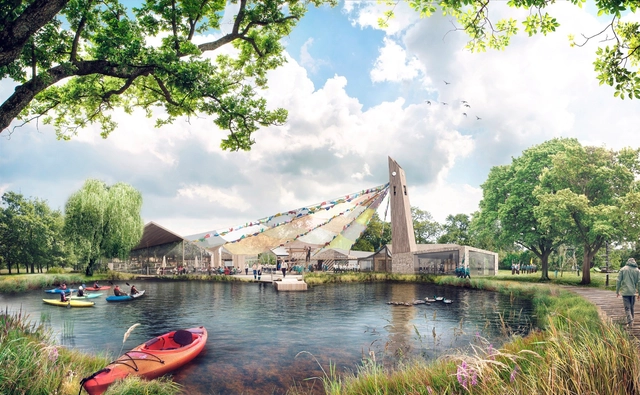
London-based firm Tate Harmer has won a competition to design a new £6 million ($7.4 million USD) museum for The Scout Association (TSA) at the group’s headquarters in Chingford, east London. Their proposal takes the form of a big, colorful tent that will tell the story of the Scouting movement within a fun, environmentally conscious structure.
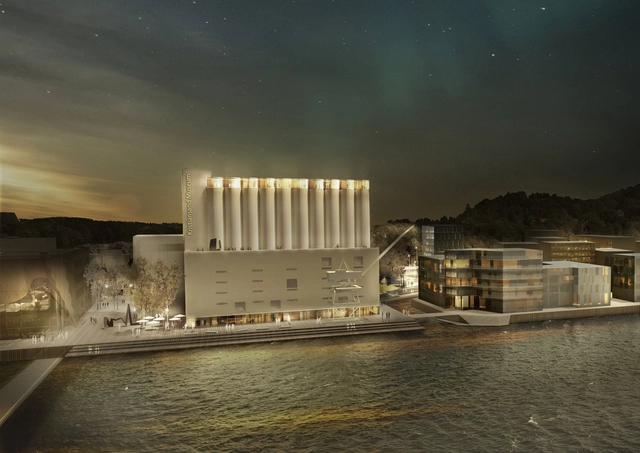
Winning proposal by MESTRES WÅGE ARQUITECTES and MX_SI ARCHITECTURAL STUDIO. Image Courtesy of Kunstsilo
The winners of the Kunstsilo (Art Silo) competition to convert a 1935 harbor-side grain silo into an art museum in Kristiansand, Norway have been announced, with one overall winner and five runners up. MESTRES WÅGE ARQUITECTES and MX_SI ARCHITECTURAL STUDIO, a team from Barcelona, have won the competition, out of 101 proposals, with their concept, SILOSAMLINGEN (“The Silo Collection”), which, according to the jury, “demonstrates a crystal-clear combination of architectural self-assurance and humble respect for the silo building and its newly assigned task.”
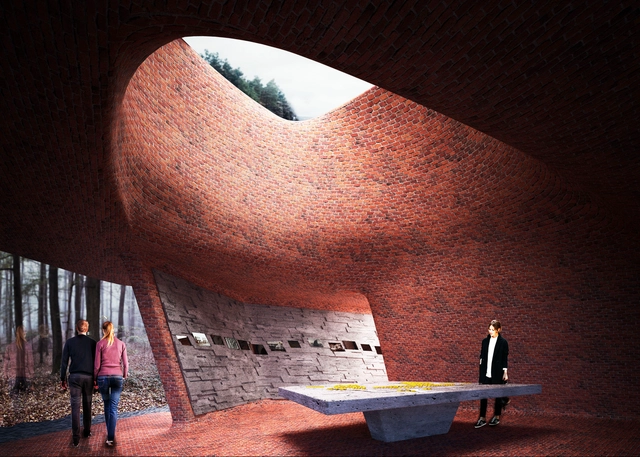
London-based Dutch architect Matthijs Ia Roi has won the Belgian Monument Competition with his proposal, Museum of Hospitality, which will be built in Amersfoort, Netherlands.
The museum will serve as a symbol of hospitality for refugees in the Netherlands and will compliment the neighboring World War I monument, which was a gift from Belgium in recognition of the Netherlands hosting Belgian soldiers during the war.
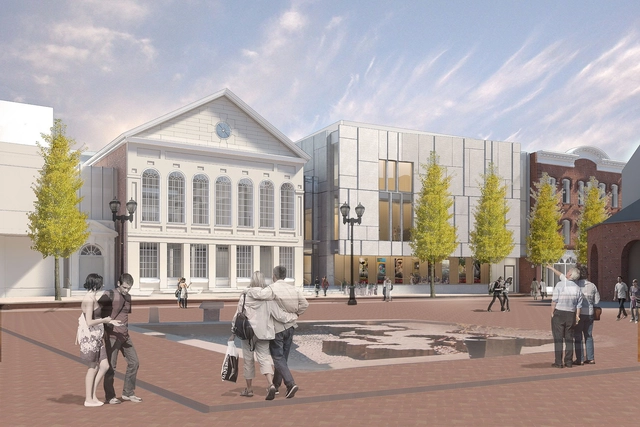
Street Plaza View. Image Courtesy of Ennead Architects
Ennead Architects has broken ground on the construction of an addition to the Peabody Essex Museum (PEM) in Salem, Massachusetts, the country’s oldest continuously operating museum (since 1799).
The expansion project includes a new 40,000 square foot wing and 17,500 square feet of renovation to adjacent structures. Upon completion, total gallery space will be increased by 15% for a total of 100,000 square feet, making the Peabody Essex into one of the top 20 art museums in the country.
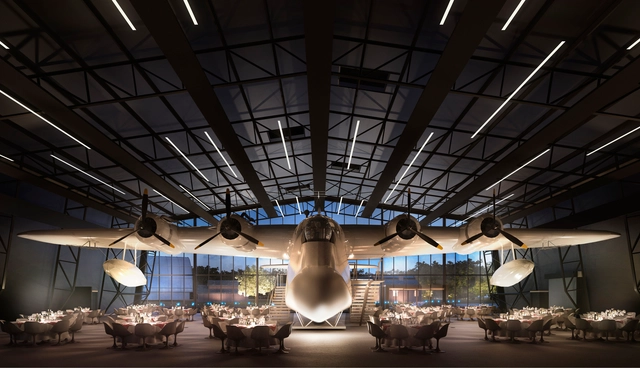
London-based firm Nex—Architecture has unveiled its plans for a new Royal Air Force (RAF) Museum as a part of the RAF’s 2018 Centenary Program. The new project will revitalize an existing RAF museum in North London that was created in 1972, transforming it into a visitor facility and promoting the airfield heritage of the museum’s location.
The new scheme will put emphasis on improving visitor experience by “establishing a clear route through the exhibition spaces.” A prominent new 40-meter-long entrance and visitor center will be placed inside the Hangar 1 building, acting as a welcome and orientation point.
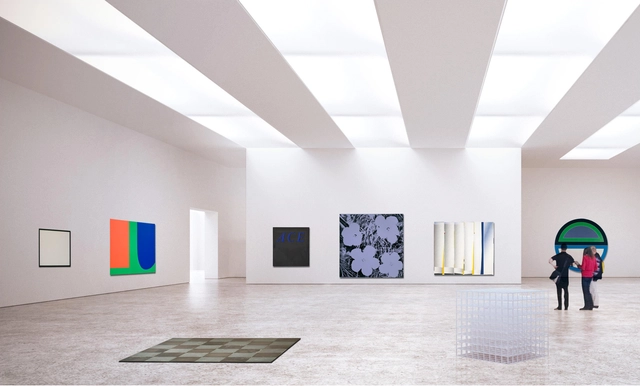
The Museum of Contemporary Art San Diego (MCASD) first opened in 1941 in the oceanfront La Jolla home of philanthropist Ellen Browning Scripps. In the half century that followed, the museum saw three distinct expansions; now, as it turns 75, MCASD anticipates its latest addition, a flexible new multipurpose design by Selldorf Architects that will quadruple the current gallery space.
Museums are increasingly becoming key landmarks that help define the image of a city, housing part of its memory and culture. In recent decades they have gained even more importance thanks to their architectural designs. Briktop was inspired by iconic designs to create this video that features works that stand out in architectural history and are important references for all architects.
This article originally appeared on guggenheim.org/blogs under the title "Nine Guggenheim Exhibitions Designed by Architects," and is used with permission.
Exhibition design is never straightforward, but that is especially true within the highly unconventional architecture of Frank Lloyd Wright’s Guggenheim Museum. Hanging a painting in a traditional “box” gallery can be literally straightforward, whereas every exhibition at the Guggenheim is the reinvention of one of the world’s most distinctive and iconic buildings. The building mandates site-specific exhibition design—partition walls, pedestals, vitrines, and benches are custom-fabricated for every show. At the same time, these qualities of the building present an opportunity for truly memorable, unique installations. Design happens simultaneously on a micro and macro scale—creating display solutions for individual works of art while producing an overall context and flow that engages the curatorial vision for the exhibition. This is why the museum’s stellar in-house exhibition designers all have an architecture background. They have developed intimate relationships with every angle and curve of the quarter-mile ramp and sloping walls.
The winners of the 2016 Leading Culture Destinations Awards have been announced. Presented this past weekend at a ceremony in London, the LCD Awards are given annually to recognize the success of “museums, art organizations, and cultural destinations from around the world [that] are investing in iconic architecture, cross-sector collaborations, [and] audacious programming […] to diversify the experiences offered to visitors and establish their global reputations.”
This year, awards were presented in four categories: Leading Cultural Destination of the Year; Best New Museum of the Year (for museums opened in the past 15 months); Best Soft Power Destination of the Year (a new award for 2016, given to destination who exhibit 'excellence, relevance, transparency, accountability and sustainability'); and the Traveller’s Award for Best Place to Visit.