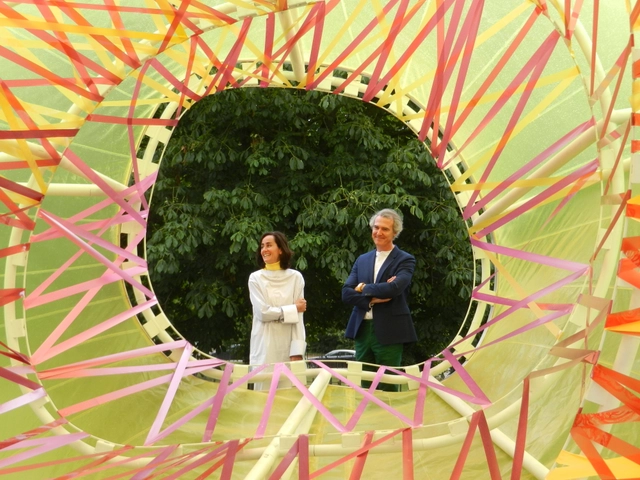
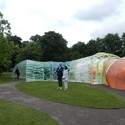
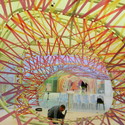
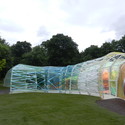
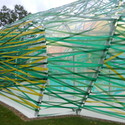
The 2015 Serpentine Gallery Pavilion was revealed today in London, showcasing the colorful plastic design by SelgasCano to the public for the first time. Consisting of a minimal steel frame wrapped in multi-colored ETFE sheets and webbing, the design is encompassed by "secret corridors" which provide access to the main internal space, inspired by the multi-layered and sometimes chaotic network of the London underground.
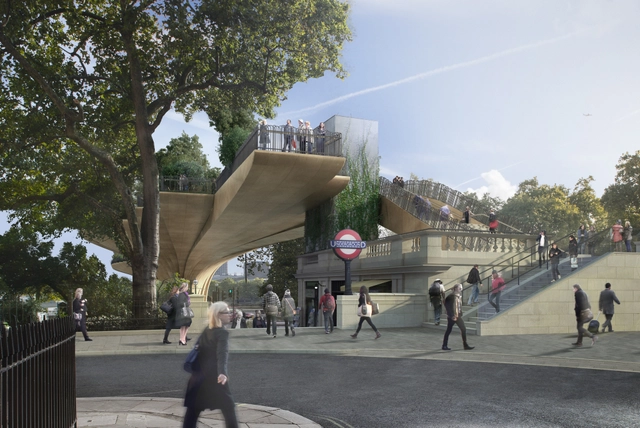
North Landing From Arundel Street. Image Courtesy of Arup
As reported in the Architects' Journal, Transport for London (TfL) – the authority in charge of the Garden Bridge programme, which was approved last year – have ordered a review into the procurement process leading up to Heatherwick's selection to design a new bridge spanning the Thames. Sir Peter Hendy, Commissioner for TfL, will "review of the overall process of procurement of the design contracts, the findings of which [will be published] in full." This statement follows the revelation that Heatherwick Studio’s estimated total price (which was wrongly redacted in response to a Freedom of Information request made by the AJ last February) "was far higher than its two fellow bidders in the 2013 invited concept design competition." Full information about the request is detailed here.
With this year's Serpentine Pavilion in London scheduled to open next week, the Serpentine Gallery has released construction images of SelgasCano's multi-colored plastic shelter. The images by NAARO show the double-skinned ETFE-coated structure taking shape, and give an impression of the spatial experience offered by the "secret corridors" which circumnavigate and provide access to the interior space.
For this week's editions of Section D, Monocle 24's weekly review of design, architecture and craft, and The Urbanist, their weekly "guide to making better cities," the Monocle team investigate the how the act of playing can shape design and the role of luck in our cities.
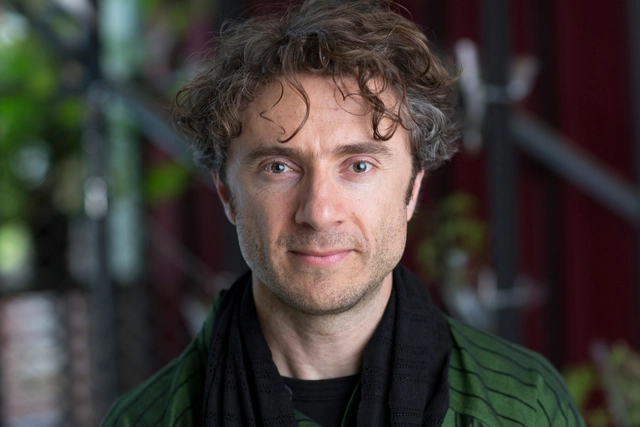
In Section D, David Plaisant meets artist Simon Terrill at the new Brutalist Playground, currently on display at the RIBA in London. Terrill, along with Assemble, have reimagined a concrete childrens' playground from one of the UK's Brutalist housing estates, in foam – plus more. In this week's edition of The Urbanist, Andrew Tuck explores the role of luck (and misfortune) in our cities, from how architects apply the philosophy of feng shui to their work to a Brazilian district that it was given the name of Boa Sorte ('good luck' in Portuguese). The show also visits Moore – the city dubbed as "tornado alley of Tornado Alley" – in Oklahoma, US, to understand how best to build in such intense climactic environments.
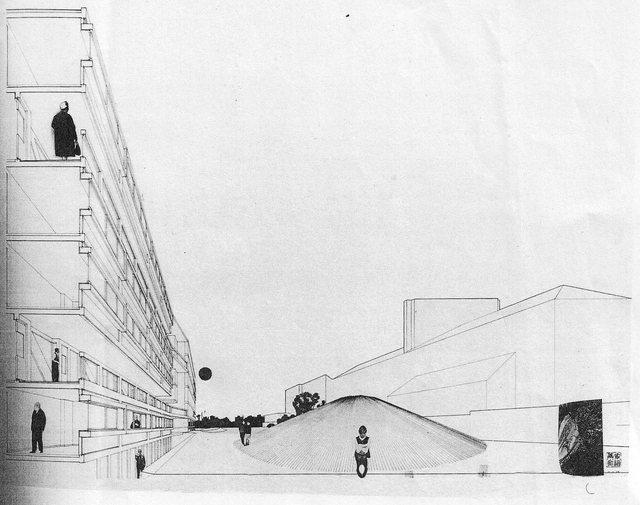
When it was announced in 2012 that London's Robin Hood Gardens – Alison and Peter Smithson's world-famous Brutalist housing estate – was to be demolished, there was outrage among the architectural community. Since then, many have called for the profession to act in order to protect "one of Britain’s most important post-war housing projects," which led to a fresh bid to save the scheme in March of this year. Richard Rogers, Simon Smithson (a partner at RSHP and son of Alison and Peter Smithson), and academic Dirk van den Heuvel have now called upon members of the public to voice their concerns to the UK Ministry for Culture, Media and Sport, before the end of the week:
"Previous efforts in 2009 to have the building listed failed, but the case has now been re-opened and we understand that the new Minister for Sport, Tourism and Heritage will be reviewing the arguments at the end of this week [w/c 15th June 2015]."
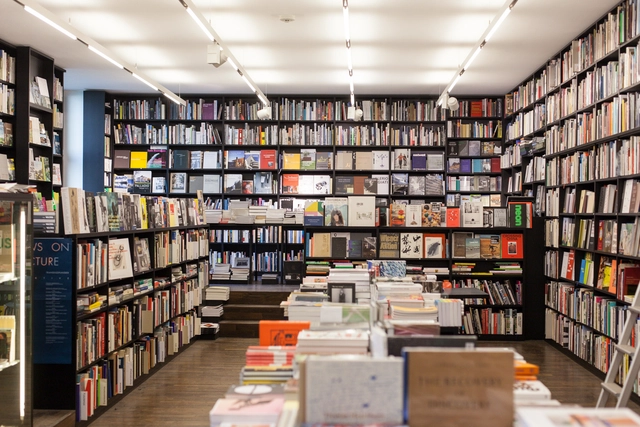
The monograph is a popular platform for dissemination and debate in the art and design world, yet architectural monographs are often treated with suspicion – viewed more as a self-serving PR exercise. But do monographs actually have a more substantive role within the practice of architecture? This was the backdrop for a discussion entitled ‘Why a Monograph?’ held at Waterstones Piccadilly as part of this year’s London Festival of Architecture. The participants included Jay Merrick, architecture correspondent of The Independent; Simon Henley of Henley Halebrown Rorrison (HHbR); David Grandorge, architectural photographer and Senior Lecturer at London’s CASS; and Ros Diamond of Diamond Architects. The session was chaired by ArchDaily Editor James Taylor-Foster.
An exploration of "post-war design for play," The Brutalist PlaygroundbyAssemble and artist Simon Terrill has opened to the public at RIBA's Architecture Gallery. The immersive installation draws on a number of historic London estates - Churchill Gardens, Pimlico; the Brunel Estate, Paddington and the Brownfield Estate in Poplar - where playgrounds were once made from concrete and cast into sculptural forms to offer children an abstract landscape for play. Now deemed unsafe, these playgrounds no longer exist. Thus, The Brutalist Playground was envisaged to explore play, "the Brutalist way."
Images of the complete installation, after the break.
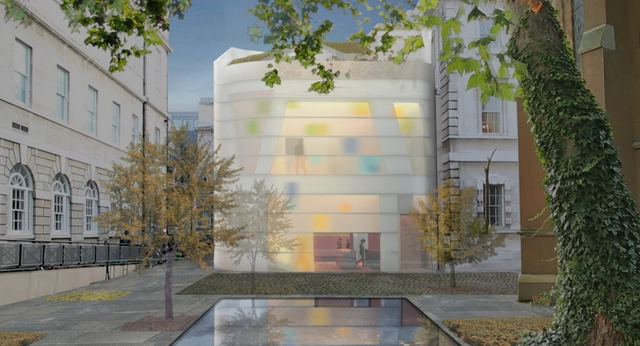
Steven Holl Architects (SHA) has broken ground on London's newest Maggie's Centre across from the large courtyard of St. Bartholomew’s (Barts) Hospital, the city's oldest hospital. The structure, a branching concrete frame lined with perforated bamboo and matte white glass, was inspired by its historic site, which also neighbors the St. Bartholomew the Great Church. It was envisioned as a "vessel within a vessel within a vessel" embellished with colored glass fragments that recall "neume notation" of Medieval music in the 13th century.
"The word neume originates from the Greek pnevma, which means 'vital force.' It suggests a 'breath of life' that fills oneself with inspiration like a stream of air, the blowing of the wind. The outer glass layer is organized in horizontal bands like a musical staff while the concrete structure branches like the hand," describes SHA.
A video of Steven Holl detailing the center's design, after the break.
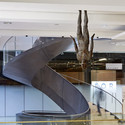
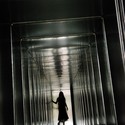
Today, London's Hayward Gallery at the Southbank Centre has opened a major exhibition of the work of Carsten Höller, the artist who is best-known for playfully inserting his slide installations into major galleries worldwide. Titled Carsten Höller Decision, the exhibition features works from throughout Höller's career, as well as a number of new works created especially for the show - not least Isometric Slides, his latest slide installation that gives gallery visitors the option of leaving the exhibition at speed from the Hayward Gallery's pyramidal roof lights.
This edition of Section D, Monocle 24's weekly review of design, architecture and craft, dives into Beirut Design Week exploring "what Lebanese designers can show the world." In this show Josh Fehnert examines why Domus have decided to start an academy in Milan, speaks to Dutch typographer Joep Pohlen about his ultimate type reference guide, and assesses some of the architectural similarities between Istanbul and London. While the likenesses are not immediately obvious, both cities are currently undergoing an unprecedented property boom. Istanbul, a city with no strategic masterplan, is growing fast and there are lessons to be learnt from London's comparatively porous urban realm.
Exhibitions, much like publications and films, are one of the key contemporary methods for the communication of architectural concepts and ideas. They allow the practice, curator or educative body to edit and present information and visuals in a way which narrates a story, provokes new ideas, or feeds into a wider discourse. For many, exhibitions are an invaluable source of inspiration and an engaging way of gaining new, or reaffirming old, knowledge and design precedents. Intimately linked to the space or place in which they are displayed, the best exhibitions also remind us that the practice of architecture is both a profession and a discipline; a valuable way of understanding the built, and unbuilt, world we live in.
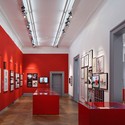
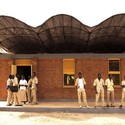
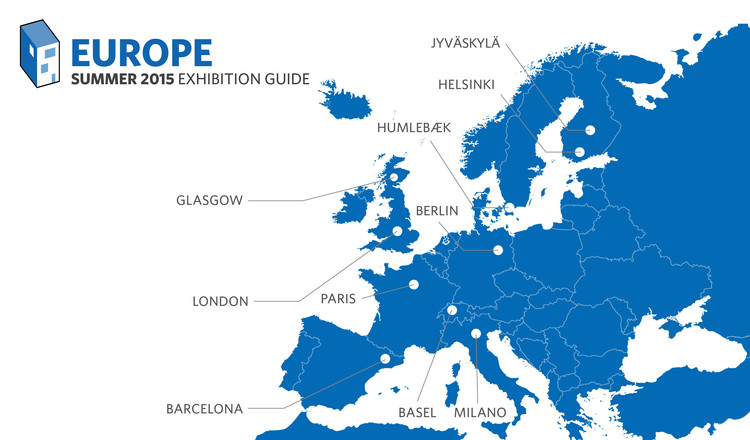
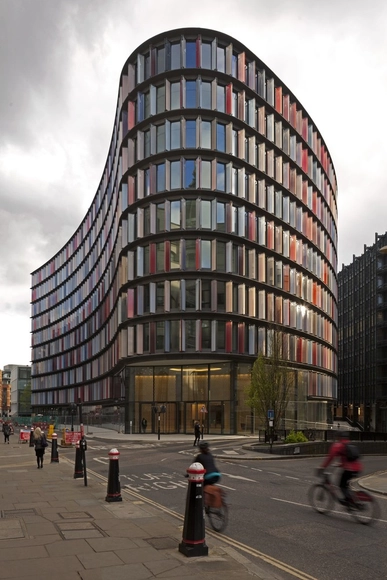
If you're traveling to, living or studying in Europe this summer then dive into our compilation of what we consider to be some of the most informative and exciting exhibitions on show in between June and October 2015. If you visit them, or any other exhibitions that you enjoy, share a photograph on Instagram or Twitter with the hashtag #archdailyexhibitions.
Check out our favourite exhibitions on architecture, urbanism and design, from Jyväskylä to Milano, after the break.







.jpg?1434614849&format=webp&width=640&height=580)





.jpg?1434051501&format=webp&width=640&height=580)
.jpg?1434051743 "© Tristan Fewings / Getty Images for RIBA")
.jpg?1434051645 "© Tristan Fewings / Getty Images for RIBA")
.jpg?1434051783 "© Tristan Fewings / Getty Images for RIBA")
.jpg?1434051823 "© Tristan Fewings / Getty Images for RIBA")
.jpg?1434051501)
.jpg?1433941926)
.jpg?1433944513 "Flying Mushrooms, 2015. Image © Linda Nylind")
.jpg?1433943325 "Two Flying Machines, 2015. Image © Ela Bialkowska, OKNO studio")