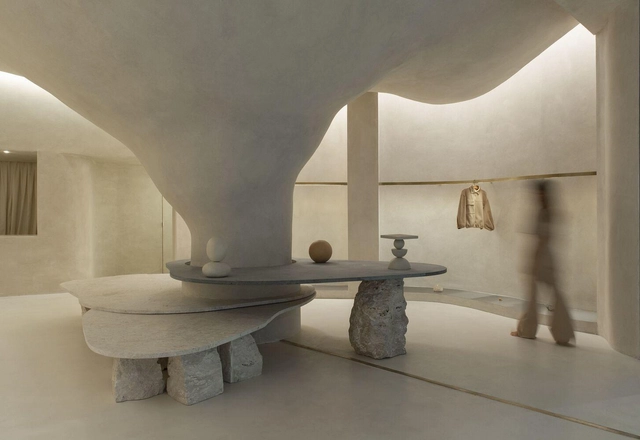
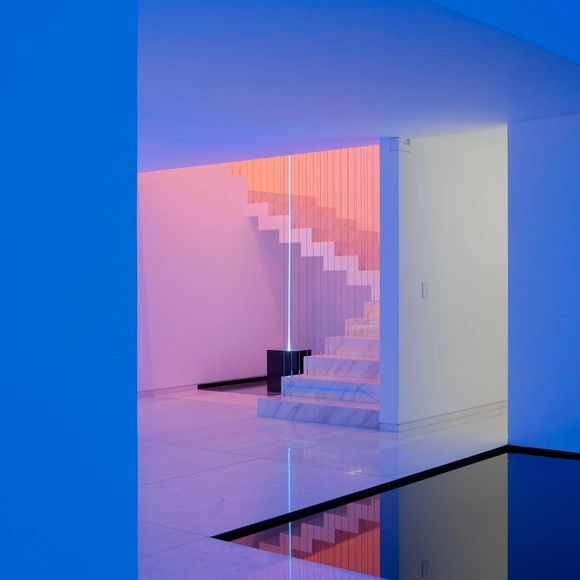
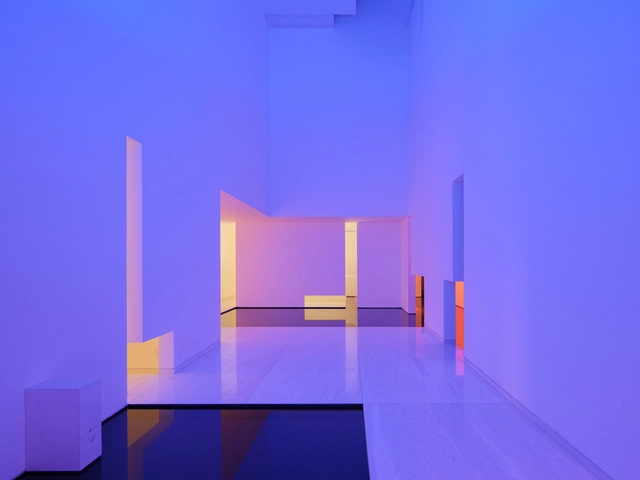
The importance of lighting in interior design cannot be overstated: done right, it not only accentuates a space's architectural features but also makes inhabitants feel at ease. As Carmelo Zappulla of Lighting Studio External Reference explains in an interview with Architonic, light is a crucial tool to add an emotional element and 'animate a space.'
There are a plethora of artificial lighting options to choose from. Which works best is usually determined by the nature of the interior they're in and the desired spatial effect. One of the most common is indirect lighting. This technique uses fixtures to aim light onto surfaces that act as reflectors, softening the emitted rays to prevent pillar-like, bulky beams in favor of a more evenly distributed glow.
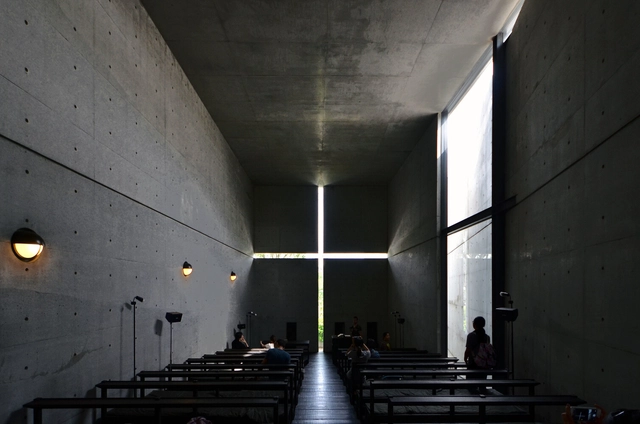
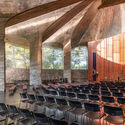
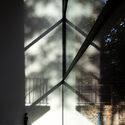
Igreja da Luz. Image by hetgallery, via Visualhunt.com
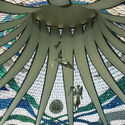
The use of light in religious constructions as an element of association with the divine has been present throughout the history of humanity. Historically, a series of temples from various religions have used this technique as an attempt to visually and perceptibly approach humans to a sacred and intangible dimension. Light is often given a spiritual connotation and significant symbolic force, capable of modifying people's relationships, perceptions, and experiences with their surroundings. Thus, it is an element that has been, and still is, used by architecture to create scenarios and effects in many religious spaces, especially churches.
From Thomas Edison's empty glass bulb to AI-controlled LEDs, hundreds of years of constant evolution have passed, which culminated in what we now know as artificial lighting. Edison could not have imagined how dependent we would become on his invention almost two centuries later. It led to a way of life where we spend up to 90% of our time in enclosed spaces deprived of natural light, such as shopping centers and offices. Places where artificial light remains constant throughout the day, without any variation of color temperature or luminous intensity are where artificial lighting practically eliminates day and night differences.
Light is part of various disciplines, shaping the world as we know it. In physics, it serves as a measure of speed and makes vision, and the recording of images by the eye and camera lens possible. Throughout art history, the representation of light - or its absence - has guided secular movements in various manifestations with equally different techniques and supports. This means that light - and its derivative shadow - can create environments, atmospheres and sensations, which can be perceived in objects and spaces. Light is also a part of architecture.
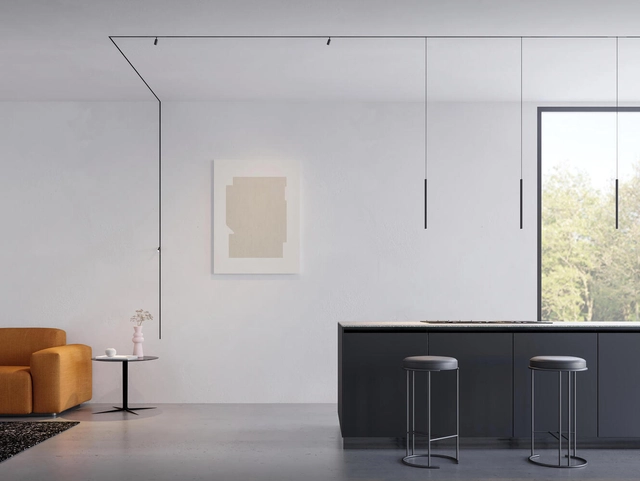
A minimal lighting framework for an open plan living space, Outline Ambient hosts a strategic combination of pendants and projectors. Image Courtesy of Reggiani
We are living in an era of active interiors where shifting perimeters, flexible set ups and agile activities are truly testing the limits of design; workspaces are hybrid, retail installations are ever-evolving and cultural spaces are multi-dimensional. Amidst changing scenarios, lighting is key to shaping interior spaces with just the right amount of mood, drama or practical spotlighting. To meet the demands of these cutting-edge interiors, lighting today must provide a solid framework that can embrace both changing dynamics and high quality consistency – offering flexibility, precision control and a timeless aesthetic.
Rising to the challenge is Reggiani's new lighting system ‘Outline’, designed for adaptability with minimalism, modularity and customisation. The system features an ultra-slim track available in linear and curved segments, ready to be tailored into endless freeform or geometric configurations. To this base, a choice of projectors, pendants and linear LED lighting fixtures can be added, so designers can model the experience and intensity of light with absolute control across spaces – from showrooms and warehouses to hospitality and retail.
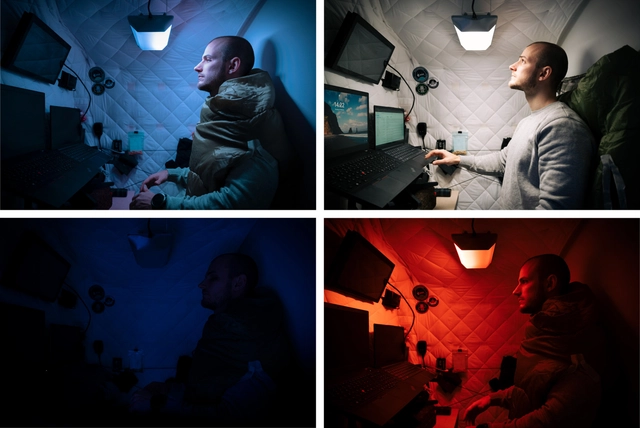
Since Yuri Gagarin's iconic pioneering flight in 1961, only 565 human beings have had the privilege of traveling into space. This extreme venture requires a high degree of devotion, extraordinary physical and intellectual preparation, and huge investments. Space exploration has the potential to benefit humanity in many ways, especially regarding the development of new technologies and the generation of scientific knowledge. Many of these technologies are already available to the public, such as GPS, water filters, or highly resistant fabrics. But while we often imagine astronauts floating in space and observing the Earth from a unique vantage point, many of them face the difficulty of sleeping and resting in space due to the lack of natural light. It is this issue that motivated a group of young Danish architects to develop a solution to improve the daily lives of astronauts in space, but also of many people on planet Earth who suffer from the same problem.
Videos
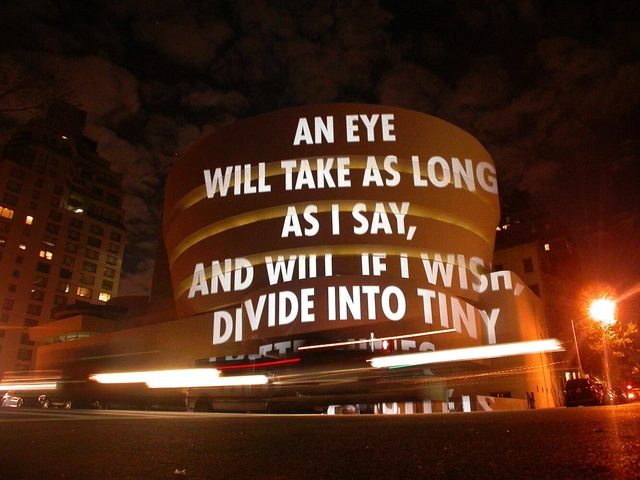
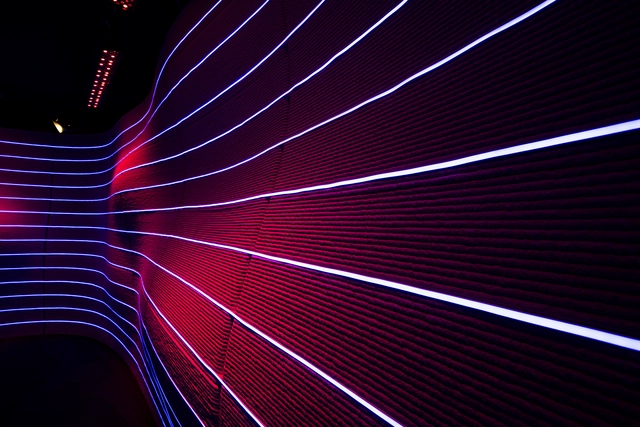
Jenny Holzer, installation at Guggenheim New York. Image: fluido & franz, CC BY-NC-SA 2.0 via Flickr
Light has been present in art for centuries. To think of the Baroque or Gothic without this element would be impossible. However, in the 20th century, artists began to explore light qualities and transformed them into a means of materializing art. Sculptures, immersive installations, and ways of shaping the environment through light, its colors and intensities brought new spatial perceptions by establishing a unique relationship with architecture.
Luis Barragán’s legacy lies in the way he uses light and color. Tadao Ando's sensitive approach to natural light established his own architectural language. James Turrell's dramatic interior transformations explore a unique perception of visual experiences where "light is not a tool to enable vision but rather something to look at itself". Olafur Eliasson's immersive installations play with the psychology of viewers using just light, water, and air. These architects and designers, among others, have reimagined how light is perceived, inspiring generations of architects to follow suit with the way they understand and employ light.
The simple activity of taking a walk in the evening can easily turn from a relaxing leisurely activity to a dangerous endeavor by removing just one element from the streetscape: public lighting. While not often recognized as defining aspect of urban environments, artificial illumination has played an essential role in defining the character of modern cities. Crime control, the appeal of nightlife, the rise of the shop window, revolutionary movements, utopias, and ideals of social equity are all concepts whose development is tightly linked to the history of public lighting. Technological advancements over the past centuries have continuously shaped the appearance and symbolism of streetlamps. Still, the this element has remains a constant throughout its history.
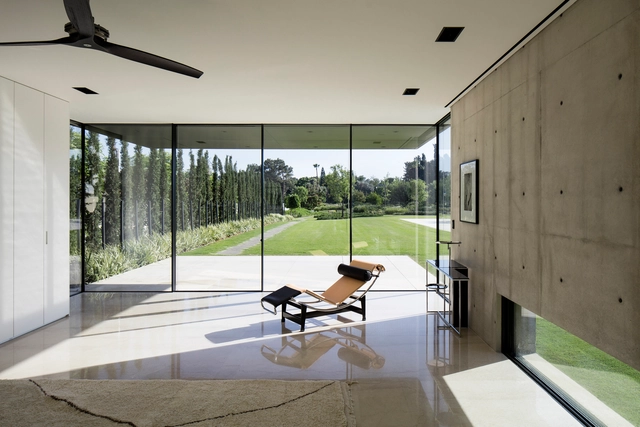
Le Corbusier once described architecture as “a learned game, correct and magnificent, of forms assembled in the light.” Natural light –and its accompanying shadow– plays a crucial role in shaping our perception of architecture, serving a long list of functions that define how users experience, engage and interact with buildings. From illuminating and accentuating to enhancing views and evoking warmth, the presence of daylight has the power to set a room’s tone and aesthetic language. It even has a significant impact on human health and well-being, including boosting mood and productivity, regulating circadian rhythms and reducing eyestrain and headaches –it makes our lives brighter, literally.
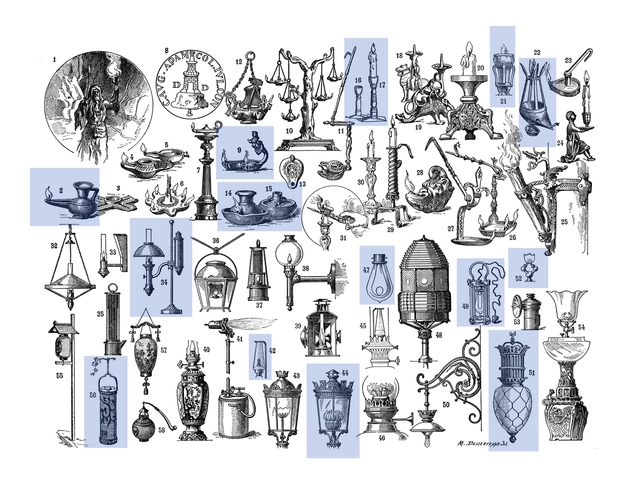
As trivial as the act of flipping a switch and lighting up a room may seem, we've had to come a long way to have safe and reliable light sources. It is estimated that the first lamps were invented 70,000 years ago, consisting of hollowed out stones or shells filled with an absorbent material soaked with animal fat that could be ignited. The Egyptians, on the other hand, used decorated ceramic vessels filled with oil, which provided a constant flame. Candles were popularized during the Middle Ages, made of tallow (animal fat) or beeswax, and could be burned in simple candlesticks and chandeliers. It was in the late 19th century that Thomas Edison and his team invented an incandescent light bulb that could be mass manufactured and was economically viable, soon becoming the dominant form of lighting for much of the 20th century. Although it was a revolutionary invention at the time, we are now aware that these lightbulbs are not very efficient, and they were eventually replaced by fluorescent and, more recently, LED bulbs. But if we have already advanced so much in such a short time, what can we expect for the future of lighting, and more specifically, how will our interiors be lit in a few years or decades?
By emulating manual manufacturing techniques, 3D printing utilizes digital models to create customized three-dimensional objects through an additive production process. This tool enables architecture to explore innovative forms, structures, and materialities, providing new paths for creative thinking. Progressively expanding its limits, 3D printing is integrating other existing technologies to unlock new uses and typologies. Such is the case with the work of Philipp Aduatz, which combines 3D printed textured structures with LED lighting, adding a new layer of complexity to enable the creation of the world's first 3D printed film studio.
As farmers water crops by moonlight, undocumented children head to school and villagers scan the sky for surveillance airplanes—these are glimpses of a complex culture that emerges in south Lebanon after dark. In collecting some of these nightly practices, Mohamad Nahleh—lecturer in architecture and urbanism at MIT—journeyed across the landscapes of Jabal ‘Amil hoping to build a new alliance between architecture and the night. His "Path of Nightrise" research has turned into a construction to revive a forgotten river path and was published by Places Journal. The interview with Nahleh argues for a new nocturnal imagination in design and reveals, not only how the night has changed in Lebanon over time, but also how he has changed alongside it.
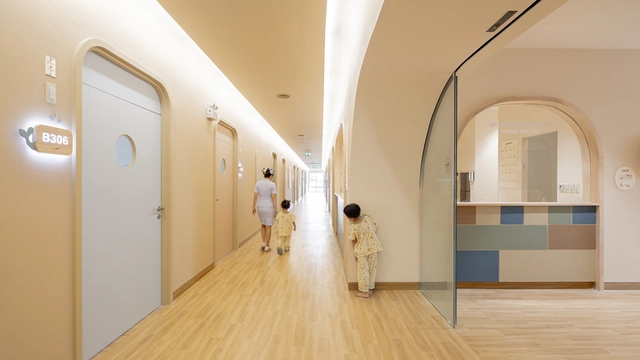
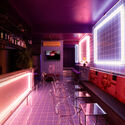
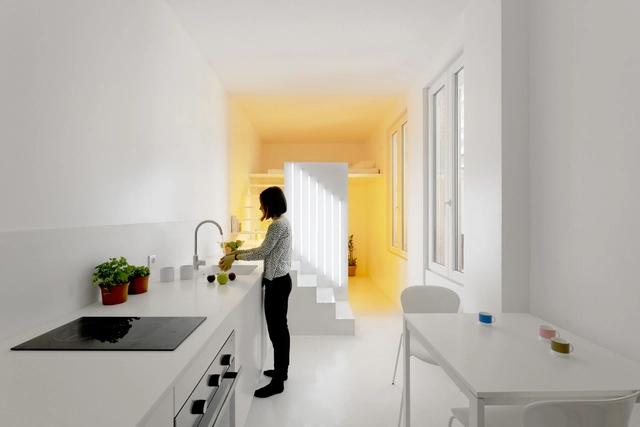
Artificial lighting offers a range of strategies for interior design. Widely used in commercial projects and restaurants as an aesthetic device to attract customers and to create environments that stimulate the senses, it can transform rooms and create cozy and well-lit places in residential projects.
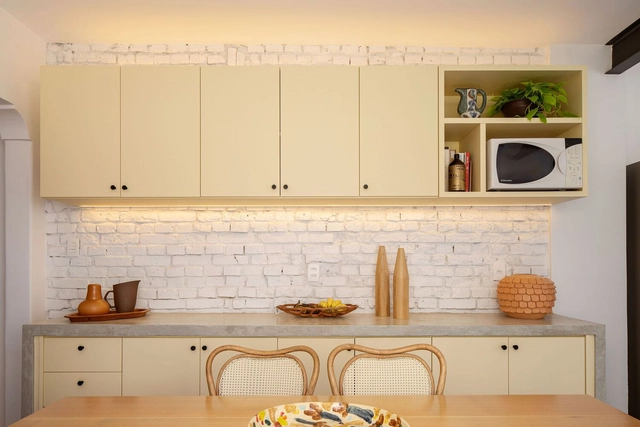
Over time, the kitchen has ceased to be considered only as a workspace and became a meeting and leisure area. For many, it is the heart of the home. Therefore, it is necessary to design an ambiance that can help when preparing dishes and also bring comfort during a gathering with friends and family.
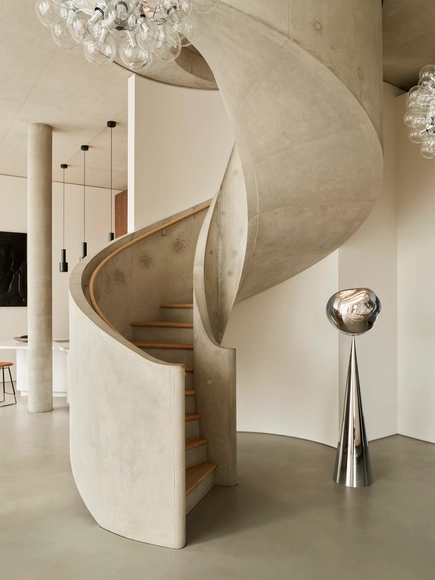
With a simple flick of a switch, lighting has the ability to completely transform a space, define its ambiance and create a mesmerizing, multi-sensory experience. It can cast shadows and highlights, add depth and texture, and even has the power to stir emotions and influence our well-being. More than just a practical source of illumination, it’s a tool for sculpting spaces and making a bold statement. Lighting fixtures come in various shapes, sizes and styles, each with a unique character and purpose; from the ornate elegance of a chandelier hanging from the ceiling to the sleek minimalism of a recessed light installed into a wall. The possibilities for creative expression are endless. Innovating and breaking the boundaries of traditional lighting design, Tom Dixon’s sculptural luminaires are a testament to these possibilities.
The emotional and spiritual atmosphere one feels when entering centuries-old architecture is palpable. So while the degradation, and sometimes even intentional destruction, of ancient structures and environments, is regretful and possibly shameful, it’s often an all-too-unavoidable part of healthy urban planning, adhering to important health and safety laws and regulations.
Whenever these historic yet antiquated environments are refreshed and adapted for modern life, however, they’re often labeled as grotesque Frankensteinian versions of their once beautiful selves. When the transformation is treated with care and respect, however, the humble grandeur and contemplative scale of the settings can remain intact.
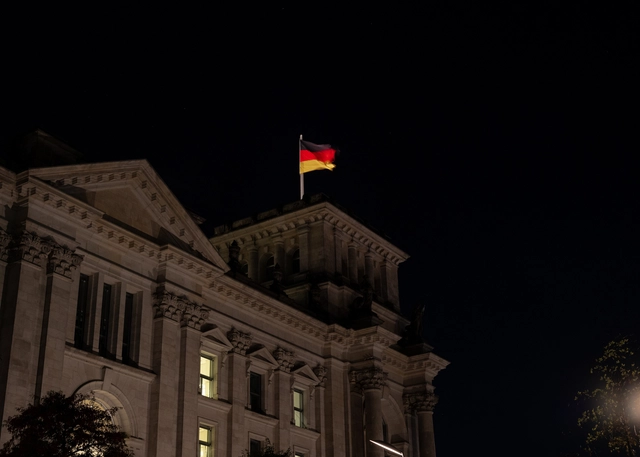
When capital cities like Paris and Berlin resolved to switch off lighting for public buildings and landmarks in July 2022 in order to save energy in the context of the Russian invasion of Ukraine, the cities created a ripple effect throughout central Europe. Images of dark iconic landmarks swept through the media and allowed politicians a momentary act of environmental demonstration. However, designers have started to question the sustainability of this ad hoc step. Seen from a broader perspective the impression arises that this alleged radical action has been part of a rather media-savvy campaign with small effect in cities at night. Further steps are necessary to reassess urban lighting that may have a major impact on energy saving and sustainability.