The Rudy Bruner Award for Urban Excellence celebrates urban places that are distinguished by quality design and their social and economic contributions to our nation’s cities. Winners offer creative placemaking solutions that transcend the boundaries between architecture, urban design and planning and showcase innovative thinking about American cities.
The International Biennial of Landscape Architecture is an international event, that takes place every two years in Barcelona, gathering architects, professionals, students and professors from all over the world.
The Best Of Design Awards is a unique project-based awards program that showcases great buildings and building elements. Entrants are invited to submit completed works in 26 categories.
Open for Registration! International Baikal Winter University of Urban Planning 2017
From 27th of January till 9th of February – the 18th session of our workshop. Topiс of this year: "Urban rivers rehabilitation as a part sustainable development"
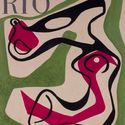
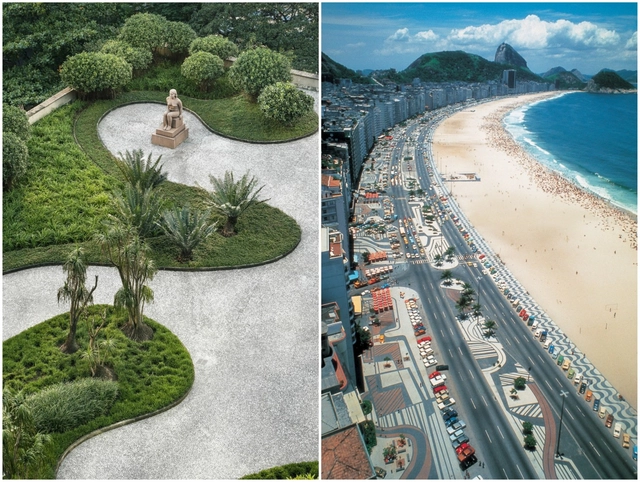
At any given moment when walking through Roberto Burle Marx: Brazilian Modernistat the Jewish Museum in New York, one may hear a soft rushing of waves, mixed with the murmur of an open-air crowd. A narration in Portuguese, both spoken and sung, will drift breezily in and out. This is the soundscape of Plages, a 2001 video by artist Dominique Gonzalez-Foerster. Shot from an aerial perspective above Copacabana Beach, the film shows the popular Rio de Janeiro waterfront not in its usual sunlit splendor but in the artificially lit nocturne of New Year’s Eve 2000. Celebrators teem in the space between city and ocean, in the moment between one year and the next, moving in dynamic patterns amid the immense designs laid out by Roberto Burle Marx.
Videos
San Mateo Wastewater Treatment Plant Competition Finalist - Perkins+Will San Francisco
Our urban environment is in constant flux brought on by changes in economies and climate change. Issues of adaptation and resiliency are increasingly more relevant to all design disciplines. Jim Wasley and Jennifer Cooper-Sabo will discuss their design projects and research related to managing stormwater, revitalizing brownfields, and assessing climate change risk and adaptation in the Great Lakes and Bay Area regions.
"Queen Hur Memorial Park Construction Project" is promoted in joint as a result of the 2015 Korea-India Summit on reinforcing cultural and personal exchanges between the two countries. The project is to reorganize the existing Queen Hur Memorial Park located in Ayodhya, India, and to extend the park in the riverside area next to the memorial park to construct the memorial park newly for connecting to the adjacent urban fabric, and commercial and cultural facilities.
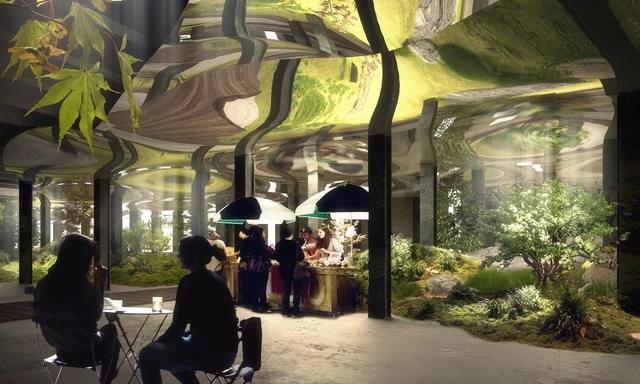
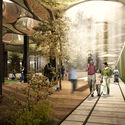
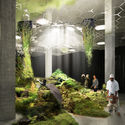
Deputy Mayor for Housing and Economic Development Alicia Glen and NYCEDC President Maria Torres-Springer have announced New York City’s first official approval of the Lowline project in Manhattan’s Lower East Side. As the first major step in making the project a reality, the approval will help to create the world’s first underground park, a community-oriented public and cultural space that will become both a local resource and an attraction for worldwide visitors.
Although the Metropolitan Transit Authority (MTA) did express interest in the space last fall, the Lowline team was awarded conditional use due its high community potential.
Blanca, a small town huddling at the foot of Peña Negra, a volcanic black rock, is reinventing parts of its structure, helped by impulses from artists’ platform AADK Spain. Part of this process is the rediscovery of the actual potentials of a shrunk city. The workshop Back To Life will be an integral step in further developing these impulses.
The latest stage of the Governors Island Park project, “The Hills,” is set to officially open to the public on this Tuesday July 19th – nearly a year ahead of schedule. Designed by internationally acclaimed urban design and landscape firm West 8, the park will feature ten acres of sloping landscapes that will provide residents and visitors with slides, art and unparalleled views of the New York Harbor.
i2a istituto internazionale di architettura summer school islands, atolls and archipelagos of Lake Lugano
i2a istituto internazionale di architettura, Lugano, in collaboration with the Hochschule Luzern - master Technik & Architektur and the CCU – Chinese Culture University, Taipei, with the patronage of Comune di Agno (Cantone Ticino, Switzerland), is glad to present the international summer school islands, atolls and archipelagos of Lake Lugano, which will take place in Agno form September 5th to September 11th. Participants will receive 3 ETCS credits form the Hochschule Luzern.
The Urban Design Plus is a PostGrad program. Applicants must already posses either an undergraduate or graduate degree. We are open to people with a diverse backgrounds that relate to the formation of our urban places – including architects, urban planners, landscape architects, economists, artists, sociologists, etc.
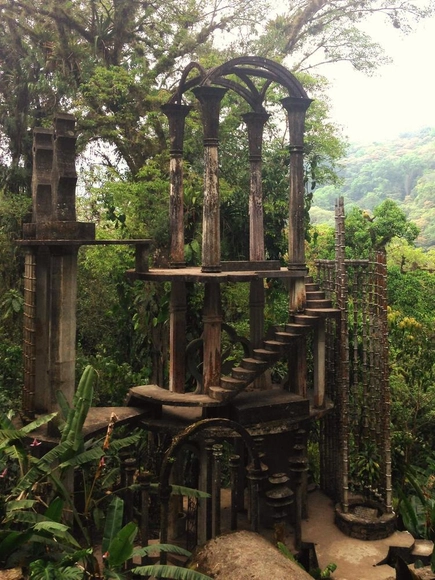
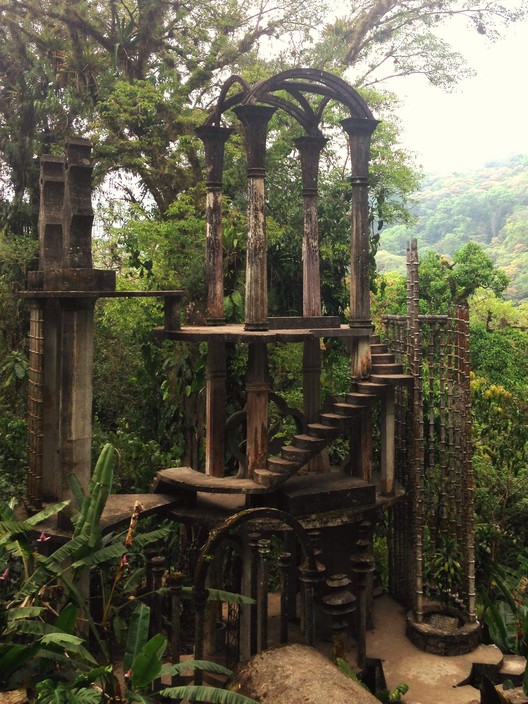
Edward James, one of the most eccentric and interesting twentieth-century collectors of surrealist art, arrived in Xilitla, Mexico at the end of the 1940's. The British writer was captivated by the splendor of the landscape of "Las Pozas" (The Wells), where he created a fantastic home, which includes a unique sculptural space unlike any other in the world.
Surrealism, whose sources of creation are found in dreams and the subconscious, in theory, could never be used to build things in real life. Edward James - described by Salvador Dalí as "crazier than all the Surrealists together" - designed a sculpture garden that defies any architectural label and allows a glimpse of something new, moving between fantasy and reality.
Columns with capitals that look like giant flowers, gothic arches, dramatic gates, pavilions with undetermined levels and spiral staircases that end abruptly in mid-air, as if they were an invitation to the horizon. In short, Edward James made concrete flourish along the lush flora and fauna of Xilitla, making surrealist architecture possible.
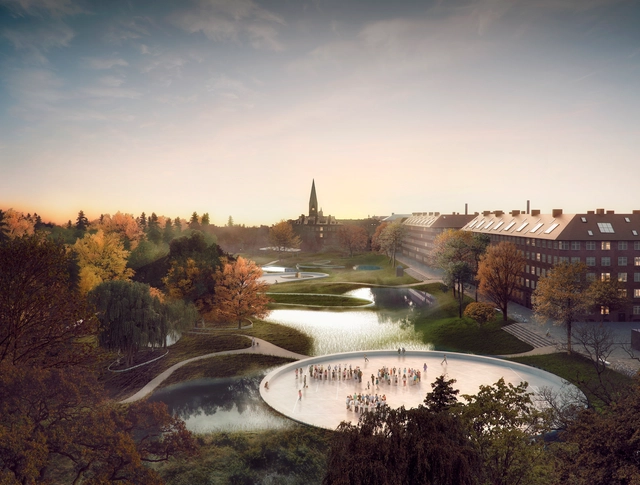
Planning and landscape firm SLA Architects and engineering office Ramboll have won an international competition to redesign Hans Tavsens Park and its surrounding area in the central Copenhagen borough of Nørrebro. The competition tasked architects with envisioning a park and streetscape that would benefit the hydrological, biological and social ecosystems of the neighborhood. The winning proposal, titled The Soul of Nørrebro, tackles the challenge by creating a system of drainage areas and an adaptable park designed to redirect runoff and contain and purify water during flood conditions.
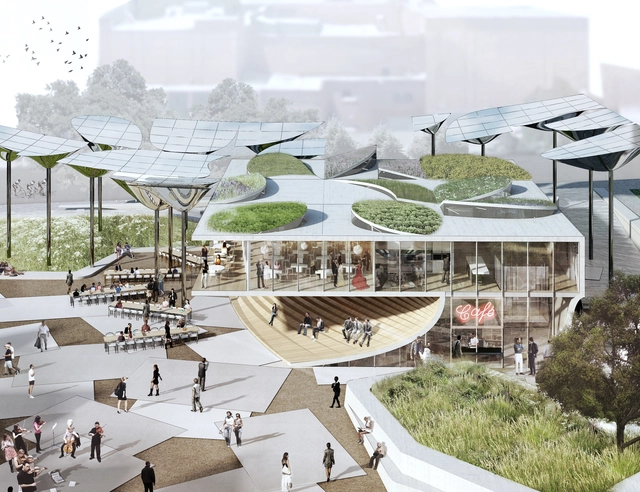
The City of Los Angeles has selected landscape architects Mia Lehrer + Associates (MLA) with partners OMA and IDEO to design a new public park at First and Broadway in downtown LA. Located across from Los Angeles City Hall, the new development, to be known as “FAB Park,” will connect into the existing Grand Park, turning the area into one of the city’s most important civic spaces.
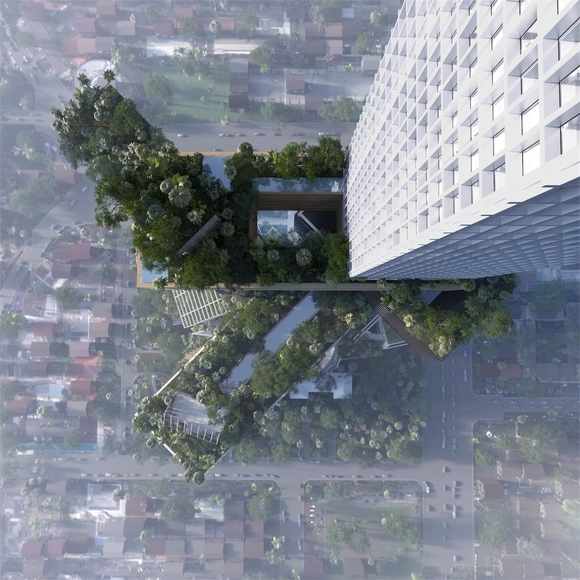
Peruri 88, a 400-meter proposal by MVRDV for Jakarta. Image Courtesy of RSI-Studio
Are tree covered buildings really in tune with ecological and sustainable principles, or are they just a form of greenwashing? This is the question posed by Kurt Kohlstedt in his essay, Renderings vs. Reality: The Improbable Rise of Tree-Covered Skyscrapers, for 99% Invisible. The author notes that vegetated designs come about for myriad reasons – the appearance of sustainability, better air and views, investment intrigue – but that most of these concepts will never leave the realm of paper or virtual architecture. For as many reasons that these buildings have become popular, there are detractors for why they simply cannot be built, including daunting construction hurdles (extra concrete and steel), vast irrigation systems, added wind load complexities, and the trees themselves having difficulty adapting to their vertiginous conditions.
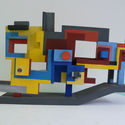
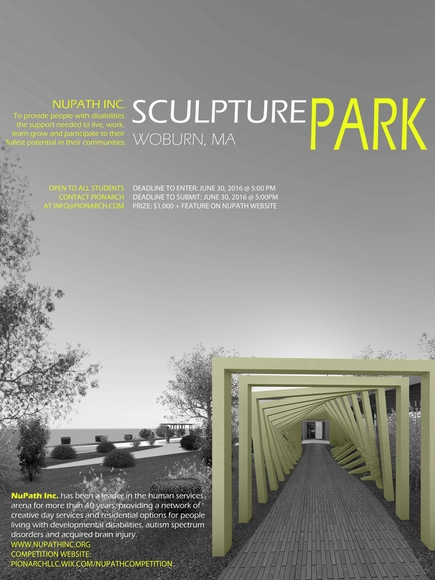
We see opportunities for collaboration for art and architecture students and NuPath. We would love to engage the students in a potential competition project of creating sculptures to the name of those who were part of NuPath. The project is to design a single sculpture or installation that could be dynamically multiplied on site. The outdoor space is located on the back green space of the building, located in 147 New Boston Street in Woburn, MA and it is currently being planned as the Outdoor Sculpture Park. With the innovative and creative ideas from art and architecture students, we can help memorialize people that were part of the NuPath family.
Husqvarna invites you to take their survey, The Future of Parks, and share your insights into how parks will look and function in the year 2030. The UN has set a goal to make cities more sustainable in the coming decades, and parks will play an integral role in making that happen. Together with students from around the world, you will help to co-create a vision of what is to come!




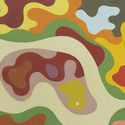
.jpg?1470233009 "An untitled work in collage, made in 1967, illustrates Burle Marx’s diverse artistic pursuits. Image Courtesy of Sítio Roberto Burle Marx, Rio de Janeiro")