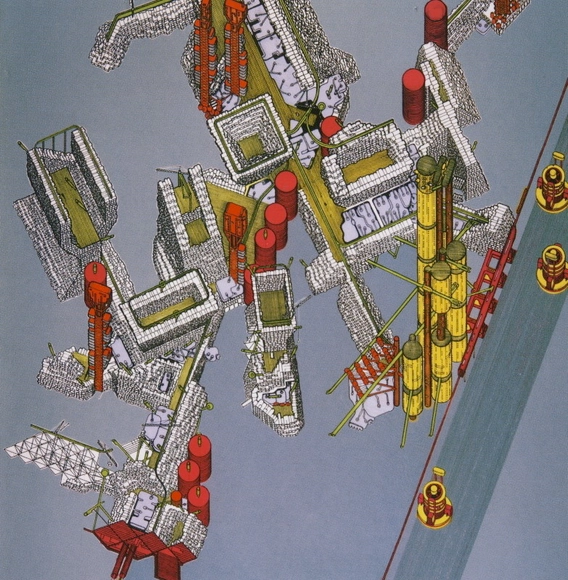
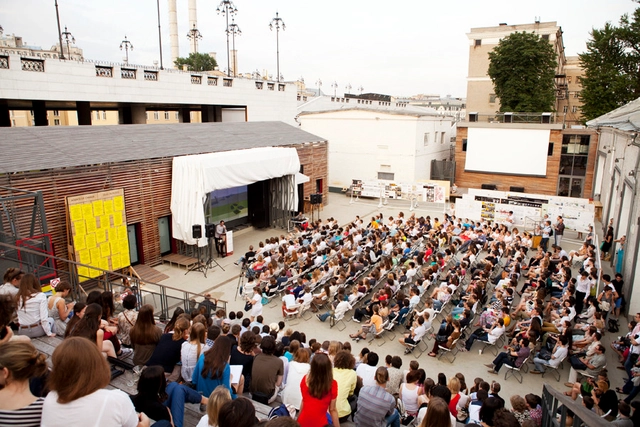
A collection of 41 interviews conducted by students at the Strelka Institute, entitled Future Urbanism, is now available online. The interviews feature architects, urban planners, sociologists, researchers, and other professionals from fields related to urban studies, emphasizing the Strelka Institute's mandate for interdisciplinary thinking. To take a look at the interviews, see here.
Andrew Carnegie once said, “Aim for the highest.” He followed his own advice. The powerful 19th century steel magnate had the foresight to build a bridge spanning the Mississippi river, a total of 6442 feet. In 1874, the primary structural material was iron — steel was the new kid on the block. People were wary of steel, scared of it even. It was an unproven alloy.
Nevertheless, after the completion of Eads Bridge in St. Louis, Andrew Carnegie generated a publicity stunt to prove steel was in fact a viable building material. A popular superstition of the day stated that an elephant would not cross an unstable bridge. On opening day, a confident Carnegie, the people of St. Louis and a four-ton elephant proceeded to cross the bridge. The elephant was met on the other side with pompous fanfare. What ensued was the greatest vertical building boom in American history, with Chicago and New York pioneering the cause. That’s right people; you can thank an adrenaline-junkie elephant for changing American opinion on the safety of steel construction.
So if steel replaced iron - as iron replaced bronze and bronze, copper - what will replace steel? Carbon Fiber.
In honor of Earth Day, we have complied a preview of the top ten most sustainable exemplars of U.S. architecture selected by the American Institute of Architects (AIA) and its Committee on the Environment (COTE). Each project featured will be honored with a COTE Top Ten Award for “sustainable design excellence” at the 2014 National Convention in Chicago. View them all, after the break...
Latrobe City Council is pushing an initiative that would put “wood first.” If implemented, the “Wood Encouragement Policy” would educate architects and industry professionals about the structural and environmental benefits of wood in an effort to promote the local timber industry and use of sustainable building materials. Following the lead of the United States and New Zealand, both of which recently established “wood encouragement” policies, the council hopes that this will set a precedent that can be applied throughout the rest of Australia.
https://www.archdaily.com/499157/wood-encouragement-policy-coming-to-australiaStephen Stanley
The Sarasota Architectural Foundation (SAF) has announced that a replica of Paul Rudolph’s Walker Guest House will be constructed at the John and Mable Ringling Museum of Art in Sarasota, Florida. It is hoped the iconic, 24' x 24' vacation cottage will be opened to the public by 2015, after which it will be disassembled and transported to select museums around the country.
More information about the Walker Guest House, after the break...
https://www.archdaily.com/497999/paul-rudolph-s-iconic-walker-guest-house-to-be-re-constructedStephen Stanley
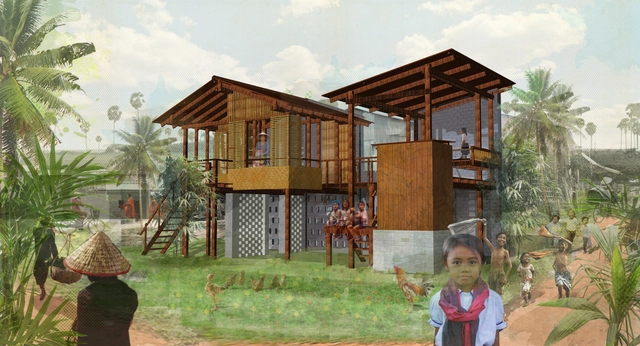
Courtyard House render. Image Courtesy of Building Trust International
Building Trust International, in collaboration with Habitat for Humanity and Karuna Cambodia, has realized three winning designs from the 2013 Future of Sustainable Housing in Cambodia competition.
Built on the outskirts of Phnom Penh, the constructed designs sought to provide impoverished Cambodians with new options for safe and secure homes under $2000 that are capable of withstanding flood and able to be expanded in phases.
Check out the three completed designs, after the break...
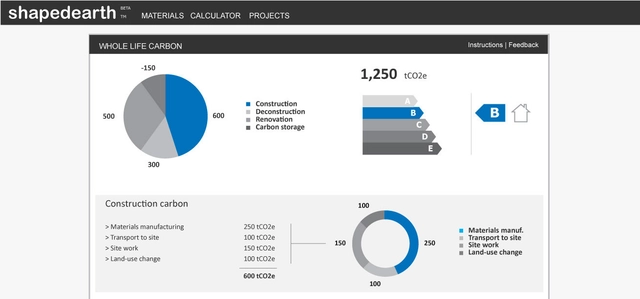
“Green” measures nothing. Which is greener: a building that saves water or a building that uses certified carpet? There is no obvious answer to this question - this is why trying to quantify “green” is biased and leads nowhere. Using carbon as a metric, on the other hand, makes sense. This is something you can accurately measure and therefore reduce. Going “low-carbon” not only contributes to fighting climate change but also totally redefines construction (choice of materials, energy sources, etc.).
This is why shapedearth.com, the first free online calculator for assessing the whole life embodied carbon of building projects, is such a useful tool.
In an enlightening interview on Future Cape Town, the Lord Mayor of Copenhagen Frank Jensen discusses what it is that makes Copenhagen, and Denmark as a whole, such a green-focused society. The key it seems goes beyond simple politics, stemming from a combination of early adoption, a robust and widely appreciated welfare system and a culture of collaborative innovation. You can read the full interview here.
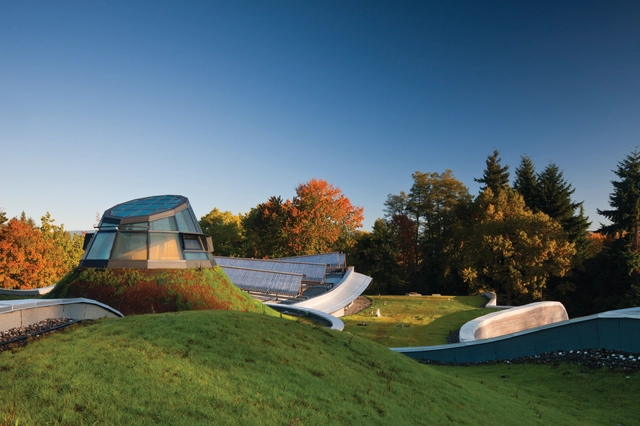
VanDusen Botanical Garden Visitor Centre / Perkins+Will
The Royal Architectural Institute of Canada has named Peter Busby the 2014 recipient of the RAIC Gold Medal, the highest honor awarded by the organization. Since founding his Vancouver practice in 1984, Busby has built a reputation for being a “powerful catalyst in the growth of the green architecture movement,” a pioneer in sustainability. In 2004, Busby merged his firm with Perkins+Will. He now serves as the Managing Director of Perkins+Will’s San Francisco office. More information on Busby and the award, here.
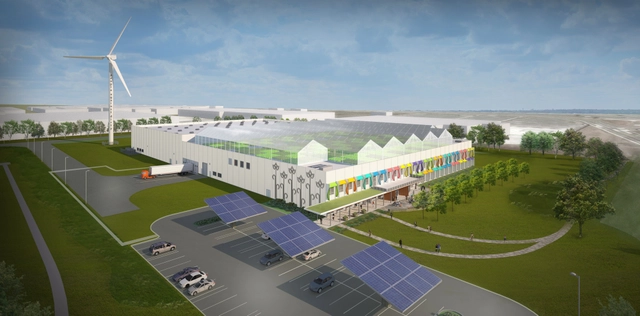
William McDonough + Partners has been selected to design Method’s first U.S. manufacturing facility on a brownfield site in Chicago’s historic Pullman community. The company, known for producing environmentally conscious cleaning products, commissioned McDonough to design an ultra clean, LEED Platinum facility constructed from Cradle to Cradle Certified materials and powered entirely by renewable energy.
This article by Jonathan Ward, originally published on Arup Thoughts as "A Top-Down Approach to Flood Prevention" discusses a cheap, simple, but effective method of easing the load on drainage after a storm: temporary storage of water on flat roofs, which can not only help to prevent floods, but also provide unexpected benefits as well.
Gravity offers a simple and cheap way to attenuate stormwater flows – by storing water temporarily on a flat roof. All sorts of causes are being blamed for the current flooding in the UK; lack of dredging, poor management of catchment areas, construction on flood plains and paving over front gardens are all being mentioned in the press.
One thing is for sure – we will be paying a lot more attention to the topic given the current experience, and the fact that wetter winters are predicted in our changing climate, with a certainty of more extreme events.
Read on for an explanation of why this counter-intuitive measure actually makes perfect sense
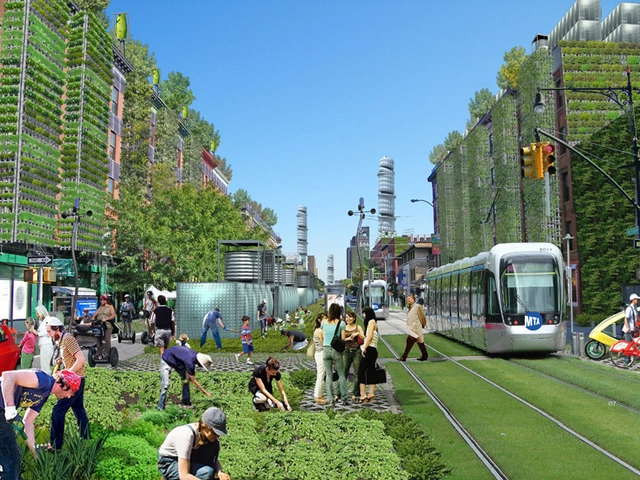
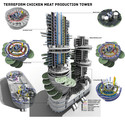
Street view of Amsterdam Ave. in northern Manhattan featuring a mix of traditional and advanced agricultural growing techniques. Image Courtesy of Terreform
"In an era of incompetent nation states and predatory transnationals, we must ratchet up local self-reliance, and the most logical increment of organisation (and resistance) is the city." This is how Michael Sorkin, writing in Aeon Magazine, explains his hypothetical plan to radically change the landscape of New York City, bringing a green landscape and urban farming into the former concrete jungle.
The plan, called "New York City (Steady) State", produced over six years by Sorkin's Terreform Research Group, is not designed simply for aesthetic pleasure; it's not even an attempt to make the city more sustainable (although sustainability is the key motivation behind the project). The project is in fact a "thought-experiment" to design a version of New York that is completely self reliant, creating its own food, energy and everything else within its own borders.
Read on after the break to find out how New York could achieve self-reliance
‘Habitat of Homo Economicus’, a piece for ‘The Competitive Hypothesis’, Storefront for Art and Architecture in New York, 2013. Image Courtesy of Ross Exo Adams and Ivonne Santoyo-Orozco
In this article, originally published on the Australian Design Review as "Longing For a Greener Present", Ross Exo-Adams examines the fear that lies behind the trend toward sustainable urbanism, and finds that the crisis we find ourselves in might not only be confined to an ecological one.
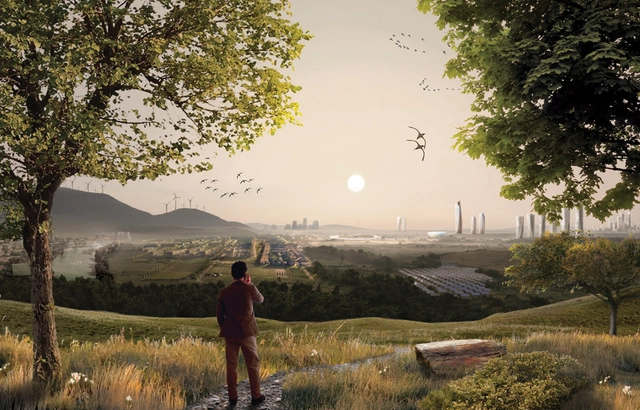
Over the past decade, architects have found themselves increasingly commissioned to design districts, neighbourhoods, economic free zones and even entire new cities: a phenomenon that has been accompanied by a commitment to ‘sustainability’, which now seem inseparable from urban design itself. While ‘sustainability’ remains a vague concept at best, it nonetheless presents itself with a sense of urgency similar to that which galvanised many of the great movements of modern architecture vis-a-vis the city. Underlying such urgency is a rhetorical reference to a collective fear of some palpable sort, whether it be fear of revolution (Le Corbusier), fear of cultural tabula rasa (Jane Jacobs, Team X) or our new fear: ecological collapse. It is obvious that the myriad ‘eco’ projects that have popped up all around the world would not be viable if not for the fact that they appear against a background of imminent catastrophe – a condition of terrifying proportions. Yet the essence of this fear is far from clear. Indeed, in light of ecological catastrophe and amidst any fetish for windmills or vegetation, architects have cultivated what seems to be a curious nostalgia for the present – a pragmatism whose lack of patience for the past seeks a kind of reconstitution of the present in imagining any future. So if not for climate mayhem, what is the true nature of fear that lies at the core of today’s urban project, ‘ecological urbanism’?
This article, published by Metropolis Magazine as "Behind the Living's "100% Organic" Pavilion for MoMA PS1", goes behind the plans for this year's MoMA PS1 Young Architects Program's winning design, "Hy-Fi" - looking at the compostable eco-bricks which make the design possible.
"It all starts on local farms with waste corn stalks," says Sam Harrington of Ecovative, who will help build this year’s winning entry for the MoMA PS1 Young Architect’s Program. Hy-Fi, designed by the New York-based firm The Living, will be made of bricks that are entirely organic and ultimately, compostable. A good chunk of that material is corn stalks, stained clay-red with an organic dye from Shabd Simon-Alexander and Audrey Louisere . The rest is mycelium—mushroom roots to you and me—that will hold the corn stalks together as they cohere into a molded shape. The technology, developed by Ecovative in 2007, has so far been used as a packaging material. "But we love the chance to try something bold, and that’s what PS1 is all about," Harrington says.
Read more about the bricks behind Hy-Fi after the break
Videos
At LAX, it was important to create "a positive experience after the stress of the departure experience," says Melissa Weigel. Image Courtesy of Moment Factory
In this interview, originally published by Metropolis Magazine as "Q&A: Melissa Weigel of Moment Factory", Leslie Gallery-Dilworth talks with Weigel about the challenges of devising multimedia installations for public spaces, as in their recent installation for the Bradley International Terminal at LAX.
Montreal’s Moment Factory, a new media and entertainment studio, is best known for creating and producing multimedia environments that combine video, lighting, architecture, sound, and special effects. You may have seen their work at Cirque du Soleil, Madonna’s 2012 Superbowl Half Time Show, Disney's E3 booth, or Jay Z's Carnegie Hall debut. Perhaps you were there when they lit up the facade of the Sagrada Familia or Montreal's Quartier des Spectacles district. Or maybe you saw that they were included in Apple's recently launched 30th anniversary timeline.
Moment Factory was the main content provider for the interior concept and media features in the newly opened Bradley International Terminal at LAX, designed by Fentress Architects. It was a large collaboration consisting of several partners, including Mike Rubin with MRA International, Marcela Sardi of Sardi Design, Smart Monkey, Digital Kitchen, and Electrosonic with installation by Daktronics and Planar.
In the following interview, which originally appeared in Zawia#01:Utopia (published December 2013), Sir Peter Cook, one of the brilliant minds behind Archigram, sits down with the editors of Zawia to discuss his thoughts on utopia - including why he felt the work of Archigram wasn’t particularly utopian (or even revolutionary) at all.
ZAWIA: It is perhaps difficult to discuss our next volume's theme - “utopia" - without first starting with archigram and the visions that came out of that period. How do you view the utopian visions of archigram during that specific moment of history in relation to the current realities of our cities and the recent political and social waves of change ?
PETER COOK: Actually... at the time I was probably naive enough to not regard it as Utopian.
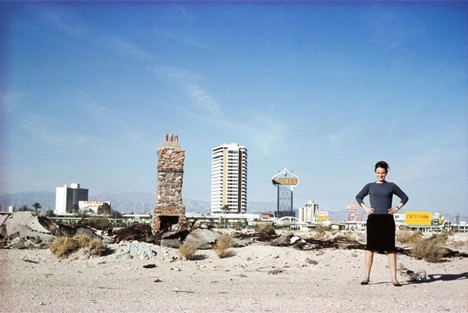
Designers & Books editors Stephanie Salomon and Steve Kroeter sat down with Denise Scott Brown for a conversation centered around Learning from Las Vegas, the seminal work penned by Scott Brown, Robert Venturi, and Steven Izenour in 1972. The must-read interview reveals some fantastic insight into Scott Brown's personal and professional life - her unending love of neon (one which led her to Las Vegas), her distaste for the "tyranny of white paper" (which gravely afflicted the design of the first edition of Learning from Las Vegas),as well as her - rather surprising - position on awarding group creativity. Read the full interview here and check out some select quotes from the interview, after the break.






_Vertical_Farm_Midtown_Manhattan.jpg?1393236960 "Bird’s-eye view of Midtown Manhattan’s neighborhood food hubs in New York City (Steady) State. Image Courtesy of Terreform")


.jpg?1391602667&format=webp&width=640&height=580)