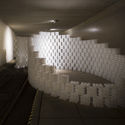
Architecture Research Office and FilzFelt have teamed up to create ARO Block, a series of modular acoustic tiles that provide sound control in a customizable, easy-to-install system. Generated from remnant material of FilzFelt’s CNC cut products, which are often times small, ARO Block not only creates distinct felt tile patterns but also prevents leftover fabric from going to waste.
In 1978, Australian ecologists David Holmgren and Bill Mollison coined the concept of permaculture as a systematic method for the first time. For Mollison, "permaculture is the philosophy of working with, rather than against, nature, after long and thoughtful observation." [1] Meanwhile, Holmgren defines the term as "consciously designed landscapes that simulate or mimic the patterns and relationships observed in natural ecosystems." [2]
In 2002, Holmgren published the book "Permaculture: Principles and Pathways Beyond Sustainability," in which he defines 12 design principles that serve as a guide for creating sustainable systems. These principles can be applied to everyday processes to humanize them, enhance efficiency, and ensure mankind's long-term survival."
What if we apply them to the design process of an architectural project?
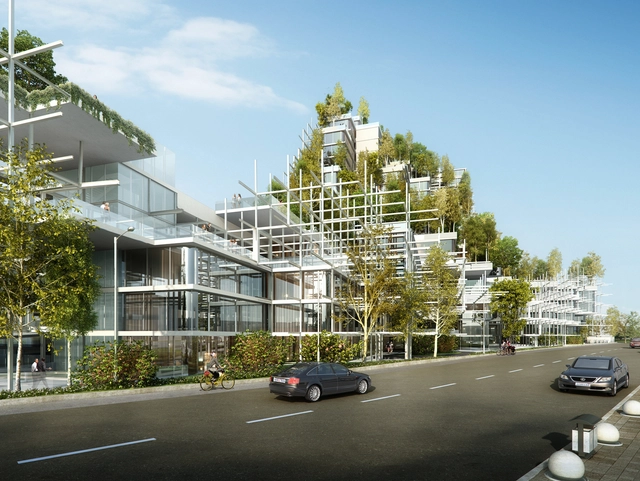
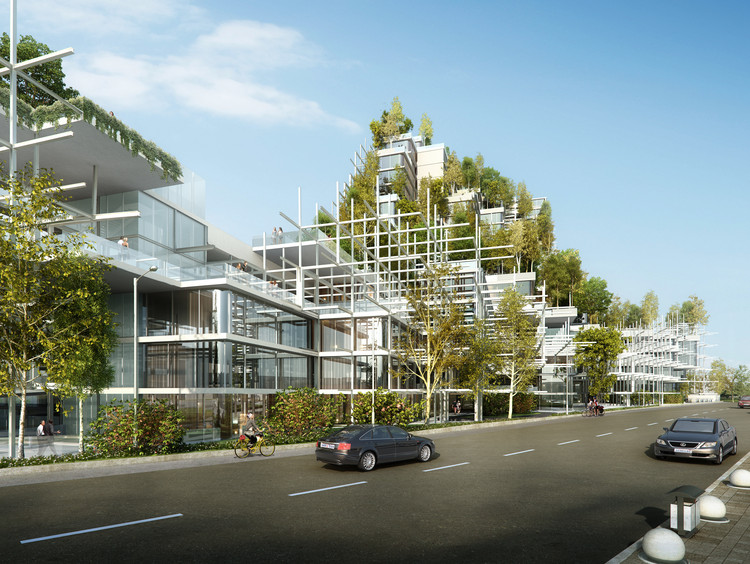
New-York-based studio Architensions has released the design for its shortlisted project, Rising Ryde, for the Ryde Civic Center in Sydney, Australia. In an effort to embrace local communities and contexts, the project is conceived as a hill-shaped building covered in local vegetation and it aims to prioritize people through its complex system of social connections and interactions with nature.
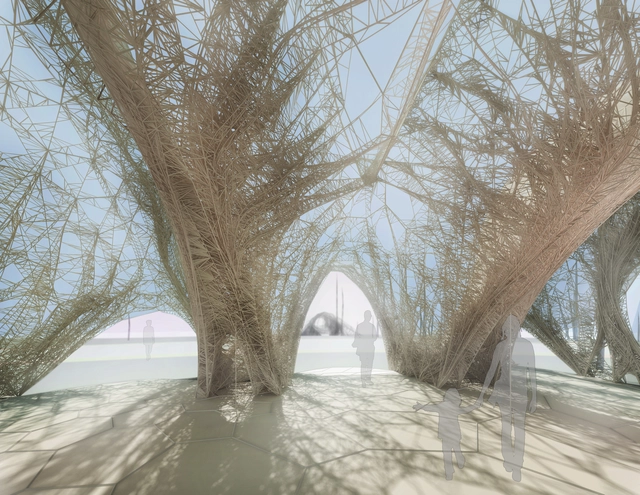
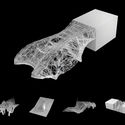
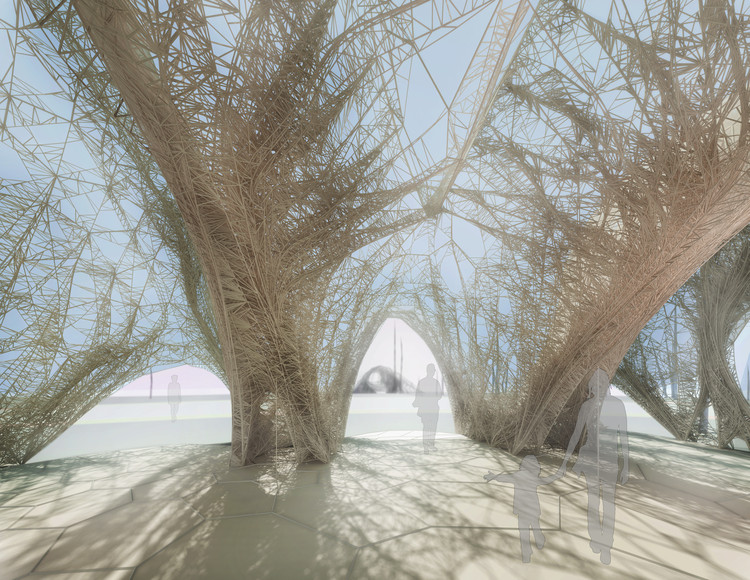
The AA School of Architecture’sDRL Masters Program has developed a thesis project, entitled Growing Systems, which explores adaptable building systems using methods of robotic fabrication and generative special printing within the context of housing.
Centered on a new method of structural 3D vertical extrusion, the project combines the precision of prefabricated elements with the adaptability of on-site fabrication, in response to the flux and dynamism of cities. The method becomes a system of elasticity that can accommodate site parameters, as well as future adjustments.
Florida is a state in denial. Miami is in the midst of one of the largest building booms in the region's history. Dense crane canopies pepper the city's skyline as they soar over forthcoming white, gold, and aqua clad "high end" residential and hotel towers. This massive stream of investment dollars is downright paradoxical considering the impending calamity that surrounds Southern Florida: The National Oceanic and Atmospheric Administration predicts that the sea level could likely increase almost 35 inches (0.89 meters) by mid-century. If current trends continue, that number is anticipated to rise to up to 80 inches (2.0 meters) by the year 2100, threatening the habitability of the entire metro area.
Given that harrowing scenario, Miami is either refusing to acknowledge the inevitable, or desperately trying to become relevant enough to be saved—not that saving the city is actually feasible. The region sits on extremely porous limestone which pretty much rules out the option of a Netherlands style sea wall. If the Atlantic couldn’t make any horizontal inroads, the rising tide would simply bubble up from below. Miami’s pancake topography doesn’t stand a chance.
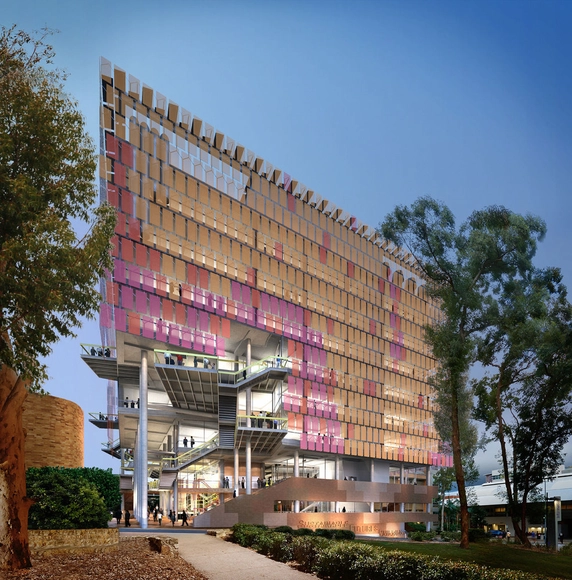
Firms Lyons and m3architecture have been selected to design the Sustainable Futures Building at the St Lucia campus of the University of Queensland.
The new building will house the School of Chemical Engineering, and is intended to amplify the University’s profile as a hub of chemical engineering leadership in Australia, the Asia-Pacific region, and a global stage.
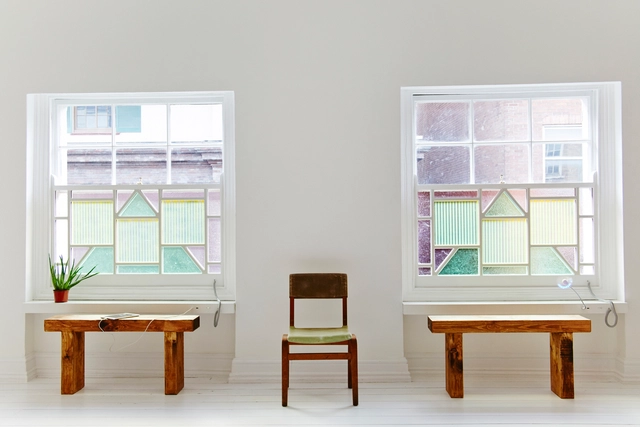
London-based design firm Caventou has designed a series of “stained glass” everyday objects that turn daylight into electricity, even indoors.
Integrated with solar cells, Current Table and Current Window are both independent, intelligent power sources that function normally as household items.
Far from the common dismissal of Margot Krasojevic’s work as (in her own words) “parametric futurist crap,” her work has always revolved around concepts of sustainability. As she explained to ArchDaily last year, she aims to focus on the ways that sustainable technology “will affect not just an architectural language but create a cross disciplinary dialogue and superimpose a typology in light of the ever-evolving technological era.” For the second project in a series of three proposals for the city of Belgrade Serbia, the architect is proposing a “Trolleybus Garden” that functions as a waiting shelter and park while simultaneously harnessing kinetic movement to produce electricity.
Hou de Sousa (Nancy Hou and Josh de Sousa) has completed construction on Raise/Raze and Sticks, two competition winners for temporary installations in Washington, DC and New York, respectively.
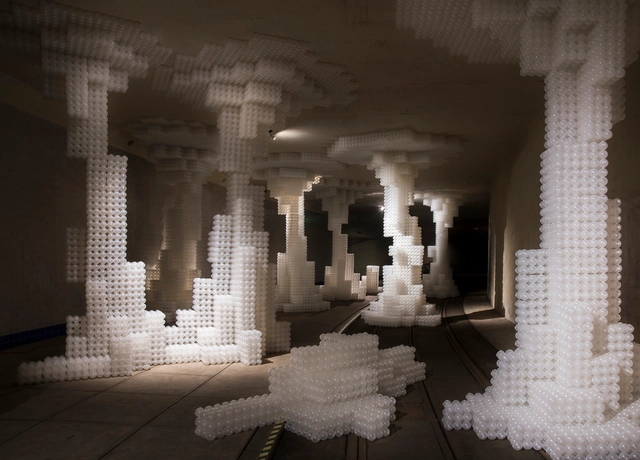
Through Raise/Raze, the firm reused plastic balls from Snarkitecture’s “The Beach” at the National Building Museum to create an installation in DC’s Dupont Underground, a contemporary arts and culture space repurposed from an abandoned trolley station. Raise/Raze opened on April 30, and closed on June 1.
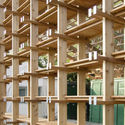
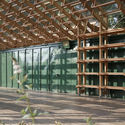
Located at the Socrates Sculpture Park in Queens, New York, Sticks is a multi-purpose pavilion space made of standard dimension lumber and accented with scrap wood found on-site. The pavilion opened on July 9, and will close December 31.
The Architectural and Environmental Design (AED) is created to be a platform for all early career researchers, practitioners and students from all around the world, helping them to share ideas, and to expand networks for scholars.
For a ruined Civil War-era warehouse in Brooklyn, there may have been no better organization than an avant-garde theater group to think creatively about its future.
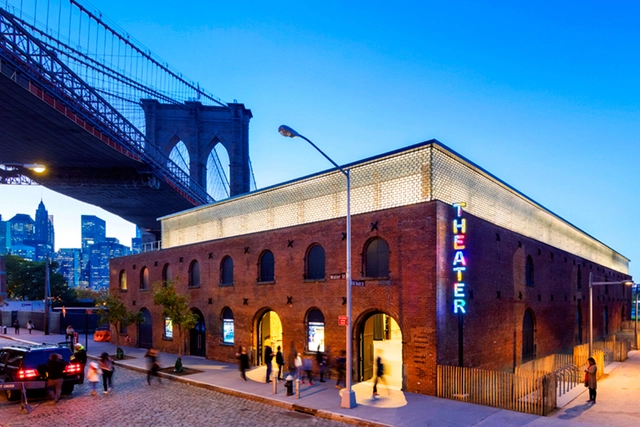
Situated in the shadow of the Brooklyn Bridge in the popular Dumbo neighborhood, the 1860 tobacco warehouse was crumbling and forgotten when St. Ann’s, a 36-year-old theater company that began life in another Brooklyn church, sought to renovate it for its first permanent home. Attaining energy efficiency in historic buildings is not just possible—it can be the most sustainable and aesthetic choice.
St. Ann’s, led by artistic director Susan Feldman, hired a building team that included Marvel Architects; BuroHappold Engineering; and Charcoalblue, a theater, lighting, and acoustics consultancy. The resulting 25,000-square-foot complex, St. Ann’s Warehouse, includes two versatile and changeable performance spaces, lobby and event areas, and a triangular garden (designed by landscape architects Michael Van Valkenburgh Associates).
https://www.archdaily.com/791475/this-brooklyn-theater-renovation-shows-you-dont-have-to-choose-between-heritage-and-sustainabilityKim A. O'Connell
Studio Symbiosis Architects is amidst the construction process for Punjab Kesari Headquarters, an 18,000 square meter office space in Delhi NCR, India.
Designed as a fusion of traditional Indian architecture and contemporary office space, the main objective of the project is “to reduce heat gain and optimize façade opening ratio, ensuing no artificial lighting is required on a typical day.”
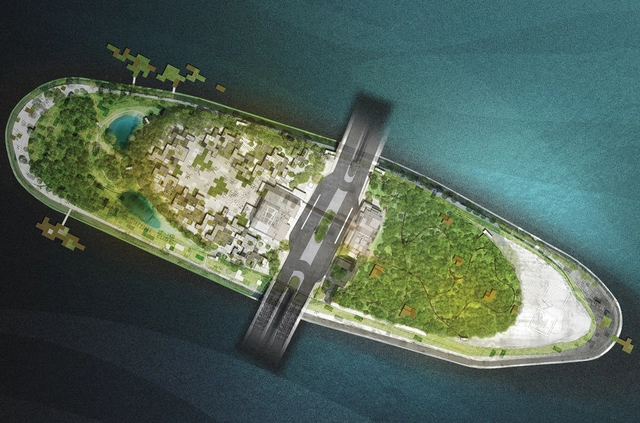
Architecture and Urban Planning firm group8asia has won third prize in the Seoul Metropolitan Government competition for the design of Nodeul Island with its sustainable project Seoul Green Dot.
Nodeul Dream Island leads with the idea of Neverland in mind, and isdesigned as “a utopia where nature and serenity are abundant.” Here, it is hoped that environmental economy, and socially sustainable practices can be utilized to create a space to transform the dense urban fabric.
Mas Subramanian. Image Courtesy of Oregon State University
After discovering a vibrant new pigment of blue by accident, chemists at Oregon State University have brought the compound to market in the form of a paint that looks promising to architectural sustainability.
While experimenting with materials to study applications for electronics in 2009, OSU chemist Mas Subramanian and his team mixed black manganese oxide with other chemicals and heated them to 2,000 degrees Fahrenheit. Little did they know, one of their samples would turn into a brilliant blue color.
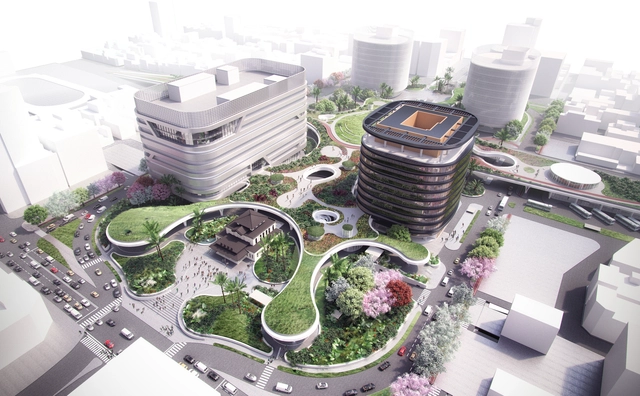
Netherlands-based Mecanoo Architecten has unveiled its plans for the new Kaohsiung Station, the centerpiece of the massive Kaohsiung Metropolitan Area Underground Railway Project in Taiwan.
The project, which will occupy an 8.5-hectare site, will act as a green connector unifying different modes of transportation and represent Kaohsiung’s vision for its future as a sustainable city.
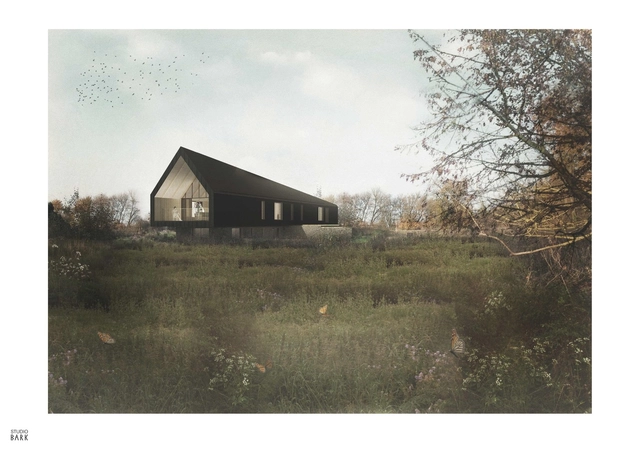
London-based Studio Bark has revealed its plans for Black Barn, an environmentally conscious family home in Dallinghoo, Suffolk.
Based on an interpretation of local black agricultural barns, the 300-square-meter house will be clad in charred timber, an ancient Japanese form of natural preservation as a way to enhance the longevity and beauty of wood.
One man’s trash is another man’s building material. Researchers from the Royal Melbourne Institute of Technology (commonly known as RMIT University) have developed a technique for making bricks out of one of the world’s most stubborn forms of pollution: discarded cigarette butts. Led by Dr. Abbas Mohajerani, the team discovered that manufacturing fired-clay bricks with as little as 1 percent cigarette butt content could completely offset annual worldwide cigarette production, while also producing a lighter, more efficient brick.
Videos
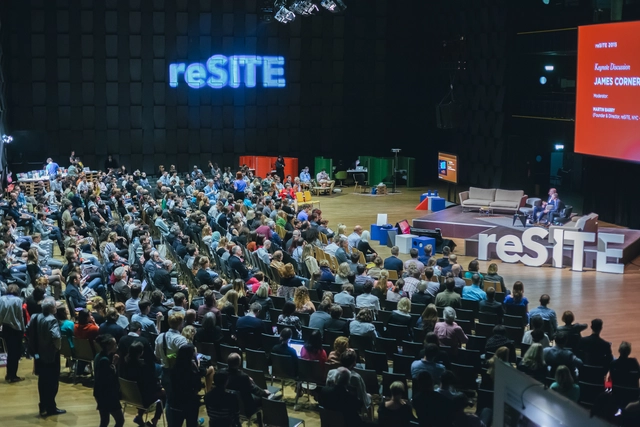
reSITE Conference, Prague, Forum Karlin. Photo Dorota Velek
On June 16-17, Prague will be hosting one of the leading architecture and urbanist events in Europe. Most of the 49 world renowned experts who will speak at reSITE 2016: Cities in Migration have experienced migration themselves. Coming from 20 countries, they will bring innovative solutions and successful strategies for European and Western cities to come to terms painlessly with the influx of new residents. Carl Weisbrod, Chairman of the City Planning Commission of NYC, Professor Saskia Sassen, sociologist at Columbia University, and Michael Kimmelman, the Architecture Critic for The New York Times will come from New York City. A huge number of speakers will come from Germany. Besides the famous landscape architect, Martin Rein-Cano from Topotek 1, Berlin, we will meet one of the city planner of Munich and the co-founders of the initiative “Refugees Welcome.”