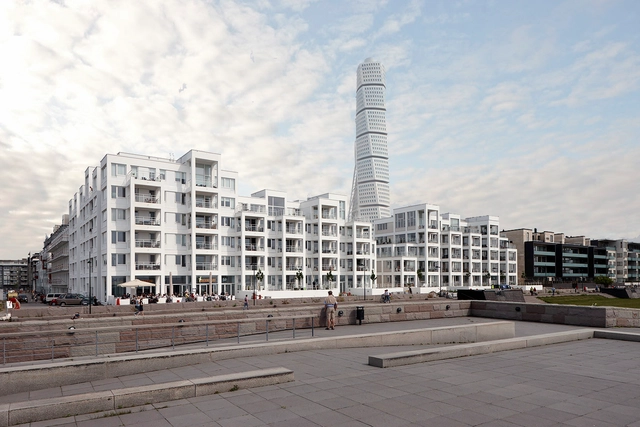
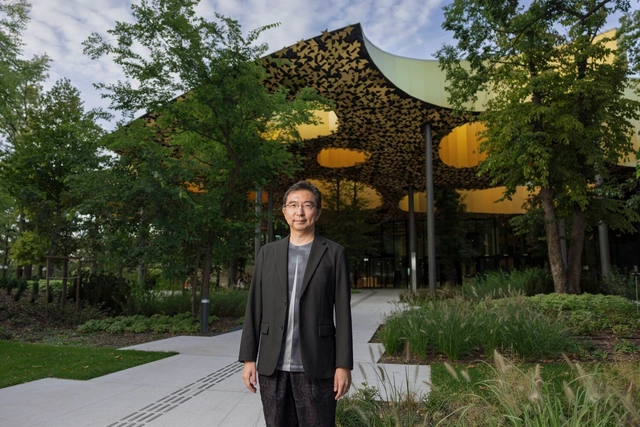
Captivated by cinematographic references and the narrative space, Ole Scheeren's work stands out by its disruptive solutions to the present social challenges and the cities we live in. With more than 30 years of career in the architecture field, Ole Scheeren has won several awards and one of its most iconic works includes the CCTV Headquarters in Beijing when was director and partner at OMA, before founding Büro Ole Scheeren.
In this interview, documented at the World Architecture Festival 2022, Scheeren discusses the importance of the narrative of a project and the quality architecture has by building the stages where people live: "the fictional anticipation of life".
Rahul Mehrotra is a practicing architect based in Boston and Mumbai and he has been teaching at Harvard’s GSD where he is currently Chair of the Department of Urban Planning and Design and Director of the Master in Architecture in Urban Design Degree Program. Born in 1959, Mehrotra grew up in Lucknow, a city in Northern India and an important cultural and artistic hub. His father was a manager at a large machine tool company. The family moved a lot following Mehrotra senior’s frequent promotions, which led to changing residences owned by his company. Besides a few years in Lucknow and Delhi, they lived in different neighborhoods within Mumbai.
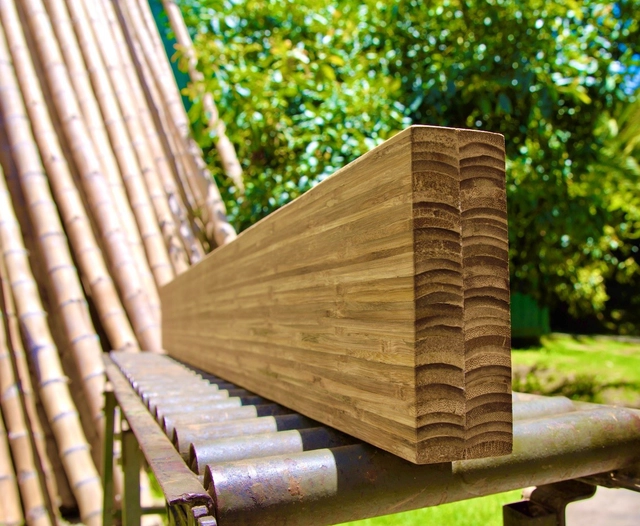
Pretentious as it may sound, we can say with certainty that bamboo is one of the most promising materials for the future of the construction industry. Neil Thomas, principal engineer at atelier one, says that if we were to design an ideal building material, it would look a lot like bamboo. This is because it grows very fast, is present in many countries around the world, has a highly efficient cross-section, and has impressive load-bearing strength. But beyond its structural use in its raw form, bamboo is also a material that allows a high level of processing and can be laminated for flooring, fixtures and, as we will see in this article, for Structural Engineered Bamboo (SEB) structures, which are very similar to Engineered Wood. We spoke with Luke D. Schuette, founder and CEO of ReNüTeq Solutions, LLC, a company in St. Louis, Missouri, that has been working with this structural material technology.
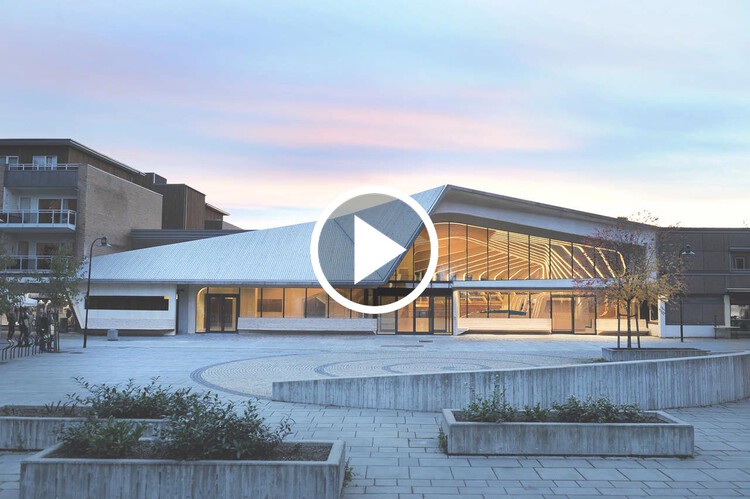
In a conversation with Louisiana Channel, the founders of the international practice Helen & Hard Architects reaffirm their insistence on community and sustainability. The use of wood, in their practice, has become more than a building philosophy, it has turned into a philosophy. “Trees have a life of their own, and you feel a deep respect for the time it has taken to grow. We work with something alive, an organic material. We can’t do as we please with it. We must interact with the material.”
In August 2022, Siv Helene Stangeland and Reinhard Kropf, the founders of Helen & Hard, were interviewed by Marc-Christoph Wagner at various locations in and around Stavanger, Norway. The area holds special importance for the architects, whose approach was influenced by the culture that permeates Stavanger and the west coast of Norway.
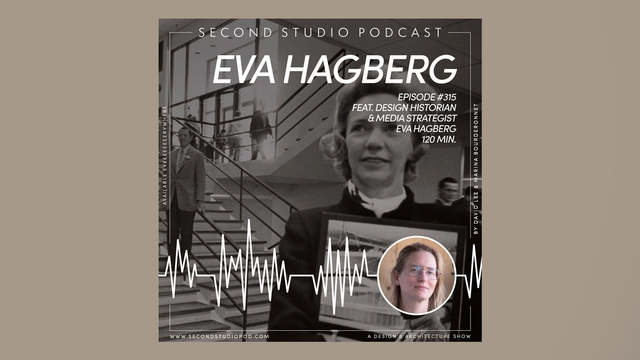
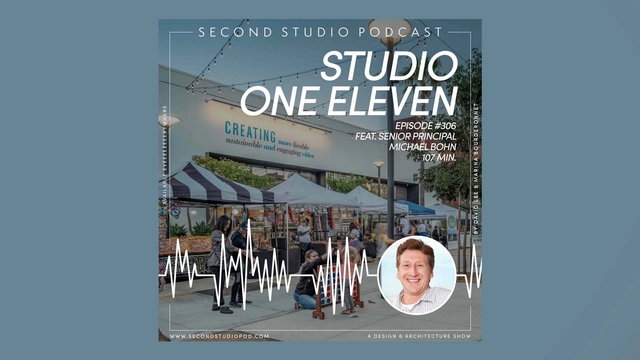
The Second Studio (formerly The Midnight Charette) is an explicit podcast about design, architecture, and the everyday. Hosted by Architects David Lee and Marina Bourderonnet, it features different creative professionals in unscripted conversations that allow for thoughtful takes and personal discussions.
A variety of subjects are covered with honesty and humor: some episodes are interviews, while others are tips for fellow designers, reviews of buildings and other projects, or casual explorations of everyday life and design. The Second Studio is also available on iTunes, Spotify, and YouTube.
https://www.archdaily.com/995571/the-second-studio-podcast-interview-with-eva-hagbergThe Second Studio Podcast
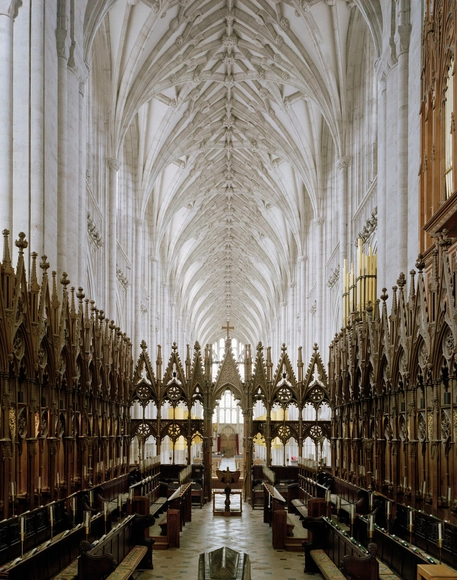
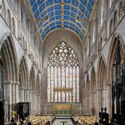
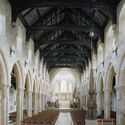
Using only natural light to document English cathedrals can turn into a logistical and technical challenge. However, Peter Marlow's photography has resulted in a remarkable series of iconic spiritual sites whose contemplative atmosphere is rarely accessible to others. Looking east with the camera towards the nave as the dawn light streamed through the main window opens a purist and mystical perspective to the time when these sacred structures were erected.
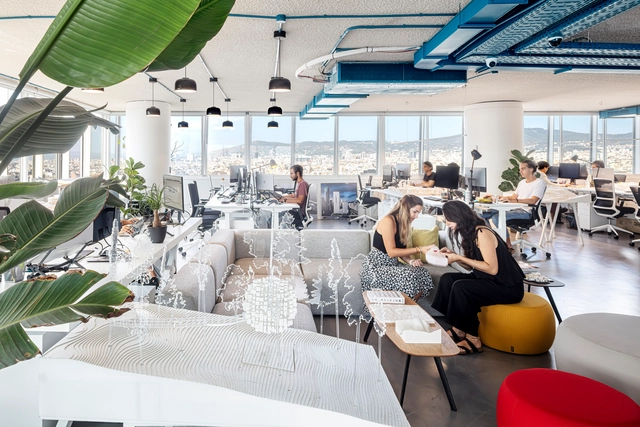
Keen to shape buildings and cities in Southern Europe, BIG has opened its latest office in Barcelona, Spain. Led by partner, João Albuquerque, the studio is seeking to create positive change and integrate into the city and the Spanish community. With a couple of projects spanning from the west to the east of the Mediterranean region, most notably Farfetch, and Fuse Valley campus in Portugal, the Joint Research Center in Sevilla for the European Commission, and the Gastronomy Open Ecosystem for Basque Culinary Center, BIG Barcelona is in constant evolution.
ArchDaily had the chance to talk to BIG Barcelona Partner João Albuquerque about the inception of the Barcelona office, his journey at BIG, and the firm's upcoming projects and involvement within the Spanish and Southern European markets.
The Second Studio (formerly The Midnight Charette) is an explicit podcast about design, architecture, and the everyday. Hosted by Architects David Lee and Marina Bourderonnet, it features different creative professionals in unscripted conversations that allow for thoughtful takes and personal discussions.
A variety of subjects are covered with honesty and humor: some episodes are interviews, while others are tips for fellow designers, reviews of buildings and other projects, or casual explorations of everyday life and design. The Second Studio is also available on iTunes, Spotify, and YouTube.
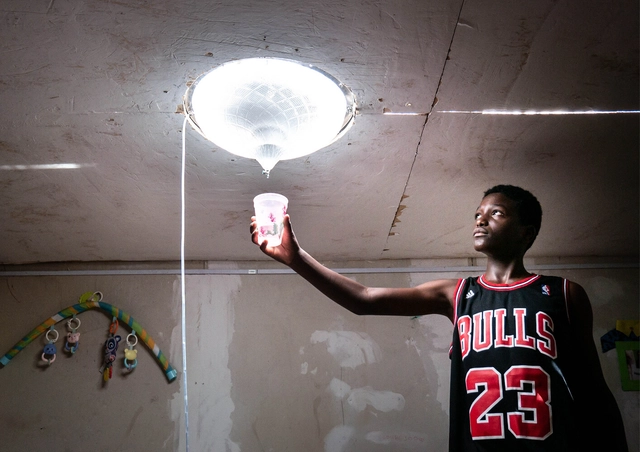
In October, the ArchDaily team spoke with Henry Glogau during his stay in London, where he was working on a number of projects. At only 26 years old, his resume includes an impressive amount of international awards, which he has received for the relevance of his work to issues both so basic and urgent for humanity: access to potable water, sanitation and quality of life. Born in New Zealand, Henry moved to Copenhagen in 2018 to study at the Royal Danish Academy and for the past two years has been working at the 3XN GXN office as an architect in their innovation unit, alongside a multidisciplinary team. Below, read the conversation we had about some of his projects, his beliefs about the role of architecture, and his views on our responsibility to the planet.
The House of Music Hungary is one of the biggest cultural investments in the European Union. Designed by Sou Fujimoto Architects, it is becoming a hub for city dwellers and worldwide visitors wishing to attend concerts, visit the exhibition or record music in the building's open studios.
ArchDaily editors first got in touch with the Liget Budapest Project in the summer of 2021 and were treated to an impressive site visit at the House of Music Hungary. We were among a few select invitees that caught a glimpse of the finishing phases at one of the city's major projects located in its 200-year-old park. Developers and contractors were racing to catch up on the time they’d missed due to the pandemic – a challenge they certainly fulfilled, with the project completed in less than six years and being opened to the public in December 2021.
When the Aga Khan Award for Architecture (AKAA) announced its winners of the 2022 edition, 20 projects were selected for their excellence in the fields of contemporary design, social housing, community development, and preservation and improvement of the environment. Among them, one project in Jhenaidah, Bangladesh, managed to capitalize on the strength of the local community to reverse the ecological degradation of its riverscape and create a functional and socially inclusive public space along the riverbanks. ArchDaily’s Managing Editor, Christele Harrouk, had the chance to interview Suhailey Farzana, and Khondaker Hasibul Kabir co-founders of Co.Creation.Architects, and Rubaiya Nasrin from Platform of Community Action and Architecture, POCAA, part of the team behind the Co-creation of Urban Spaces by the Nobogonga River, in Bangladesh. The project also won the 5th category of the UIA 2030 Award for the Access to Green and Public Spaces.
The Second Studio (formerly The Midnight Charette) is an explicit podcast about design, architecture, and the everyday. Hosted by Architects David Lee and Marina Bourderonnet, it features different creative professionals in unscripted conversations that allow for thoughtful takes and personal discussions.
A variety of subjects are covered with honesty and humor: some episodes are interviews, while others are tips for fellow designers, reviews of buildings and other projects, or casual explorations of everyday life and design. The Second Studio is also available on iTunes, Spotify, and YouTube.
Witold Rybczynski’s latest book—he’s written 22 now, at last count—is The Story of Architecture (Yale University Press), and it’s as comprehensive as the title implies. The author of Home and A Clearing in the Distance starts with the ancients, works his way chronologically through the movements, buildings, and architects, and into the present day. It’s done, he concedes, through his own prism. “I have not given equal attention to all parts of the world,” he writes in the book’s Note to the Reader. “This is primarily although not exclusively the story of the Western canon. That is not to slight regions that often have their own unique architectural accomplishments … but I have chosen examples that best convey the principal thrust of the strain of architectural thought that has most influenced me.” Recently I talked with Rybczynski about the genesis for the book, what architecture lost when it abandoned ornamentation, and where we are today.
The Second Studio (formerly The Midnight Charette) is an explicit podcast about design, architecture, and the everyday. Hosted by Architects David Lee and Marina Bourderonnet, it features different creative professionals in unscripted conversations that allow for thoughtful takes and personal discussions.
A variety of subjects are covered with honesty and humor: some episodes are interviews, while others are tips for fellow designers, reviews of buildings and other projects, or casual explorations of everyday life and design. The Second Studio is also available on iTunes, Spotify, and YouTube.
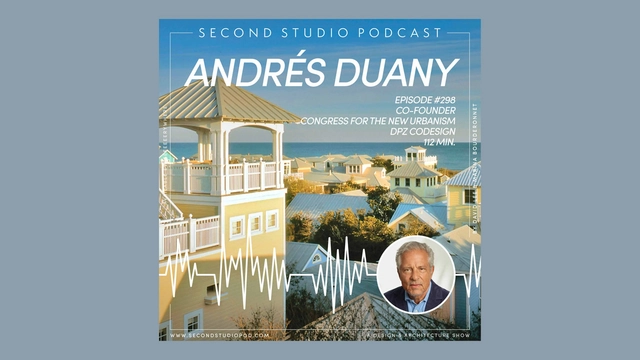
This week David and Marina are joined by Architect Andrés Duany, FAIA, CNU, one of the founders of the Congress for the New Urbanism to discuss new urbanism; his appearance on the Tucker Carlson Fox show; the importance of understanding an audience; Seaside, Florida and how it embodies principles of new urbanism; the current state of architecture; and more.
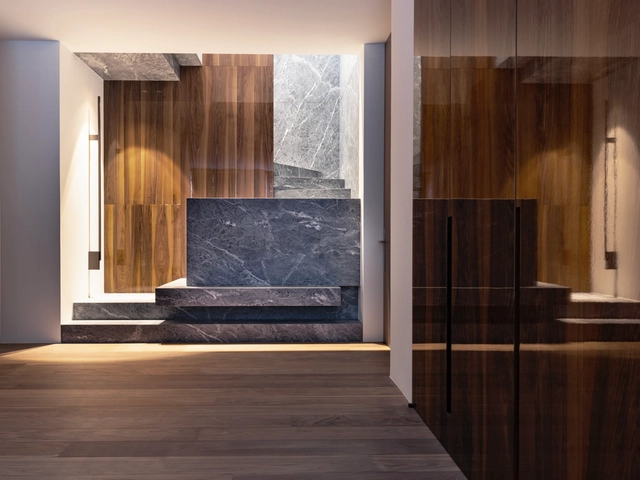
Penthouse Tuymans - Arocha. Image Courtesy of Glenn Sestig
Whether an apartment building, house, storefront, office interior, or restaurant, Glenn Sestig’s architecture consistently reveals itself in tidy fragments of robust and determinately monumental geometry that tends to evoke urban qualities. His austere facades, colonnades, stair landings, and even reception desks and shelf displays appear to be quite hefty and substantial. And, in fact, every project, be it a small boutique or gallery, starts with rigorous planning – visual primary and secondary axes get established, circulation flow is laid out, and major anchors are identified before the architect moves on to addressing the appropriate materials, surfaces, and details. Every space is architecture first; its program and appearance will fit into it.
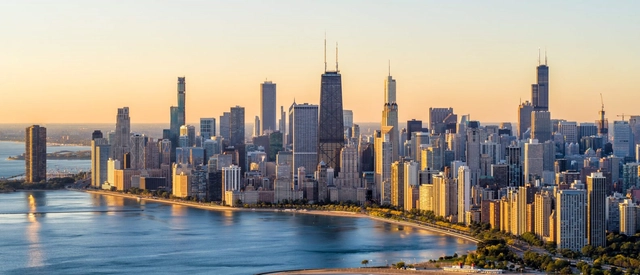
Blair Kamin stepped down as architecture critic for the Chicago Tribune in January 2021, after a nearly 30-year run in the post. He won a Pulitzer Prize in 1999 for a body of work highlighted by a series on Chicago’s lakefront, including a story that documented the race- and class-based disparity between the city’s north and south lakefronts. He has previously published two collections of his work: Why Architecture Matters (2001) and Terror and Wonder (2010), both from the University of Chicago Press. His third collection, Who is the City For? Architecture, Equity, and the Public Realm in Chicago, was released last week. Recently I talked to Kamin about the new book, the state of post-pandemic Chicago, and the need for more mainstream architecture criticism. I will post the second of our conversations tomorrow, in which the critic pushes the need for a redefinition of the phrase “design equity.”
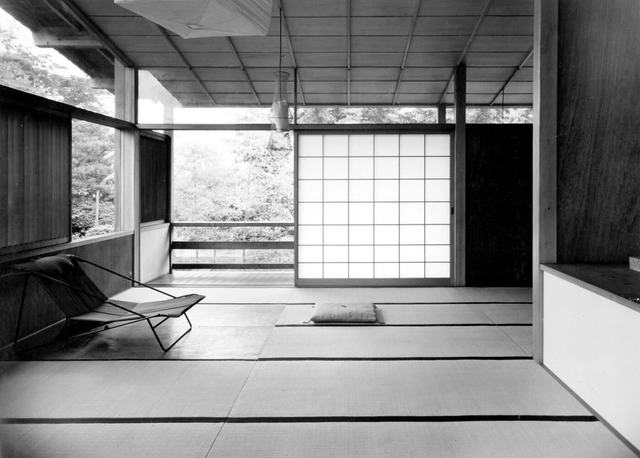
In the following interview with Paul Tange, the chairman and senior principal architect at Tange Associates in Tokyo, we discussed the relationship with his famous architect-father Kenzo Tange (1913-2005; the most influential architect in postwar Japan and the winner of the 1987 Pritzker Prize), the fate of the house Tange senior built for his first family, the decision of joining his father’s practice right after graduation from Harvard, sharing his father’s design principles, and the vision behind his first independent built work – a 50-story Mode Gakuen Cocoon Tower in Tokyo, a vertical campus that can accommodate up to 10,000 students; the project won an international competition, in which 50 international architects participated.