In an age dominated by screens and digital images, the full character of a designed object often remains hidden. Only when encountering an object in person can one sense its texture, notice how it interacts with light, or even perceive its subtle smell. These sensory qualities— so difficult to convey online—reveal why design fairs continue to matter. Increasingly, these fairs have become spaces for experimentation in contemporary design, where ideas about materials, collaboration, and social responsibility are publicly explored. Curated programs, exhibitions, and experimental installations transform these events into environments where designers, manufacturers, and researchers test new possibilities for the built realm.
In South China, there is occasionally an urban myth—especially across Hong Kong, Shenzhen, and Guangzhou—about choosing a home that avoids western light. Over decades, the west-facing sun has proven to be a particularly difficult condition to live with: its low angle in the afternoon, its aggressive heat gain (especially in summer), and the way it penetrates deep into interiors. With global warming and longer, hotter seasons, that much-romanticized "afternoon glow" is increasingly experienced less as romance and more as glare, heat, and fatigue. Although this wisdom circulates as a community-driven rule of thumb, it carries an undeniable architectural clarity about building orientations: avoiding western light is not only about thermal comfort, but also about avoiding the sharpest, most intrusive form of direct illumination—light that strikes at the most unforgiving angle, washing surfaces, flattening depth, and turning rooms into high-contrast fields of discomfort.
"Feeling at home" is more than just an expression—it is the sense of warmth and comfort that transforms a space into a true refuge. To achieve this, elements like color, texture, lighting, and materials play a crucial role in shaping an environment that fosters relaxation and well-being. Backed by research in environmental psychology and neuroscience, the connection between physical spaces and human behavior highlights how architecture can directly influence the atmosphere, turning chaos into tranquility.
Creating living spaces in a world between on and off. Image Courtesy of GIRA
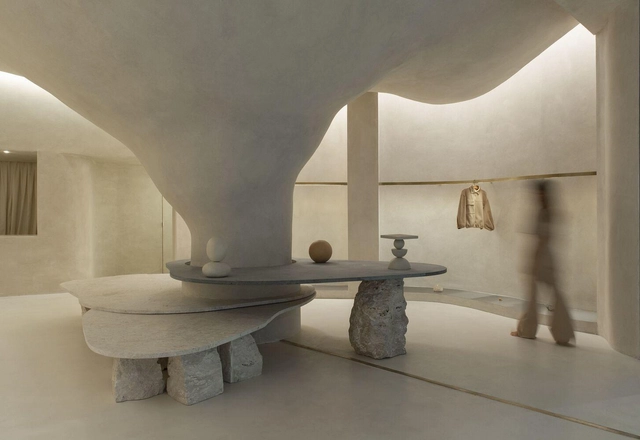
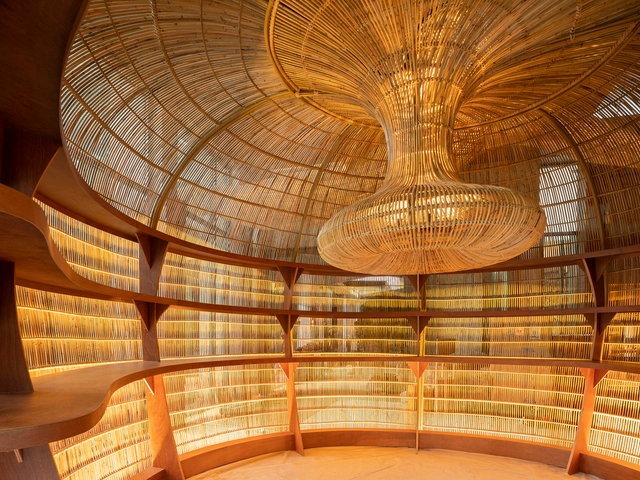
Across recent architectural discourse, interior design has been centered on how spaces shape psychological and atmospheric experience, and on what gives interior environments their emotional resonance. Attention has shifted toward small details rather than relying primarily on form or structure. Light, for instance, is not only a technical requirement but also an architectural material in its own right. It can structure space, animate surfaces, define textures, and shape atmosphere while influencing well-being. At the same time, the characteristics between minimalism and maximalism shape how atmospheres are perceived, prompting reflection on how approaches to simplicity or exuberance might influence mood. Rather than existing as opposing aesthetics, these tendencies explore how interiors interact with mental states, reflect personal identity, and respond to the subtle shifts in the way people inhabit and experience space.
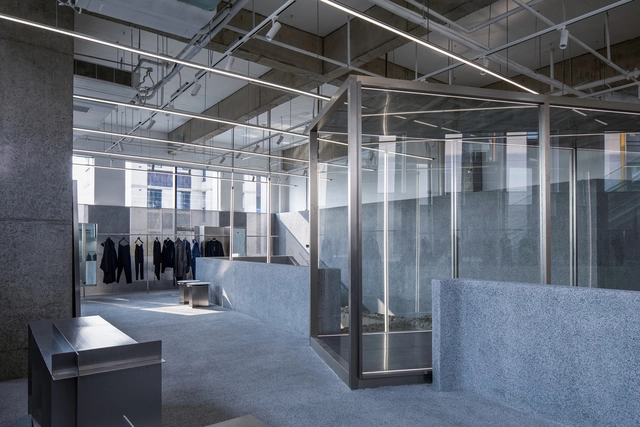
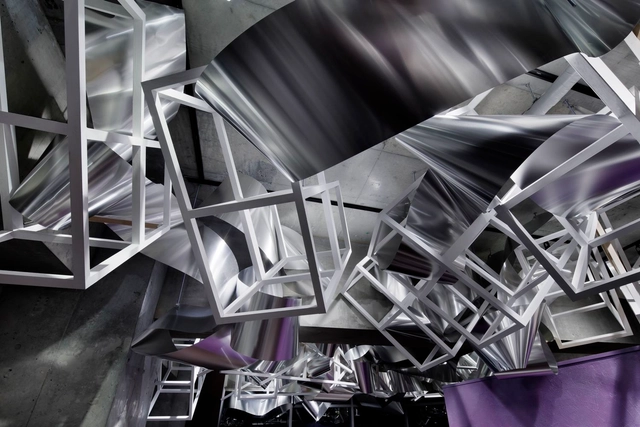
As we close the chapter on 2024, a review of ArchDaily's extensive database projects highlights a few standout interior design trends that defined the year. Among these is the use of stainless steel, often paired with concrete and shades of grey, creating interiors with a refined, industrial elegance. This article delves into the increasing prominence of stainless steel as an interior element, exploring its applications, pairings, and growing appeal despite lingering perceptions of its cold, industrial nature.
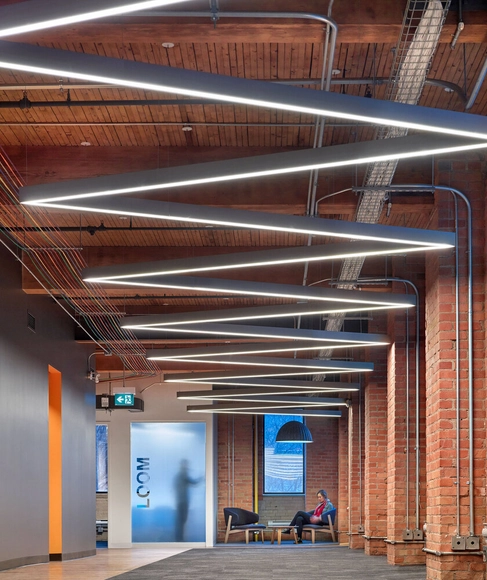
Slack Toronto Office / Dubbeldam Architecture + Design. Image Courtesy of Alcon Lighting
Lighting has evolved remarkably throughout architectural history, driven by significant technological advances. Despite these changes, its central purpose of enhancing aesthetics, functionality, and safety has remained consistent. In this evolution process, a milestone can be traced with the transition from fluorescent lighting to LED lighting, marking a turning point that has reduced costs and energy consumption. Furthermore, it has fueled creativity, thanks to the versatility of LED lighting. These new design possibilities are evident in organic lighting layouts, which mimic linear patterns of lighting arrangements on walls and ceilings, whether suspended or recessed.
In this context, as architects and designers have moved away from symmetrical, rigid, and parallel mirror patterns, Alcon Lighting has detected a trend where linear lighting highlights asymmetrical architectural features and lines. In this way, layouts that do not appear to follow a rigid design pattern are being adopted.
https://www.archdaily.com/1015184/exploring-linear-lighting-design-for-creating-luminous-pathsEnrique Tovar
The importance of lighting in interior design cannot be overstated: done right, it not only accentuates a space's architectural features but also makes inhabitants feel at ease. As Carmelo Zappulla of Lighting Studio External Reference explains in an interview with Architonic, light is a crucial tool to add an emotional element and 'animate a space.'
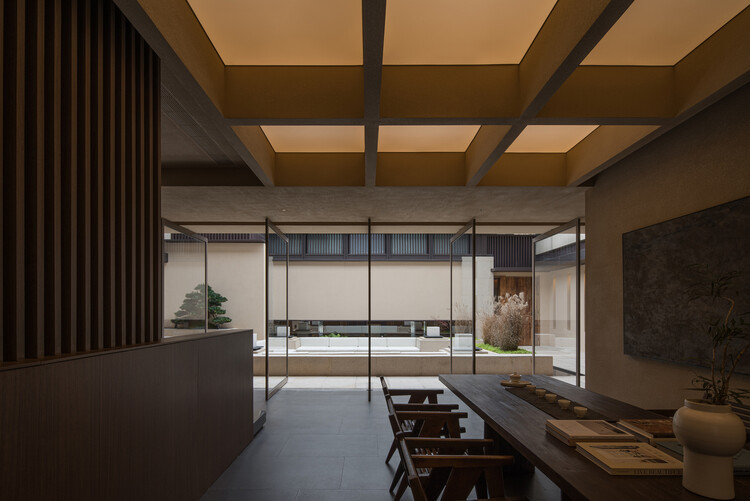
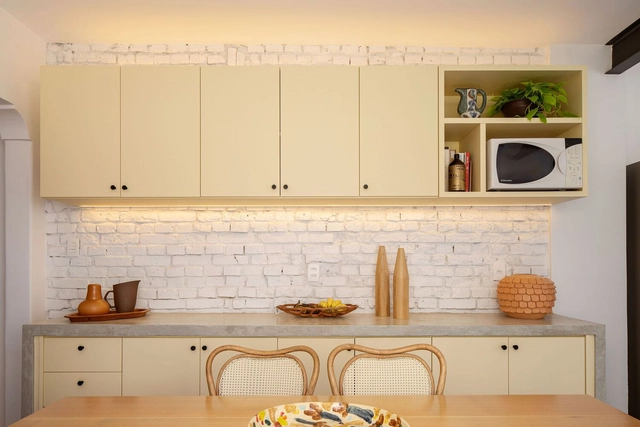
There are a plethora of artificial lighting options to choose from. Which works best is usually determined by the nature of the interior they're in and the desired spatial effect. One of the most common is indirect lighting. This technique uses fixtures to aim light onto surfaces that act as reflectors, softening the emitted rays to prevent pillar-like, bulky beams in favor of a more evenly distributed glow.
Lighting is often a numbers game — too much, and interiors lose their edge (literally), too little, and the dim atmosphere can make a space seem bland. Its importance in interior design cannot be overstated: done right, it not only accentuates a space's architectural features but also makes inhabitants feel at ease. As Carmelo Zappulla of Lighting Studio External Reference explains in a recent interview with Architonic, light is a crucial tool to add an emotional element and "animate a space." It follows that a lighting concept gone wrong can have catastrophic consequences for an otherwise perfectly designed room.
Better for sight, better for eyes, better for health, and better for moods, natural light is understandably the majority’s favored method of illumination, but it’s an uncontrollable resource. It can be increased with larger windows, open-plan interiors, and reflective or light-hued surfaces, but ultimately, when those cold winter nights draw in, the majority of our time is spent fumbling around in the dark.
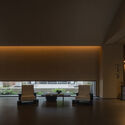
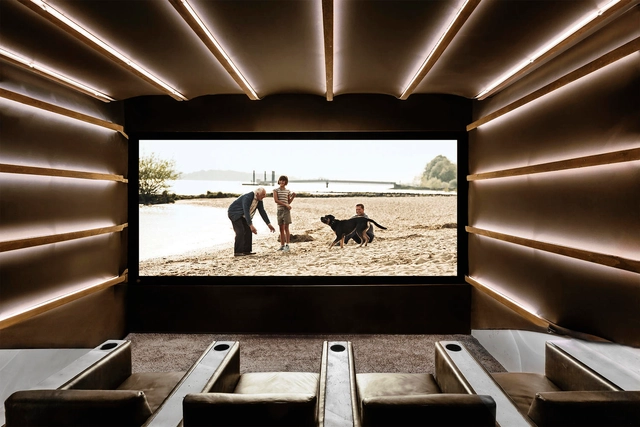
It’s not all doom and gloom, however. Well-thought-out lighting concepts can entirely transform an interior environment. This home in Japan, for example, highlights its architectural features with hidden lighting, bringing them to life at night, while this small-scale showroom cinema also uses indirect lighting strips to graphically define its interior.
Over time, the kitchen has ceased to be considered only as a workspace and became a meeting and leisure area. For many, it is the heart of the home. Therefore, it is necessary to design an ambiance that can help when preparing dishes and also bring comfort during a gathering with friends and family.
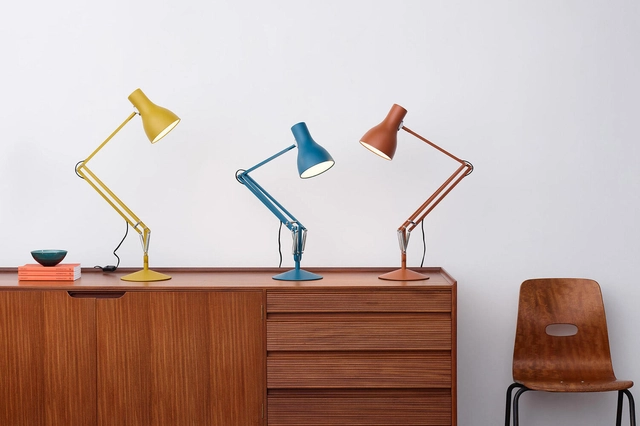
Founder of the balanced-arm design, the Anglepoise lamp holds the weight of its head with attached springs. Image Courtesy of Anglepoise
"You’ve got a friend in me…" sings Randy Newman, in the Oscar-winning toy-box-fearing romp, Toy Story. But although the song refers to the relationship between a young boy and his favorite toys, it could equally apply to another of Pixar Animation’s most iconic characters, the loveable Luxo Jr, seen hopping around the studio’s production logo.
Combining a stable base with an independently moveable arm and head may make anthropomorphic desk lamps more functional, but while size, position, brightness, temperature, and the adjustability of all of the above are important features, what you really look for in someone to share a desk with, is a friend. Here are some of the friendliest desk light characters.
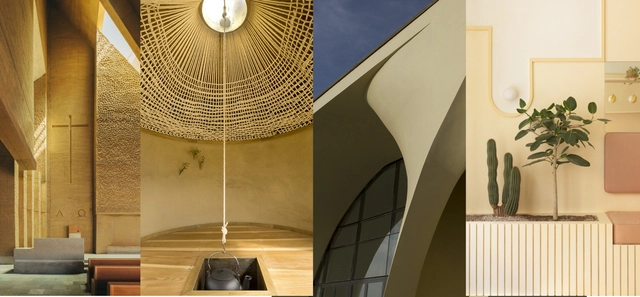
Inspired by the warm tones of harvested crops, Wild Wonder was selected as Color of the Year 2023 by AkzoNobel. Extensive research conducted by AkzoNobel, including color experts and international design professionals, identified the "Wonders of the Natural" swatch at the heart of global social and design. This trend is inspired by nature as people are re-evaluating their relationship with the environment as the source of everything in their lives. # d0c599, or pale yellow/ olive green, captures the moment's mood and conveys serenity and positivity after these recent years of uncertainty and despair.
Le Corbusier once stated that “Light creates ambiance and feel of a place, as well as the expression of a structure.” Despite other external technicalities and design choices made within public spaces, such as the way the space is constructed and the use of color and materiality, these elements would essentially be rendered useless without the proper use of lighting.
Many architects’ design choices and decisions cater toward the general illumination of a given environment, and the intended feeling and mood that architects want individuals of the public to experience whilst occupying the space. The lighting, therefore, must be integrated into the furnishings and architecture as lighting plays a decisive role in creating the right atmosphere. Low lighting creates an intimate, upscale atmosphere, especially within restaurants, bars, and lounge areas, where individuals are more apt to lean close together.
Placebo tube up 46 by Modular Lighting Instruments. Image Courtesy of Modular Lighting Instruments
We know that lighting is probably one of the most powerful means of influencing the perception of a space in terms of its geometry. Only through light does color become color, and matter becomes relevant.