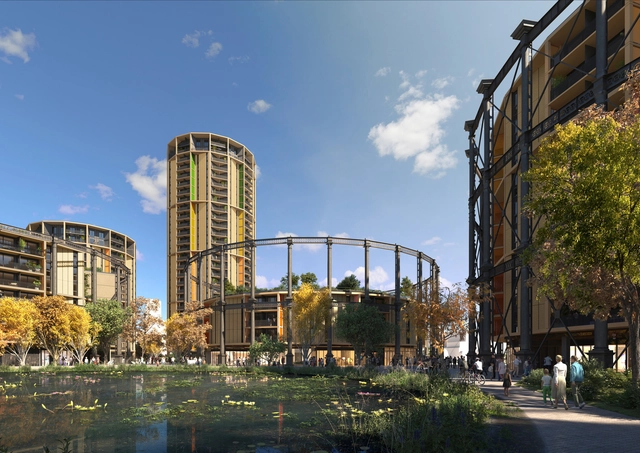
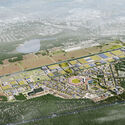
RSHP’s design proposal for the Bromley-By-Bow Gasworks regeneration project has just been approved by the London Borough of Newham’s Strategic Development Committee. The 23-acre site dates back to the 1870s, housing the largest collection of Victorian gasholders worldwide, making the project one of the largest regeneration proposals in the Lower Lea Valley in London. After three years of design development, the scheme reimagines the gas holders into a mixed-use development offering new high-quality residential architecture.
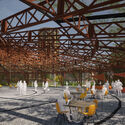
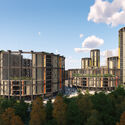
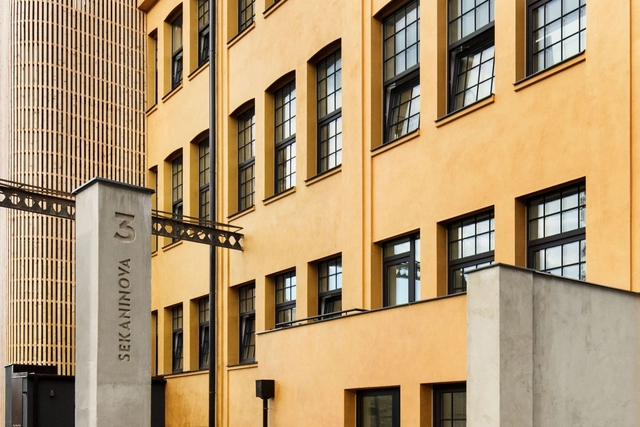
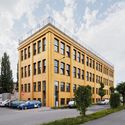
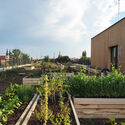
In response to the Czech Republic's soaring real estate prices, architecture firm KOGAA has transformed a former storage facility in Brno into DADA Distrikt, an affordable and diverse housing development. The project's economic approach, achieved through shared funding and direct sales, bypasses extra costs associated with developers while refurbishing a part of the city’s industrial heritage, transforming it into an active urban district. The project also features sustainability measures aimed at lowering its maintenance costs, further exemplifying the intersection of affordable housing, heritage restoration, and sustainable urban living.
The project is now part of Open House Brno, a free weekend festival held annually that allows visitors to enter and explore various locations across the city and discover their stories and architectural narratives. This year, the festival follows the curatorial concept of “Inclusion and Accessibility”, showcasing barrier-free integration of urban locations and the societal impact of buildings. A total of 58 locations will be available to visitors, exploring a variety of programs and scales demonstrating
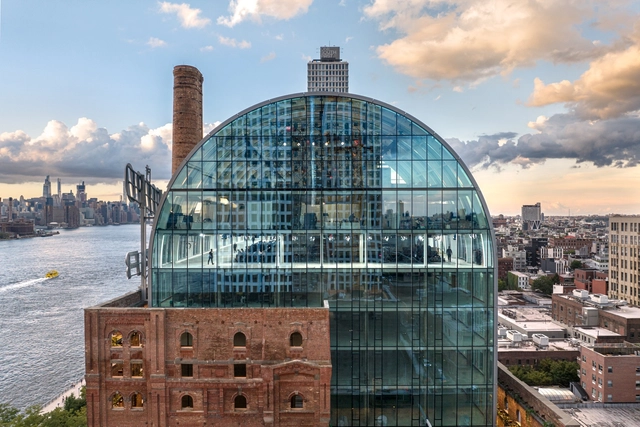
Domino Sugar Refinery / PAU - Practice for Architecture and Urbanism
In the same way that societies transform, times change, and cities evolve, industrial architecture modernizes and becomes more technological, sometimes reaching a state of abandonment or ruin. Understanding its value as a built legacy and being vestiges of technological, social, and cultural changes, the renovation and/or conversion of numerous factories and industrial warehouses can lead to the revitalization, recovery, or growth of various areas in large cities by incorporating new uses and spaces for the enjoyment of its citizens.
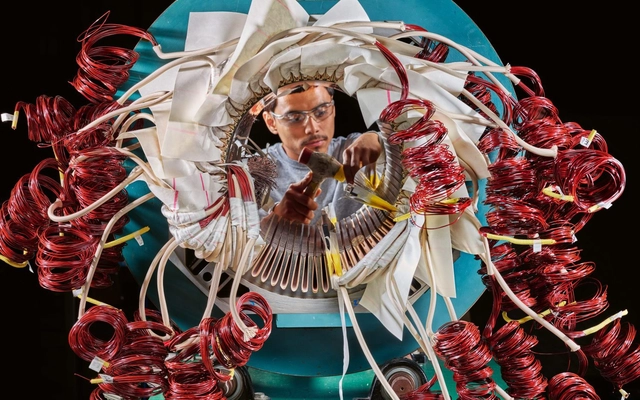
Christopher Payne’s fascination with factories goes back decades. As an architecture student at the University of Pennsylvania in the 1990s, Payne had the good fortune to find a summer job with an agency inside the National Park Service called the Historic American Buildings Survey. “They sent teams of architecture students, historians, and photographers to document all kinds of projects,” he says. “We documented grain elevators in Buffalo, cast iron bridges in Ohio, a power plant in Alabama, and national parks in Utah. That experience instilled a deep appreciation for industrial architecture.” After graduation, he worked for several years as an architect in New York City before transitioning full-time to photography. His previous books include New York’s Forgotten Substations: The Power Behind the Subway; Asylum: Inside the Closed World of State Mental Hospitals; North Brother Island: The Last Unknown Place in New York City; and Making Steinway: An American Workplace. Last month, Payne gave the School of Visual Art’s Ralph Caplan Memorial Lecture, and shortly afterward I reached out to him to talk about his most recent book, Made in America (Abrams), his long love affair with factories, and the photographic process.
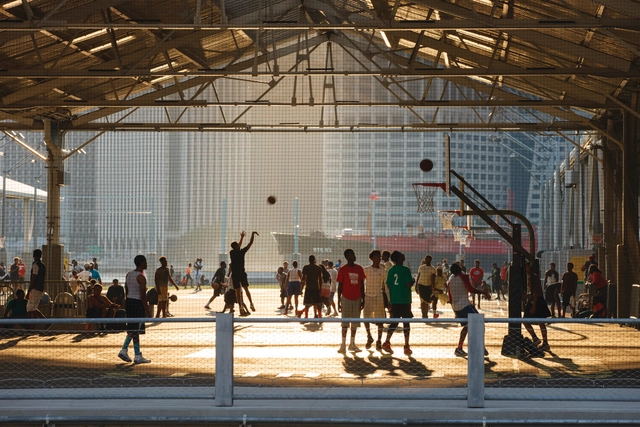
Beautiful sites with stunning views along the waterfront of major cities often go unused due to the industrial remains of a past economy based on shipping and manufacturing. The move away from these economic sectors and the potential of these sites has contributed to a move to adapt these spaces into public amenities. While some cities' approach has been to demolish and start from scratch completely, the thirteen-year transformation of the Brooklyn Bridge Park in New York City's waterfront included keeping some of its industrial character. In their upcoming book "Brooklyn Bridge Park," Michael Van Valkenburgh Associates discuss their design process, including using the existing materiality and structures along the piers to embed the site's history in the park.
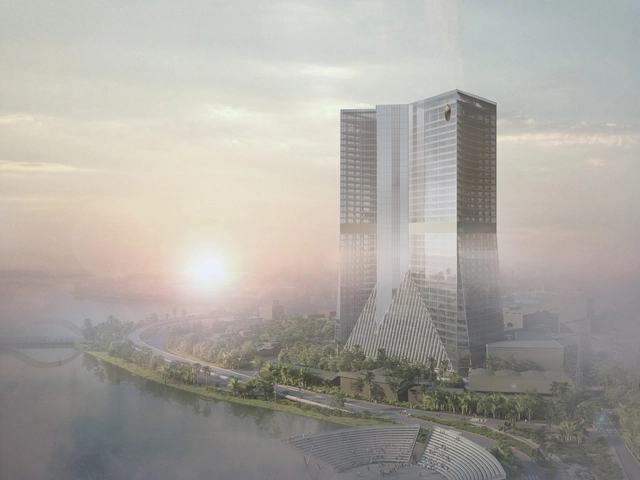
Construction on OMA’s first project in Bangladesh, the Dhaka Tower, has just started. Reaching a height of 150 meters and spanning 180,000 sqm in office space, the project is set to stand as one of the tallest buildings in the country. This scheme marks a significant milestone in the urban landscape of Bangladesh, designed by OMA in collaboration with local real-estate developer Shanta Holdings.
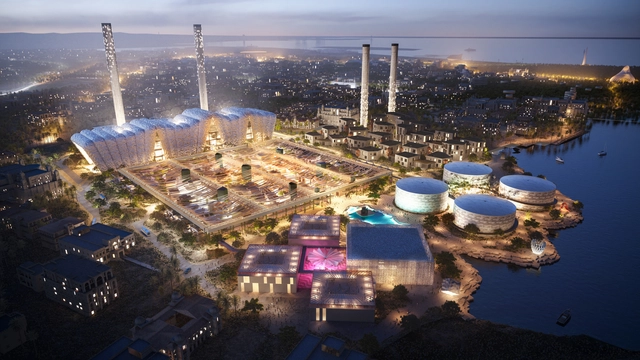
Heatherwick Studio has unveiled a new project to transform an old desalinization plant into the centerpiece of a new cultural district on the waterfront of Jeddah, Saudi Arabia. The industrial structure is set to be reconfigured to become The Museum, large complex offering production spaces, studios, and ateliers for artists and makers. Its program also includes exhibition spaces that can accommodate large-scale commissions to help visitors to learn and feel inspired by the next generation of artists.
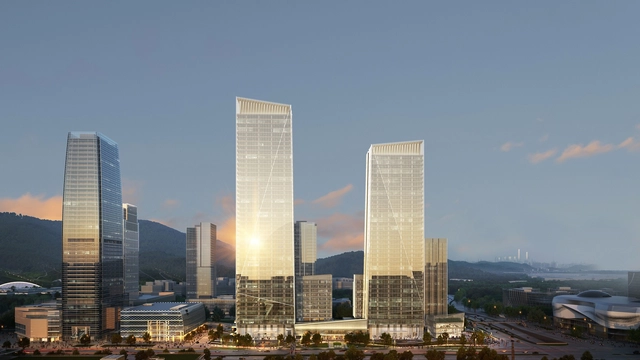
Aedas Global, in collaboration with GDAD, revealed the design of a 230 meters tall mixed-use complex comprising of two twin towers and a plaza. The development, located at the base of the Baiyun Mountain range in Guangzhou, China, contains industrial, commercial, and publicly available areas while also including large urban green spaces and panoramic views of the mountains. The massing of the project is inspired and informed by the local topography, with sight-seeing corridors opening up toward the surrounding scenery.
Videos
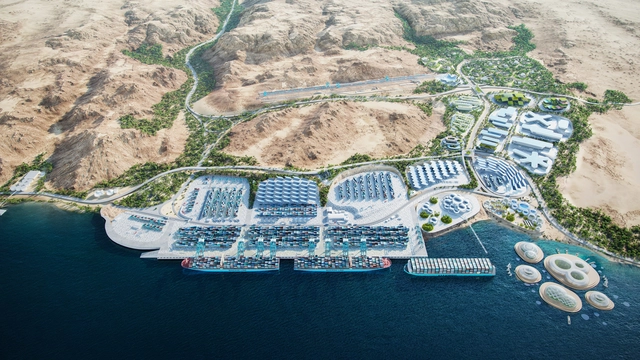
Courtesy of BIG – Image by Ping-Pong Visualization
BIG – Bjarke Ingels Group supports APM Terminals and Maersk in reimagining the shipping industry's future with a master plan for the AqabaPort Terminal in Jordan, expected by 2040. Considered one of the most strategic ports in the country and an important gateway to the Levant region, the 3 square kilometers plan will merge different strategic approaches at the regional scale, starting from the terminal refurbishment, expansion of the logistics functions, and connecting to the broader port's community and natural environment.
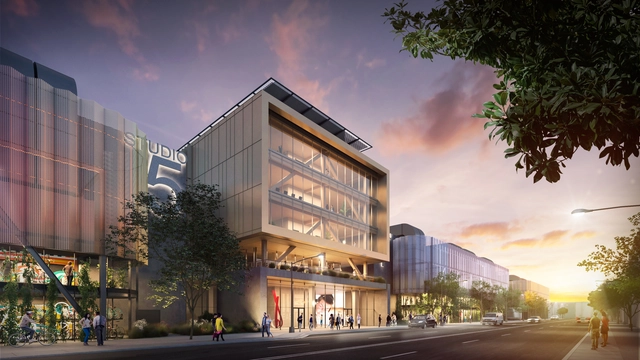
Grimshaw Architects has revealed the design for a 16-soundstage studio production campus for the independent company East End Studios. Located on a 15-acre former industrial site in the Arts District in Los Angeles, the campus will provide creative workplace buildings and production support spaces connected via a series of outdoor terraces and walkways. The project responds to its location and context by moving away from the traditional studio layout and instead opting to create a “vertical campus”. This composition creates a more open public relationship with the downtown neighborhood while ensuring that all campus facilities are well connected.
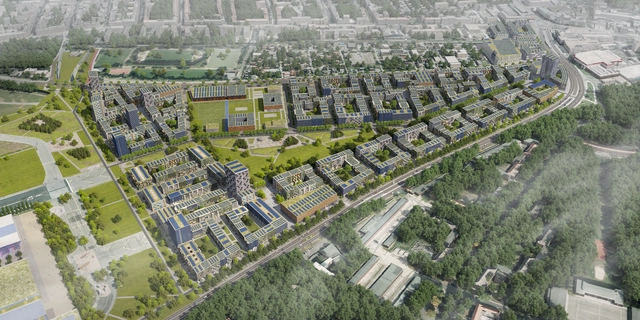
The former Berlin-Tegel Airport is set to be redeveloped. The master plan includes the Schumacher Quartier, a new residential district with 200 hectares of landscaped area, and a research and industrial park for urban technologies, Berlin TXL – the Urban Tech Republic. Besides creating a space for industry, business, and science, the innovation park aims to research and test urban technologies. The park will focus on major themes in the development of cities: the efficient use of energy, sustainable construction, eco-friendly mobility, recycling, networked control of systems, clean water, and the application of new materials.
In this powerful new visual from Spirit of Space, we are introduced to Ricardo Bofill’s headquarters ‘The Factory’ or La Fábrica, Taller de Arquitectura. Once a disused and decaying cement factory from the turn of the century, with 30 silos, machine rooms, and galleries, it is now a significant transformative project, satisfying the Architect's longing for space via adaptive reuse.
A haven in the urban sprawl, engulfed by a floury of palm, olive, and eucalyptus trees. Spirit of Space visits the former hive of activity, now a tranquil mid-city refuge, an immense contrast to the industrial grime that used to reside here. Moving picture and multi-sensory experience explore the Brutalist form; a concrete shell… a skeleton intertwined with nature itself.
The built environment we inhabit can be hostile, both on an individual architectural scale and in a wider urban context. Homeless people, for instance, are dissuaded from resting on public benches by the menacing presence of spikes and other forms of exclusionary design. From a global lens, we see the impact that borders have amidst anti-immigration hostility, imposingly exemplified by the Melilla border fence on the Morocco-Spain border. This “hostility” can be found in a large number of settlements around the world, settlements that have been formed as a result of organic migration or settlements predicated on control – like company towns.
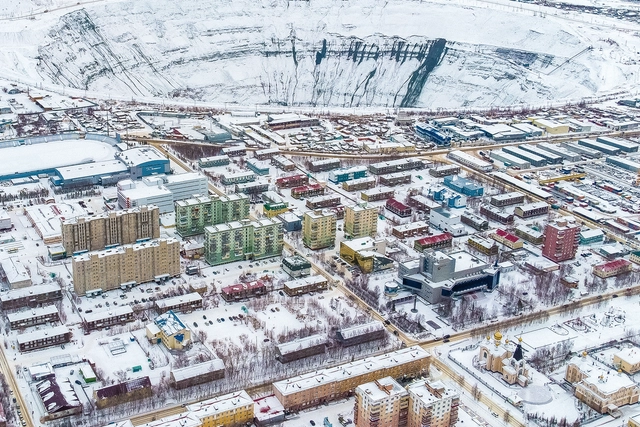
Found worldwide and revolving around various activities, from resource extraction to manufacturing, monotowns are urban settlements created around a single industry that employs the majority of the inhabitants. In the former Eastern Bloc, where monotowns are the remnants of the totalitarian regimes of the last half of the 20th century, the sudden transition from centralized economies to capitalism came as a profound shock to these settlements, generating processes of deurbanization and internal migration. The following explores the architecture of the Russian Soviet-era monotowns, highlighting the failures, successes, and current state of these particular urban environments.
The progressive departure of factories from cities, often due to environmental regulations, noise ordinances, or the price of real estate, has left many urban manufacturing facilities abandoned and out of use. As these urban factories are left empty, many adventurous developers are taking advantage of the plentiful space, light, and flexible functions that they offer, leading to a residential revitalization in many of the world's defunct manufacturing facilities.













.jpg?1645540015 "La Fábrica, Ricardo Bofill Taller de Arquitectura. Image Courtesy of Ricardo Bofill")
.jpg?1645655249 "Courtesy of Ricardo Bofill")
_©_Richard_Powers.jpg?1645655222 "La Fábrica, Ricardo Bofill Taller de Arquitectura. Image © Richard Powers")
.jpg?1645655255 "Courtesy of Ricardo Bofill")