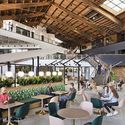
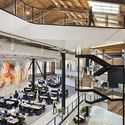
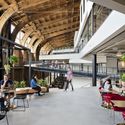
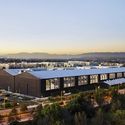
Transform your “New Tab” page into a useful, inspiring tool with ArchDaily’s New TabChrome Extension.
Every time you open a new tab in your Chrome browser, it’s an opportunity to be inspired with a randomly selected photograph of our +38,000 curated projects. If you want to learn more about the project featured, you can easily click to see more pictures, drawings, and information.
Users now can virtually visit museums all over the world thanks to Google Arts & Culture. The project offers 360 ° views of places that can often be inaccessible due to financial costs or distance.
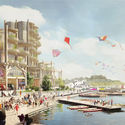
The new Quayside smart city development by Sidewalk Labs will be scaled back after a vote last week in Toronto. As the subsidiary of Google's parent company Alphabet, Sidewalk Labs aimed to "unlock the potential" of the city’s Eastern Waterfront. The government agency responsible for development of the area, Waterfront Toronto, voted unanimously to limit the team’s original 190-acre plan to 12 acres.
For technology companies, image is everything. Whether it be the latest iPhone, the newest Slack interface, or the latest Uber app update, these multimillion-dollar giants strive daily to keep the user engaged, and to keep their image young, current, and cutting edge. Invariably, this need to be noticed transcends the digital screen, and manifests in the architecture of the offices where this innovation takes place.
Across the world, from Dublin to Tel Aviv to Tokyo, the workspaces of the world's largest tech companies are redefining how offices are designed, aided by leading architects such as Foster + Partners, Snøhetta, and Gehry Partners. While our recent article on solutions for flexible home offices reflects on strategic functionality and individual expression, the 30 workspaces below dedicate themselves to collaboration and inspiration through a play on scales, color, shapes, and unexpected fixtures.
The We Company has announced plans to launch a Future Cities Initiative, hiring the head of Studio Dror and a former Google executive to lead the team. Dror Benshetrit and Di-Ann Eisnor will work with engineers, architects, data scientists, biologists, and economists to generate ideas addressing problems raised by globalization, urbanization, and climate change.
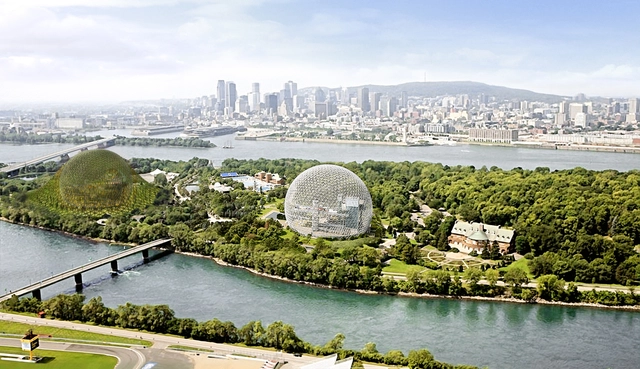
Known for pioneering works such as their vegetated biosphere in Montreal, Studio Dror has been creating visions for designing without boundaries since their inception 17 years ago. Working at the intersection of art, design, and architecture, Dror has led a team of designers, artists, architects, researchers, and communicators to create holistic design solutions for everything from a vase to a city masterplan, a lightbulb to an island, and a collaboration with NASA.
https://www.archdaily.com/913746/the-we-company-launches-future-cities-initiative-with-studio-drorNiall Patrick Walsh
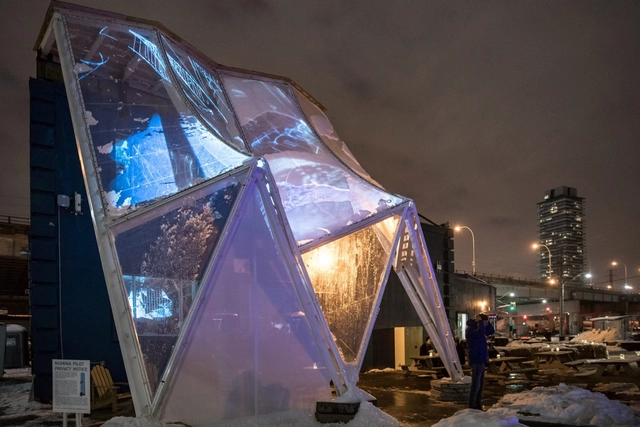
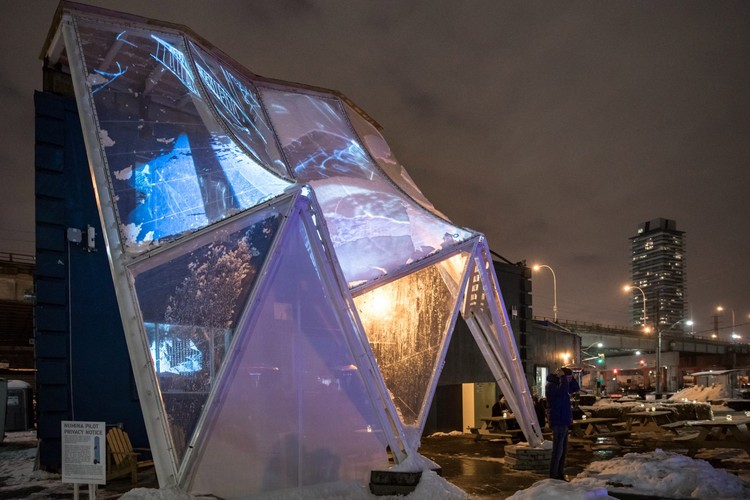
Alphabet-owned Sidewalk Labs is testing a "raincoat" for buildings, a prototype tensile structure that's made to make extreme weather more comfortable. Created as part of the Quayside smart city project in Toronto, the raincoat structure aims to help protect from wind and rain while lowering energy demands on buildings. Designed by Toronto-based RWDI and Partisans, the prototype debuted at Sidewalk's 307 office. Made from a thin plastic membrane, the raincoat will remain up for one year as teams test its performance.
All Things Urban London Meetup @ Google will bring together some of the coolest people in town to share their passion for urban innovation. Whether you’re an urban planner or a software engineer, a circular designer or a blockchain economist, join us at this multidisciplinary event to brainstorm the future of cities and urban professions.
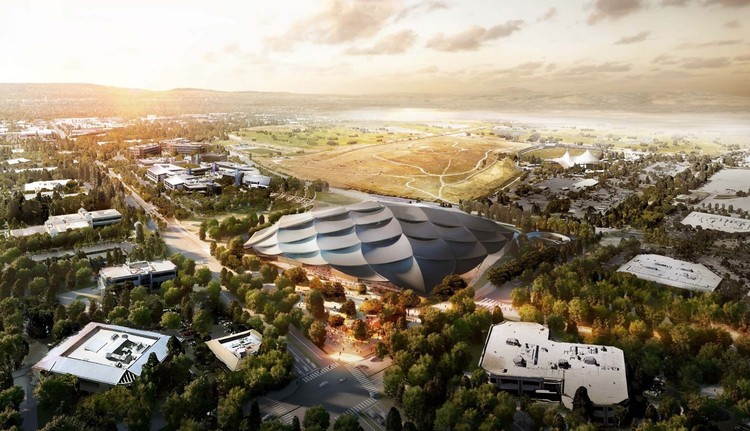
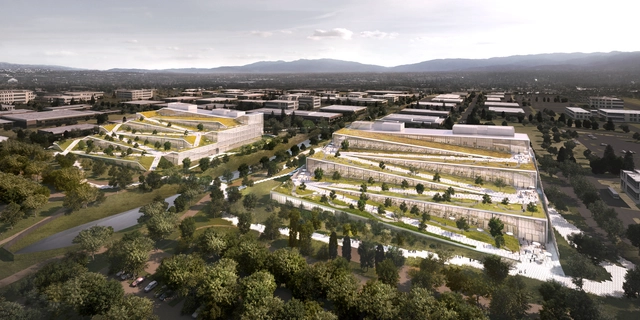
Google Mountain View Campus. Image Courtesy of Google
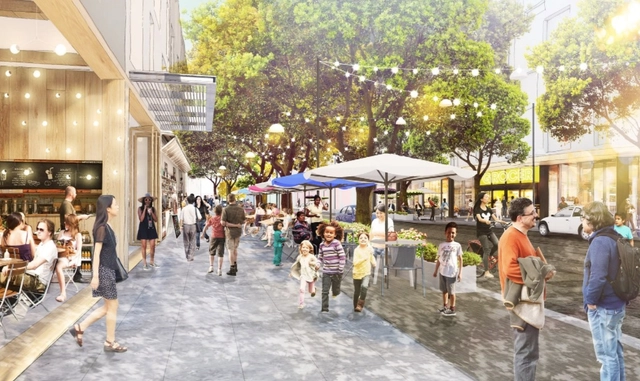
New details of Google's North Bayshore campus have been revealed. The latest scheme includes a combination of office, retail, public and residential space. Located in North Bayshore, California, the revised plan focuses on the site's natural environment and affordable housing.
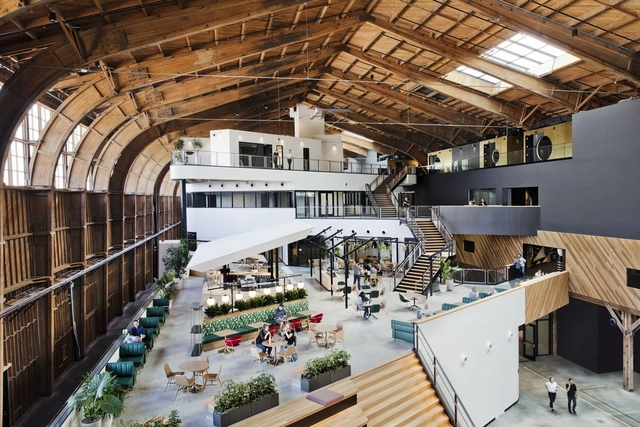
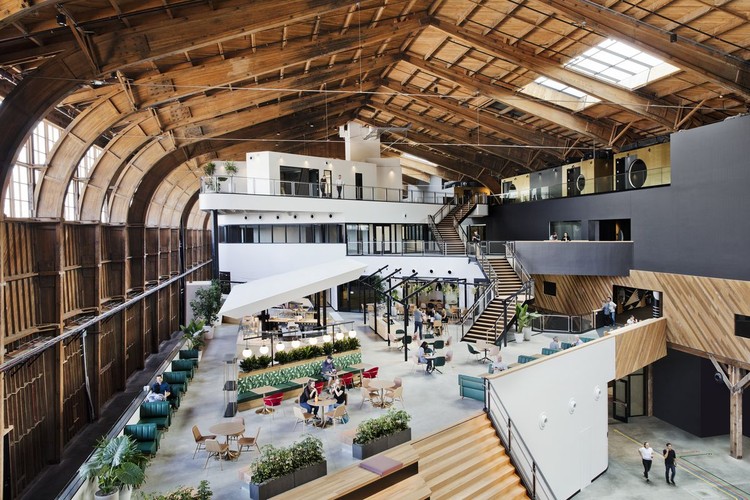
Google Spruce Goose Hangar. Image Courtesy of ZGF Architects
ZGF architects have completed Google's new L.A. office by transforming California's landmark Spruce GooseHangar. Designed as a building-within-a-building, the project was built inside the seven-story, 750-foot-long historic wooden structure. The 450,000 SF, four-level design is sited between two existing Google properties, and the project aimed to unify the Playa Vista campus while bringing a new perspective to workplace through adaptive reuse.
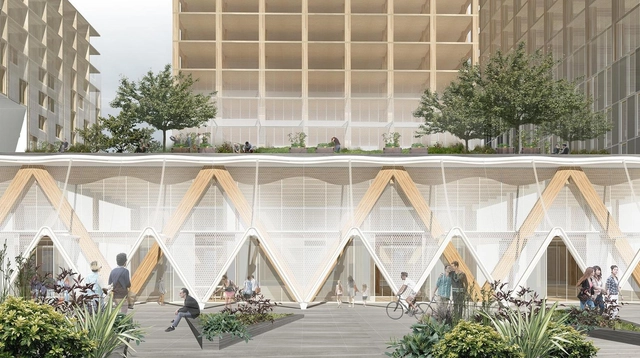
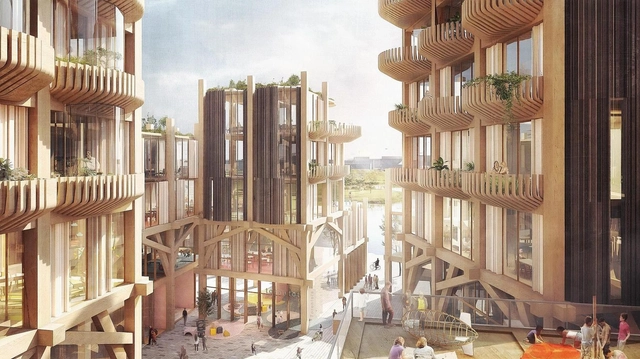
Sidewalk Labs has unveiled a new proposal for Toronto's eastern waterfront and a neighborhood development called Quayside. After announcing plans to create a model smart city in Toronto last fall, Sidewalk Labs has been working to pioneer a new approach to future urban developments. Plans for Quayside were revealed during a roundtable discussion on August 14, 2018. As the subsidiary of Google's parent company Alphabet, the team responded to an open call from Waterfront Toronto with a design that features heated pavements, large public spaces and mass timber buildings.
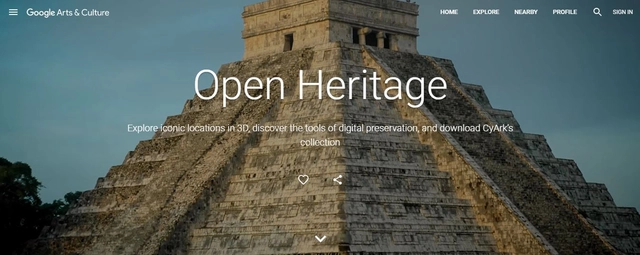
In partnership with a 3D laser-scanning nonprofit called CyArk, Google Arts & Culture began the Open Heritage Project, a new chapter for historic preservation in the form of virtual reality. By using advanced 3D laser scanning technology, high-res drone photography, and DSLR cameras, CyArk can virtually recreate historic architecture to be more easily explored and restored.
The Instagram account @streetview.portraits presents stunning images of people and architecture from Arizona to Kyrgyzstan. At first glance, it seems to be the work of a professional photographer gallivanting across the globe, but the owner of the account is actually Jacqui Kenny, a woman who suffers from agoraphobia and anxiety, capturing these beautiful images through Google Street View.
Through her alternative method of travel, Kenny discovered incredible scenes that displayed the magic of the ordinary: "I found a surprising and unique refuge in the creative possibilities of Google Street View. I began clicking through Google Maps to navigate to faraway countries like Mongolia, Senegal, and Chile. I found remote towns and dusty landscapes, vibrant architectural gems, and anonymous people, all frozen in time. I was intrigued by the strange and expansive parallel universe of Street View, and took screenshots to capture and preserve its hidden, magical realms."
Willow Village will form part of Facebook's OMA-designed Willow Campus. Image Courtesy of OMA
“Do people love tech companies so much that they would live inside them?” This is the question posed by The New York Times in an article reflecting on Facebook’s plans for Willow Village, a 59-acre urban district located at the company’s Menlo Park headquarters in San Francisco, California.
https://www.archdaily.com/891145/zucktown-usa-will-facebook-design-your-future-cityNiall Patrick Walsh
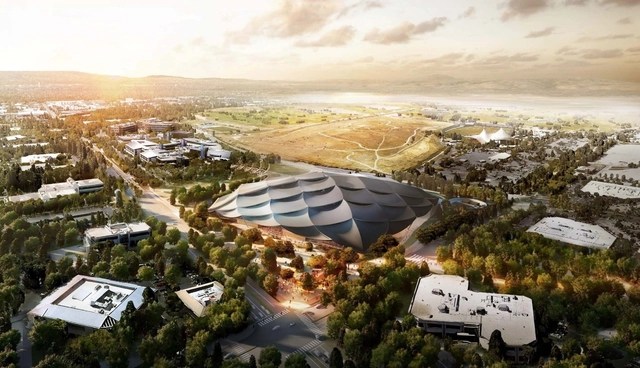
Google has unveiled plans for a new campus in the Moffett Park area of Sunnyvale, California that will be located just a few miles from its long-awaited ‘Googleplex’ headquarters in Mountain View. And just like the company’s Mountain View and London campuses in the works, the building has been designed by Bjarke Ingels Group (BIG).
Located at 100 and 200 W. Caribbean Drive, the complex will consist of two terracing buildings containing over 1 million square feet of office space and room for up to 4,500 employees.
Google has launched 'Tilt Brush', a powerful tool for designers available for Oculus and HTC Vive that allows artists to create 3D objects while fully embedded in Virtual Reality (VR).
Tilt Brush turns any room into the perfect canvas to capture all your creativity, allowing you to paint in real size with 3D brushes.
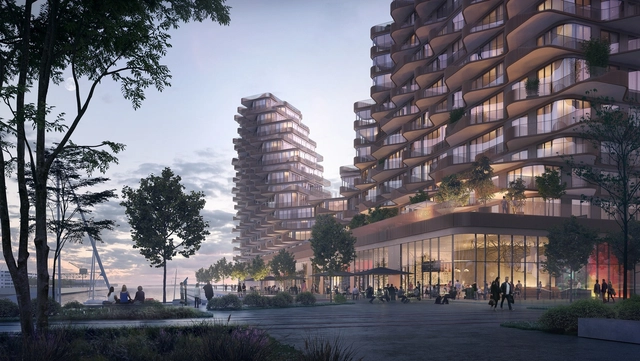
Inspired by the reflection of the waves of Lake Ontario, ‘The Waves at Bayside’ will feature a undulating facade of metal balconies with views out to the water and a podium filled with public program including a rowing club and assortment of restaurants and cafes.
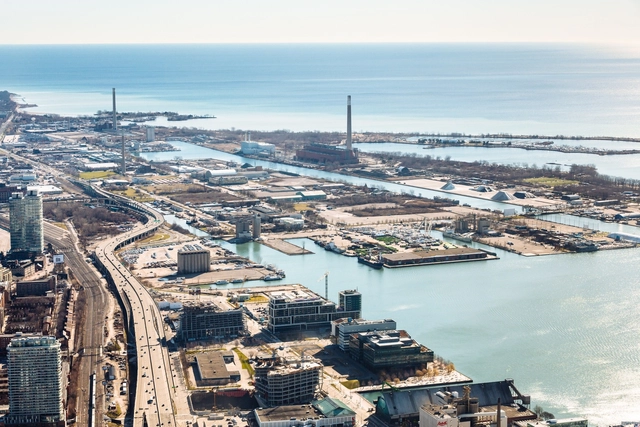
Eastern Waterfront as it looks today. Image Courtesy of Sidewalk Labs
Sidewalk Labs and Waterfront Toronto have revealed plans for a brand new community on Toronto’s Eastern Waterfront that will bring together “forward-thinking urban design and new digital technology to create people-centred neighbourhoods that achieve precedent-setting levels of sustainability, affordability, mobility, and economic opportunity.”
The people of Manchester, UK, recently gained access to an entirely new way to access local news and engage with their city: OtherWorld, a pilot news experiment from startup studio Like No Other and Google’s Digital News Initiative. OtherWorld uses Bluetooth and cutting-edge beacon technology to deliver geo-located news directly to your smartphone for free, without installing an app. Referred to on the OtherWorld website as “living media,” as users walk around the city and pass by story locations, a silent notification will pop up on their phones, disappearing again as they walk out of range. Because the news you see on OtherWorld is directly related to the space you’re currently occupying, the system ensures that the news you’ll see is relevant to you. This unobtrusive method allows users to choose whether and how they will engage as well as adding an evanescent, elusive quality to the stories; you could walk right by and miss one if you aren’t paying attention.
In this way, OtherWorld illustrates the layers of our cities that are often invisible to us, bringing them into focus and allowing a deeper level of exploration into even a familiar city neighborhood. Focusing on stories that involve a real-world experience, users could become aware of an event nearby, a volunteer opportunity, a public meeting, or any number of other possibilities—thereby involving themselves in the public space and public realm in a way they would not have otherwise been able to.



.jpg?1568675092&format=webp&width=640&height=580)


.jpg?1568675092)