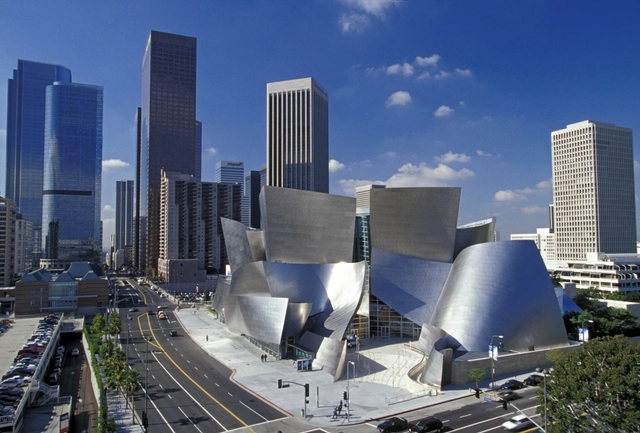
Coinciding with their 100th anniversary, the Los Angeles Philharmonic (LA Phil) has announced plans to build a new, dedicated space for the Youth Orchestra Los Angeles (YOLA) to be designed by Los Angeles’ own Frank Gehry. Architect of Los Angeles’ and one of the world’s most famous performance spaces, the Walt Disney Concert Hall, Gehry has been called upon to transform a 17,000-square-foot facility in the LA neighborhood of Inglewood that will allow LA Phil to reach its goal of doubling the number of students involved in its programs by 2022.
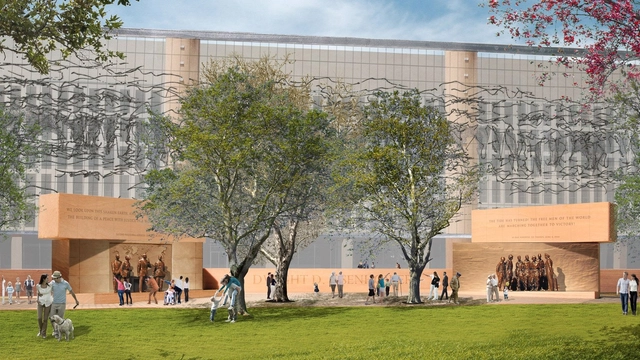
A groundbreaking ceremony was held yesterday at the National Mall site, located at the intersection of Maryland and Independence Avenues and across from the National Air and Space Museum.
This article originally appeared on guggenheim.org/blogs under the title "How Analog and Digital Came Together in the 1990s Creation of the Guggenheim Museum Bilbao," and is used with permission.
The Guggenheim Museum Bilbao, which celebrates its twentieth anniversary this month, has been hailed as a pinnacle of technological progress since its October 1997 opening. While the use of the modeling software CATIA (Computer Aided Three-Dimensional Interactive Application) was without question groundbreaking, some of the greatest moments of ingenuity during the building’s design and construction were distinctly low-tech. Developed between 1991 and 1997, the curved and angular titanium-clad building was conceived at the turning point between analog and digital practice. This profound shift enveloped and permeated every aspect of the project, from the design process and construction techniques to the methods of communication technology put to use.
In celebration of the 20th Anniversary of the Frank Gehry-designed Guggenheim Museum Bilbao, creative production studio 59 Productions has put on a 4-day projection mapping light show, transforming the museum’s iconic shimmering surfaces into a canvas for a dazzling light display.
From October 11-14th, the 20-minute-long multisensory production Reflections combined music, light and projection, creating a show on the building’s north-facing titanium facades that told the story of the museum’s genesis and design.
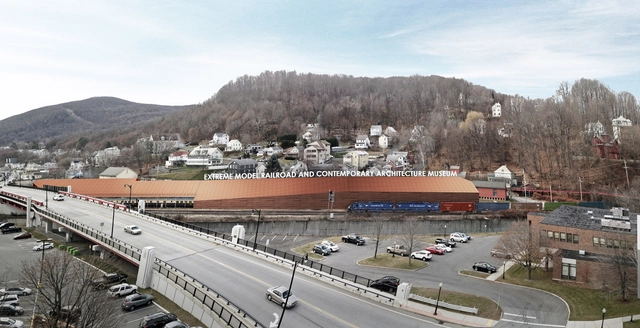
The Extreme Model Railroad and Contemporary Architecture Museum has selected Gehry Partners to replace Gluckman Tang as lead architects of their new museum planned for the town of North Adams, Massachusetts, reports the Berkshire Eagle.
Along with the change in designer comes a change in location to an 83,000-square-foot site on Christopher Columbus Drive (near contemporary art museum Mass MoCA) and a major increase in scope – while original plans called for a 45,000-square-foot museums, new figures project the building will total as much as 75,000 square feet.
Renderings for a new office building in the Playa Vista neighborhood of Los Angeles designed by Gehry Partners have been revealed in documents released by the LA Department of City Planning. Called New Beatrice West, the eight-story development consists of a series of terraced glass boxes, capped with abundant vegetation aimed at contributing passive energy-efficiency to the complex. The new building will integrate an existing adjacent office building that currently houses the offices of Gehry Partners.
https://www.archdaily.com/876240/renderings-revealed-of-gehry-partners-future-tree-covered-playa-vista-officeAD Editorial Team
Six internationally-acclaimed teams have been selected as finalists in a competition to design a new home for London Symphony Orchestra and Guildhall School of Music & Drama to be known as the Centre for Music London.
Planned to contain a world-class concert hall, education, training and digital spaces, top-grade facilities for audiences and performers, and a number of supporting commercial areas, the Centre for Music building will become a new landmark within the heart of London, aimed at becoming “a place of welcome, participation, discovery and learning fit for the digital age.”
Designing a museum is always an exciting architectural challenge. Museums often come with their own unique needs and constraints--from the art museum that needs specialist spaces for preserving works, to the huge collection that requires extensive archive space, and even the respected institution whose existing heritage building presents a challenge for any new extension. In honor of International Museum Day, we’ve selected 23 stand-out museums from our database, with each ArchDaily editor explaining what makes these buildings some of the best examples of museum architecture out there.
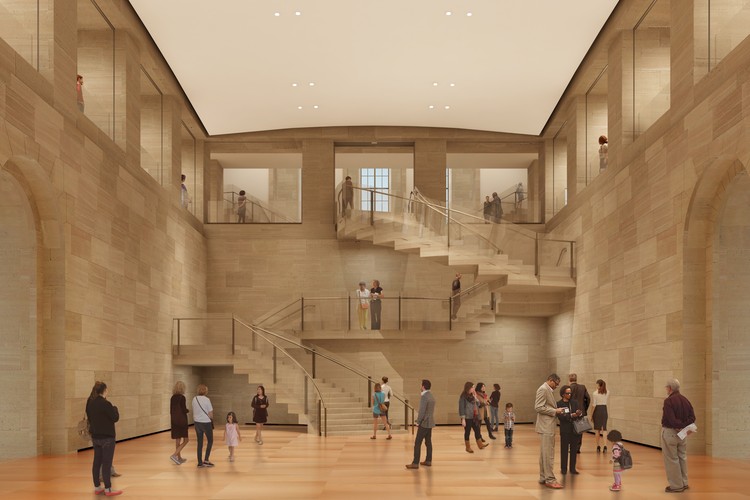
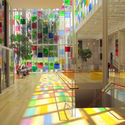
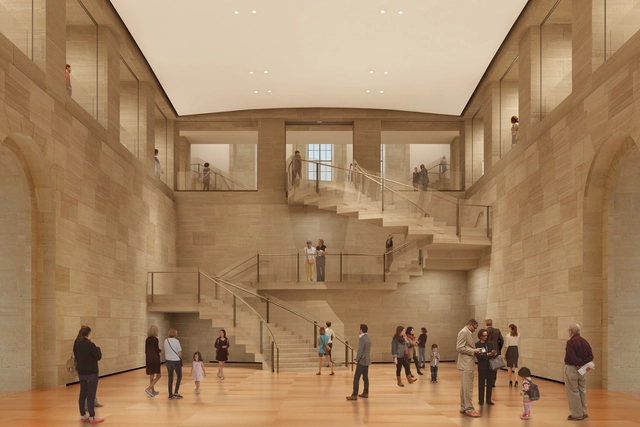
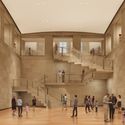
AFTER: The Forum, looking west and up to Lenfest Hall. The Forum extends from Level A to Level C and will be one of the most highly trafficked and recognizable areas created during the Core Project. This stunning space will serve as a venue for performances and events, as well as a welcoming spot for visitors to socialize or orient themselves. Architectural rendering by Gehry Partners, LLP and KX-L. Photo courtesy Philadelphia Museum of Art.
The Philadelphia Museum of Art has broken ground on the Core Project, a $196 million transformation of its main building led by Frank Gehry. In total, the renovation will add a total of 90,000 square feet to the museum, including 67,000 square feet of new public space, 11,500 square feet of gallery space for the museum’s American Art collection, and another 11,500 square feet of contemporary art display space.
As suggested by its name, The Core Project will focus on the heart of the museum; the main circulation of the building will be completely reorganized and museum infrastructure will receive much-needed upgrades, improving access to the community and enhancing the visitor experience.
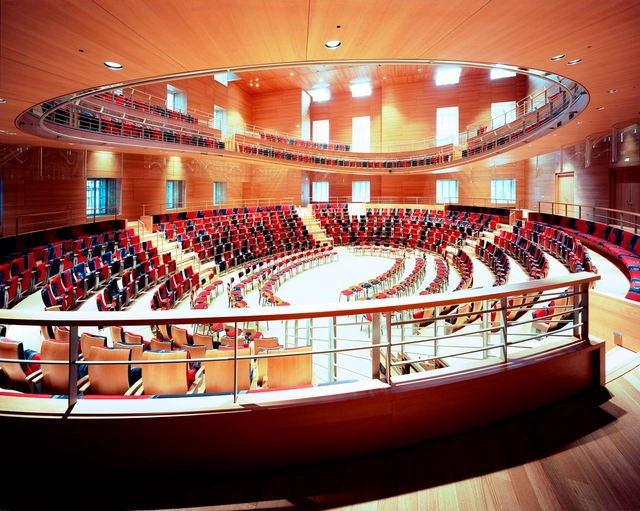
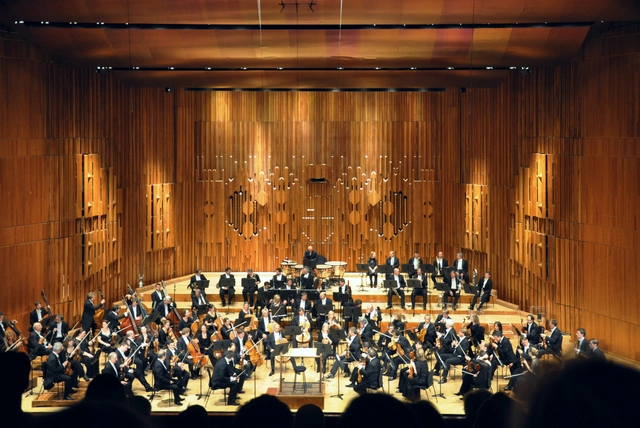
“If it hadn’t been for Frank Gehry, we would have made a simple, straightforward concert hall where students play concerts. But if the space is there, and somebody so gifted, like him, is prepared to do that, then of course you have to do that” - Daniel Barenboim, Founder, Pierre Boulez Saal.
In this Facebook video, Frank Gehry discusses the circumstances of his most recently-completed project, the Pierre Boulez Saal concert hall in Berlin, and the significance of contributing a new venue to Berlin’s historic musical scene.
Frank Gehry has been selected by online education platform MasterClass to lead an interactive architecture and design course on his creative process. The course will include 15 video lessons, and critique from the architect himself on select student work.
At a cost of $90, the lessons will cover Gehry’s career and architectural philosophy, illustrated with sketches and models from Gehry’s private model archive. Each lesson will offer a downloadable workbook with notes and assignments for the week. Students will then be able to upload videos for the opportunity to get feedback from the class and Frank himself.
Andy Klemmer has had a front-seat view of the making of some of the most important pieces of architecture of our time. The president and founder of the consulting firm Paratus Group, Klemmer was an essential part of the team that helped develop the iconic Guggenheim Bilbao. Since then, he’s gone on to consult on the California Academy of Science, the Perez Art Museum Miami, the Kimbell Art Museum expansion, working with architects like Renzo Piano, Herzog & de Meuron, and SANAA (to name a few). By liaising between institutions and their chosen architects, he has unique insight into architecture, its practice, and that essential part of the architecture puzzle: the client.
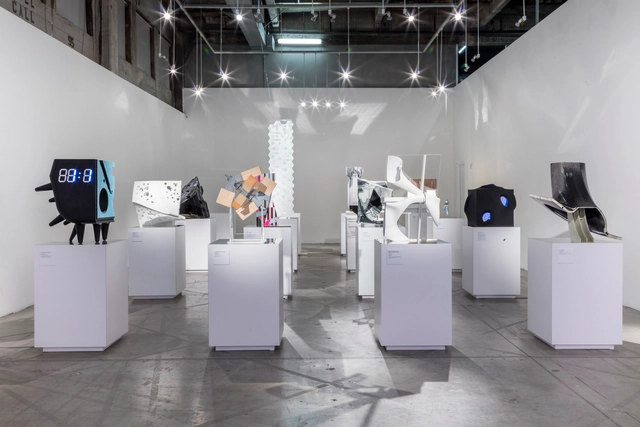
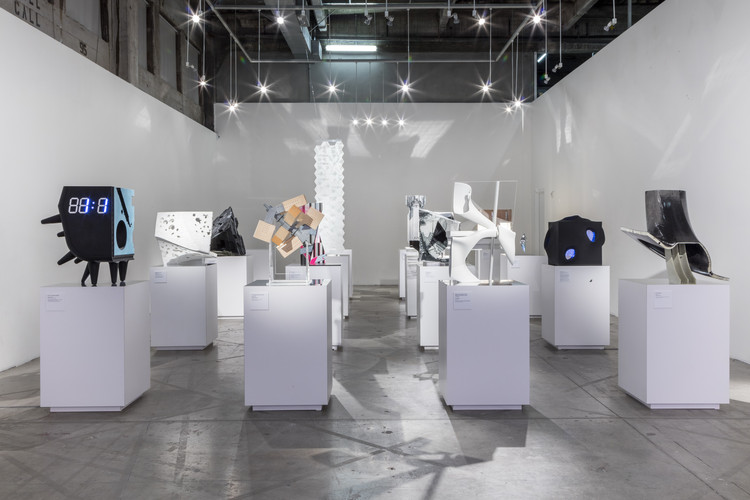
SCI-Arc’s “Close-up” exhibition is currently on display at the SCI-Arc gallery, featuring architectural details designed with the use of digital technology by top architects in the field. The exhibit, curated by Hernan Diaz Alonso and David Ruy, seeks to explore the impact of new computational tools not only on large-scale building analysis, but also on the “traditions of tectonic expression” associated with architectural detail.
“Out of the many critical shifts that the discipline has gone through in the last 25 years with the explosion of new technologies and digital means of production, the notion of the construction detail has been largely overlooked,” Diaz Alonso said. “This show attempts to shed light on the subject of tectonic details by employing a fluid and dynamic movement of zooming in and zooming out in the totality of the design.”
The 16 exhibitors include architecture firms like Morphosis, Gehry Partners and UN Studio – see preview images of them all after the break.
After he achieved celebrity status at the turn of the millennium, in recent years the conversation around Frank Gehry has switched tones, going from near-universal admiration to widespread controversy. Yet according to Paul Goldberger, whose biography of Gehry was released in September, both adoration and critique of the architect might engender an overly simplistic interpretation of his long and storied career. In this interview originally published by Metropolis Magazine as "Q&A: Paul Goldberger on Frank Gehry's Life and Work," Goldberger delves into the many ways Gehry has been misunderstood over the years, and how his work, his psyche, and the interplay between the two have made him one of the most conversation-worthy architects of a generation.
Frank Gehry isn’t just the world’s foremost architect; he is, by all public standards, also one of our greatest living artists. Paul Goldberger’s new biography (his first), Building Art: The Life and Work of Frank Gehry, acknowledges the architect’s celebrity status but doesn’t acquiesce in it. Rather, Goldberger interrogates the peculiar psyche and restless contradictions of the man to shed light on the motivations behind the architecture. Metropolis editor Samuel Medina speaks to the newly minted biographer about defying genre conventions, unpacking the ambiguities of Gehry’s work, and giving reporters the finger.
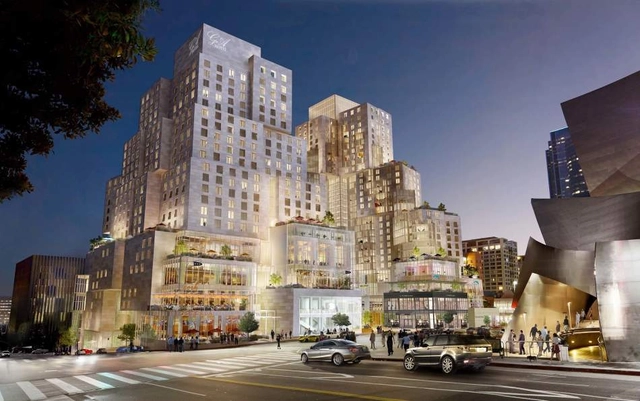
Gehry Partners, alongside Townscape Partners, has unveiled plans to redefine the "gateway" to California's Sunset Strip. A cluster of five distinct, Gehry-esque structures, the mixed-use proposal is one of several design alternatives that have been proposed by Townscape for the site. If built, it would include two residential buildings, featuring a mix of rental and for-sale apartments, along with retail, entertainment programs, and public gathering spaces.
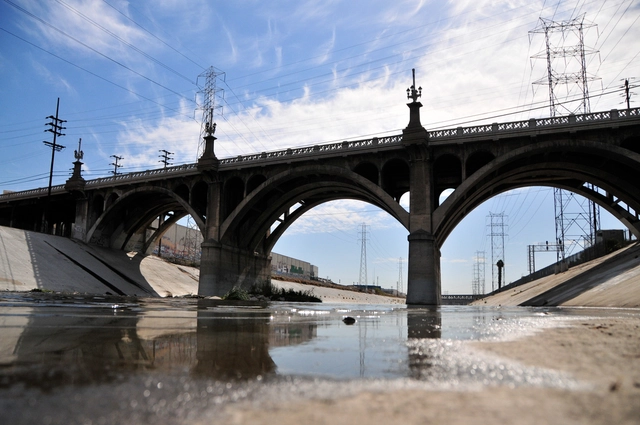
Frank Gehry is said to be "quietly" working on a masterplan for the Los Angeles River in California. Prematurely announced by the Los Angeles Times, the City's mayor Eric Garcetti has confirmed the news, saying Gehry is producing "a master plan, in the truest sense of the word,” pro bono.
“To have the [Frederick Law] Olmsted of our time focusing on this, I think, is extraordinary,” Garcetti said, according to the Los Angeles Times.
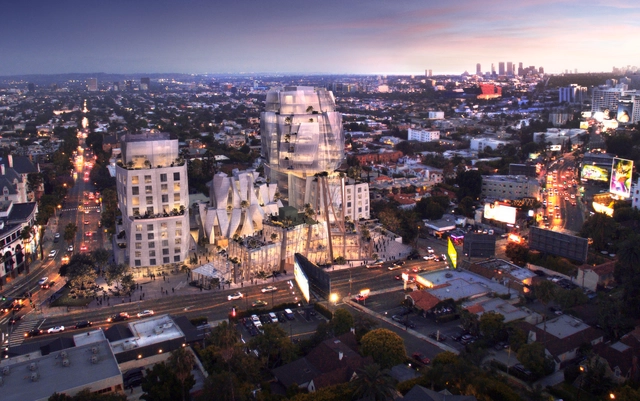
An overlooked strip mall at the corner of Sunset and Crescent Heights boulevards will soon be replaced by a mixed-use, walkable community designed by Frank Gehry. Known to be the “gateway to the Sunset Strip,” the West Hollywood site will be comprised of 249 apartments, restaurants, retail storefronts and a central plaza - all within "an environmentally sensitive building that complements and contributes to the historic architecture in the neighborhood.”
“Frank Gehry’s deep understanding of the property, its history and the context will elevate the project to the iconic and timeless status that it deserves,” said Townscape partner and project developer Tyler Siegel.










.jpg?1500566908&format=webp&width=640&height=580)
.jpg?1500566881 "via LA Department of City Planning")
.jpg?1500566871 "via LA Department of City Planning")
.jpg?1500566918 "via LA Department of City Planning")
.jpg?1500566892 "via LA Department of City Planning")
.jpg?1500566908)

.jpg?1490895765 "BEFORE: The Van Pelt Auditorium, shown here in 2016, is being demolished to create the Forum. The auditorium was not part of the original design for the building, which opened in 1928; it was added in 1959. Photograph by Elizabeth Leitzell. Photo courtesy Philadelphia Museum of Art.")
.jpg?1490895731 "BEFORE: The Van Pelt Auditorium, shown here in 2016, is being demolished to create the Forum. The auditorium was not part of the original design for the building, which opened in 1928; it was added in 1959. Photograph by Elizabeth Leitzell. Photo courtesy Philadelphia Museum of Art.")