Had the worst jury ever? Failed your exams? Worry not! Before you fall on your bed and cry yourself to sleep—after posting a cute, frantic-looking selfie on Instagram, of course (hashtag so dead)—take a look at this list of nine celebrated architects, all of whom share a common trait. You might think that a shiny architecture degree is a requirement to be a successful architect; why else would you put yourself through so many years of architecture school? Well, while the title of "architect" may be protected in many countries, that doesn't mean you can't design amazing architecture—as demonstrated by these nine architects, who threw convention to the wind and took the road less traveled to architectural fame.
Some unbuilt designs—the hopes they reveal and the reasons they stayed unbuilt—tell a powerful story. So it is with the home Frank Lloyd Wright designed for Marilyn Monroe and Arthur Miller. Or perhaps it’s what we think we know about Marilyn that makes it so poignant?
The union between a quiet-living intellectual and the world’s greatest sex symbol was baffling to the public, and the conflict between their aspirations and personalities seems to have played out in their plans for this Connecticut home. After moving into Miller’s country retreat, Monroe asked Wright to design a new house for them on this vast piece of land.
Created by paper engineer and artist Marc Hagan-Guirey, the book contains templates for creating 14 Wright-designed structures using the Japanese art of kirigami. The book leads you through the assembly of each model, which providing photographs, drawings and information for each building, including favorites like Fallingwater and the Solomon R. Guggenheim Museum in New York.
From wonderment to disgust, the opening of Solomon R. Guggenheim Museum by Frank Lloyd Wright in 1959 was met with a wide range of reactions from the public. This profound cultural moment was distilled in a series of witty cartoons published in the New Yorker that simultaneously lampooned both the innovative architecture and its critics, which were recently shared in a blog post by the Guggenheim Museum. Through detailed sketches, cartoonist Alan Dunn represents the experience of the building, from staring into the exterior porthole windows to walking around the grand ramp. In one drawing he depicts the perspective from the first floor looking up at the dome, giving a sweeping sense of the curvature and geometries of the building.
This month marks the 150th anniversary of the birth of acclaimed American architect, visionary, and social critic Frank Lloyd Wright -considered by many to be one of the greatest architects of his time.
As a pioneer of the term 'organic architecture', one of his most iconic representative works is Fallingwater, set upon a waterfall in rural Pennsylvania. From its unveiling, the scheme has evoked enduring reflection on the relationship between man, architecture, and most prominently in Frank Lloyd Wright's mind - nature.
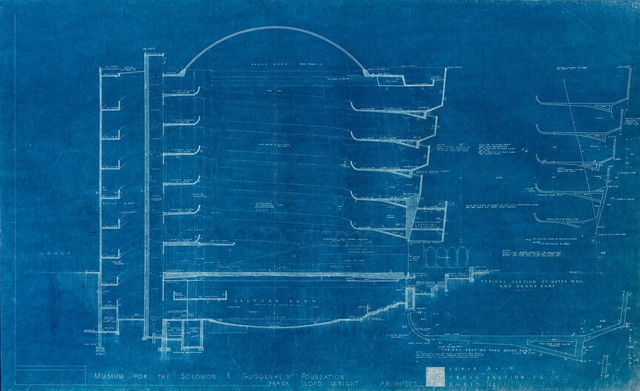
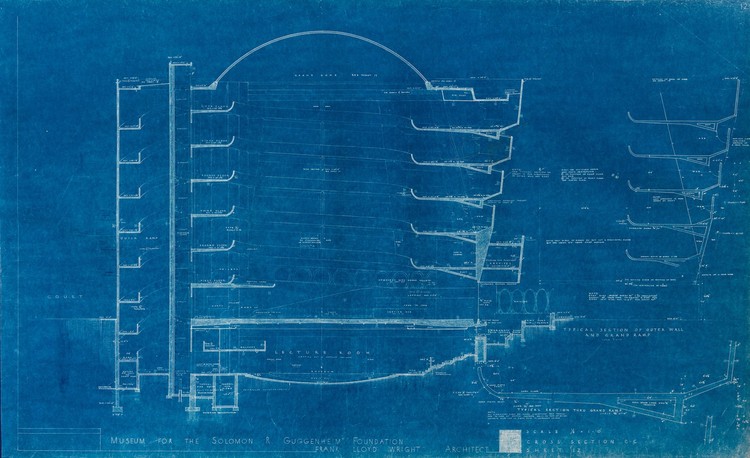
In a recent blog post from the Solomon R. Guggenheim Museum, curator Ashley Mendelsohn explores unrealized design details from Frank Lloyd Wright’s iconic design in New York City, based on blueprints and drawings from the museum’s archives. From large-scale questions of form to material choices, the 16-year period between the commission and the completion of the museum saw many design iterations. Most notable of these are the circulation paths drawn by Wright in the 1953 blueprints that include a steeper circular ramp—in addition to the "Grand Ramp"—that would allow for expedited access to the floors. Though replaced later with a triangular staircase, the "Quick Ramp" demonstrates Wright’s exploration of overlapping geometries.
150 years ago this month saw the birth of one of the most regarded, studied, influential architects of the twentieth century - American architect Frank Lloyd Wright. With a career spanning over seventy years, Wright developed his own distinct style of 'organic architecture', a new residential model of 'prairie house', as well as iconic schemes such as the Guggenheim in New York, and Fallingwater in Pennsylvania.
More than an architect, Wright was a social critic and visionary, just as well-known for his personal life as he is for his architectural contributions. The various stages of Wright's career can be narrated in tandem with biographical episodes, as exemplified in the book "Lives built, Biographies of architects" by authors Anatxu Zabalbeascoa and Javier Rodríguez Marcos. In celebration of Wright's birthday and life, we have compiled a list of biographical details to give you an insight into the man behind some of the twentieth century's most enduring pieces of architecture.
This is what we discovered.
https://www.archdaily.com/873273/26-things-you-didnt-know-about-frank-lloyd-wrightPola Mora
It's no secret that Frank Lloyd Wright was among the architecture profession's more colorful characters. Known as an outspoken and often unforgiving egotist, Wright's appreciation of architecture was outshone only by his appreciation for himself—which is perhaps understandable, given that he ranks among the 20th century's great geniuses. For better or worse (probably worse), Wright's reputation has clung to the profession, thanks in large part to Ayn Rand, who used Wright as inspiration for the incorrigible lead character of one of her most famous books, The Fountainhead.
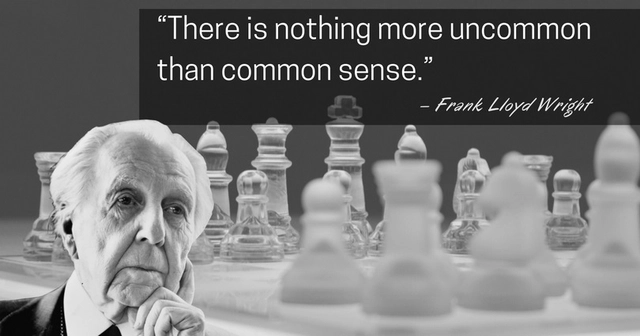
But in truth, most architects have at least a little of Frank Lloyd Wright's personality contained within their own. It's difficult to have self-confidence without a shred of ego, and since design requires a lot of self-confidence, many of us can relate—if only occasionally—to the outrageous attitude of The United States' greatest architect. In honor of Frank Lloyd Wright's 150th birthday today, we've collected some of Wright's most "insightful" comments and turned them into posters that can inspire you no matter what life throws at you. Now, take your humility, lock it in a tiny box deep inside your mind, and join us on a journey through 150 years of wisdom...
The last house designed by Frank Lloyd Wright was never built, with its plans being delivered to the client just days after Wright’s funeral. But the realization of his vision is tantalizingly possible, as those plans, and the parcel of land it was designed for, are still held by the same family—and are for sale, along with the adjoining plot and an existing Wright house.
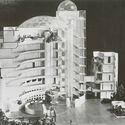
The 744-piece set features a new rendition of the building made from the classic plastic blocks, following a 208-piece interpretation released in 2009. The new set provides a much more realistic portrayal of the Wright's original building as well as the 10-story limestone tower added by Gwathmey Siegel & Associates Architects in 1992 (based on Wright's original sketches).
Famous architects are often seen as more enigma than person, but behind even the biggest names hide the scandals and tragedies of everyday life. As celebrities of a sort, many of the world's most famed architects have faced rumors and to this day there are questions about the truth of their private affairs. Clients and others in their studios would get a glimpse into an architect’s personal life, but sometimes the sheer force of personality that often comes with creative genius would prevent much insight. The fact remains, however, that these architects’ lives were more than the sum of their buildings.
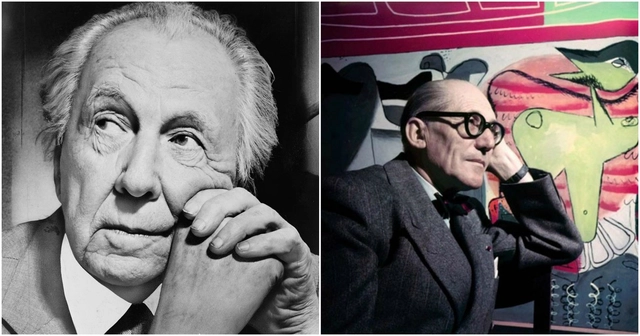
Frank Lloyd Wright and Le Corbusier are both architects who were known for their grand and innovative ideas—as well as for their high esteem for their own opinions. The two did not, however, see eye to eye in their visions for the future of American cities and civilization. Both architects had utopian, all-encompassing plans for their ideal American city, combining social as well as architectural ideas. In 1932, both described these ideas in The New York Times; in these two articles Frank Lloyd Wright and Le Corbusier made their differing beliefs perfectly clear to the public.
Aaron G Green FAIA was an internationally known organic architect of “striking originality and grace.” His diversi ed architectural works include commercial, industrial, municipal, judicial, religious, interment, mass housing, and educational projects. Aaron Green taught advanced architectural design at Stanford University Department of Architecture for fifteen years.In the early 1940s, Aaron Green became a member of Frank Lloyd Wright’s apprentice group, the Taliesin Fellowship. He maintained a close relationship with Frank Lloyd Wright over the next 20 years.
Description via Amazon.Frank Lloyd Wright (1867–1959) is the most renowned and popular architect and designer in America. His buildings, including Fallingwater and New York's Guggenheim Museum, are iconic landmarks. Now you can create 14 of his best loved buildings using the art of kirigami (cutting and folding).
The Guggenheim celebrates Frank Lloyd Wright’s 150th birth year kicking off on Thursday, June 8, Wright’s 150th birthday, with a special reduced admission of $1.50. Visitors will be treated to free birthday cupcakes in the Guggenheim’s newly renovated Cafe 3, which will feature large-scale, rarely seen photographs of the museum during its construction. An actor-historian portraying Frank Lloyd Wright will be on-site engaging with visitors between 9 am and 1 pm.
Frank Lloyd Wright (1867-1959) revolutionized American architecture through his innovative treatment of space, light, and materials. America’s best-known architect of the 20th century, Wright-designed buildings and structures continue to thrill and inspire.
As an architect, Frank Lloyd Wright was known for many things, but perhaps his most famed characteristic was his exceptional attention to detail – in many of his projects, each furniture piece was designed specifically for its intended location. This trait carried over into the design of the windows in his houses. Borrowing from organic motifs, Wright created a series of compositions suited for each house, from the tall, triangular stained glass windows of the Hollyhock House to the mahogany Samara clerestory panels of the Bachman-Wilson House.