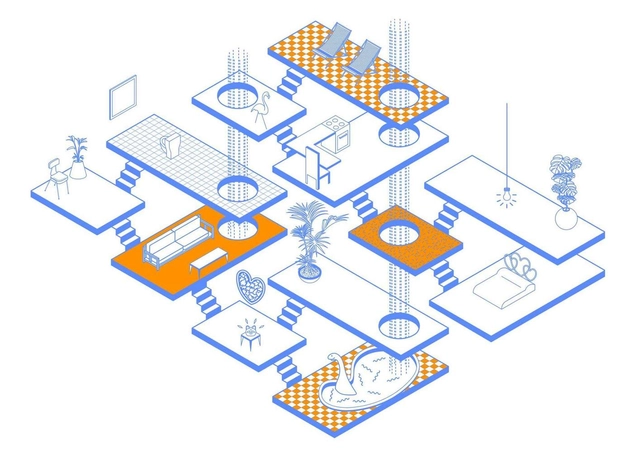
Finding the right tools to represent a project idea or carry out a construction job remains an ongoing challenge for architecture and design professionals. While software for drafting, 3D modeling, and calculations has increased precision and efficiency, many architects continue using legacy tools learned in academia or practice—tools that feel familiar, but don't necessarily offer the best design experience. From overloaded interfaces and clunky workflows to endless plug-ins and constant back-and-forth between disconnected software, traditional design tools often reveal their complexity and fragmentation.
Named one of ArchDaily’s Best New Practices of 2024, (ab)Normal is redefining the boundaries of contemporary inspiration, architecture, and design. This Milan-based interdisciplinary studio, led by architects Mattia Inselvini, Davide Masserini, and Luigi Savio, aims to seamlessly merge architecture, product design, and creative direction into a cohesive practice. Founded in 2017 alongside Marcello Carpino, (ab)Normal's work spans various domains, including art, culture, design, interiors, and fashion. Their projects traverse multiple scales and formats, moving between the virtual and tangible, ephemeral and permanent, speculative and commercial, while integrating iconic elements with nods to popular culture and focusing on the implications of technological progress. Acting as Creative Director for the built environment, (ab)Normal operates across scales and formats, moving between the virtual and tangible, ephemeral and permanent, performative and static.
The architecture and construction industry has undergone a transformation with the integration of various digital tools, now indispensable to the design process. The welcoming of technologies has effectively streamlined operations, enhanced efficiency, and elevated design quality. This digital shift, however, has resulted in a digital divide that goes beyond accessibility to tools and software. It also encompasses the crucial aspect of integrating traditional and indigenous communities into the urban development landscape. Can advancing technology support the growth of vernacular architecture? Can indigenous building practices find a place in the vision for a digitalized future?
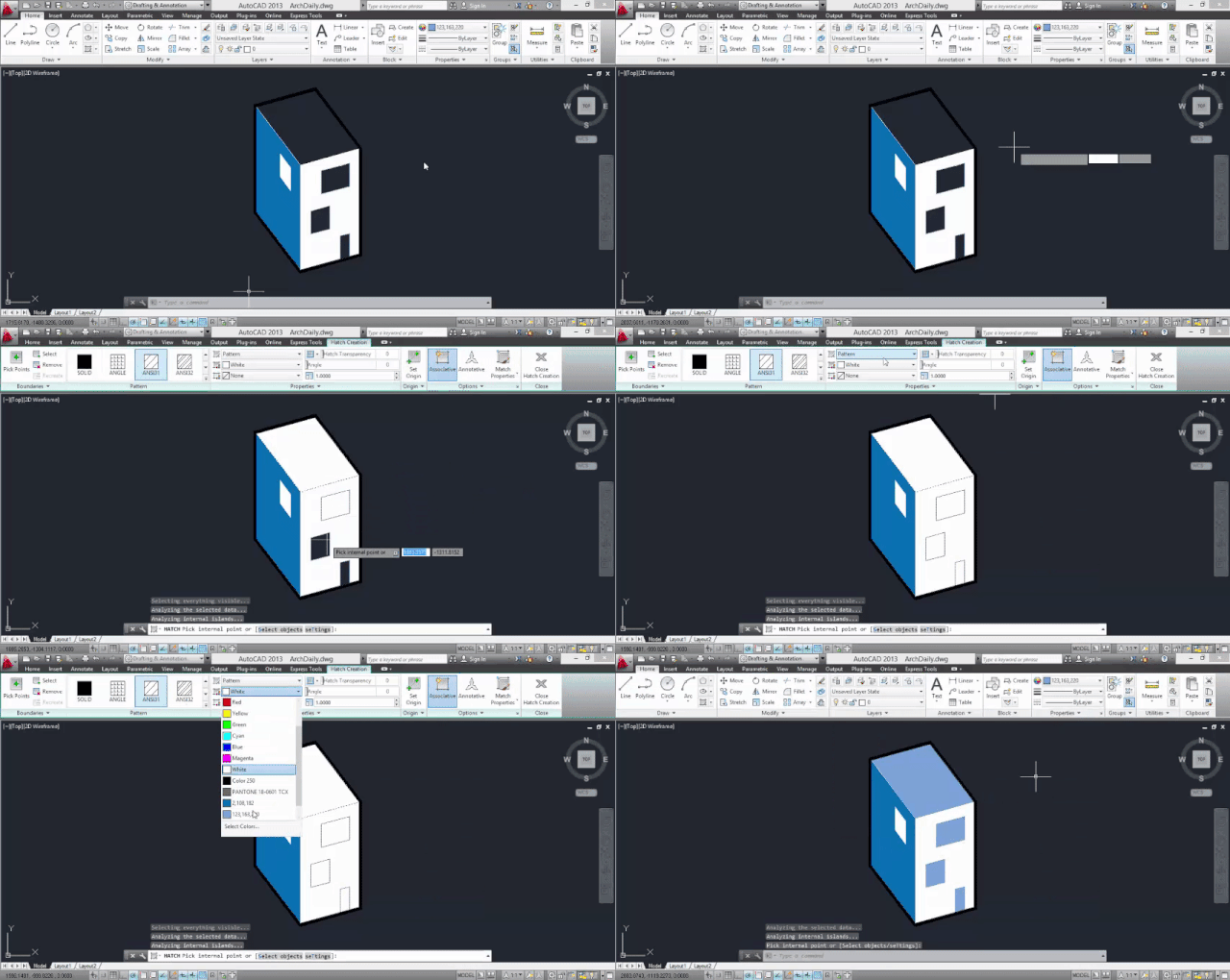
After spending countless hours in front of AutoCAD working on a project, you’re bound to have your own set of favorite commands to standardize a few steps. We also bet that you don’t have them all memorized or often forget them. To help you remember, we've made a list of 50 commands that can help you speed up your work game, discover new shortcuts, or come in use as a handy tool for when you forget what the command you need is called.
The following listing was developed and corroborated by our team for the 2013, 2014 and 2015 versions of AutoCAD in English. We also prepared a series of GIFs to visualize some of the trickier ones.
When you’ve finished reading, we would love to know what your favorite commands are (including those that we didn’t include). We will use your input to help us update the article!
I was part of the last generation of architectural students who didn't use computers (we’re only talking the early 1990’s here; there was electricity, color TV’s, rockets, just no renderings.) In my final year at college I miscalculated how long it would take me to finish my thesis project. As the deadline approached, I realized it was too late for me to match my fellow students’ presentations. At the time Zaha Hadid, and her deconstructivist paintings, set the style for architectural illustration. That meant many student projects being rendered in oil paints on large canvases.
Presenting designs to third parties can be a challenging task. Architects may find it difficult to describe spaces to their clients, therefore more firms are incorporating virtual reality into their workflows and project presentations.
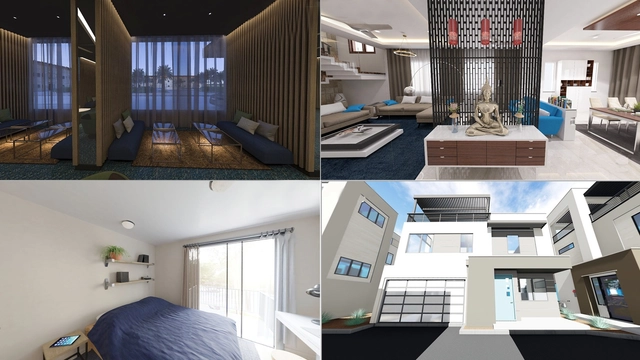
Below are 5 architecture offices using SentioVR to present their designs. To see the content in 360º, click on the image and move the mouse.
When you think of the age of hand drafted architecture drawings, what images come to mind? Is it the iconic plans of the Palladian Villas? Fast forward to present day, where architecture software is favored over hand drawings due to its efficiency and ability to create increasingly innovative structures. With all of the software available to architects, have you ever wondered which one might be the "best"? Luckily, TechRadar has just released their list of leading architecture software for this year.
Which processor? How many graphics cards? How much RAM? For architects, engineers, civil engineers, BIM managers, and other CAD pros, navigating the computer workstation marketplace can be an arduous task, hindered by unknowledgeable sales reps, inaccurate information, and other pitfalls.
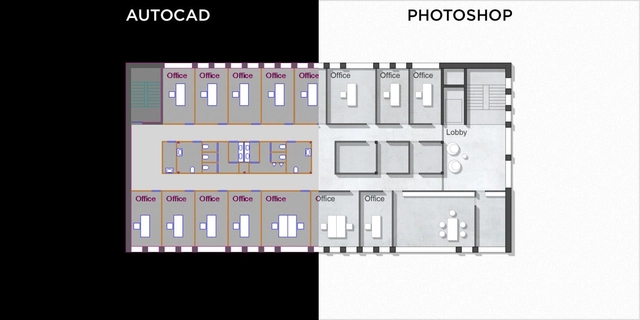
Rendering plans in Photoshop is an essential part of presenting your work to your client or to convince a competition jury to pick your design as a winner. Whenever you publish your work for books, websites or presentations the design quality of your plans will be your business card to future clients and the audience you build around your practice. Let’s start step by step.
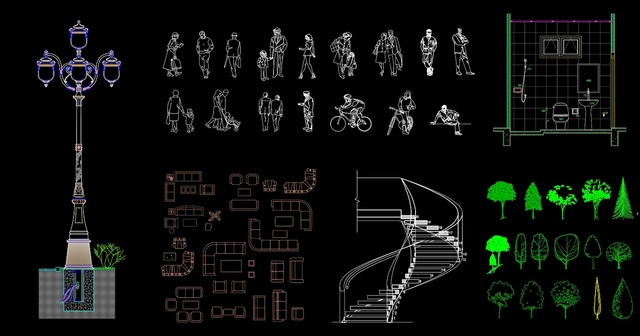
The people have spoken and the message is clear: “We want CAD blocks, reference drawings in DWG format and templates of all kinds!” Well, feast your eyes on this latest discovery, www.linecad.com. The site is a catch-all for downloadable DWGs and blocks whose scope even goes beyond architecture. (Shout out to your engineer buddies looking for pumps, pipes and gauges!)
https://www.archdaily.com/874915/linecad-offers-solid-collection-of-free-architecture-cad-blocks-no-strings-attachedAD Editorial Team
Modern technology; when it works, it's brilliant. Even the cell phone, primarily a communication device, can now transform our face into a dog or let us throw angry birds at pigs. Computers really do separate us from the animals.
But it's not all fun and games, particularly for architects. Whilst the new kids on the block such as BIM and virtual reality are hurtling the profession into the 21st century, AutoCAD will always be the dear old friend we could never let go of. And that presents a problem - because AutoCAD is more than capable of letting go of us. It's never through a heartfelt letter, or an endearing text, but through a cold, abrupt, soul-destroying message. AutoCAD knows it can leave us unexpectedly, it knows we will come crawling back, but at least now, you know what it really means when it says goodbye.
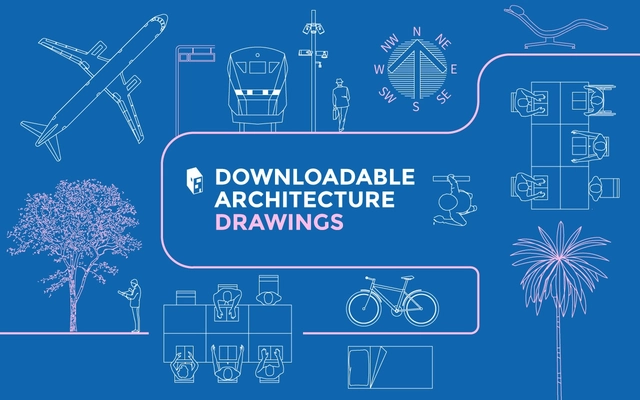
Looking for some quick references or ways to spice up your drawings? Fire up Google Translate or brush the dust off your Italian to take advantage of this comprehensive vector/dwg/architecture drawing resource site! archweb provides a number of free CAD blocks, downloadable CAD plans and DWG files, for you to study or use in precedent research. From furniture to north arrows, road detailing to room layouts, the website boasts a vast collection of plans, sections and elevations for you to pick and choose from, across a variety of categories. And what’s more, many drawings come complete with closed polylines and shapes for you to fill and hatch to your heart’s content.
Check out these 20 blocks to add quick and easy details to your drawings:
https://www.archdaily.com/872601/a-library-of-downloadable-architecture-drawings-in-dwg-formatOsman Bari
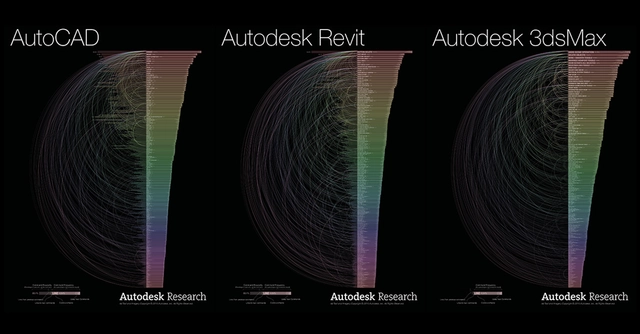
The 'Customer Involvement Program' of Autodesk's research department has, over the years, compiled a database of over 60 million individual commands created by anonymized users. Each reveals shortcut paths and thought flows among its customer base. The team have visualized the product usage (here described as the Command Usage Arc project) by ordering known and new commands from the most-frequently-used to the least-frequently. Revealed as a sequence of infographics, the results demonstrate how people work – and how they often deviate from prescribed usage.
https://www.archdaily.com/869537/visualizations-of-the-most-used-autodesk-autocad-revit-and-3dsmax-commandsAD Editorial Team
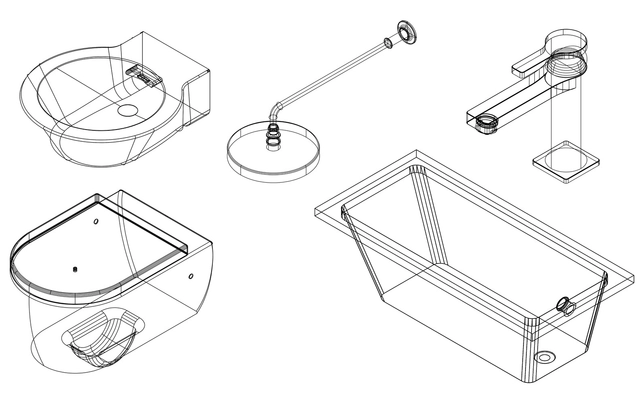
In order to support the design work of our readers, the company Porcelanosa Grupo has shared with us a series of .DWG files of its various bathroom products. The files include both 2D and 3D drawings and can be downloaded directly from this article.
Download the objects below, which have been separated into the following categories: Shower Heads, Toilets, Sinks, Faucets and Tubs.
https://www.archdaily.com/805903/sinks-toilets-shower-heads-and-faucets-downloadable-bathroom-cad-blocksArchDaily Team
This article was originally published in Redshift and is republished here with permission.
In 2001, the Taliban destroyed the Buddhas of Bamiyan in central Afghanistan using dynamite, anti-aircraft guns, and artillery. After weeks of incremental destruction, nothing of the statues remained.
That sad turn of events was the impetus for the founding of CyArk, a nonprofit that uses technology to ensure sites of rich cultural heritage remain available to future generations. Since 2003, they have used laser scanning, photography, photogrammetry, and 3D capture to record nearly 200 sites around the globe.
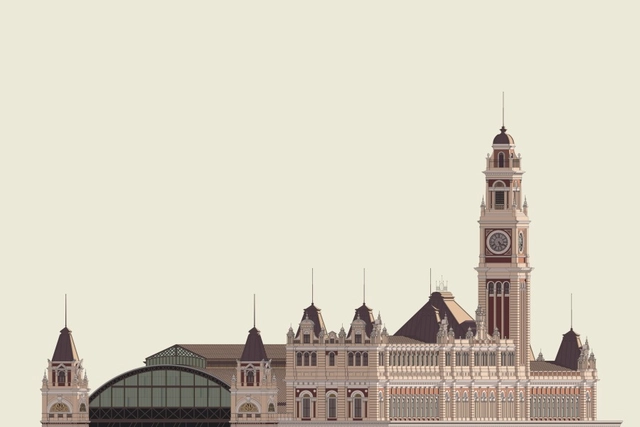
While using technical drawings, Zema Vieira makes architectural illustrations by using only AutoCAD without any further techniques. Her body of work became a project called “Fachada Frontal” or "Front Facade." In it, the artist depicts buildings from cities around the world, with a particular focus on Belo Horizonte, Brazil.
Check out below the illustrations made by the artist.
Fabiola Morcillo Núñez, an architect from the University of Chile, is 26-years-old and has been formally drawing under the name 1989 for about a year and a half. Her illustration project uses basic tools of architecture to build fictitious and imaginary spaces based on Asian architecture and pop art.
Fabiola is aware of the design benefits of paper and uses its abilities to imagine spaces without any limits.
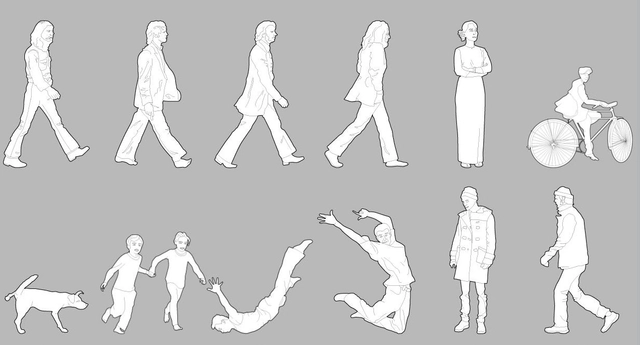
Complementing the many websites that already provide people for renders, PimpMyDrawing is a growing online database of vector drawings of people. The site was started by three recent graduates of architecture school. After realizing the amount of vector drawings that they had produced during their academic career, they decided to share them for free.