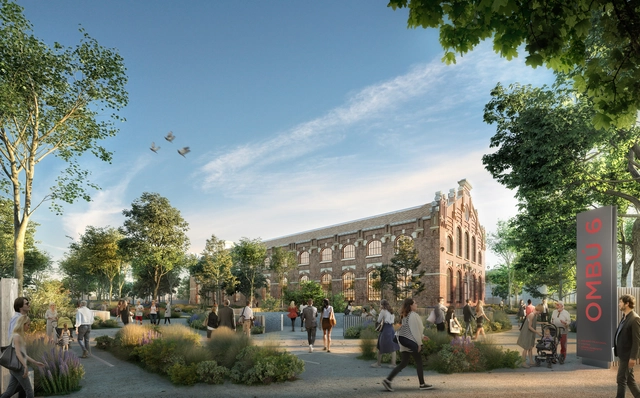
General view of the revitalised industrial building sitting in a landscaped garden. Image Courtesy of Foster + Partners
Foster + Partners is leading massive refurbishment works on a historic building in Madrid. The renovation project that will put in place an office building for Acciona, seeks to revitalize an abandoned old industrial building built in 1905, generating over 10,000 square-meters of new spaces.
The progressive departure of factories from cities, often due to environmental regulations, noise ordinances, or the price of real estate, has left many urban manufacturing facilities abandoned and out of use. As these urban factories are left empty, many adventurous developers are taking advantage of the plentiful space, light, and flexible functions that they offer, leading to a residential revitalization in many of the world's defunct manufacturing facilities.
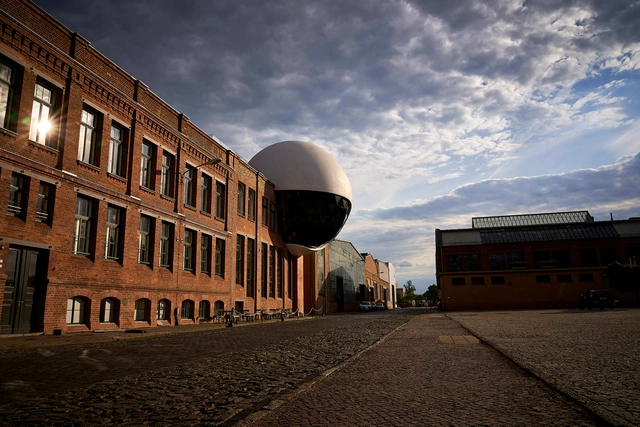
Oscar Niemeyer’s latest work generated a spherical extension for the Kirow plant’s canteen in Leipzig, Germany. The architect was first approached by the factory’s owner in 2011, and following Niemeyer’s death in 2012, his sketches were further developed by assistant Jair Valera, and executed by Harald Kern Architects.
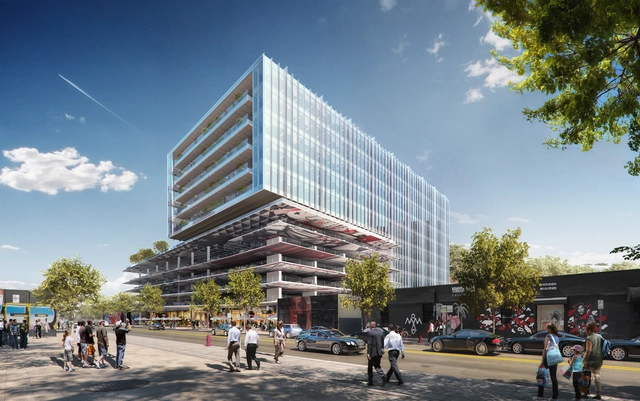
Gensler has unveiled 545wyn, “the first Class-A office tower in Miami in over a decade”. In collaboration with office developer Sterling Bay and local development partner Joe Furst of Place Projects, the project introduces a new generation of office space, aiming to attract a new type of innovative, forward-focused tenants. In fact, Gensler Miami will be the building’s first tenant of the 10-story tower.
Recycled and reused materials continue to grow as a more attractive alternative in the construction field. They are at most times a coveted sustainable substitute to conventional building materials, offering a financially resourceful solution when appropriately sourced and implemented. Aside from saving up on raw material costs, establishing recycling facilities or factories might present a good opportunity to generate jobs within a local setting (collecting, handling). The recycling process might also be used as a gateway to lower energy consumption, with some plants eventually generating their own power through specific material transformation techniques (Heat generated power).
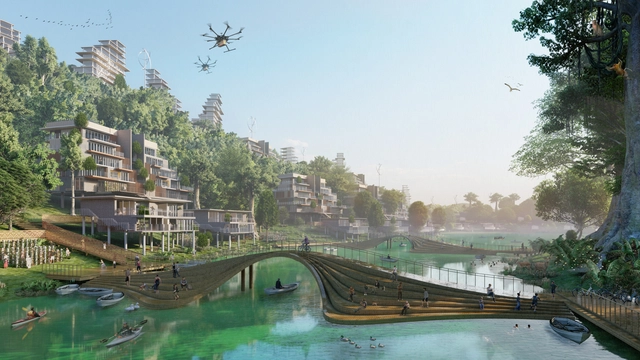
“The Infinite City” smart city design for Indonesia New Capital. Image Courtesy of AntiStatics Architecture
Presented part of international competitions, this week’s best-unbuilt architecture gathers award-winning projects submitted by our readers. Highlighting as usual diverse approaches from across the globe, ArchDaily is rounding up in this article, a curated selection of cultural, civic, and urban proposals.
In Singapore, an adaptive reuse project transforms a power station into a creative industrial hub, while in Indonesia, a smart city design for the new capital generates an ecologically responsible environment. Moreover, Kjellander Sjöberg designs and develops an original city block in Stockholm, and TheeAe imagines a city hall for China. Other proposals include an entire reflective surface for a public square in Italy, a new city district in Tampere Finland, a University building in Warsaw, and a school for contemporary art in Vienna.
RIBA presents Forms of Industry, an exhibition of contemporary photographs by Alastair Philip Wiper (1980) and archival images by Eric de Maré (1910-2002) from the RIBA Collections. Separated by more than 50 years, the two photographers share a common interest in industrial buildings and landscapes, yet their differing approaches create a commentary on changing attitudes towards industrialisation and sustainability.
Eric de Maré was one of Britain’s most influential architectural photographers, responsible for raising awareness of the value and beauty of Britain’s overlooked industrial heritage via photographs taken for the Architectural Review in the 1950s and 1960s. A selection from RIBA’s extensive
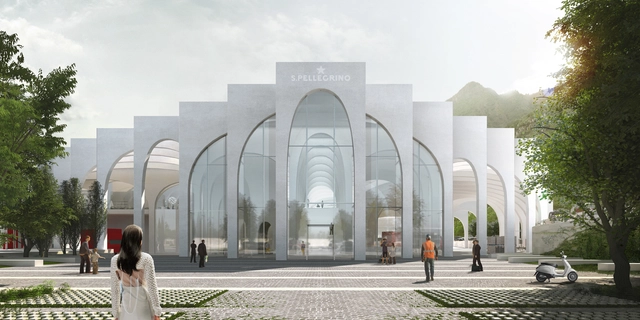
Works started on Sanpellegrino’s “Factory of the Future”, designed by BIG-Bjarke Ingels Group on the brand’s 120th year anniversary. Scheduled to open in 2022, the new production plant will showcase high levels of innovation, technological advancements, and social sustainability.
Travel seven hours by car in a Southwest direction from Shanghai and you will arrive in Songyang County. The name is unfamiliar to many Chinese people, and even more foreign to those living abroad. The county consists of about 400 villages, from Shicang to Damushan.
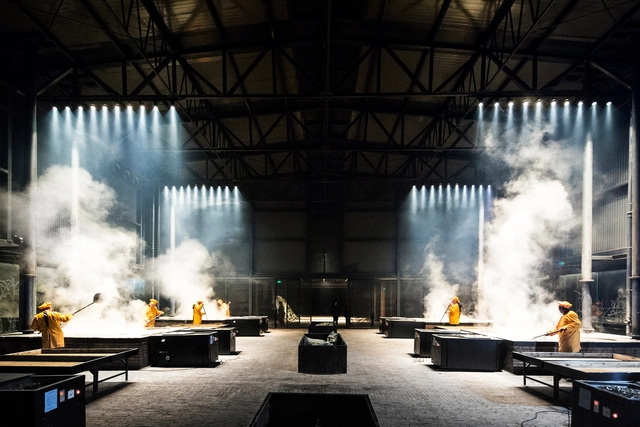
Here, undulating lush green terraces hug the sides of Songyin river valley, itself the one serpentine movement uniting the lands. Follow the river and you will see: here, a Brown Sugar Factory; there, a Bamboo Theatre; and on the other side, a stone Hakka Museum built recently but laid by methods so old, even the town masons had to learn these ways for the first time, as if they were modern methods, as if they were revolutionary.
And maybe they are. Songyang County, otherwise known as the “Last Hidden Land in Jiangnan,” may look like a traditional Chinese painting with craggy rock faces, rice fields and tea plantations, but it has also become a model example of rural renaissance. Beijing architect Xu Tiantian, of the firm DnA_Design and Architecture, has spent years surveying the villages of Songyang, talking to local County officials and residents, and coming up with what she calls “architectural acupunctures.”
Techniques, technologies, construction, controls: master it all during LIGHT IN ACTION, a fast-paced, one-day lighting education.
Take a break from the office desk to earn 3 AIA credits and 2 NCQLP credits. The program includes: - tour of a rare NYC factory - 'Art of Lighting' tour (1 AIA and NCQLP credit), showing art lighting techniques, through the Edison Price Lighting Gallery. - dimming controls primer (1 AIA credit), including how to design for Title 24. - 'LEDs as IoT' presentation (1 AIA and NCQLP credit), analyzing LEDs as the future hub for the Internet of Things. ...and more! Sign up with info@epl.com
The project of the Music Factory of Lanzarote was born as a public initiative that seeks to solve the lack of musical spaces and interpretation of the island bearing in mind the analysis extracted from the area.
A priority objective is a connection with the city and the impulse of the urban renewal in Arrecife. A project that will act as an engine of future activities that seek intervention in urban voids and old buildings adapting them to new uses.
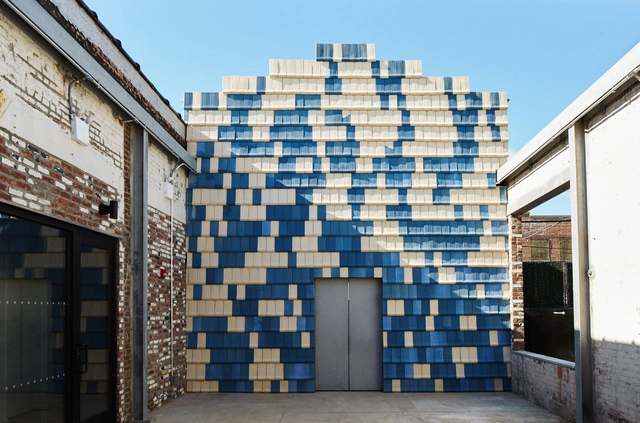
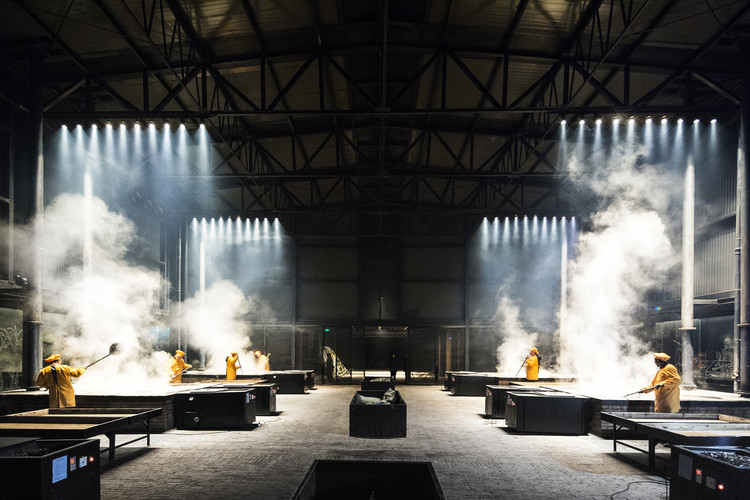
The installation is set at A/D/O's courtyard in Brooklyn. Image Courtesy of Sam Nixon
London-based architecture collective Assemble is set to transform an outdoor courtyard at A/D/O in Brooklyn into a ‘model factory’ to explore utopian ideals of work. The Turner Prize-winning architects will use their first site-specific installation in the U.S. entitled ‘A Factory As It Might Be’ to depict a vision of how society should build and function using abundant, malleable materials.




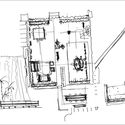
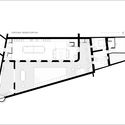

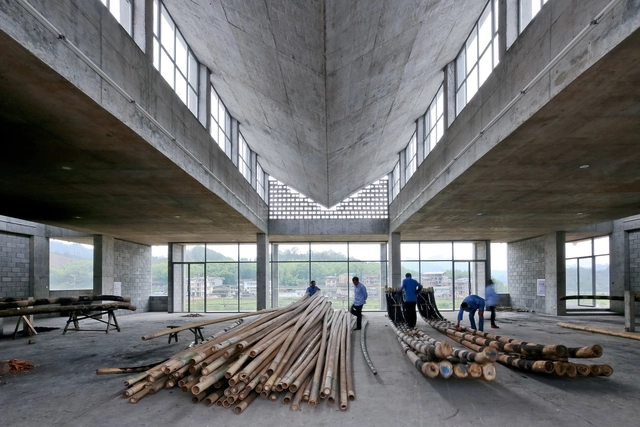
















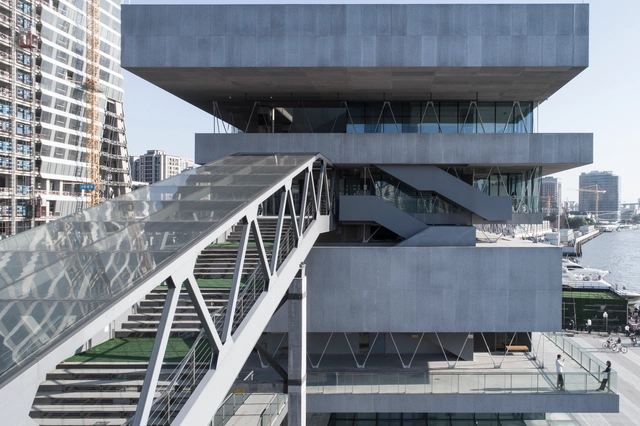


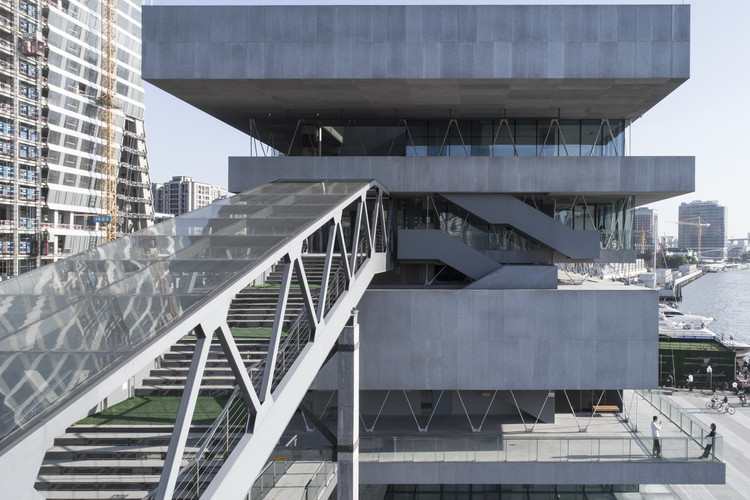


.jpg?1524158077)
.jpg?1524158077&format=webp&width=640&height=580)
.jpg?1524158612 "Brown Sugar Factory. Image © Wang Ziling")
.jpg?1524163466 "Teahouse, Damushan Tea Valley. Image © Chen Hao")
.jpg?1524164629 "Teahouse, Damushan Tea Valley. Image © Jiang Xiaodong")
.jpg?1524158127 "Bamboo Pavilion. Image © Zhou Ruogo")
.jpg?1524158212 "Bamboo Pavilion. Image © Zhou Ruogo")
.jpg?1524163398 "Bridge at Shimen Village. Image © Han Dan")
.jpg?1524163448 "Bridge at Shimen Village. Image © Wang Ziling")
.jpg?1524163483 "Bridge at Shimen Village. Image © Wang Ziling")
.jpg?1524163637 "Wang Jing Memorial Hall. Image © Wang Ziling")
.jpg?1524158077)