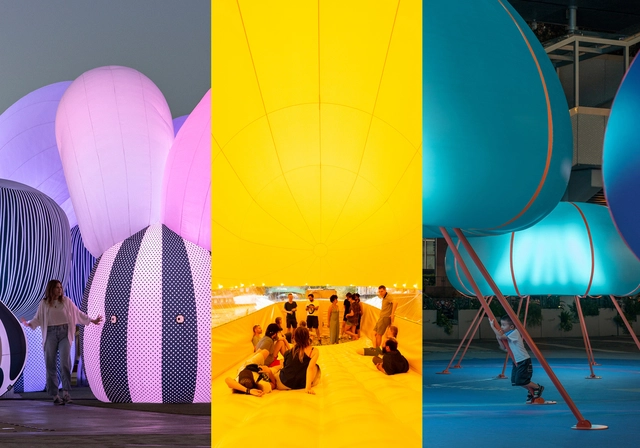
As society, technology, and architecture have evolved, designers and architects have embraced novel construction systems and innovative approaches to reshape the built environment. This advancement has stretched the boundaries of traditional construction techniques and ignited fresh ideas in building design.
In the past, some architects and artists aimed to question an architectural paradigm deeply entrenched in anthropocentrism. Historically, architecture has been linked to the notion that buildings, being conceived by human beings, must be extremely durable, even imperishable. Considering the principle that the best intervention is the least intrusive, inflatable architecture, in contrast to these human-centric viewpoints —but aligned to our ephemeral nature—, can propose structures that may exist one day and vanish the next, leaving a temporal imprint on the landscape. This architectural approach uses textiles as the primary material and air as the structural system, potentially challenging the traditional Vitruvian ideals of Venustas, Firmitas, and Utilitas.
https://www.archdaily.com/1007496/inflatable-architecture-pneumatic-structures-transforming-built-environmentsEnrique Tovar
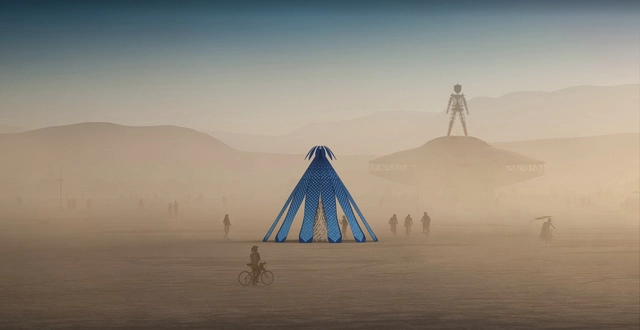
Once a year, in the vast and unforgiving Black Rock Desert of Nevada, a city arises. Thousands of people unite to form a temporary metropolis with a collective spirit. Burning Man 2023 removes all restrictions on expressing oneself, allowing forms to be unexpected. This year, Burning Man Festival’s theme was Anamilia, transforming The Black Rock Desert into a blank canvas for creation, a playground for self-discovery, and a haven for radical self-expression.
The topic "ANIMALIA," encouraged participants to set off on a voyage that blurred the line between reality and fantasy. ANIMALIA pays tribute to the animal kingdom's diversity, from the animals that live in the transitional areas of the desert to the mythical and fictitious animals that appear in our dreams. Inspired by the sea, the sand, the sky, and the imaginative, this year’s installations and pavilions range from a fish installation representing fresh waters to a living knit work pavilion that takes form with textiles, to a geometric structure showcasing a cube’s potential.
The concept of a city can be viewed as a constantly evolving system where both architects and users contribute to its design and redesign. While its framework may start with planners or designers, the character of the urban fabric is ultimately shaped by the societies and generations that inhabit it. The question of "city authorship" often arises in the context of masterplan design. Can architects and urban planners determine the extent to which a city will evolve through its initial design? The answer is no. User authorship then acknowledges that city planning should not be approached like building design, where designers attempt to predict every aspect of shape, pattern, behavior, and culture. Instead, it recognizes the role that people play in shaping the urban fabric through their personal taste in architecture, the development of neighborhood personality, and ongoing redesign that contributes to the story and spirit of a place. These factors should be considered in the initial design by engaging ideas related to future expansion, adaptable infrastructure, and empowering citizens to contribute to the city's architecture, thus making the city design democratic. This article explores conceptual radical cities where designers embrace the ideas of user authorship and the constant evolution of ephemeral architecture.
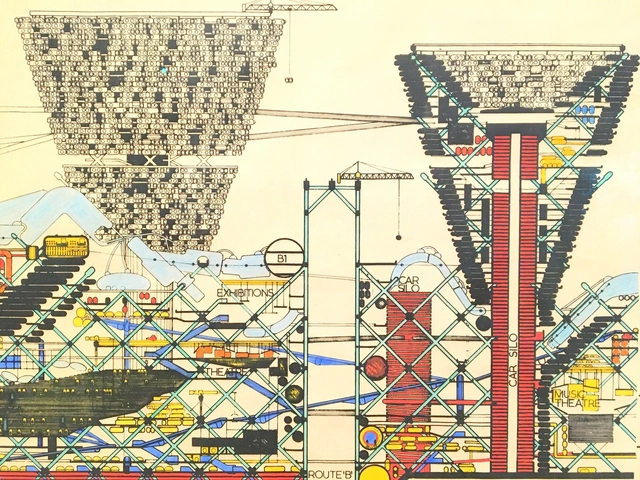
“With the forgiveness of the master [Le Corbusier], the house is a machine to carry with you and the city a machine to which you connect”. That phrase was said almost 60 years ago by David Greene, the founder of the English group Archigram. He was speaking on the presentation of the Living Pod, a capsule house that could be transformed into a trailer. The idea was that the structure could be connected and disconnected from the cities, forming the Plug-In City. Designed as an airtight capsule, the interior was small and comfortable, with multiple compartments. The Living Pod was one of many similarly utopian and daring projects by this group that seemed to have a fixation on nomadic and mutant structures like the Walking City and the Instant City.
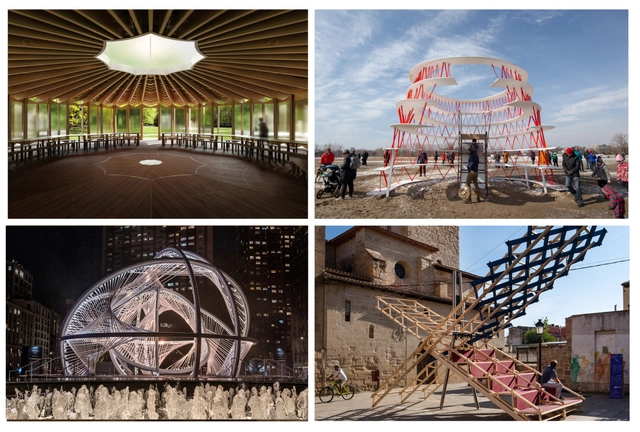
Staged stories on community and identity, ephemeral architecture showed that in 2022 it doesn't have to be permanent to be powerful. A direct and popped-up public installation can shift from preparation to action, reclaiming and defining what makes a community unique. Highlighting installations to acknowledge linguistic diversity in NYC, a giant table to celebrate culinary in Barcelona, and a large-scale net in Dubai to represent the local culture, among others, these initiatives seek to understand ways in which local and regional expressions can help cities to be more equal and diverse.
Globalization has connected the world boundaryless. While it has also made information more accessible, it has led to homogeneity and identity crisis at melding unique societies and cultural expressions. Cultural differences are undeniable as globalization grows. Hence, as architecture produces common living standards, it can also highlight singularities. Festivals, installations, and pavilions, 2022 was the year to express local memories to be recognized and celebrated, setting Community and identity as central topics in ephemeral architecture throughout the year.
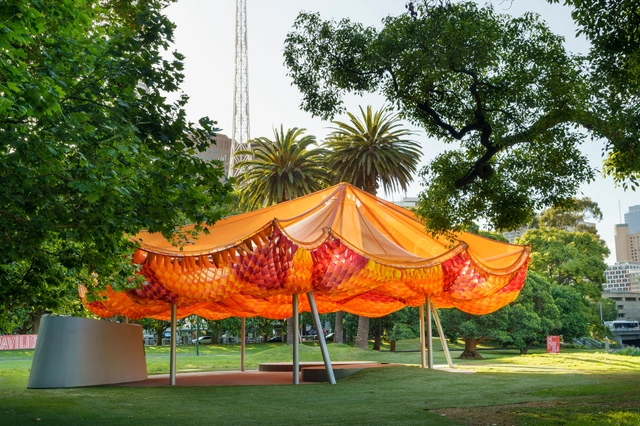
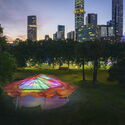
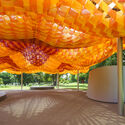
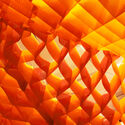
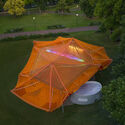
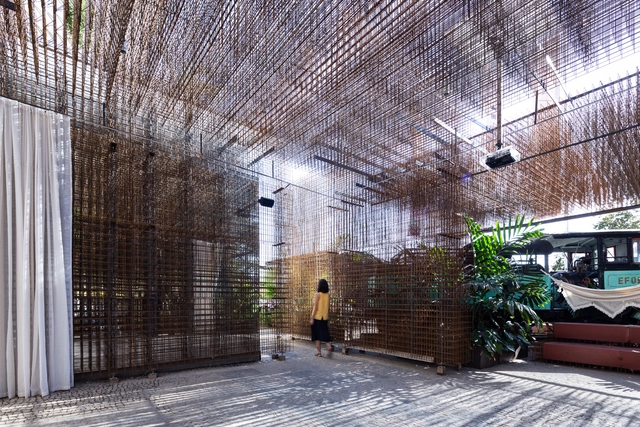
The ninth edition of the MPavilion opened with an orange canopy installation designed by Bangkok-based practice all(zone) in collaboration with AECOM and Schiavello Architects. From December 2022 to April 2023, visitors will experience a vibrant and joyful setting made of upcycling materials, featuring an architectural lighting program by Melbourne-based design practice Bluebottle.
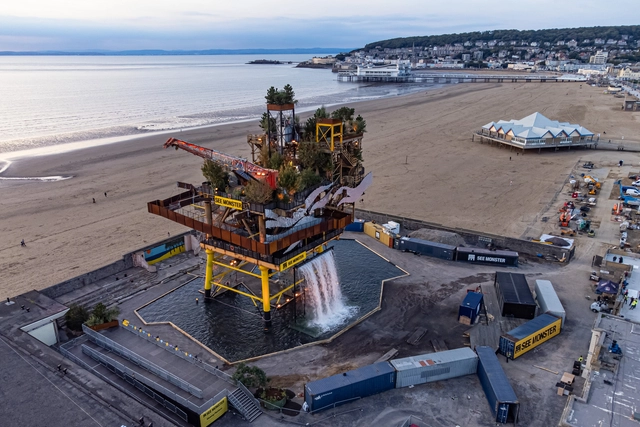
NEWSUBSTANCE transforms an oil rig into a 35 meters tall public art installation in Weston-super-Mare, UK. The mega-platform features a 10- meter-high waterfall, a wild garden, and a 6,000-piece kinetic installation, including Ivan Black's work and Trevor Lee's art pieces. From 24 September to 5 November 2022, "SEE MONSTER" will welcome the public to inspire conversations about reuse, renewables, and the great British weather, as part of the festival UNBOXED: Creativity in the UK.
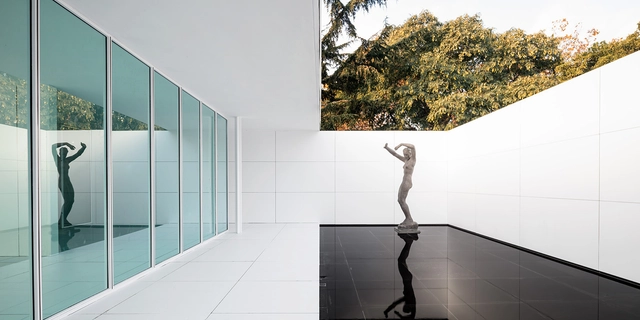
In 1929, Ludwig Mies van der Rohe and Lilly Reich design the German National Pavilion for the 1929 Barcelona International Exhibition. The official reception for the exhibition was held there, presided over by King Alfonso XIII and the German authorities. From then on, the story is well known to everyone. A symbolic work of the Modern Movement, the Pavilion has been extensively studied and interpreted, and has inspired the work of several generations of architects.
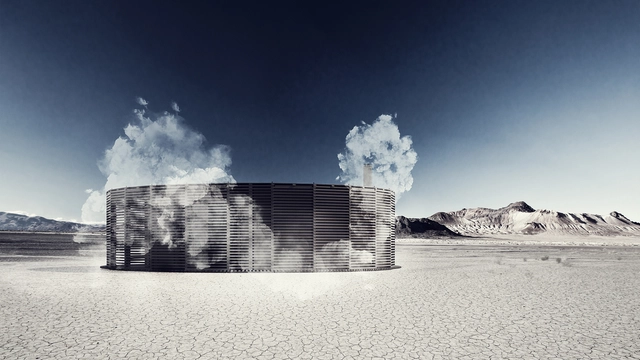
Steam of Life . Image Courtesy of Sauna On Fire And JKMM Architects
This year’s theme for the famous annual Burning Man festival revolves around the notion of “Metamorphosis”. Taking place in the Black Rock Desert of Nevada, from the 25th of August till the 2nd of September, each year artists and architects from around the world get creative and imagine installations and pavilions responding to one general question.
For the 2019 edition, Burning Man has already revealed the design for the Central Temple by Geordie Van Der Bosch. Read on to discover more about 2 interventions, taking part in this year's event, an Ornamental Shade from San Francisco and a Desert Sauna from Finland.
As we have seen throughout the history of architecture, ephemeral installations and pavilions are important tools for talking about specific moments in architecture in an almost immediate way. While it is true some pavilions have been so relevant that they broke with their ephemeral quality to become permanent, such as the German Pavilion in Barcelona, designed by Ludwig Mies van der Rohe and Lilly Reich, most are documented in photographs, plans and experiences to be rewritten in future projects.
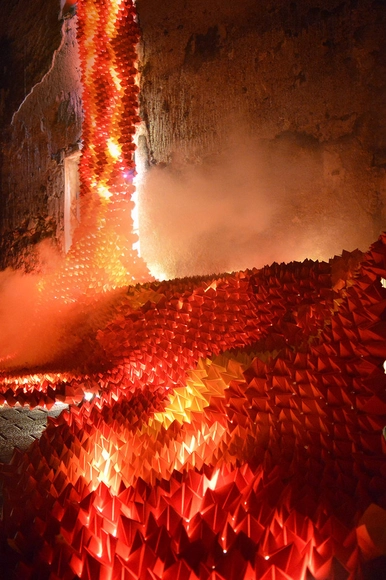
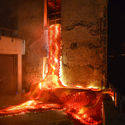
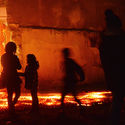
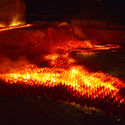
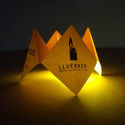
In the wistful irony of creating liquid fire through sheets of paper, David Oliva of Barcelona-based firm SP25 Arquitectura and Anna Juncà of Atelier 4 collaborated to fabricate an installation piece for the LLUÈRNIA festival of fire and light in Catalonia. Titled, "Origami Lava", the field of flame cloaks the 100 m2 surface of an abandoned building using over 10,000 pieces of origami.
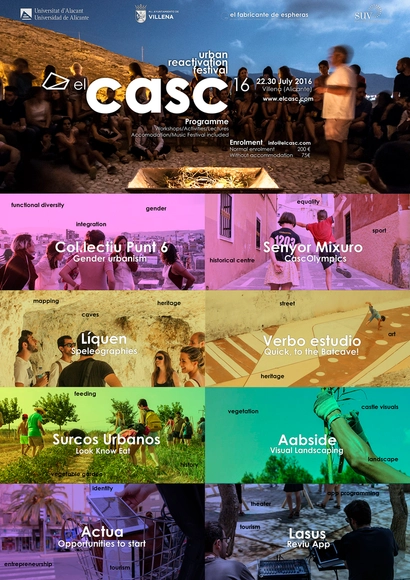
The festival aims for a social and cultural renewal of the Historic Center of Villena, which is stigmatized within the city for several reasons. The event has already received several awards.