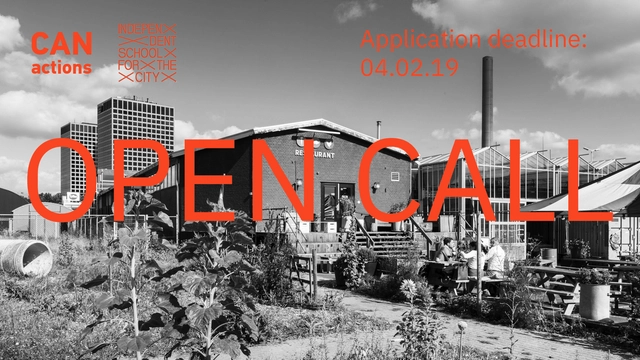
The 11th edition of MEDS Workshop will be held in the industrial region of Poland - Silesia. Based mainly in Tychy it will take advantage of the Upper Silesian Urban Area’s diversity challenging the participants to face different projects in different cities such as Katowice and Dąbrowa Górnicza.
OMA / Iyad Alsaka have unveiled their design for a major educational masterplan in Dubai. Designed for the Government of Dubai Knowledge Fund, on a site located in the centre of Dubai International Academic City (DIAC), the scheme aims to be the world’s largest free zone dedicated to higher education.
https://www.archdaily.com/928700/oma-unveil-major-education-masterplan-in-dubaiNiall Patrick Walsh
The Robin Evans Lecture: The 24/7 Bed: Privacy and Publicity in the Age of Social Media
The city is not what it used to be. What is private and what is public has become completely blurred. We can no longer think of distinct spaces for work, play, domesticity, and rest. We are living in a 24/7 culture. Industrialisation brought with it the eight-hour shift and the radical separation between the home and the office or factory, between rest and work, night and day. Post-industrialisation collapses work back into the home and takes it further into the bedroom and into the bed itself. Networked electronic technologies have removed any limit to what can be done in bed. Millions of dispersed beds are taking over from concentrated office buildings. The boudoir is defeating the tower. This lecture explores the new role of the bed as the epicentre of labour, post-labour and love in the age of social media
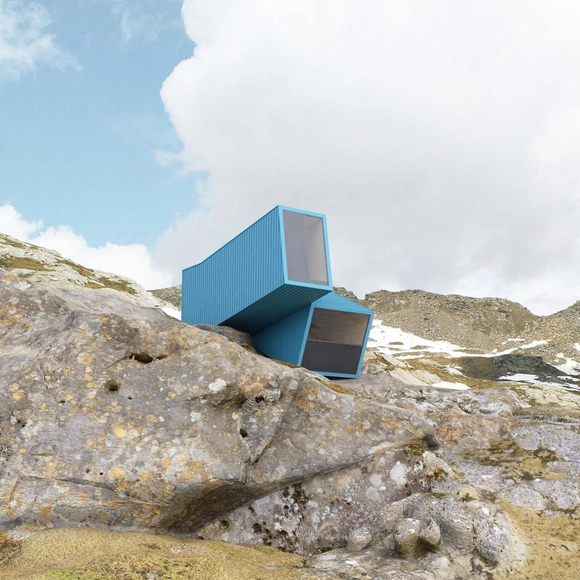
Bivacco Bredy is the title of the project designed by Claudio Araya, Natalia Kogia, Iga Majorek and Maria Valese, a young team of architects who attended the latest edition of YACademy’s course in Architecture for Landscape.
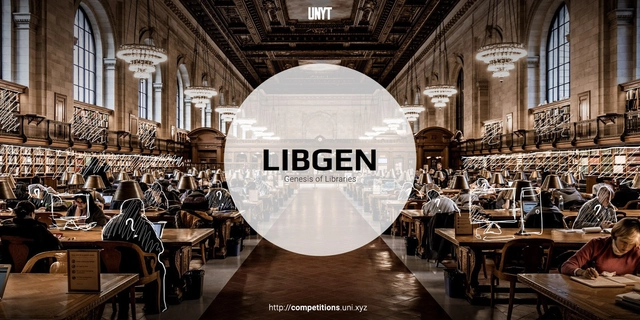
The world that we see today is closer than ever before. Knowledge which was earlier stored via books has now been transferred to the digital medium. It is accessible to the world, making the process of acquiring this knowledge i.e. learning, simpler. An avenue to self-educate and learn was initiated by need of a public space that made knowledge accessible to all with books. The concept of libraries initiated with this idea, by making learning accessible to all. It banked on the idea of gathering a wide spectrum of knowledge in one space, open to enable self-learning.
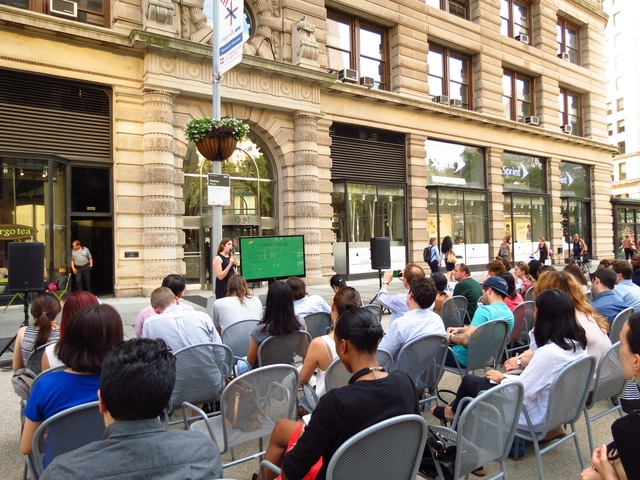
The Flatiron/23rd Street Partnership Business Improvement District (BID), in collaboration with General Assembly and local institutions and businesses, presents eight weeks of free education classes on the Flatiron South Public Plaza.
Green building was always part of the firm's DNA, though a little more than ten years ago Lake|Flato formed an internal studio that would focus on landscape and resource management.
For over three decades, San Antonio’s Lake|Flato Architects have advanced the cause of critical regionalism in South Texas. Founding partners David Lake and Ted Flato met in the office of O’Neil Ford, an early Texas Modernist whose work combined structural innovation with local building traditions. When they started their own practice in 1984, Lake and Flato carried this germ with them, turning out a series of ranch houses that garnered attention for their deft blending of modern modes of living, indigenous materials, and agro-industrial vernacular.
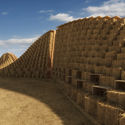
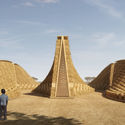
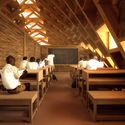
Architecture firm NUDES has released details of their proposed secondary school in Malawi, constructed from straw bales. Responding to a brief focused on modularity, incremental expansion, deployment, and sustainable technology, the scheme is formed of a modular “ladder” component deployed to create a structural system that houses the pedagogical intent of the school.
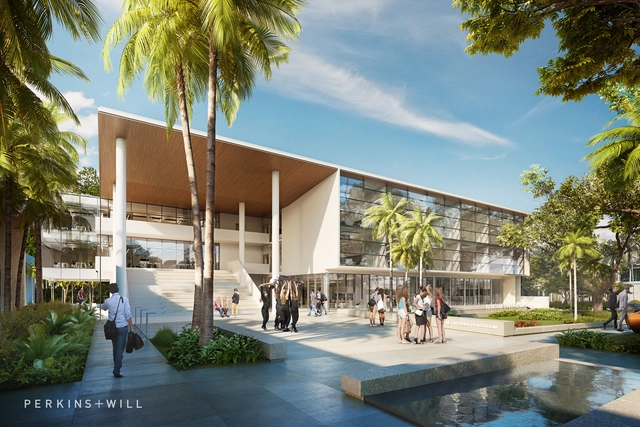
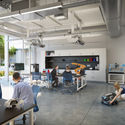
Perkins+Will has released details of their design for the Ransom Everglades School in Miami, Florida. The school’s new STEM building will feature flexible classrooms with mobile walls and furniture, and an emphasis on indoor/outdoor connectivity. The school’s role as a nationally-renowned center for science and technology will also be aided by tech-enabled educational tools, fabrication and maker labs, a rooftop outdoor lab, and an entire roof of solar PVs.
https://www.archdaily.com/915320/perkins-plus-will-designs-flexible-stem-school-with-movable-walls-in-miamiNiall Patrick Walsh
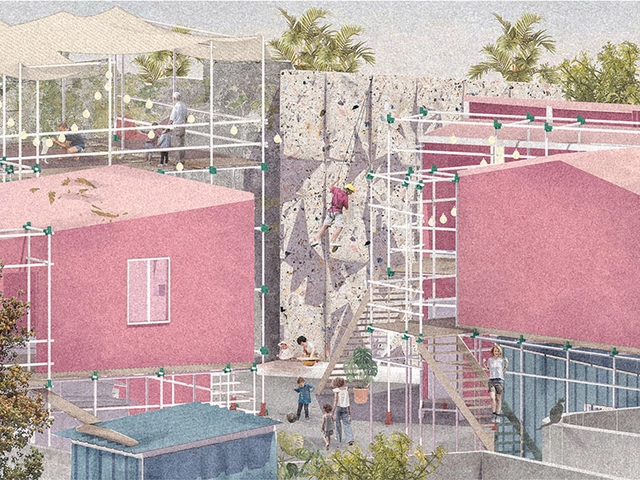
Volume Zero has announced the results of their RE School architecture competition 2018, which challenged participants to design and innovative school that brings education to children living in the most inaccessible areas of the world. Serving as a hub for interaction between local communities, the winning schemes ranged from a school floating above a shanty area to a transportable building made of hands-on material.
Below, we have republished the three winners from the competition. For more information about the competition, honorable and special mentions, visit the official website here.
https://www.archdaily.com/914083/volume-zero-announces-winners-of-re-school-competition-imagining-the-future-of-remote-educationNiall Patrick Walsh
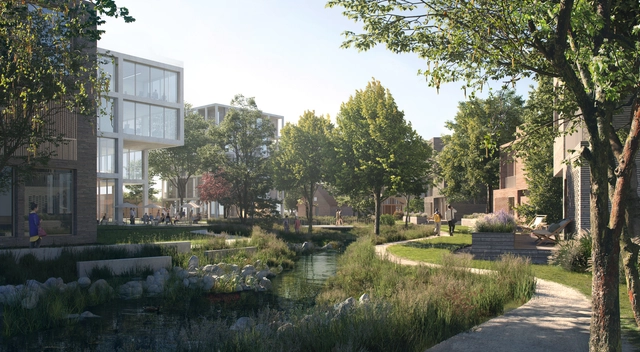
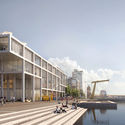
C.F. Møller Architects and EFFEKT has won an architectural competition for the design of the new SIMAC (Svendborg International Maritime Academy) in Svendborg, Denmark. Set to be completed in 2022, the open, flexible, modern learning institution seeks to educate the leaders of Denmark’s future innovative maritime industries. In addition to their role as design team for the academy, C.F. Møller Architects and EFFEKT have also prepared a masterplan for a surrounding district including housing, commerce, and urban green space.
The 12,500-square-meter SIMAC will contain common areas such as a Campus Square, teaching areas including auditoriums, laboratories, and simulator centers, and rooms for administration and support. The SIMAC will also sit within an overall development plan for the area, dubbed the “Harbour of the Future,” also designed by EFFEKT.
MK:U International Design Competition, images Luke Hayes
The MK:U International Design Competition seeks world-class design teams for a new model university in the Oxford to Cambridge innovation arc.
Beloved by architects as the most original and successful of the mid-twentieth century’s wave of ‘New Towns’, and famously ‘different by design’, Milton Keynes (MK) has successfully reinvented itself as a ‘Smart City’ and is a key contributor to the United Kingdom’s knowledge economy.
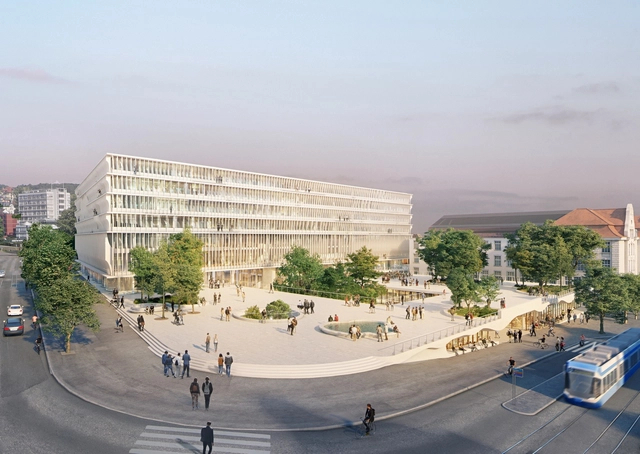
Herzog & de Meuron has released details of their proposed Forum UZH, creating a new center for education and research on the city campus of the University of Zurich. The new building is a seen as a crucial element for ensuring the future viability of Zurich as a higher education hub, upgrading and consolidating an existing aging, dispersed campus.
Due to be completed in 2027, the Forum UZH will occupy a prominent corner site, combining expansive public space with the firm’s recognizable clean, contemporary language. Situated in the old city’s university quarter, dominated by stand-alone buildings set back from the street on below-ground plinths and terraces, the Forum UZH forms the 21st-century embodiment of the stately urban campus.
MEDS Spetses Island, Greece: July 26 - August 12, 2019 Open Call Dates: December 17, 2018 - January 15, 2019
In its 10th edition, MEDS Workshop is going to take place this year in Greece, on Spetses Island with its theme “MEMNISO,” which in ancient Greek means “to remember.” The idea of the workshop is to bring traditional professionals together with contemporary crafts and design by exploring new capabilities and learning techniques from local expert craftsmen. The goal of the workshop is to not only learn from local artisans but also exchange knowledge and share skills.



_OMA.jpg?1574164282&format=webp&width=640&height=580)







.jpg?1555325309&format=webp&width=640&height=580)
.jpg?1555325239 "© David Chipperfield Architects")
.jpg?1555325309 "© David Chipperfield Architects")
.jpg?1555325249 "© David Chipperfield Architects")
.jpg?1555325282 "© David Chipperfield Architects")
.jpg?1555325309)