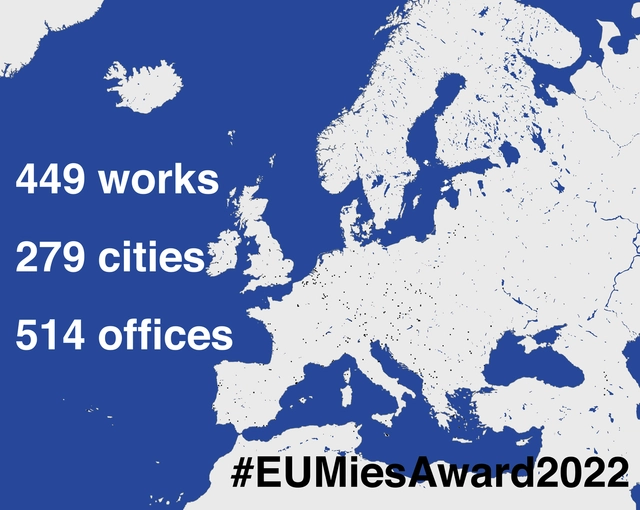
The European Union Prize for Contemporary Architecture, the Mies van der Rohe Award has just announced the first 449 works competing in its 2022 edition. Selected from 279 cities in 41 countries, the projects have been nominated by European independent experts, the national architecture associations, and the Prize Advisory Committee.
The Design Educates Awards recognize, showcase, and promote globally the best ideas and implementations of architecture and design that can educate. The design itself may provide an informative and educational layer that guides us through the increasing complexity of our environment. The objects in our surroundings can communicate important values and guide us through desirable, positive practices.
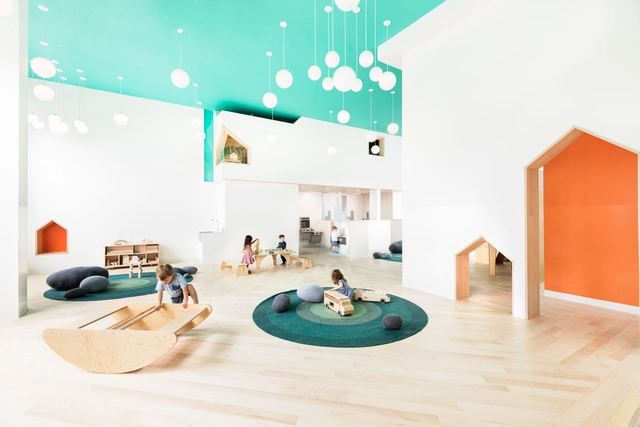
Emmi Pikler was a Hungarian pediatrician who introduced, in the years after World War II, a new philosophy on early childhood care and learning for children up to the age of 3. It was after the birth of her first child that she began to question: what happens when a child is allowed to develop freely? The observed results culminated in the introduction of a new methodology.
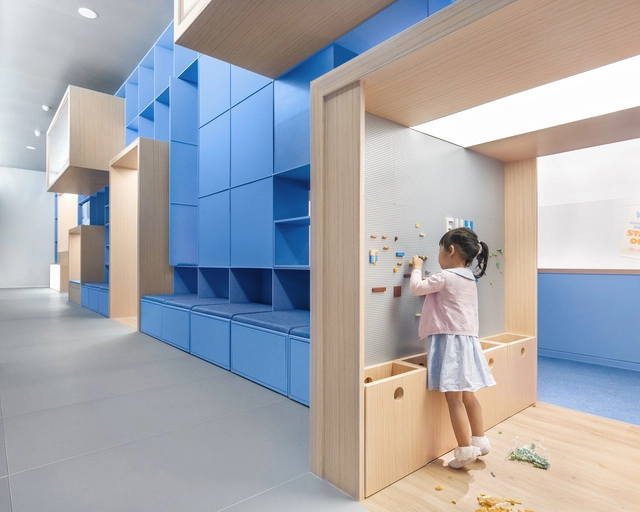
The Pikler approach facilitates the free development of children by caring for their physical health and providing affection but largely respecting their individuality and autonomy. Following this logic, intervention by adults becomes mostly unnecessary. Rather, for the child to experience space while moving freely, certain care must be taken in the preparation of the environments themselves.
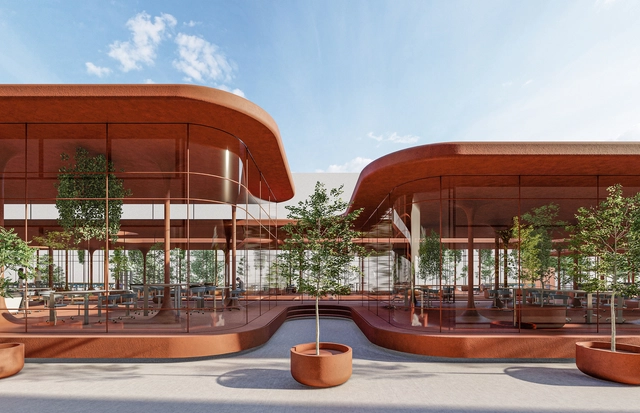
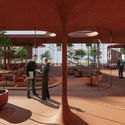
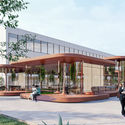
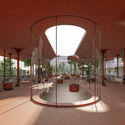
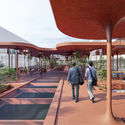
Salon has created a new type of campus building, bringing together education and industry. Located between two buildings of the Yıldız Technical University in Istanbul, the textile academy and a teaching block, Ecotone includes learning, flexible co-working, and meeting spaces.
The Reggio Emilia Approach was created in the post-WWII period at the initiative of widowed mothers and under the coordination of journalist and educator Loris Malaguzzi. In a time of postwar urban reconstruction, the group's primary concern was the formation of new schools, where they wanted to create a peaceful, welcoming, and cheerful environment, with a domestic atmosphere where children could stay while their mothers worked. Understanding the children's interests and providing a suitable environment for exploration and experimentation is one of the focal points of this pedagogy. The creation of a safe and stimulating environment is so fundamental that, in much literature, it appears as a third teacher.
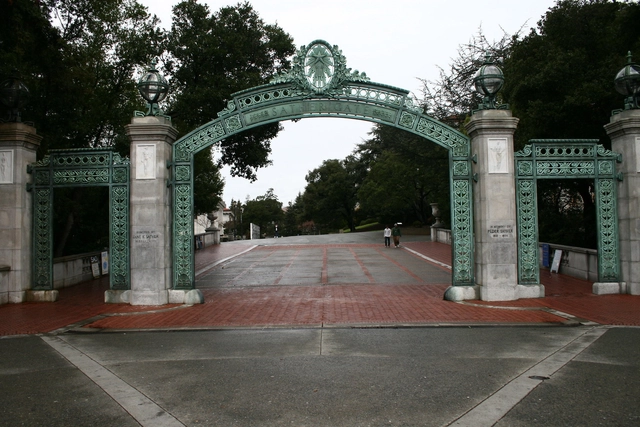
In March 2020, the Covid-19 pandemic shifted our university—the University of California, Berkeley—totally online, along with the whole of education from childcare up across the country and most of the planet. In the wake of this forced and unprecedented experiment, debates about what it means remain ongoing. Will the episodic dream of a placeless university, or at minimum a hybrid place/placeless one, come true? Millennia of experience argue for giving higher education a local, physical anchor. And most universities and colleges have this anchor as their starting place, even as they consider what their ongoing experience with virtual teaching, research, and administration means.
https://www.archdaily.com/943322/letter-from-berkeley-campus-planning-in-an-increasingly-virtual-worldEmily B. Marthinsen, John J. Parman, Richard Bender
It is unquestionable that environments directly influence the behavior and emotions of their users. Human beings spend approximately 90% of their lives indoors, making it imperative that the spaces we inhabit stimulate positive behavior and emotions, or at least don't influence us negatively. There exists a specific term describing the stimuli that the brain receives from its environment: neuroarchitecture. Several studies have been published on this topic, most focusing on its impact on work environments. This article approaches this concept through a different, yet essential lens: emphasizing its importance in the design of spaces for children in early childhood.
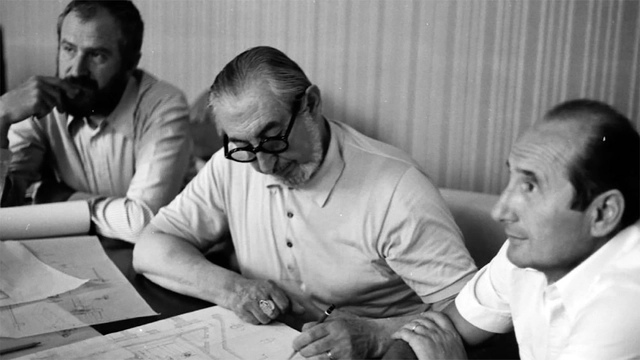
Carlo Scarpa working on the design of the Banca Popolare di Verona, with his associates, Arrigo Rudi and Renato Scarazzai. Photo courtesy of George Dodds.
This essay is an excerpt from the final chapter of Draw in Order to See: A cognitive history of architectural design, which outlines recommendations for reforming architectural education and practice. It uses the theory of embodied cognition—the science behind how our brains take in the built environment—to underscore the need for designers to reject the alienating legacy of Enlightenment rationalism that has pushed architects away from artisanal literacy since the industrial revolution. Although some of these practices and methods are already employed by individual educators and included in some curricula, they are neither widespread nor (more important) mandated in NCARB standards.
https://www.archdaily.com/941809/12-ways-to-reform-architectural-educationMark Alan Hewitt
The Midnight Charette is an explicit podcast about design, architecture, and the everyday. Hosted by architectural designers David Lee and Marina Bourderonnet, it features a variety of creative professionals in unscripted conversations that allow for thoughtful takes and personal discussions. A wide array of subjects are covered with honesty and humor: some episodes provide useful tips for designers, while others are project reviews, interviews, or explorations of everyday life and design. The Midnight Charette is also available on iTunes, Spotify, and YouTube.
This week hosts David and Marina are joined by Marc Neveu—Chair of Architecture, The Design School, Arizona State University and Executive Editor of the Journal of Architectural Education; Renée Cheng—Dean of the College of Built Environments, University of Washington; and Kiel Moe—Gerald Sheff Chair in Architecture, School of Architecture, McGill University to discuss how COVID-19 has impacted teachers and students, the future of education (changing studio, reviews, and lectures), and more. Enjoy!
https://www.archdaily.com/940505/covid-19-and-the-future-of-architectural-educationThe Second Studio Podcast
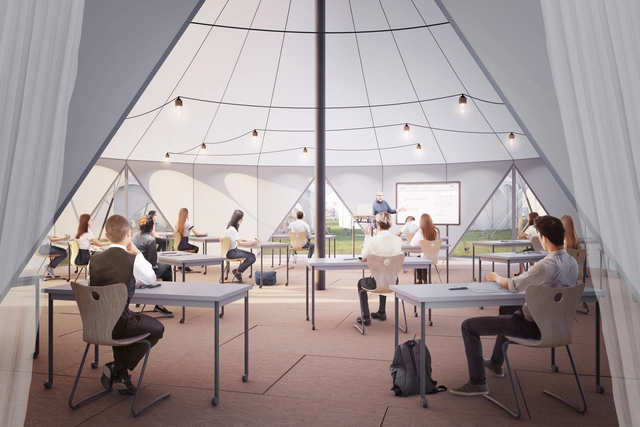
Curl la Tourelle Head Architecture (CLTH) has imagined a new design approach for classrooms when schools reopen as the lockdown eases in the UK. The architecture practice based in London has released an innovative concept “to help mitigate restricted circulation routes within schools and maintain the necessary social distancing among pupils and staff”.
Courtesy of the coronavirus, universities are closed around the world, and classrooms are now entertained over video conferencing. This is not overly dramatic as this temporary arrangement will eclipse after cases are contained, and classes will resume soon after. However, the impacts on the university ecosystem and on the urban fabric will require immediate renovations in higher education that will shape the architectural syllabus for years to come.
https://www.archdaily.com/939423/how-covid-19-will-shape-architectural-educationZaheer Allam, Gaetan Siew and Felix Fokoua
The 2020 coronavirus pandemic is already creating change in every part of society. Harnessing this change should be the impetus for a long-overdue overhaul of the educational system and, in particular, the way we teach architecture.
Each day during the pandemic, we are suddenly finding what was once impossible is now suddenly possible. As Thomas Friedman said of online learning back in 2012, "Big breakthroughs happen when what is suddenly possible meets what is desperately necessary."
We now find ourselves in a position where we have to re-think everything to fight this virus. This pandemic will cause us to re-think learning as entire educational systems are forced to move online. In general, most formal education institutions are not producing the creative thinkers the world urgently needs. Solutions to the coronavirus pandemic require creative thinking, and how we currently teach in institutions today produces groupthink. Our path-dependent education does not get the best from individuals.
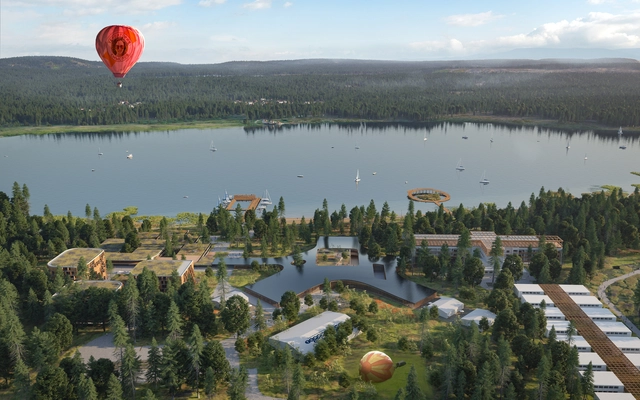
Mecanoo was selected as the winner of the international architectural competition for the development of the Senezh Management LAB. The master plan highlights an architecture that responds to its surroundings and generates a rich environment with a diverse variety of functions and spaces.
Introduced by Rudolf Steiner, Waldorf pedagogy draws on the principles of anthroposophical philosophy. One of the theory's foundational characteristics is its holistic approach to the human being: feelings, imagination, spirit, and intellect are considered unique to every individual, and thoughts, feelings, and actions are understood to always be linked.
Thus, the focus of the philosophy is to cultivate individuals who are capable of relating both to themselves and to society (inter and intrapersonal intelligence) - fundamental skills for overcoming the challenges of the 21st century. This kind of learning takes place in schools that follow Steiner's method, introducing families to the school environment and bringing them into the community. Below, we review the operations and implications of this pedagogy.
The Midnight Charette is an explicit podcast about design, architecture, and the everyday. Hosted by architectural designers David Lee and Marina Bourderonnet, it features a variety of creative professionals in unscripted conversations that allow for thoughtful takes and personal discussions. A wide array of subjects are covered with honesty and humor: some episodes provide useful tips for designers, while others are project reviews, interviews, or explorations of everyday life and design. The Midnight Charette is also available on iTunes, Spotify, and YouTube.
This week David and Marina discuss strategies and share their stories about passing the AREs (Architects Registration Examination). The two cover everything from the best study materials, how to study and how much time to allow, why the exam is difficult, the best time to take the exams, what to do if you fail, what to expect the 'day of', tips for taking the exam, and more! If you have any questions call or text the hotline at 213-222-6950.
https://www.archdaily.com/934548/tips-on-passing-the-architect-registration-examinationThe Second Studio Podcast
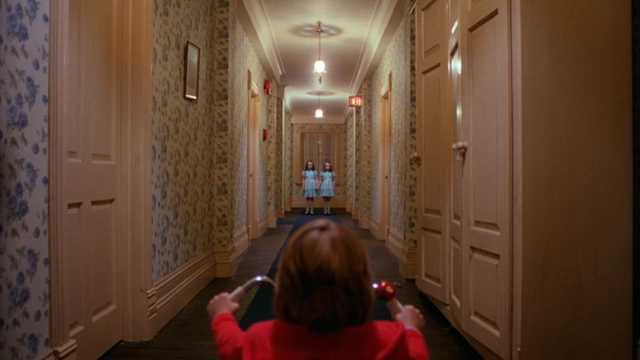
The field of architecture is not exactly a hot topic of study for most undergraduate students. The closest they might get to the subject is an art history survey course in which architecture is presented as a parade of styles across the millennia—just another form of visual expression.
https://www.archdaily.com/932965/teaching-an-appreciation-for-architecture-through-filmMichael J. Crosbie
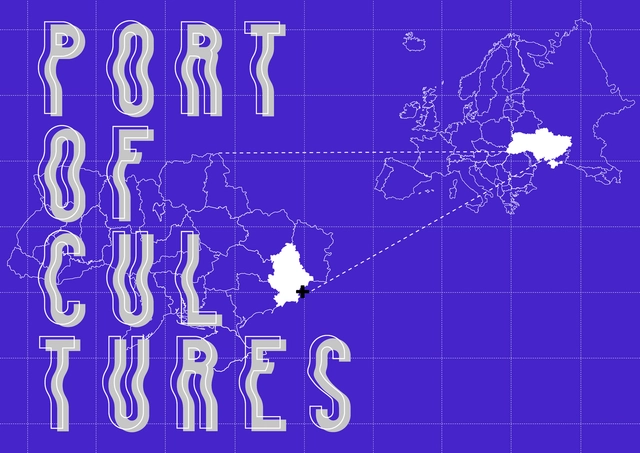
Municipality of Mariupol (UA) invites architects, designers and interdisciplinary teams to submit architectural ideas for a new multifunctional center that will be devoted to the subject of migration, a process that has shaped the city throughout the centuries, becoming an integral part of its identity. The Port of Culture will uncover and explore the less known traits of Mariupol city, and contextualize its local history within larger regional and global processes related to migration.
Education is a form of absorbing and inculcating knowledge, of which learning is an integral part. Over the years, education has evolved into a system and has been organized and re-written innumerable times to a point where it has now it is majorly constrained to classroom teaching focused on academic learning.






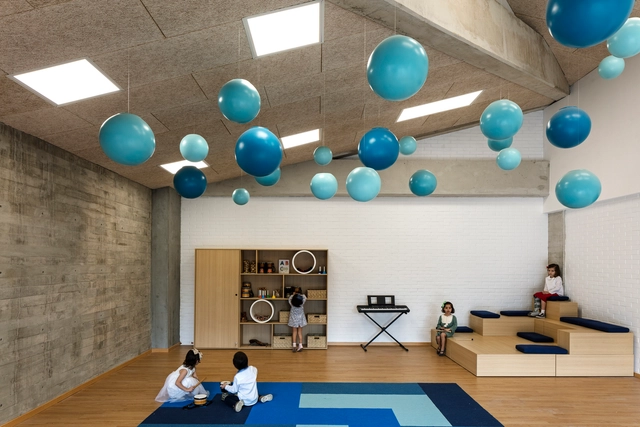
.jpg?1594149242 "Redbridge School / ARX Portugal Arquitetos. Image © Fernando Guerra | FG+SG")