1. ArchDaily
  2. Education

Education: The Latest Architecture and News

Kickstarter Campaign Aims to Transform Denver Parking Lot into Outdoor Classroom

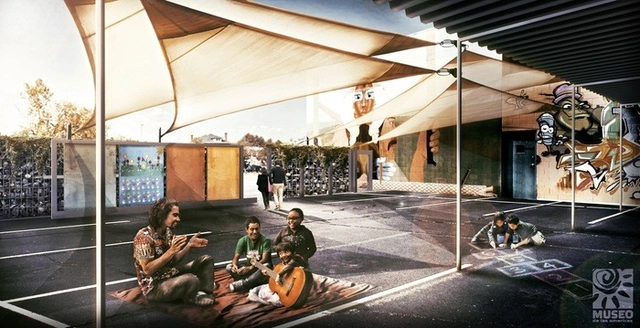
Architecture for Humanity-Denver is seeking to raise money for the transformation of a museum parking lot into an outdoor classroom for children in need. The goal of Denver's Museo de las Americas is to educate the community about the diversity of Latino Americano art and culture from ancient to contemporary through innovative exhibitions and programs, but the museum is lacking the necessary space for its increasingly popular youth summer camp.

The New 'Context' in Architecture: Learning From Lebanon

Subscriber Access | 


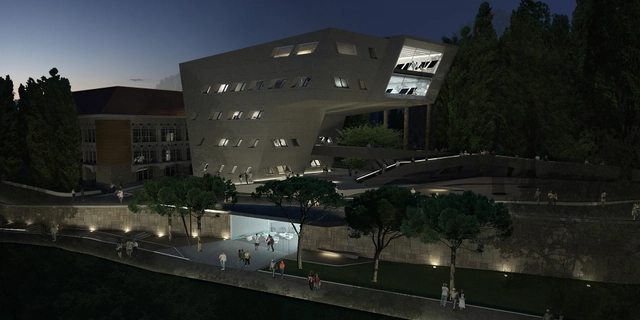
Context in architecture has become a subject bloated with discussion and debate over the years. And, as a matter of fact, it has come to matter very little in its formal and typological sense. Take, for instance, the fluid forms that compose Zaha Hadid’s hundreds of projects around the world, or Frank Gehry’s exploding compositions seen from South America to the unmistakable Guggenheim in Bilbao. The form architecture takes in these cases, and countless others, is in itself a deliberate disregard towards context in its literal sense.

But is this disregard for context a mistake? Observers would often say so, though I would like to disagree. It has become frequent that projects like these, largely formal and not politely accommodating their historic surrounding, actually take greater interest in social urban issues that have a direct impact on the city dwellers. Quite simply, successful architecture today is one that serves society culturally and practically, addressing tangible problems of 21st century cities and dealing with context in a solution-oriented manner, going beyond aesthetics (whose value is only temporary) and into future-invested urbanism. Case-in-point? My hometown: Beirut, Lebanon.

The New 'Context' in Architecture: Learning From Lebanon - Educational ArchitectureThe New 'Context' in Architecture: Learning From Lebanon - Educational ArchitectureThe New 'Context' in Architecture: Learning From Lebanon - Educational ArchitectureThe New 'Context' in Architecture: Learning From Lebanon - Educational ArchitectureThe New 'Context' in Architecture: Learning From Lebanon - More Images+ 7

MIT’s Center for Advanced Urbanism Collaborates with AIA to Bring Research Solutions for Healthy Urban Futures

American Institute of Architects (AIA) and Massachusetts Institute of Technology’s (MIT) Center for Advanced Urbanism have announced a research collaboration to support AIA efforts through the Clinton Global Initiative (CGI), Decade of Design, a measure focused on improving the health of urban communities. As the global population continues to shift toward urban environments, urban conditions of the past century have become too outdated to address the increase in population and pollution. In order to advance the state of city liveability, professionals in the design and planning fields must reconsider how urban environments need to be designed to work optimally in regards to social, economic and health challenges. MIT's collaboration with the profession-based organization of the AIA allows the research of the school to reach the professional world for application and development.

University-driven Urban Economies Proposer, based on Brookings Institution Report

Subscriber Access | 

Think the best way to promote the economic and creative development of a city is to build stadiums and and shopping malls? Think again. In a recent article in the New York Times, Steve Lohr reveals the findings of a study from the Brookings Institution that looks into where and why specific cities emerge as hubs of creativity and innovation. By studying the patent filings of the United States' 370 metropolitan areas, the study revealed that cities with the most innovation were centers of education and research. San Jose-Sunnyvale-Santa Clara, California; Burlington-South Burlington, Vermont.; Rochester, Minnesota; Corvallis, Oregon; and Boulder, Colorado topped the list as the "output of innovation. Lohr suggests that this data can help promote policies that encourage urban development for economic feedback.

More after the break.

Community-Oriented Architecture in Schools: How 'Extroverted' Design Can Impact Learning and Change the World

Subscriber Access | 
Community-Oriented Architecture in Schools: How 'Extroverted' Design Can Impact Learning and Change the World - Image 3 of 4
© Yazdani Studio of Cannon Design

You’ve considered every detail: re-thought the spatial configurations of the classrooms to account for over 40 students, ensured that the noise from outside doesn’t drown out the teacher, perhaps even adjusted the storage to kid-friendly heights.

As an architect, you live in the skin of the people who will daily occupy your buildings. And of course, the impact of physical conditions should never be underestimated, especially in the design of a school. Study after study has cited that the correct environment can greatly improve student engagement, enrollment, and even general well-being. [1]

However, there is another vital way in which design can impact learning. An approach that recognizes the power of society and culture, that aims to create a school not only permeable to the community around it, but charged with positive symbolic value.