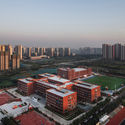
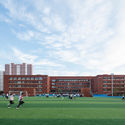
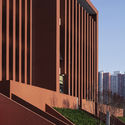
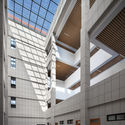
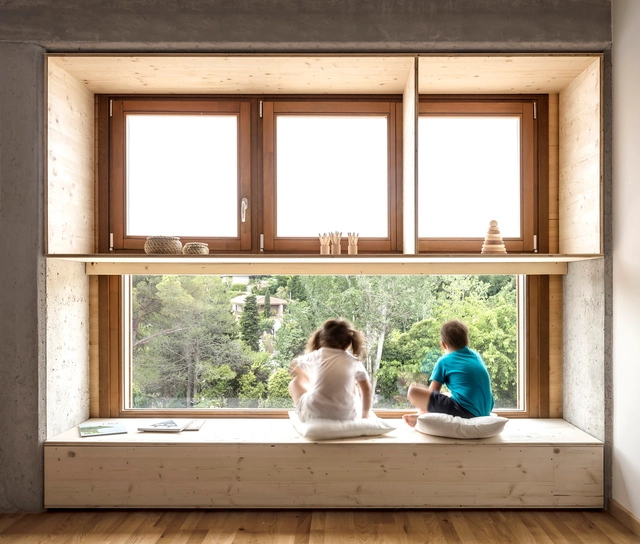
Environments that inspire, promote well-being and stimulate a connection with nature. Biophilic landscaping in education spaces recognizes the importance of this bond for student development, as it benefits well-being, academic performance, and people's health. We have selected eight projects that bring natural elements to the classroom or that place students directly in nature to illustrate the qualities in these spaces.
On January 24th, the fifth edition of the 'International Education Day' was celebrated under the slogan "Invest in people, prioritize education". Proclaimed by the United Nations General Assembly, it promotes a strong political mobilization seeking to chart the way and accelerate progress towards the 4th Sustainable Development Goal: Quality Education.
For many, schools and kindergartens represent the first contact with public architecture. They, together with every educational facility, serve as the foundation for learning and knowledge dissemination, playing an important role in shaping the formative years of children and young adults. In consequence, these buildings need to respond to the needs of different age groups, while creating functional and flexible spaces for learning, but also for play and unstructured interaction. Light and ventilation needs contribute to the complexity of these architectural programs. However, designing educational facilities presents opportunities for innovation and creative expression, as they are required to adapt continuously to the changing needs of students and faculty while creating a conductive environment for learning.
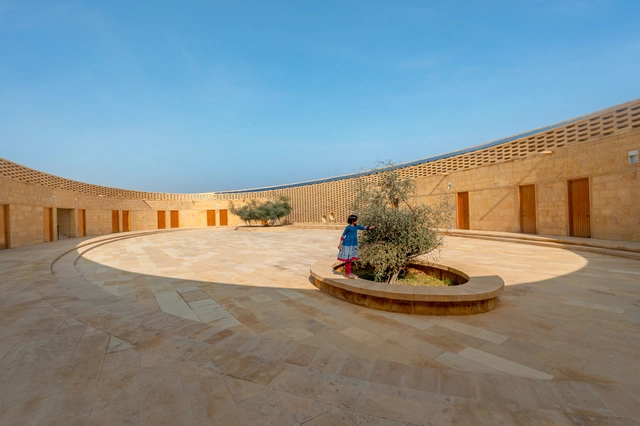
This week’s curated selection of Best Unbuilt Architecture highlights designs submitted by the ArchDaily community dedicated to cultural institutions. From a learning center created to offer the girls in Mozambique an equal opportunity to learn, play and connect, to a naval station redesigned as a research center on the coast of Puerto Rico, this selection features projects created to encourage learning, curiosity, and the exchange of knowledge and expertise. The article includes designs from both established and emerging architectural practices, including Moore Ruble Yudell, C+S ARCHITECTS led by Carlo Cappai and Maria Alessandra Segantini, Hello Wood, and snkh studio.
Architects have always considered the positive influence of natural light on the health and mood of a building's occupants, but measuring its actual benefits was a challenge for a long time. However, the past few decades have seen significant progress in this area, with research such as the comprehensive study conducted by the Heschong Mahone Group, which analyzed more than 21,000 student tests in three school districts in California, Washington, and Colorado. The results showed that students in classrooms with more natural light had a 20% faster learning progress in math tests and 26% on reading tests, compared to students in classrooms with less natural light. Many other studies reinforce that including natural light in spaces has immense long-term benefits for societies, especially during a child's valuable formative years, who spend about 90% of their time indoors and about 200 days a year in classrooms.
March 8th is celebrated as International Women's Day, a date remembered for years as a symbol of the fight for their rights. However, although many countries have laws establishing equal rights for men and women, gender inequality and all its consequences are still experienced every day by girls and women all around the world. The patriarchal system, rooted in many societies over the centuries, has been responsible for inequality of power between the genders which, in the most extreme cases, results in violence and femicide.
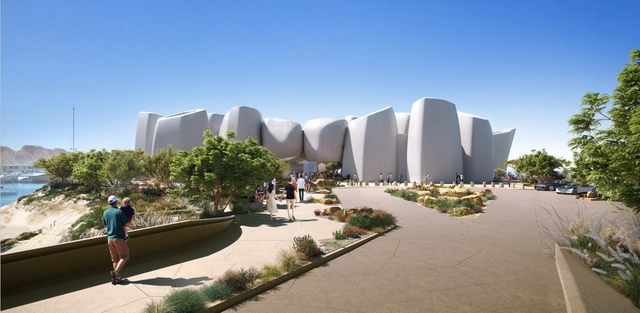
Foster + Partners has revealed the designs of the Marine Life Institute on Saudi Arabia's northwestern coast. As part of Triple Bay development AMAALA, a luxury tourist destination on the Red Sea coastline, the project will accommodate a research center, labs, galleries, and educational spaces to give visitors a glimpse into the wonders of the marine environment of the coastline. Reproducing the forms of coral formations, the building will be the world's first fully immersive marine institution where visitors can walk underwater, snorkel with rare species and experience a coral exhibit inside the building.
As democratizing catalysts, educational spaces play a fundamental role in shaping individuals and entire communities. These places, where students spend a significant amount of time developing their capabilities, skills, and competencies, are more than a background for the promotion of a fundamental right, they are key elements to providing equal opportunities for all.
Open and common facilities, such as schoolyards, courtyards, and auditoriums are great examples of how spaces can encourage students, teachers, parents, and community members to learn with each other in an active dialogue. Flexibility and accessibility are two other key points to promote the democratization of both design and education, as seen in programs that go beyond school time and encourage communities to participate, for example.
SO-IL Architects has been chosen to develop the conceptual design for a new building for the Williams College Museum of Art (WCMA) in Williamstown, Massachusetts. The project is set to provide the first stand-alone facility for WCMA, and will feature teaching spaces, collections, exhibitions and programs that will transform the museum’s engagement with the campus, as well as the Williamstown community and the Berkshires cultural region. The architecture firm was commended for its "inventive and enthusiastic approach to the museum’s teaching mission", putting art at the center of academia, student life, the campus, and community.
El centro recreacional, de bienestar y vida estudiantil de la Universidad de Lima. Image Cortesía de Sasaki
Over the past few years, educational campuses around the world have been confronted with various trends and challenges of change, such as pandemic adaptation, climate crisis, the responsibility for sustainable design and online teaching. SasakiArchitecture, with offices in Boston, Denver and Shanghai, specialises in planning educational campuses around the world. With a broad portfolio of projects at various scales of intervention, recent projects in the United States, China, Mexico and Peru stand out.
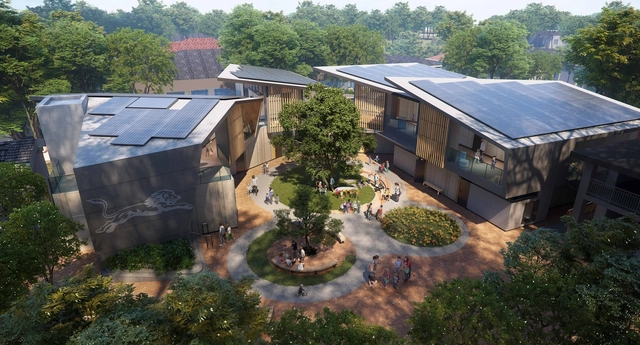
Aiming to transform the learning experience for neurodiverse students through a nature-centric environment, NBBJ has unveiled a net-zero school in Encino, California. Titled "Westmark Lower School", the new campus will foster an inclusive and engaging learning experience for students and teachers, responding to the critical condition of U.S students, where 2.3 million were diagnosed with learning differences between 2019 - 2020.
Cavatina Concert Hall by Cavatina. Image Courtesy of Cavatina
The diversity of civic spaces in cities and rural areas have continuously showcased how strongly they explore human connections regardless of program, construction technique, scale, and geography. Ranging from educational facilities and museums, to art centers, libraries, religious halls, and memorials, these projects have enriched urban fabrics with cultural programs that have provided members of the community with places to learn, entertain, create, and unwind.
This week’s curated selection of Best Unbuilt Architecture highlights cultural projects submitted by the ArchDaily community from across the world. From a water management system that targets the natural crises in Egypt to a structurally intertwined memorial in the United States, this round up of unbuilt projects showcases how architects responded to the contextual and spatial needs of their projects through innovative and local solutions. The article also includes projects from Italy, China, Uruguay, Poland, Iran, Hungary, Russia, and the United Kingdom.
The ongoing pandemic has been a disruption to the everyday routines of billions around the world, as due to being confined to their households, the separation between work and rest has become extremely blurry, with people forced to rethink and reconfigure the layout of their personal spaces. Conversations have abounded on how to create flexible working spaces in a home environment, and if offices themselves are an outdated model that we should leave behind. A missing part of that conversation, however, is the impact that the pandemic has had on children, specifically primary-school level children, on their education - as inequalities are emphasized, some children learning with slow internet connection speeds, or struggling to have the space required to adequately complete educational activities.
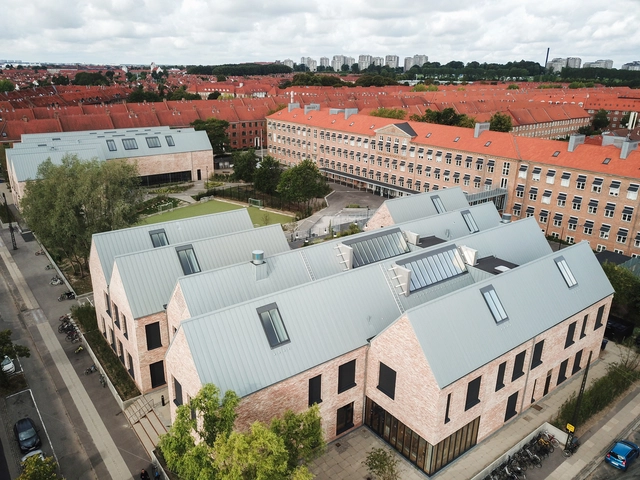
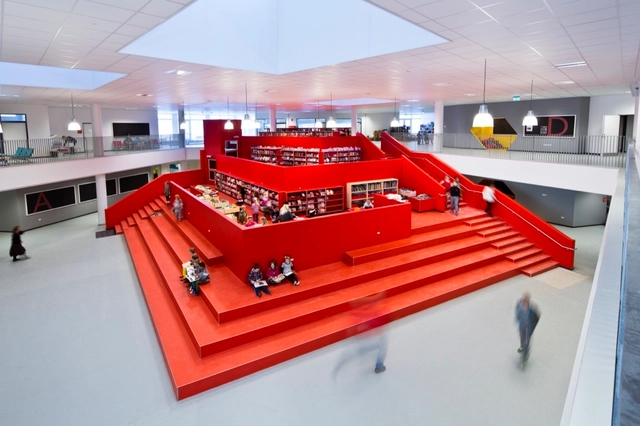
New City School, Frederikshavn / Arkitema Architects . Image Cortesía de Arkitema Architects
According to architect and academic Frank Locker, in architectural education, we keep repeating the same formula from the 20th-century: teachers transmitting a rigid and basic knowledge that gives students, no matter their motivation, interests, or abilities, little to no direction. In this way, says Locker, we are replicating, literally, prisons, with no room for an integral, flexible, and versatile education.
"What do you think of when you're in a space with closed doors and a hallway where you can't enter without permission or a bell that tells you when you can enter and leave?" asks Locker.
Woodland Elementary School / HMFH Architects. Image Cortesia de HMFH Architects
It is a student's right to be educated in a safe, healthy, and even aesthetically appealing environment, especially young students for whom these factors are even more important. For example, it has been shown that when the ergonomics of chairs are inadequate, they can greatly affect levels of concentration and the development of skills such as calligraphy. At the same time, the effectiveness of traditional teaching methods is increasingly being questioned and the quality of alternative methodologies increasingly being considered. In other articles, we discussed in more detail the design of Montessori schools and the atmosphere of Waldorf interiors.
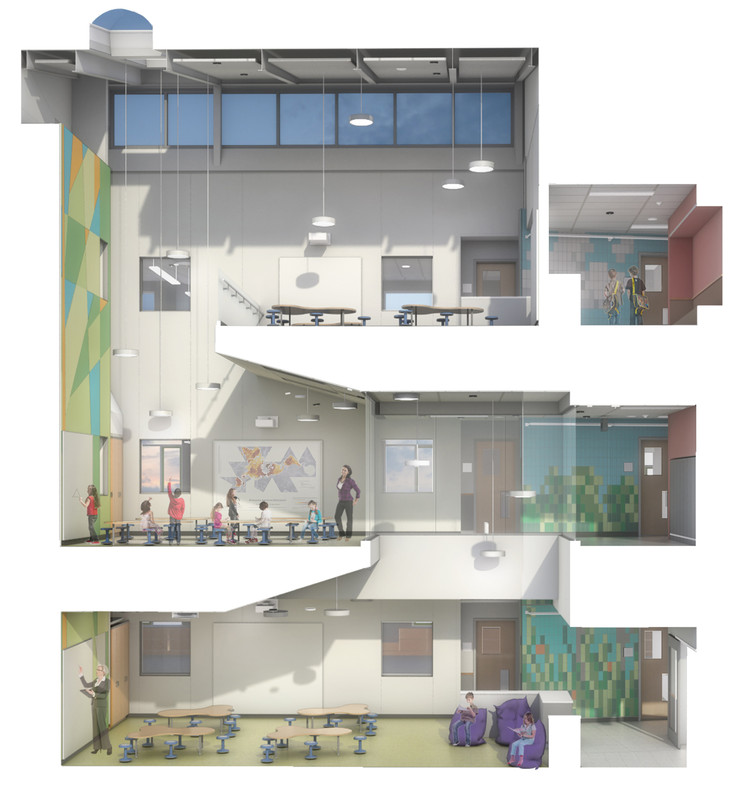
Today, we will cover the importance of choosing furniture and address some aspects to consider when organizing them in classroom design for the schools of the future.
Introduced by Rudolf Steiner, Waldorf pedagogy draws on the principles of anthroposophical philosophy. One of the theory's foundational characteristics is its holistic approach to the human being: feelings, imagination, spirit, and intellect are considered unique to every individual, and thoughts, feelings, and actions are understood to always be linked.
Thus, the focus of the philosophy is to cultivate individuals who are capable of relating both to themselves and to society (inter and intrapersonal intelligence) - fundamental skills for overcoming the challenges of the 21st century. This kind of learning takes place in schools that follow Steiner's method, introducing families to the school environment and bringing them into the community. Below, we review the operations and implications of this pedagogy.



















_-_West_Elevation.jpg?1641304390 "So Close , So Far Cultural Center by Shahab Shariat. Image Courtesy of Shahab Shariat")

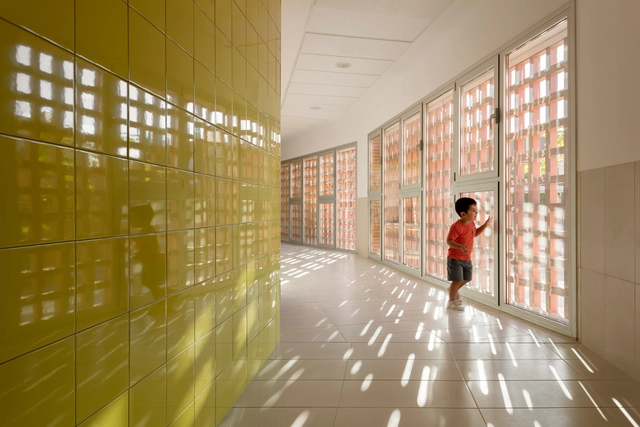



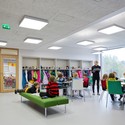

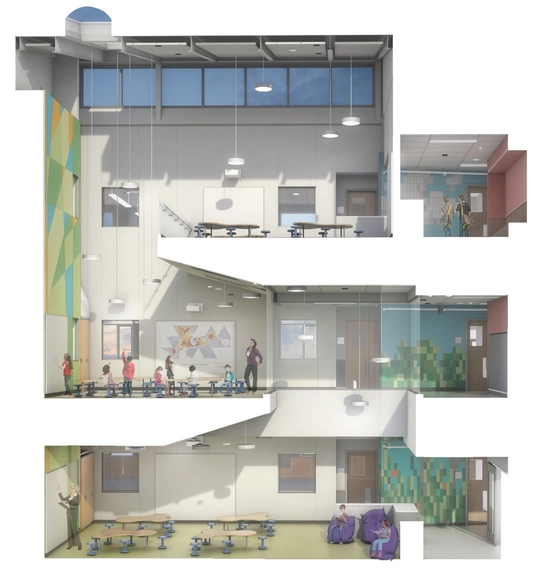

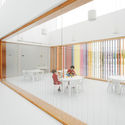
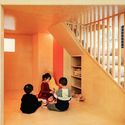



__.jpg?1583984454&format=webp&width=640&height=580)
CAPA.jpg?1583984502 "© Fernando Guerra | FG+SG")
.jpg?1583984753 "© Fernando Guerra | FG+SG")
.jpg?1583984565 "© Fernando Guerra | FG+SG")
.jpg?1583984658 "© Fernando Guerra | FG+SG")
__.jpg?1583984454)