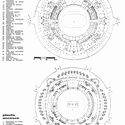
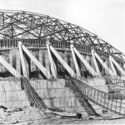
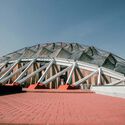
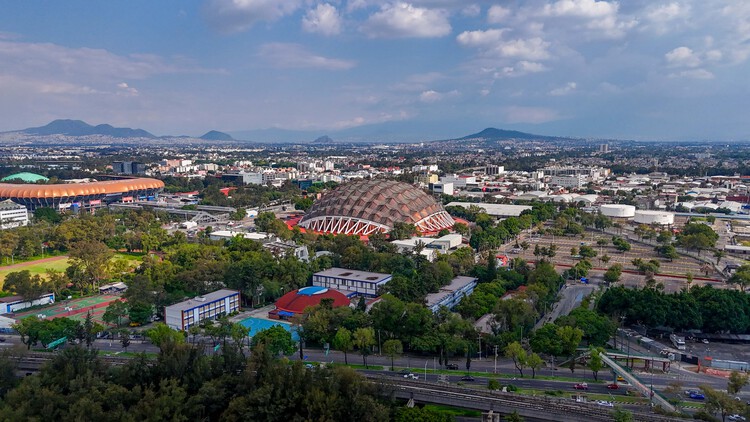
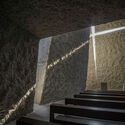
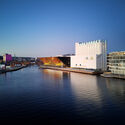
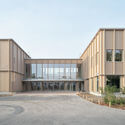
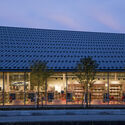
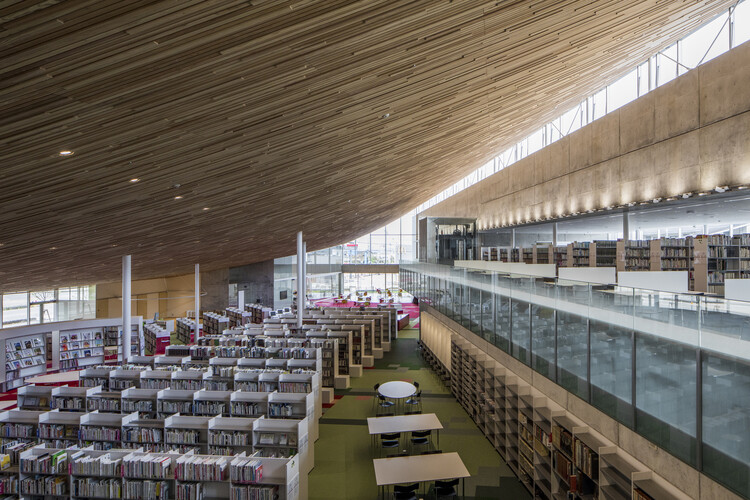
When Mexico City hosted the Olympics in 1968, it was the first time the Games had been awarded to a Latin American country as well as the first time for a Spanish-speaking nation to host them. This made the games a good opportunity to project Mexico and its culture internationally, thus prompting the government to constitute an organizing committee with prominent local talent. They appointed Pedro Ramírez Vázquez as its president, a Mexican architect who held significant influence over the state's mid-century building program. His approach was explicit: architecture as a synthesis of international modernist technique with Pre-Columbian references and local material culture. Under his direction, the committee would oversee the construction and adaptation of venues distributed across the southern districts of Mexico City, nearly all designed and built by local architects, engineers, and technicians.
Buildner has also announced the results of Buildner's Unbuilt Award 2025, the second competition in a series celebrating architectural design that has yet to be realized. With a generous 100,000 EUR prize fund, this initiative provides a global platform for architects and designers to showcase their most compelling unbuilt projects, whether conceptual, published, unpublished, or fully developed.
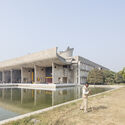
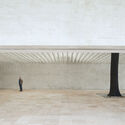
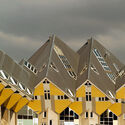
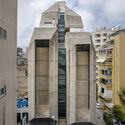
"The story of architecture is not wrong," argued Lesley Lokko in her introduction to the Venice Architecture Biennale 2023, "but it is incomplete." For most of the 20th century, architectural history spoke in one tongue: a singular, dominant narrative centered on a handful of movements, names, and cities, whose reach and influence appeared universal precisely because alternative voices were rendered inaudible. Design movements, however, rarely traveled intact across borders. They were frequently absorbed, resisted, reinterpreted, and transformed depending on geography, politics, economy, climate, and available materials. What arrived in one place as doctrine became, somewhere else, something entirely different.
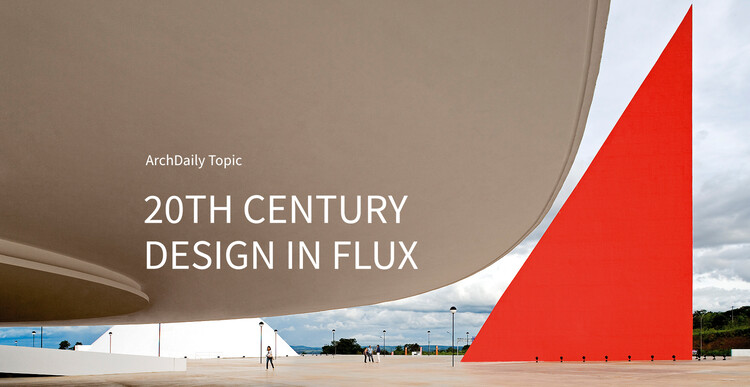
This month, ArchDaily explores 20th Century Design in Flux: A Global Reinterpretation of Architectural History, a topic that traces the century's design languages not as a single canon but as a constellation of evolving, intersecting, and continually reinvented trajectories. The theme challenges the assumption that regional and non-Western architectures were merely derivative — positioning them instead as sites of active reinterpretation, where global ideas were filtered through local materials, climates, labor, and cultural practices to produce something entirely distinct.
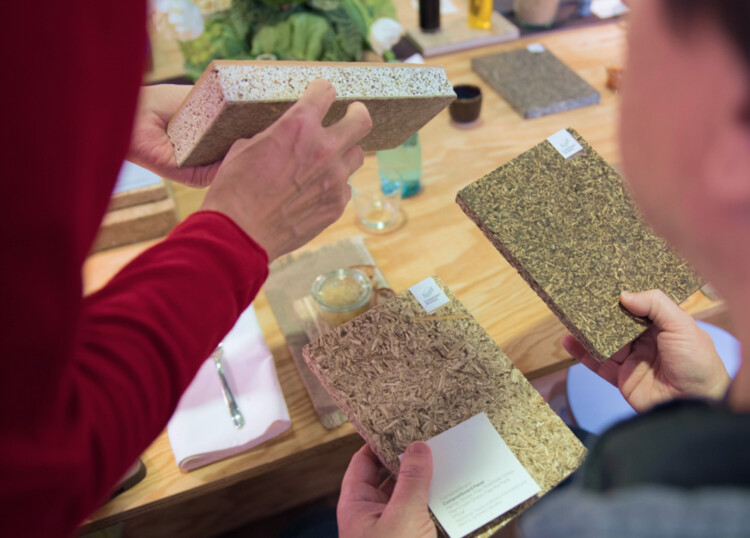
At the Table with Nature Exhibit, ambiente 2026 Photo Credit: Jürgen Baumhauer
The well-known phrase "man is what he eats" (Der Mensch ist, was er isst), by Ludwig Feuerbach, asserts that the physical, mental, and even moral constitution of human beings is directly linked to what they consume. Today, this idea is widely internalized, with growing awareness around food, nutrition, and the impact of what we ingest on our bodies. Yet, this same level of awareness doesn't extend to the environments we inhabit, where materials continue to be treated as technical decisions rather than active agents in the relationship between body and space. Considering that a large portion of the global population spends around 90% of their time indoors, it is rarely discussed what actually composes these spaces at their most fundamental level: materials. Walls, floors, and finishes are often approached as technical or aesthetic choices, when in reality they can function as continuous sources of exposure to potentially harmful substances.
In an age dominated by screens and digital images, the full character of a designed object often remains hidden. Only when encountering an object in person can one sense its texture, notice how it interacts with light, or even perceive its subtle smell. These sensory qualities— so difficult to convey online—reveal why design fairs continue to matter. Increasingly, these fairs have become spaces for experimentation in contemporary design, where ideas about materials, collaboration, and social responsibility are publicly explored. Curated programs, exhibitions, and experimental installations transform these events into environments where designers, manufacturers, and researchers test new possibilities for the built realm.
Tadao Ando has joined forces with Cauny to design the newest watch in The Architects of TimeSeries. This is a collection of watches designed by some of the greatest architects of our time—an initiative that the nearly century-old brand launched in 2019 with none other than Álvaro Siza. From then until today, the collection has proven to be a Pritzker Prize–based tour de force: Siza, Rafael Moneo, Eduardo Souto Moura, and, this year, Tadao Ando.
Contemporary workplaces promise collaboration, yet they increasingly struggle to provide spaces for privacy. In an era dominated by open-plan layouts, small acoustic spaces like phone booths and focus pods have become essential for maintaining productivity and privacy. However, the paradox of "booking conflicts" alongside "underutilized spaces" has turned these areas into operational challenges. The question, then, is how workplaces can balance efficiency, productivity, and individualized user experiences within increasingly complex environments.
WORKac is a New York-based firm founded in 2003 by Amale Andraos and Dan Wood. The firm has always believed in "the power of architecture and design to engage in environmental and social concerns, and to create new possibilities for the future." In that sense, the firm's principals define their approach to architecture as a constant evolution. For them, it is a continuous process of learning, questioning, and relearning, which is nurtured through the firm's engagement in local culture, climates, and histories, as well as discourse in the fields of ecology, landscape, and urbanism. In this way, they are able to bring these topics together with a focus on public, cultural, and civic projects that aim to reinvent how people live, work, and experience the world.
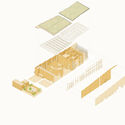
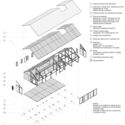
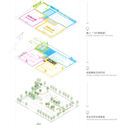
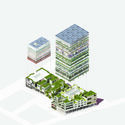
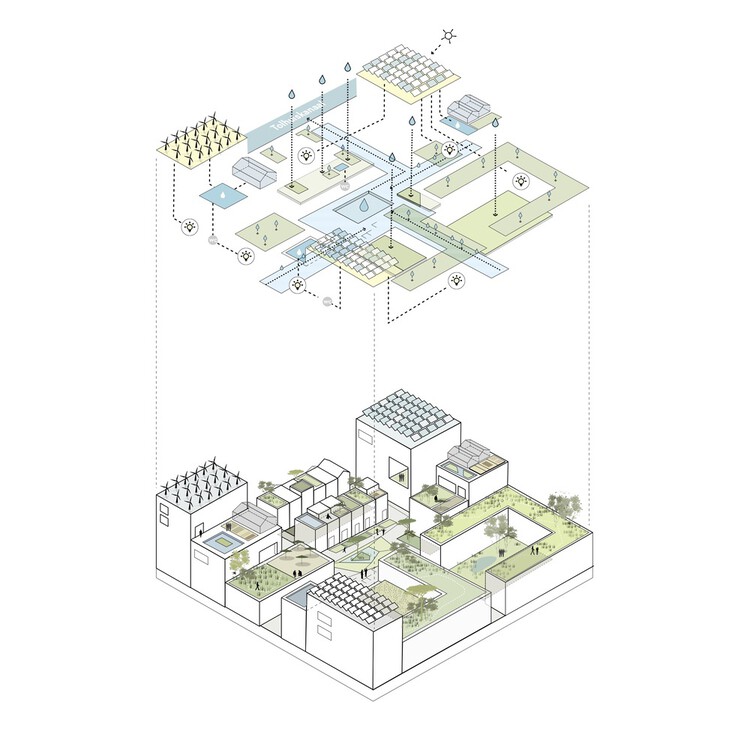
In the translation of three-dimensional reality onto a two-dimensional plane, axonometry stands as one of the graphic systems of representation that form the foundation of the language used by architecture and design professionals. Alongside plans, sections, and elevations, its exploded views often stand out for their ability to study the multiple layers that compose a project. Although axonometry is also employed in other disciplines such as engineering and urban planning, it consistently proves its capacity to function as more than a mere representational tool, strengthening the understanding not only of a project's construction processes, materials, and structural systems but also expanding the communication of the ideas and design processes that shape a project.
Having explored adaptability at the city scale, we are now zooming in on the building itself—and, crucially, on practice. How can architects, developers, and consultants embed adaptability as a measurable, mainstream outcome? This question will be on the agenda at the Adaptable Building Conference (ABC) on January 22 at the Nieuwe Instituut in Rotterdam, where architects, engineers, policymakers, and industry leaders will explore the potential of adaptable buildings—and how to deliver them at scale.
In a balance of aesthetics, performance, and versatility, HIMACS shows a solid surface material of choice for many architects and designers. Taking a further step forward, the entire range of standard HIMACS sinks and basins is now officially SCS certified, containing a minimum of 8% pre-consumer recycled content. This certification enhances the material's technical and visual appeal by providing a more sustainable option without compromising quality or functionality.
From bathroom vanities with integrated basins to kitchen islands with flush-mounted sinks, HIMACS shapes offer a seamless balance of style and function. Each component integrates effortlessly with the surrounding HIMACS surface, creating a continuous, grout-free finish that is both elegant and easy to maintain.
The 2026 Color of the Year selections show a shift toward nuanced, layered palettes and understated spatial calm, moving beyond the saturated earth tones of previous forecasts. Pantone's Cloud Dancer, a soft white, sets a foundation of clarity and simplicity, while Sherwin-Williams and C2 Paint highlight the versatility of mid-tone neutrals and soft ochres, emphasizing material authenticity and adaptability across different interior surfaces and lighting conditions. Benjamin Moore and Graham & Brown explore deeper, atmospheric hues that balance warm and cool undertones, and Behr, Valspar, and AkzoNobel introduce muted greens and blue-based tones aimed at creating restorative, composed, and visually engaging interiors.
The High Museum of Art in Atlanta will present Isamu Noguchi: "I am not a designer" from April 10 to August 2, 2026. The exhibition examines the design work of Isamu Noguchi (1904–1988) across sculpture, furniture, lighting, landscape, and stage design, marking his first major design-focused retrospective in nearly 25 years. Following its presentation in Atlanta, the exhibition will travel to the Peabody Essex Museum in Salem, Massachusetts, from September 19, 2026, to January 3, 2027, and to the Memorial Art Gallery of the University of Rochester in spring 2027.
Ellisse, location: Armando Cose, Designer: Philippe Malouin
Communicating an idea using only the essentials is a far greater challenge than it often appears. From Japanese haikus to the refined sculptures of Constantin Brâncuși, many artistic expressions have sought to condense the maximum meaning with the minimum of elements. This economy of form is not a sign of scarcity, but of intensity: every stroke, every word, every silence gains weight. There is something intrinsically appealing in what presents itself as simple and well-resolved, whether it is a text that wastes no words, a tennis player who moves with purposeful gestures, or a melody that is both direct yet unexpectedly profound.
That same principle, which transcends various artistic languages, resonates deeply in contemporary design. When reduced to the essential, furniture or everyday objects reveal a form of beauty that arises from precision and transcends their function. This is exemplified by HUM, the new collection of taps developed by designer Philippe Malouin for QuadroDesign, in which a simple gesture is transformed into a complete language.
NPO Aoyama Design Forum (ADF), a non-profit organization, has announced the ADF Design Award 2026, celebrating architecture that does more than please the eye—it aims to make a meaningful impact on society, culture, and the environment. The award aims to recognize outstanding works that challenge existing conventions, demonstrate innovative thinking, and enrich people's lives through visionary, responsible design. Architects and designers around the world are invited to submit their proposals on a unique platform that fosters connections, promotes the exchange of ideas, and encourages meaningful cross-cultural collaboration.
Color of the Year 2026 "Cloud Dancer". Image Courtesy of Pantone
PantoneColor Institute has introduced PANTONE 11-4201 Cloud Dancer as the Color of the Year 2026, a soft white selected for its understated presence and sense of visual calm. The hue, described as balanced and airy, appears against a broader cultural context in which designers and creatives are reassessing the role of clarity, simplicity, and spatial quietude. Framed as a color that resembles a blank canvas, Cloud Dancer signals a renewed interest in environments that support reflection and measured creativity rather than constant acceleration.
All architecture is grounded in the earth. This pliant, resilient raw material is the origin of extruded ceramic tiles—clay transformed from its natural state into an architectural solution without relinquishing any of its authenticity. Exagres' work is rooted in this natural material, carefully transforming the clay with skillful precision and guiding it on this journey rather than forcing it.
Finding the right tools to represent a project idea or carry out a construction job remains an ongoing challenge for architecture and design professionals. While software for drafting, 3D modeling, and calculations has increased precision and efficiency, many architects continue using legacy tools learned in academia or practice—tools that feel familiar, but don't necessarily offer the best design experience. From overloaded interfaces and clunky workflows to endless plug-ins and constant back-and-forth between disconnected software, traditional design tools often reveal their complexity and fragmentation.