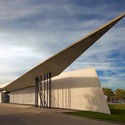
Five finalists have emerged from the 196 submissions of Toronto’s first international Winter Stations design competition. Drawing proposals from 36 countries around the world, the competition challenged entrants to transform the lifeguard stations on Toronto’s east beaches into public art pieces for the winter. The finalists’ designs were constructed in mid-February and will be displayed until March 20, 2015.
Take a look at the completed installations, after the break.
New York City. Image Courtesy of Stephen Von Worley
A new series of maps by California-based artist-scientist Stephen Von Worley give colour coding an entirely new meaning. With his latest algorithm-generated project, "Crayon the Grids," Von Worley has taken maps of ten major metropolitan areas and coloured them based on geographical orientation of the urban grid. Each street is assigned a colour specific to its orientation, varying in hue and weight depending on its cardinal direction and length. The result is a dizzying technicolor of urban planning, creating completely new demarcations for some of the world's most recognizable cities.
Enter the chromatic world of coloured city grids after the break
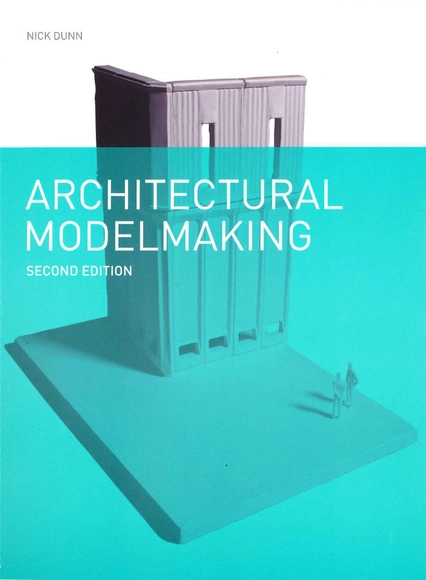
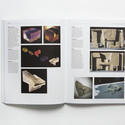
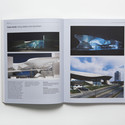
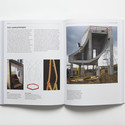
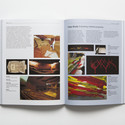
Why do we make models? From sketch maquettes and detail tests to diagrammatic and presentation models, the discipline of physically crafting ideas to scale is fundamental to the architect's design process. For architect and educator Nick Dunn, architectural models ultimately "enable the designer to investigate, revise and further refine ideas in increasing detail until such a point that the project's design is sufficiently consolidated to be constructed." In Dunn's second edition of his practical guide and homage to the architectural model, the significance and versatility of this medium is expertly visualised and analysed in a collection of images, explanations, and case studies.
Oct Design Museum (Shenzhen) / Studio Pei-Zhu. Image Courtesy of Studio Pei-Zhu
In an article for the Financial Times, Edwin Heathcote asks "what are design museums actually for?" Noting that we are living through a "boom time" for the typology, Heathcote argues that when we are overwhelmed by design in our day to day lives, what will fill these spaces? London's Victoria & Albert Museum sprouted from the legacy of the 1850 Great Exhibition, where the concept of a design museum originated, as an attempt to "display the fruits of Britain’s industrial revolution." Ironically in the very same museum in 2013, curator Kieran Long acquired a print of the world's first 3D printed gun for the permanent collection. Will the ubiquity of 'design' soon negate the need for dedicated spaces? Read Heathcote's conclusions in full here.
In an article for London's Royal Academy of Arts Magazine entitled Plane Sailing, Zaha Hadid discusses the influence of Russian Suprematist painter Kazimir Malevich on her own design work. In Hadid's early work, such as The Peak Blue Slabs (1982/83), the visual connections to Malevich's strict, regular shapes and lines are evident.
PlanGrid, touted as "the fastest blueprint viewer" available, is one of the most mature apps for viewing, amending and discussing construction drawings on a collaborative cloud-based platform. This week they launched PlanGrid for Education, allowing students full and uninhibited access to every feature of the app free of charge. According to the company, they currently have "40,000 blueprints being uploaded to PlanGrid daily and over 9 million blueprints stored digitally", making the platform one of the fastest growing in its market.
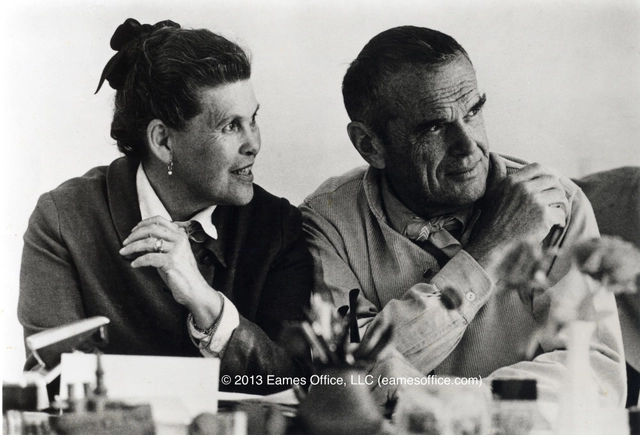
Today Charles Eames - the taller half of modernism's greatest power couple, Charles & Ray Eames - would have turned 107. Although perhaps best known for their furniture design (particularly the Eames Lounge & Shell Chairs), the couple is well known in architectural circles for the home they designed in 1945 and subsequently lived in: the Eames House (or Case Study House No. 8, as it was part of the Arts & Architecture magazine's "Case Study" program).
Le Corbusier donned signature glasses; Frank Gehry designed footwear; early twentieth-century architect Adolf Loos even wrote "Why A Man Should Be Well-Dressed." Now Zaha Hadid is making her way into swimwear. But are the nuances of fashion too much for architects to dip their feet into? Read the full article at the Telegraph.
It seems to be part of the architect's daily life: hunching over drawing or model making, uncomfortably crouching to try get that perfect shot through your 1:100 model. Javier Cuñado, designer at Actiu, has tackled these perennial problems with Mobility, a desk that ascends or descends according to your needs. Available in an architect's range of colours - black, white or with an aluminium finish - this stylish desk is an investment your back will thank you for. Learn more in the video above and check out images after the break.
American Artist Janet Echelman is to premiere her latest, and largest, sculpture in Vancouver. Widely known for her artistic ability to reshape urban airspace, Echelman's sophisticated mixture of ancient craft and modern technology has led to collaborations with aeronautical and mechanical engineers, architects, lighting designers, landscape architects, and fabricators to "transform urban environments world wide with her net sculptures." Using a light weight fibre to elevate her monumental "breathing" forms above the streets of urban centres, Echelman's new sculpture will be of a size and scale never before attempted.
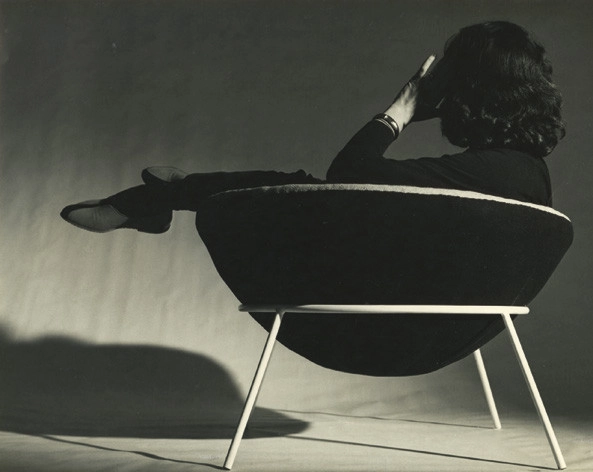
The Italian furniture brand Arper recently reissued Lina Bo Bardi's signature Bowl Chair. The pioneering project of the Brazilian-Italian architect presents a more relaxed approach to "sitting" - one that was fairly radical when it was originally released in 1951. The reissue of the chair - presented at the Salone del Mobile 2013 - is a testament to the forward-thinking vision of the architect.
Arper, who worked in partnership with the Instituto Lina Bo e P.M. Bardi to produce the Bowl Chair, based the design on the original prototype drawings. The genius of the chair is in its simple execution: consisting of two loose parts - an upholstered shell on a metal structure - the seat remains free to move in all directions. It is a chair for living, not just for sitting, and (as with all of Bo Bardi's works) places the human at the center of the design.
Fashion visionaries Tom Ford, Gianfranco Ferre, and Gianni Versace all began their design education in architecture. In the words of Coco Chanel, "fashion is architecture." It was likely with this in mind that the Architecture Foundation hosted it's annual John Edwards Lecture. The event, which was held at the Tate Modern's Starr Auditorium, was a discussion between designer Marc Jacobs and architect Peter Marino, who have frequently collaborated together on retail design.
https://www.archdaily.com/461856/peter-marino-and-marc-jacobs-chat-about-design-architecture-and-fashionKatherine Allen
The Blinspot Initiative: "Beyond competition, towards collaboration". Image Courtesy of Blindspot Initiative
Like many in architecture, the Blindspot Initiative has grown tired of "the exclusive, winner takes all mentality of competitions." Instead, they value collaboration and open access to design ideas, and so are renting a studio in East LA for an exhibition that will display the work of 10 fringe (blindspot) designers, "presenting work on a neutral ground to encourage conversations and practice which lives outside the conventions of typical design outputs and practices." Visit their kickstarter project to learn more and contribute to their cause (and check out their video, after the break).
https://www.archdaily.com/461713/kickstarter-campaign-the-blindspot-initiativeKatherine Allen
Videos
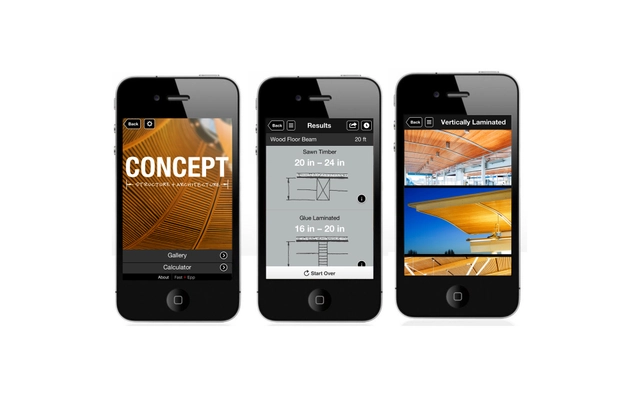
Interface on iOS. Image Courtesy of Fast + Epp
Getting instantaneous, accurate structural dimensions in the early stages of the design process, or even when exploring the feasibility of a project, can often be challenging. In response to this, Vancouver-based structural engineering firm Fast + Epp have developed a new mobile application called Concept, a depth calculator which uses typical span-to-depth ratios for common steel, concrete and wood members to give you a quick overview of what dimensions a certain structural idea will require. In addition to this, the app also includes project photos to give users an idea of how certain materials will be expressed in built form.
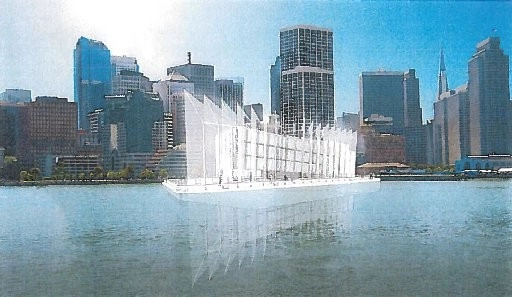
A mysterious construction project in the San Francisco Bay has been making waves for the past couple of weeks. Moored off Treasure Island, locals apparently refer to it as 'the secret project' - and, until now, that's about as much as was known about it.
Despite months of rumors and complete radio silence from Google, spokespeople have finally released a statement on the project, stating: "Google Barge … A floating data center? A wild party boat? A barge housing the last remaining dinosaur? Sadly, none of the above. Although it’s still early days and things may change, we’re exploring using the barge as an interactive space where people can learn about new technology."
While it's a shame about the dinosaur, Google's expansion into technology retail is possibly even more intriguing, as it's entirely new turf for the company: retail design.
More info and an artist's rendering of what the barge could look like, after the break...
https://www.archdaily.com/446791/barge-of-shipping-containers-to-become-google-glass-showroomKatherine Allen
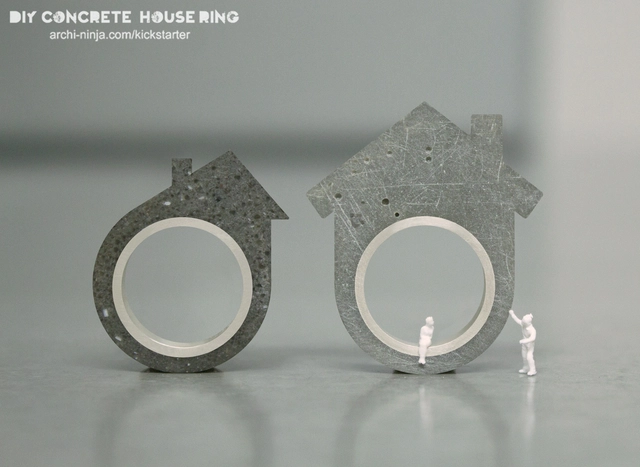
Dream of one day making your own home? Well, here's a fun mini alternative in the meantime. The "DIY Concrete House Ring" is a high quality silver and concrete ring that lets users experience the process of 'making'. The ring itself is made from a DIY compact kit, and comes in two familiar architectural silhouettes - gable roof or saltbox roof - and in either light or dark concrete. The project was developed by Linda Bennett, author of "10 Things They Don’t Teach You in Architecture School" and "Searching for a Job in Architecture? 10 Things You Need to Know…" via her blog, archi-ninja. Check out the project's debut on kickstarter (which offers fantastic perks for backers) for more information.
https://www.archdaily.com/448877/a-diy-concrete-house-travel-sizedKatherine Allen
Although university is meant to be a place of educational exploration, paths, particularly for architects and designers, tend to be extremely prescribed. In "Notes from the Dean," originally published in Metropolis Magazine, Executive Dean Joel Towers describes how the Parsons New School for Design is pioneering a new design program that is more reflective of modern design approaches: "The world has changed; the role of design has changed. And the way that designers are taught to engage with the world must change, too."
Every generation is presented with challenges specific to its time and place. We live in a world changing in ways that were unimaginable at the beginning of the Industrial Revolution, when design education first began to take shape. Technology (aided and abetted by design), advances in scientific knowledge, and shifts in social and cultural norms shaped design in the twentieth century. Our problems today involve more complex and interconnected systems—climate, cities, resources, networks, flows—and call for a new paradigm. Design in the twenty-first century is of critical importance in both addressing these challenges and transforming them into opportunities to remake the world around us. To do so, design education must change.
Design schools have traditionally adhered to a model that builds programs based on a foundation year, a well-defined and contained introduction to the basics of material, form, and color. And while that foundation is an important cornerstone of design education, it leaves little room for the more exploratory methods of cross-disciplinary and technology-based learning, and for understanding and applying design in the context of the larger world. That old model needs to evolve to reflect design’s enhanced role as a catalyst for innovation and creativity.
https://www.archdaily.com/445647/the-dean-of-parsons-design-education-must-changeKatherine Allen
Amsterdam's famous canal district celebrated its 400th birthday this year. And though the district has grown and evolved throughout the centuries, now, more than ever before, this UNESCO World Heritage site is struggling with how to ensure the past doesn't hold a vice-like grip on its future.
For Jarrik Ouburg, an Amsterdam architect, the problem was more specific: in such a historic district, how do you keep urban transformations from slowing to a stop? This question eventually led him to his ongoing project, “Tussen-ruimte.” Tussen-ruimte (Dutch for ‘between space’) installs pieces of contemporary art and architecture in the hidden alleys and courtyards that have formed over years of building in the canal district.
https://www.archdaily.com/431720/between-the-buildings-of-historic-amsterdam-an-urban-interventionKatherine Allen