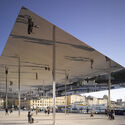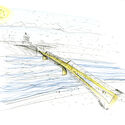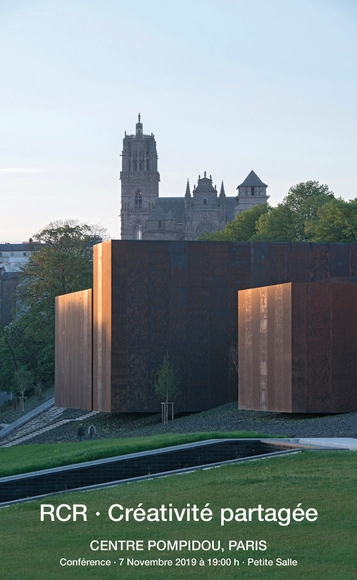
Conference by Carme Pigem , principal and founder of RCR Arquitectes, on their work and their philosophy of shared creativity.
RCR Arquitectes is a studio of Catalan architects, created in Olot in 1987 by Rafael Aranda, Carme Pigem and Ramon Vilalta. The atelier has received many prizes including the Gold Medal of the Academy of French Architecture in 2015 and the prestigious Pritzker Prize in 2017.
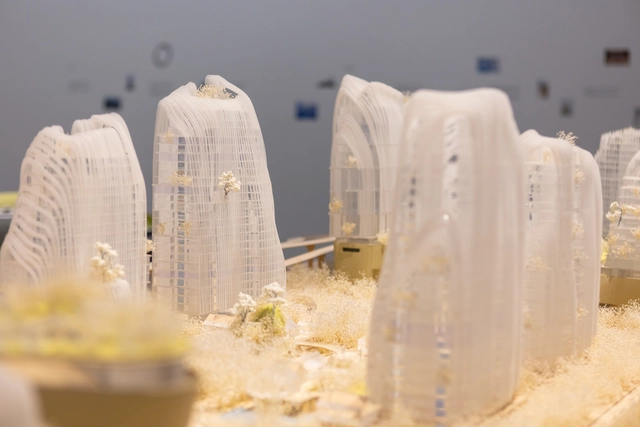
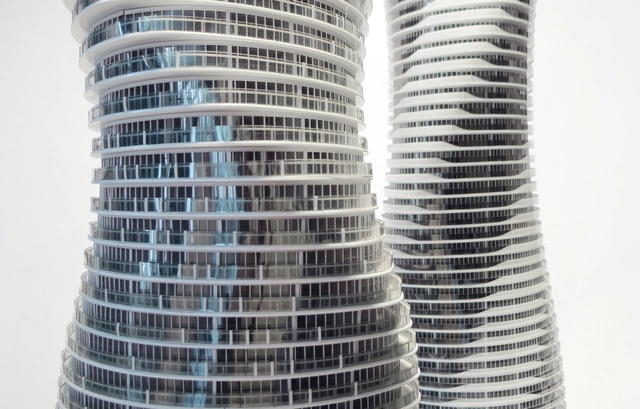
The Centre Pompidou will host a year-long exhibition of MAD Architects in Paris, France. The exhibition, titled MAD X, showcases ten of MAD’s most significant projects to date. Exploring unchartered territory, the show is made to exhibit the evolution of MAD’s architectural practice and design philosophy since its establishment in 2004, led by Ma Yansong, Dang Qun, and Yosuke Hayano. The exhibition centers on how MAD reimagines the future of design.
The Centre Pompidou in Paris has acquired 12 architectural models by MAD Architects, depicting 10 significant projects undertaken by the firm. Each model embodies MAD’s core values that “look to envisioning a futuristic architecture that is akin to dream-like earthscapes – one that creates a conversation with nature, the earth, and the sky.”
The collection, permanently acquired by the Pompidou, represents projects developed by MAD between 2005 and the present day, demonstrating the evolution of the firm’s design process. The Pompidou has become the first major European cultural institution to acquire such a collection of MAD’s work, on display in an exhibition beginning in April 2019.
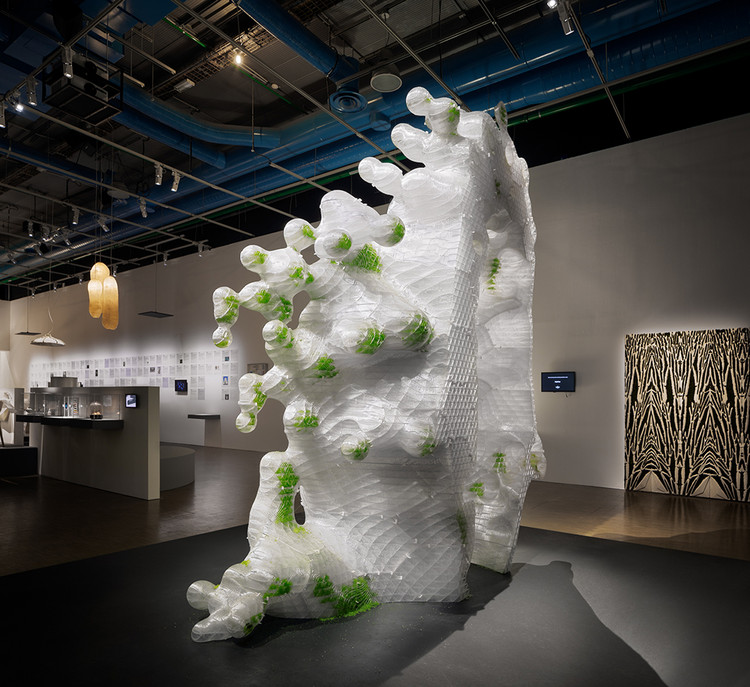
The renowned Centre Pompidou in Paris is to open its doors to two living sculptures, embodying the future forms of spatial intelligence. The exhibition, titled “La Fabrique du vivant” [The Fabric of the Living], will feature “H.O.R.T.U.S. XL Astaxanthin.g” by ecoLogicStudio in collaboration with Innsbruck University - Synthetic Landscape Lab, CREATE Group / WASP Hub Denmark - University of Southern Denmark, and "XenoDerma" by Urban Morphogenesis Lab directed by Claudia Pasquero at The Bartlett UCL.
Running from February 20th to April 15th, the exhibition will examine the notion of “living” in a digital era, where new interactions are emerging between the fields of life science, neuroscience, and synthetic biology. Permeating the entire urbanscape, this global, digital apparatus “encompasses miniaturization, distribution, and intelligence of manmade urban networks of in-human complexity, engendering evolving processes of synthetic life on Earth.”
Junya Ishigami's works at the 2008 Venice Biennale. Image Courtesy of junya.ishigami+associates
I think that the conversation with Junya Ishigami at his experimental (and very international) studio in Tokyo was one of the most memorable experiences of my recent trip to Japan. Junya's visions for not just of his own architecture but for the profession were wholeheartedly inspiring. He thinks that architecture today is “not free enough.” He wants to diversify it, liberate it from so many architects’ insistence on following particular building types and, in general, our narrow expectations. He wants his architecture to be soft and loose and finds inspiration in such improbable metaphors as clouds or the surface of water. “We need to introduce more varieties of architecture to better address peoples’ dreams…I want to expand architecture into the future by creating new comfortabilities,” says Ishigami, whose two recent manifesto-like exhibitions in Paris questioned the very nature and purpose of architecture. He is a visionary and essential voice in what is perhaps the most unsettled of all professions.
Inducing a surreal physical experience through minimal maneuvers, buildings with smooth concrete panels and simple geometric volumes instinctively hint at the work of Japanese architect Tadao Ando. At an ongoing exhibition at the Centre Pompidou, photographs of the headquarters of Fabrica, Ando's first European commission in 1992, are showcased. Located near the city of Treviso, the building was an old villa restored to become a thriving creative research center.
Villa Pastega Manera, built on an area of 51,000 square meters, went through a rigorous study of traditional construction techniques and material sampling to commence the redesign. The photographs feature the harmonious integration between the historical structure and seamless renovations.
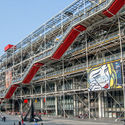
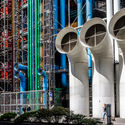
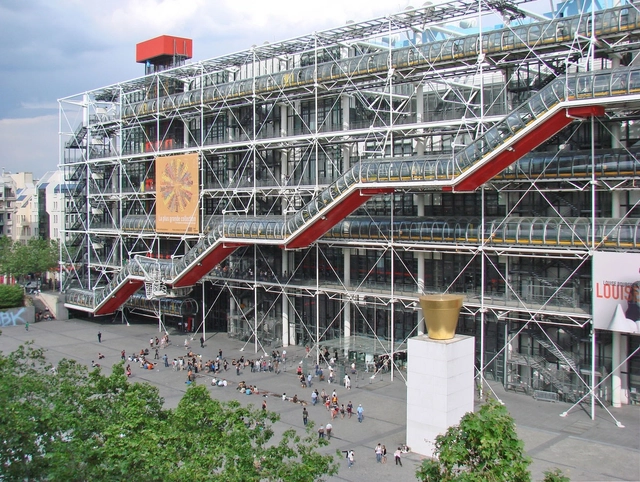
Nike has announced that it will release a special edition of its Air Max 1 range, inspired by the iconic Centre Georges Pompidou in Paris. The special edition pays tribute to the Richard Rogers and Renzo Piano-designed structure, which is credited by designer Tinker Hatfield as the inspiration behind his original Air Max 1 range.
Two upcoming editions of the Air Max 1 will honor the building, with colored tubes appearing along the seams and lines of the fabric, as well as the sole. A large P logo on the translucent sole offers a further tribute to the controversial structure, opened in 1977.
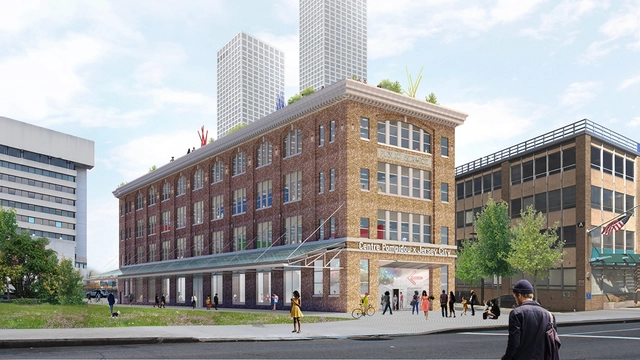
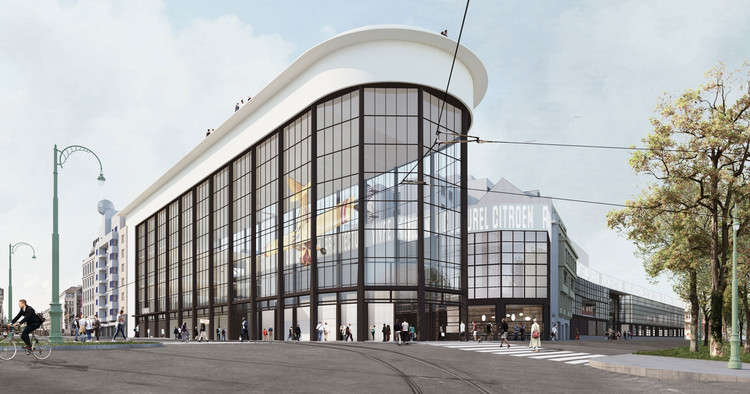
A team comprising noAarchitecten, EM2N, and Sergison Bates has won a design competition for the transformation of a former Citroën factory in Brussels into a cultural hub, merging a Museum of Contemporary Art, architecture center, and public amenities under the name “KANAL – Centre Pompidou.” The architects’ vision was for a scheme which reflects on the role of the twenty-first-century museum in society, one which opens out towards the city to entice the general public.
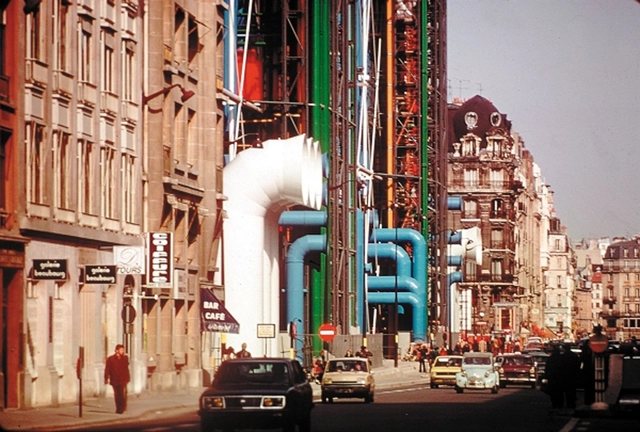
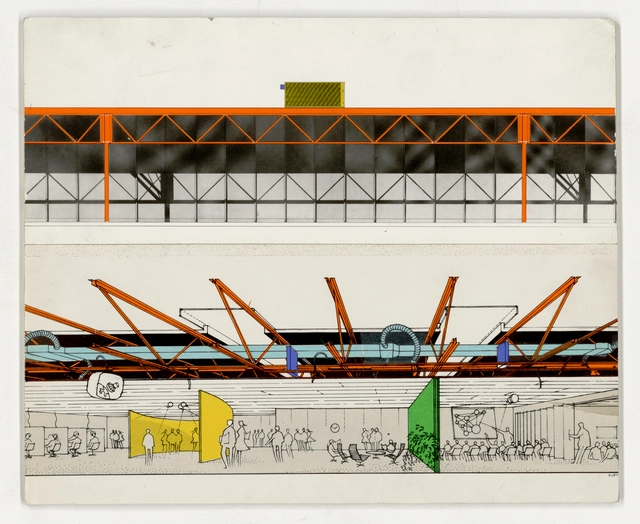
Centre Pompidou (1970s). Image via Rogers Stirk Harbour + Partners
The following is an extract from A Place for All People, a new semi-autobiographical manifesto by Lord Rogers. It is a mosaic of life, projects and ideas for a better society, ranging backwards and forwards over a long and creative life, integrating relationships, projects, stories, collaborations and polemics, with case studies, drawings and photographs.
https://www.archdaily.com/881986/richard-rogers-architecture-is-a-place-for-all-people-bookBaron Rogers of Riverside
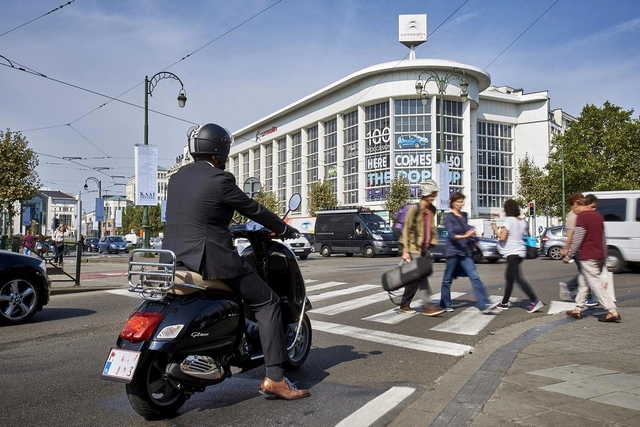
The Urban Development Corporation (SAU-MSI) has announced the seven shortlisted teams competing for the design of the latest Centre Pompidou outpost in Brussels, Belgium. The finalist teams were selected from 92 entries to the competition, which sought proposals to transform the existing Art Deco Citroën Yser garage in the heart of the city into a mixed-use museum complex focusing on contemporary art and architecture.
To be known as the Citroën Cultural Centre, the $135 Million project will consist of 375,000 square feet (35,000 square meters) of public cultural, education and recreation space, including 160,000 square feet (15,000 square meters) designated for the new Centre PompidouBrussels. An additional 108,000 square feet (10,000 square meters) will host a museum run by Brussels’ International Centre for Urbanism, Architecture & Landscape.
What is the place of the museum in the modern city? What role does architecture play? How can these buildings be effectively interpreted?
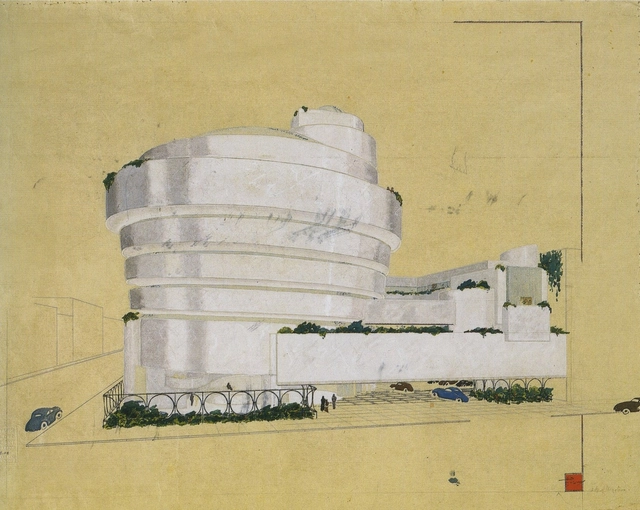
Frank Lloyd Wright’s design for the Guggenheim Museum in Manhattan broke with all existing conventions, setting a new standard for the postwar art museum and, together with the Museum of Modern Art, firmly establishing the city of New York as the cultural capital of the 20th century.
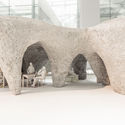
Following the success of their highly intricate Arabesque Wall, Benjamin Dillenburger and Michael Hansmeyer have once again achieved new levels of ornamental eye candy – this time, with a full-scale 3D printed grotto created from seven tons of sandstone. Commissioned by the Centre Pompidou in Paris, the grotto is an example of how the spatial expression of computational technologies can make for remarkable architectural experiences.
“Digital Grotesque II is a testament to and celebration of a new kind of architecture that leaves behind traditional paradigms of rationalization and standardization and instead emphasizes the viewer’s perception, evoking marvel, curiosity and bewilderment,” state Dillenburger and Hansmeyer.
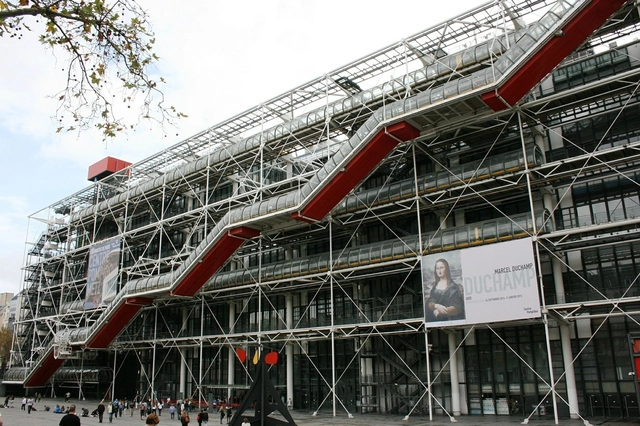
Reviled by Parisians for its shocking inside-out appearance when it first opened in 1977, the Centre Pompidou has reached its 40th birthday, and as a gift, is set to receive to 2-year, $110 million renovation that will preserve the unique structure for years to come.
UPDATE: The videos are no longer available on YouTube. :(
Over the past 20 years, many of the most renowned European cultural institutions - including ARTE France, Les Films d’Ici, the Louvre, the Ministry of Culture and Communication Department of Architecture and Heritage, Centre Pompidou, City of Architecture and Heritage, Musée d'Orsay and the Fundació Mies van der Rohe - have come together to produce more than 50 architecture documentaries devoted to the most significant achievements of architecture, its beginnings, and the latest creations of the great architects of today. Now, these videos are accessible to the public via the YouTube Channel ACB (Art and Culture Bureau).
Each documentary is approximately 26 minutes long, and focuses on the genesis and impact of a single building that has played a role in the evolution of architecture. Narration is in English, and many of the videos of newer buildings feature interviews with the architects themselves. Check out some of the videos below, or find the entire list here.
Pompidou Centre, Paris / Richard Rogers and Renzo Piano. Image via incollect
London-based practice Rogers Stirk Harbour + Partners (RSHP) have announced the elevation of five associates to partner level while Mike Davies CBE, who has worked alongside Lord Rogers for more than forty years, will be reducing his roles. Davies has been involved in some of the practice's most significant projects including the Pompidou Centre in Paris, Lloyd's of London, the Millennium Dome, and Terminal 5 at London's Heathrow Airport. As a Chevalier de la Légion d’Honneur, Davies is currently the project director for Grand Paris, the masterplan for Greater Paris 2025 which was commissioned by former President Nicolas Sarkozy. According to RSHP, Davies "will remain employed in a part-time role."
To commemorate the architect 50 years after his death, from April 29 through August 3 the Pompidou center is hosting a retrospective on the life and works of Le Corbusier. The exhibition highlights Le Corbusier’s architecture and artwork, which is curated to trace his evolving understanding of the human body, and includes texts, paintings, drawings, sculptures, and models.
The south west French city of Libourne may soon get its own pop-up Pompidou. Reports indicate that the Libourne satellite outpost would be similar to the one currently underway in Malaga, Spain (soon to open in March 2015). If the deal is passed, the city would host the museum outpost in a former 40,000-square-meter military academy, though renovation costs are excepted run high - nearing €6 million. The city's mayor Philippe Buisson is reaching out to regional and national authorities requesting financial assistance.
Yesterday, during the opening of a new photography gallery, Centre Pompidou president Alain Seban announced the contemporary art museum will soon open a new design and architecture gallery inside the famed Renzo Piano- and Richard Rogers-designed building. “Eventually, there should be almost no offices in the building, and we'll keep only the technical facilities that are strictly indispensable," said Seban. “When allocating the spaces, the works and the visitors have to take precedence."