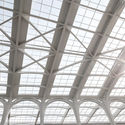
Architectural professionals recognize how exterior design choices influence both perception and performance. A canopy is more than a functional overhang — it is a visual statement, a layer of environmental control, and a reflection of the project's overall design vision.
Among available materials, custom aluminum canopies have become a preferred choice in modern architecture for their resilience, adaptability, and sleek aesthetics. The following outlines their primary advantages.
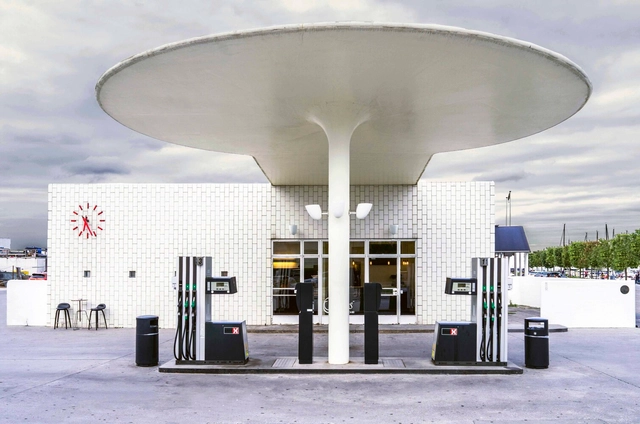
The gas station is an architectural typology that has undergone significant transformations since its inception. Initially, these structures were simple roadside refueling points designed for functionality rather than aesthetics. As automobile culture expanded, gas stations evolved to accommodate new technologies, shifting urban landscapes and changing consumer behaviors. Over time, they became more than just utilitarian stops — they developed into service hubs, integrating restaurants, motels, and leisure spaces, responding to contemporary transportation increasing demands.
By the late 20th century, however, the widespread standardization of gas stations led them to be perceived as "non-places", a concept defined by anthropologist Marc Augé to describe transient spaces that lack social or cultural significance. With uniform designs and a focus on efficiency, gas stations became interchangeable, reinforcing their role as purely functional infrastructure rather than meaningful architectural interventions. This standardization also departed from the era when fuel stations served as recognizable landmarks, contributing to a homogenized landscape devoid of local identity.
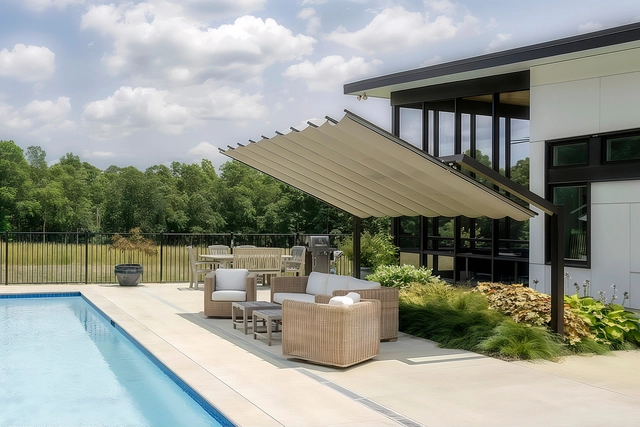
The sun is an inescapable partner in architecture, influencing lighting, energy efficiency, and comfort inside and outside buildings. This influence has become increasingly relevant in the context of climate change, which has led to rising temperatures and the creation of challenging environments. In response, designers are constantly working to adapt cities to heatwaves through large-scale urban strategies. On a smaller scale, such as in residential settings, the issue can be addressed more specifically through various shading solutions.
Since the sun's behavior varies by region and time of year, adjustable shade structures are crucial for managing sunlight and heat effectively. In high latitudes, the solar angles shift with the changing seasons, while in equatorial regions, the radiation remains more consistent throughout the year. ShadeFX retractable solutions are crafted to adapt to these varying conditions, regulating direct light intensity and minimizing excessive heat. By enhancing the comfort and functionality of spaces, these solutions also help reduce the impact of an overheated planet.
https://www.archdaily.com/1020060/how-to-choose-shade-structures-strategies-based-on-solar-angles-and-seasonsEnrique Tovar
Although the sensory approach in the built environment is often based primarily on visual aspects, such as color and light, as we delve deeper into the relationship of architecture with the senses other essential elements emerge, such as aromas, textures, sounds, and even flavors. These components are fundamental to creating a profound experience between the user and the environment in which it takes place, demonstrating that design and sensory experience are intrinsically connected.
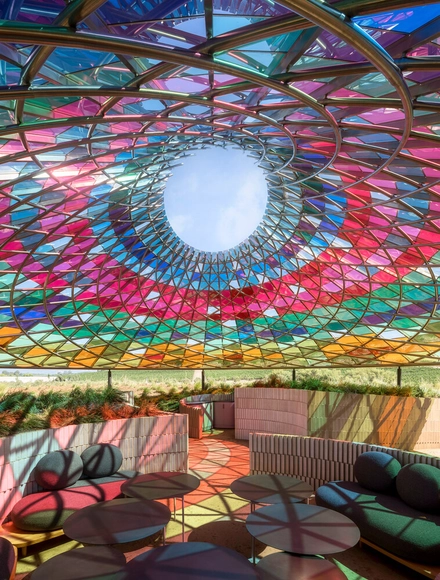
Thus, sensory design offers an immersive atmosphere for a full spectrum of senses where its perception extends beyond physical boundaries. An example of this is the Vertical Panorama Pavilion, located in a region of California (USA) with a strong identity linked to the wine tradition. This structure, with a glass canopy of Color PVB interlayers, serves as a shelter for hospitality. Inspired by nature, the pavilion’s canopy engages all the senses: from the texture of the gravel on the walking path to the wind currents in the area and the characteristic aromas of the region.
https://www.archdaily.com/1017382/a-multicolored-glass-canopy-for-senses-shelter-and-hospitality-the-vertical-panorama-pavilionEnrique Tovar
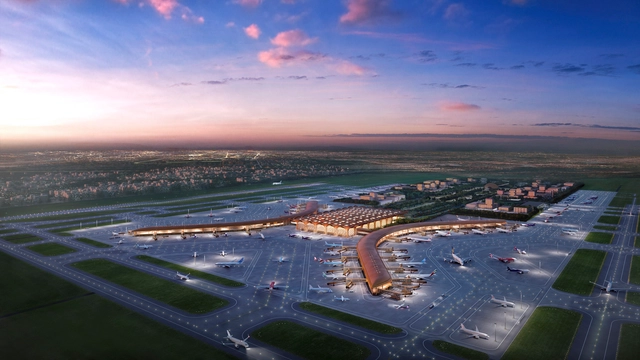
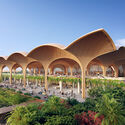
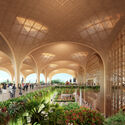
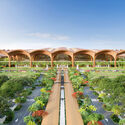
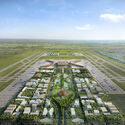
Construction is underway at the new Techo International Airport in Phnom Penh, Cambodia, designed by Foster + Partners. The project, located 20 kilometers from Cambodia’s capital city, draws inspiration from the vernacular architecture that defines the area, searching to provide adequate design solutions in response to the tropical climate. The commission, which was won following an international competition, includes the master plan for a new airport city in addition to the new terminal building.
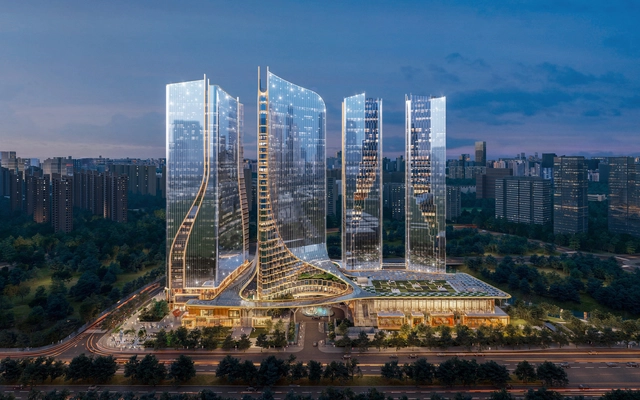
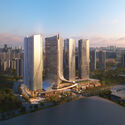
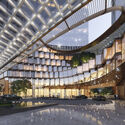
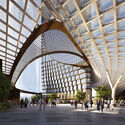
On a site that also hosts the Olympic Sports Centre, the 2023 Asian Games complex, UNStudio has unveiled the design of the new Hiwell Amber Centre, a complex of four high-rise towers planned to add a mix of offices, apartments, hotels, art spaces and retail to the city center of Hangzhou, China. Responding to the area’s rapid economic and cultural growth, the new development aims to provide a wide range of services to residents and visitors alike. To open up towards the city, the smooth glass curtain wall of the towers peels apart to reveal a tapestry-like facade that envelops the main plazas and civic spaces, creating an ‘urban living room.’
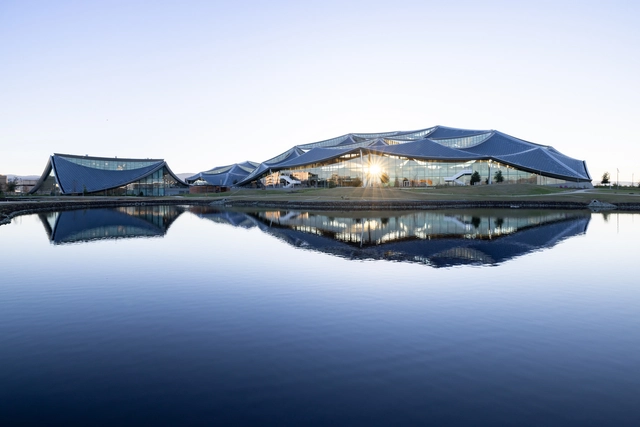
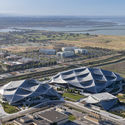
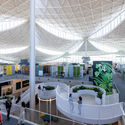
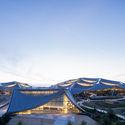
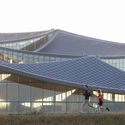
Google’s first ground-up campus, designed by BIG - Bjarke Ingels Group and Heatherwick Studios in collaboration with Google’s design and engineering teams, opened in Silicon Valley. The campus’ mission is to create a human-centric design for the future of Google’s workplace and set new global sustainability standards for construction and office design. The site aims to operate entirely on carbon-free energy by 2030; it integrates the most extensive geothermal pile system in North America and is net-water positive. The campus also includes 17 acres of high-value natural areas, including wet meadows, woodlands, and marsh.
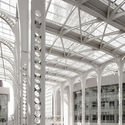
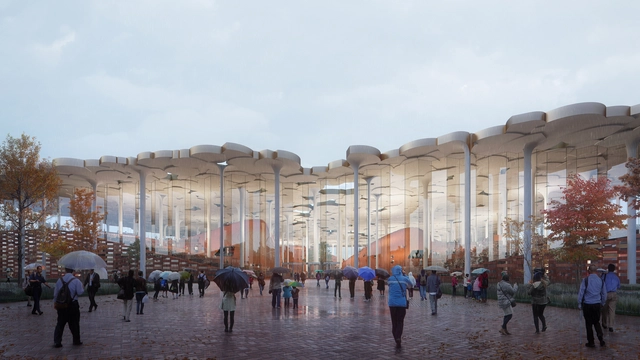
Following an international design competition win in 2018, Snøhetta and ECADI have been commissioned to design a new sub-center library in Beijing, offering visitors a contemporary space for learning and sharing knowledge while celebrating the rich cultural China and its capital. The library sets new standards for traditional library designs, featuring technology-driven designs and locally-sourced materials, as well as a glass enclosure of up to 16 meters, which will be China’s first self-supporting glass facade project.
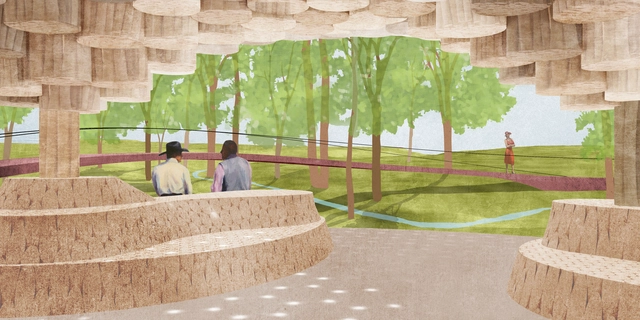
Interior view of Pavilion designed by Francis Kéré at Tippet Rise Art Center in Montana. Image
Tippet Rise Art Center has announced the commissioning of architect Francis Kéré to design a 1,900-square-foot pavilion for the center’s 10,000-acre grounds in Montana, USA. Envisioned as a “communal gathering space nestled among a cluster of aspen and cottonwood trees,” new renderings by Kéré Architecture depict the scheme featuring a locally-sourced log canopy.









.jpg?1641202772 "Courtesy of Plomp/Snøhetta")