Courtesy of Chris Grimley, Michael Kubo, and Mark Pasnik
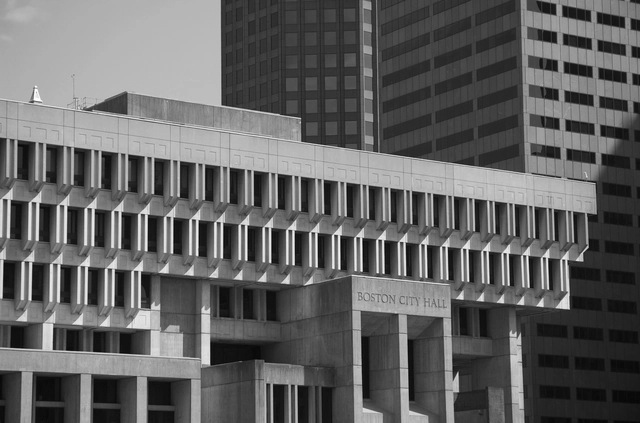
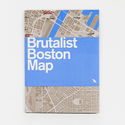
In their ninth architectural city guide, London-based publisher Blue Crow Media highlights the city of Boston’sBrutalist buildings. The map was produced in collaboration with the principles of the firm over,under Chris Grimley and Mark Pasnik along with Michael Kubo, who together authored the book “Heroic: Concrete Architecture and the New Boston.” The map highlights more than forty examples of Brutalist architecture around the greater-Boston area.
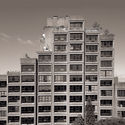
In a major victory for preservationists, one of Sydney’s few examples of brutalist architecture, the Sirius Apartment Building, has been saved from the wrecking ball after court ruled against the government’s attempt to deny it a place on the State Heritage Register.
https://www.archdaily.com/876508/sydneys-brutalist-sirius-building-saved-from-demolition-after-court-rulingAD Editorial Team
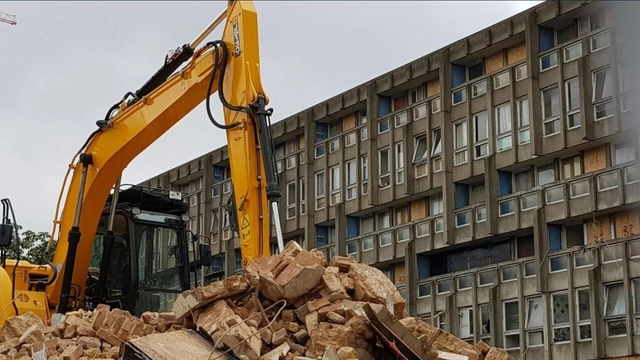
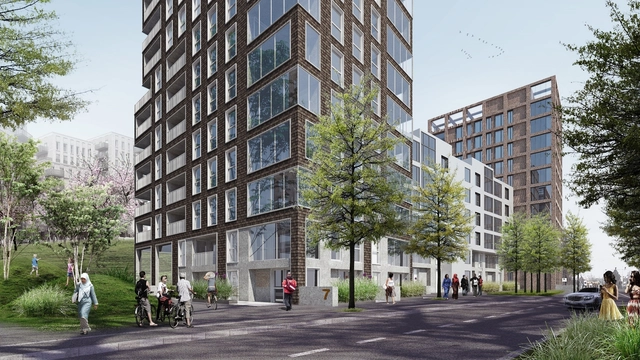
As leaders of Phase 3 of the plan, C.F. Møller will design housing for the eastern portion of the site. A total of 330 one- to five-bedroom residential units, half of which have been designated as affordable, will be located within a courtyard block complex at the edge of an existing garden mound – one of the few elements of the original estate that will be retained. The garden is planned to be replanted and renamed the “Millennium Green.”
https://www.archdaily.com/874779/cf-moller-to-lead-design-of-project-replacing-alison-and-peter-smithsons-robin-hood-gardensAD Editorial Team
Sydney is the latest city spotlighted by city map publisher Blue Crow Media, with the release of their fourth map of Brutalist architecture. Produced in collaboration with Glenn Harper, Senior Associate at PTW Architects and founder of @Brutalist_Project_Sydney, Brutalist Sydney Map showcases over 50 examples of the architectural style across the New South Wales (NSW) city and suburbs.
“This map not only guides the reader to discover many of Sydney’s oldest and historically important Brutalist buildings, it enables a unique encounter of Sydney and its varied urban and harbor side landscapes,” expressed Harper.
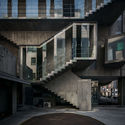
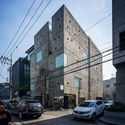
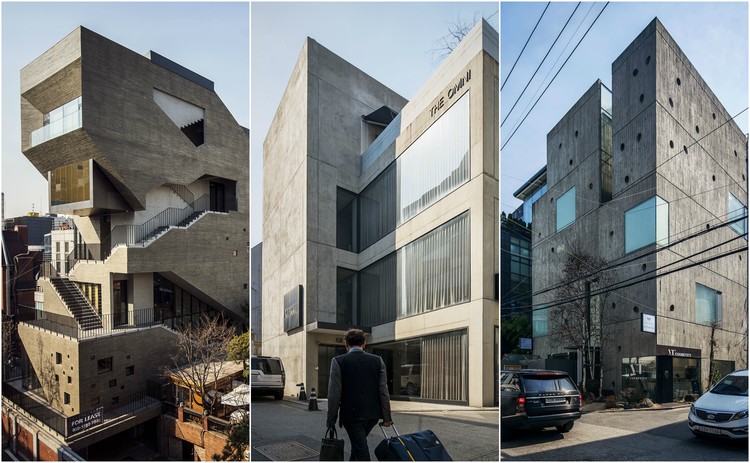
During his frequent travels to Seoul, Hong Kong- and Singapore-based photographer Raphael Olivier noticed a new trend taking the South Korean capital: a crop of geometric, concrete buildings of all genres. He calls the new style Neo-Brutalism, after the modernist movement that proliferated in the late 1950s to 1970s, in which raw concrete was meant to express a truth and honesty. Olivier's observation led him to capture the phenomenon in a personal photo series—a photographic treasure trove of these projects which, when taken as a whole, uncovers a cross-section of this trend in the city's architecture.
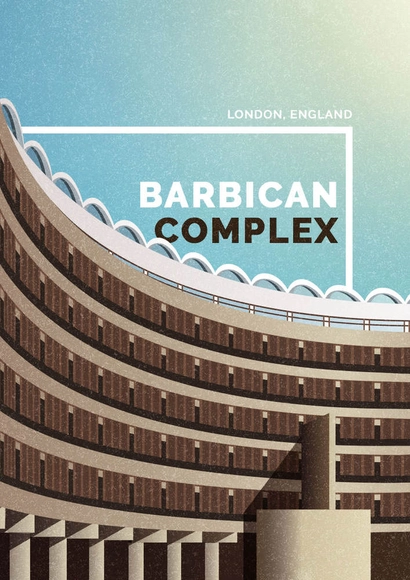
Barbican Complex, London. Image Courtesy of GoCompare
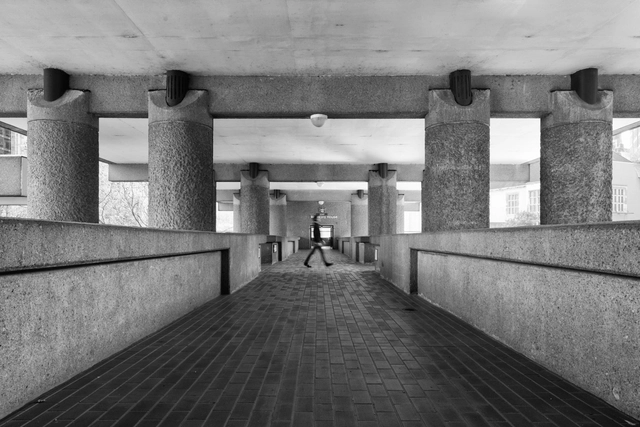
The Barbican Centre in London is celebrating its 35th anniversary. Widely regarded as the pinnacle of the Brutalist movement, the mixed-use development is home to 4,000 residents, the Guildhall School of Music & Drama, and the London Symphony Orchestra. Located in the heart of London, the Barbican is just one example of how Brutalist architecture forms a central part of our cities. To celebrate this progressive, modernizing, sometimes controversial style, GoCompare has created an online gallery illustrating Brutalist icons from across the world.
In this second installment of his revamped “Beyond London” column for ArchDaily, Simon Henley of London-based practice Henley Halebrown discusses a potential influence that might help UK architects combat the economic hegemony currently afflicting the country – turning for moral guidance to the Brutalists of the 1960s.
Before Christmas, I finished writing my book entitled Redefining Brutalism. As the title suggests I am seeking to redefine the subject, to detoxify the term and to find relevance in the work, not just a cause for nostalgia. Concrete Brutalism is, to most people, a style that you either love or hate. But Brutalism is far more than just a style; it is way of thinking and making. The historian and critic Reyner Banham argued in his 1955 essay and 1966 book both entitled The New Brutalism: Ethic or Aesthetic that the New Brutalism began as an ethical movement only to be hijacked by style. Today, it is a mirror to be held up to the architecture of Neoliberalism, to an architecture that serves capitalism. More than ever, architecture relies on the brand association of the big name architects whose work has little to do with the challenges faced by society, which are today not unlike the ones faced by the post-war generation: to build homes, places in which to learn and work, places for those who are old and infirm, and places to gather. We can learn a lot from this bygone generation.
Russian designer Sergey Lisovsky has created an online illustrative magazine inspired by Brutalist Architecture. Pattern Brutalist’s first issue was published in January 2017, illustrating four Brutalist buildings across Russia, Germany, and Serbia. The buildings, dating between 1968 and 1980, are represented by Lisovsky using a collection of GIFs, photographs, and illustrations.
Pattern Brutalist also hosts a T-shirt printing service, allowing users to publically express their appreciation for an often-criticized architectural style.
https://www.archdaily.com/806436/pattern-brutalist-an-illustrative-magazineNiall Patrick Walsh
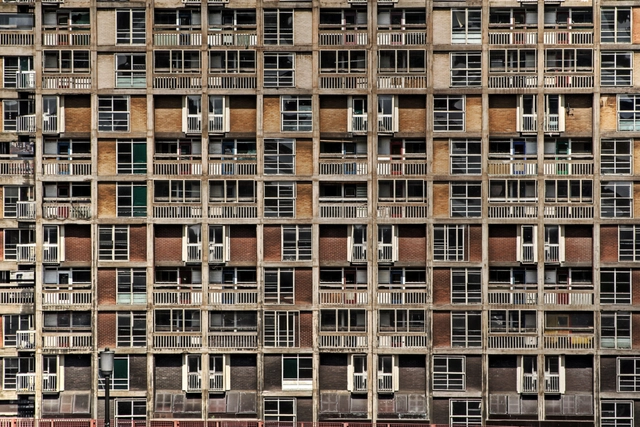
From its hilltop vantage point in the east end of Sheffield, UK, the Park Hill Estate surveys the post-industrial city which sprawls westwards. Its prominent location makes the estate highly visible and it has, over time, become engrained in the popular consciousness – a part of the fabric of the city. Although today it divides opinion, following its completion in 1961 it was hailed as an exemplary model for social housing. Designed by architects Jack Lynn and Ivor Smith under the supervision of Sheffield’s visionary City Architect John Lewis Womersley, the estate now stands as testament to an era when young British architects were revolutionizing the field of residential architecture with radical housing programs.
The Park Hill Estate was part of Womersley’s strategy to introduce more high-density housing to Sheffield, which he believed would foster a stronger sense of community than the ubiquitous back-to-back terraces.[1] This policy went hand in hand with an urgent need for slum clearance; The Park, a slum so notorious for its high crime rate that it was known locally as ‘Little Chicago,’ was demolished to make way for the estate.
In 2017, British news magazine The Economist will move to a new home, leaving behind its iconic home of 52 years, Economist Plaza.
The project represents the first major commission by British duo Alison and Peter Smithson, who would go on to have esteemed careers as champions of the Brutalist style. Located at 22 Ryder Street, not far from Hyde Park and Buckingham Palace, Economist Plaza marked a significant breakthrough in tall building design, replacing the traditional streetfront of a podium and tower design with stairs and a ramp leading to an elevated plaza from which 3 buildings would rise.
Watch the video above to learn the story behind the project, and read more about the legacy the Economist will leave behind, here.
UK transport minister John Hayes has declared war on Brutalist architecture, The Independent reports. Citing public distaste for the functional, modern designs characterized by exposed concrete and brick masonry, Hayes warned against a revival of the style, referring to it as "aesthetically worthless, simply because it is ugly." Meanwhile, Hayes named Boris Johnson's New Routemaster and the redeveloped St. Pancras, Blackfriars, and King's Cross stations as specimens of exemplary design. At the heart of this ire is a push to rebuild a Doric arch outside Euston station, which was demolished in 1962.
The winning proposal has just been announced for an extension to the Bunkier Sztuki ("Bunker of Arts") contemporary art gallery in Cracow, Poland. Out of 33 entries in the international competition, the underground design by Robert Konieczny - KWK Promes has been selected to be executed in the heart of Cracow's Old Town.
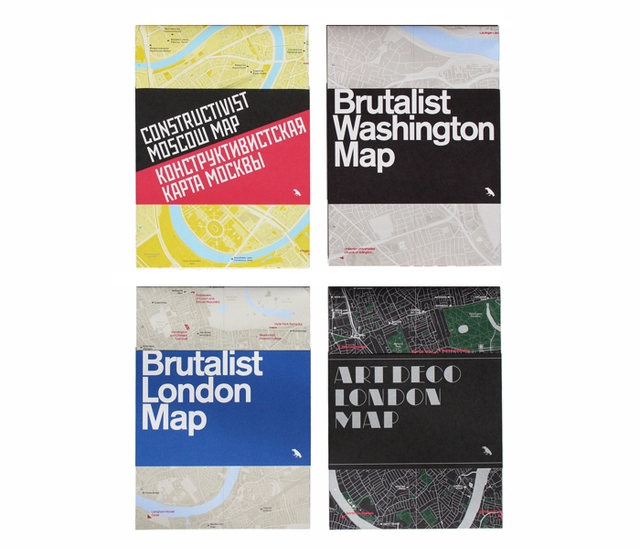
City Guide publisher Blue Crow Media and Deane Madsen, Associate Editor of Design at Architect Magazine, have collaborated to produce the Brutalist Washington Map, which features 40 examples of Brutalist architecture in Washington, D.C. This is Blue Crowe's fourth architectural guide map, following their Brutalist London Map, Art Deco London Map, and Constructivist Moscow Map. One can only expect further releases on the horizon.
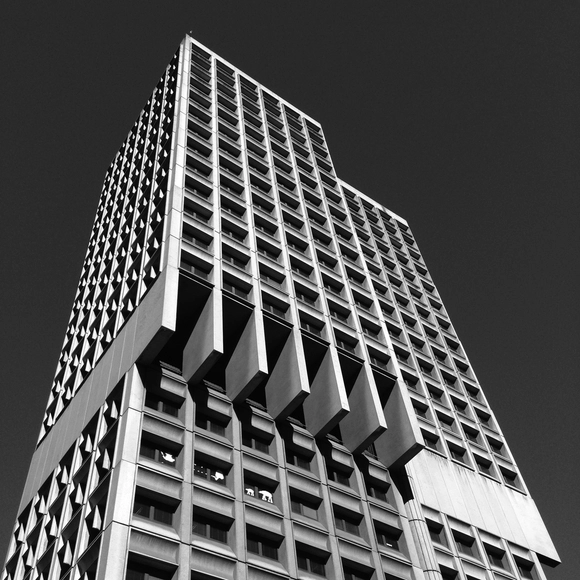
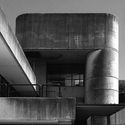
This exclusive photo essay by Laurian Ghinitoiu was originally commissioned for the fifth issue ofLOBBY. Available later this month, the latest issue of the London-based magazine—published in cooperation with the Bartlett School of Architecture—examines the theme of Faith as "a fervent drive, a dangerous doctrine, a beautifully fragile yet enduring construct, an unapologetic excuse, a desperate call for attention and a timely consideration on architectural responsibility."
In 1986 the Pritzker Architecture Prize announced their first German laureate. In a speech at the ceremony in London’s Goldsmiths’ Hall, the Duke of Gloucester suggested that the prize “may not guarantee immorality,” inferring, perhaps, that not even the most prestigious award in architecture could compete with an œuvre so compact, focussed and enduring as that of Gottfried Böhm – a “son, grandson, husband, and father of architects.”












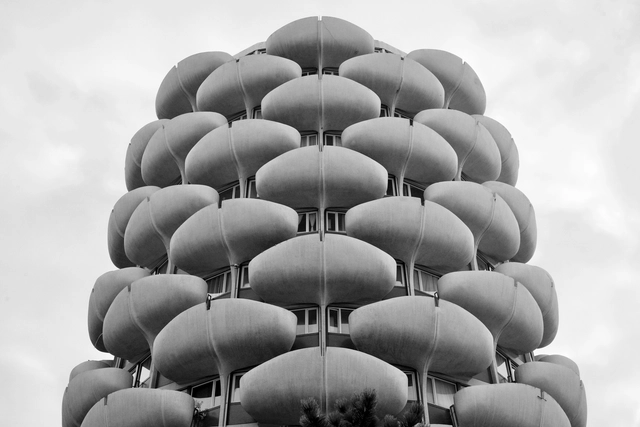











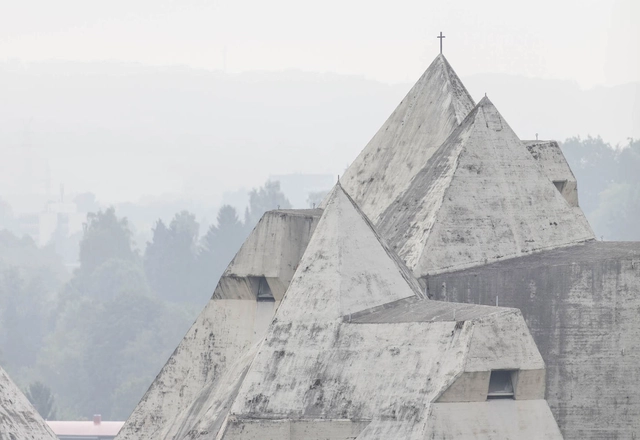
.jpg?1474570511 "Courtesy LOBBY Magazine. Image © Laurian Ghinitoiu")
.jpg?1474569951 "Courtesy LOBBY Magazine. Image © Laurian Ghinitoiu")
.jpg?1474569428 "Courtesy LOBBY Magazine. Image © Laurian Ghinitoiu")
.jpg?1474569212 "Courtesy LOBBY Magazine. Image © Laurian Ghinitoiu")
