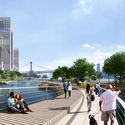
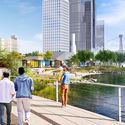
The results of the International Competition for the Architectural Landscape Design Concept for the Tuchkov Buyan Park were just revealed. The proposal by Studio 44 in consortium with WEST 8 won the first place, JV Vogt in consortium with Herzog & de Meuron won the second place while AB CHVOYA in consortium with KARAVAN landskapsarkitekter took the third position.
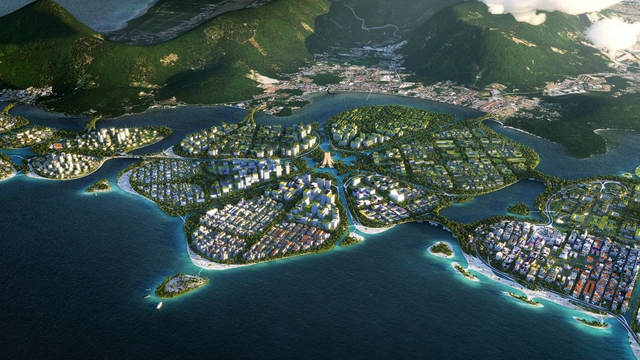
BIG, Hijjas, and Ramboll were selected as winners of Penang State Government’s international competition to design a master plan for Penang South Islands in Malaysia. The proposal entitled BiodiverCity, fits into the island's 2030 vision, and generates 4.6km of public beaches, 600 acres of parks and a 25km waterfront. An Urban Mosaic of three diverse islands, the project establishes new urban design guidelines, mixing programs, addressing pedestrian and mobility networks, building sustainably, and harvesting resources.
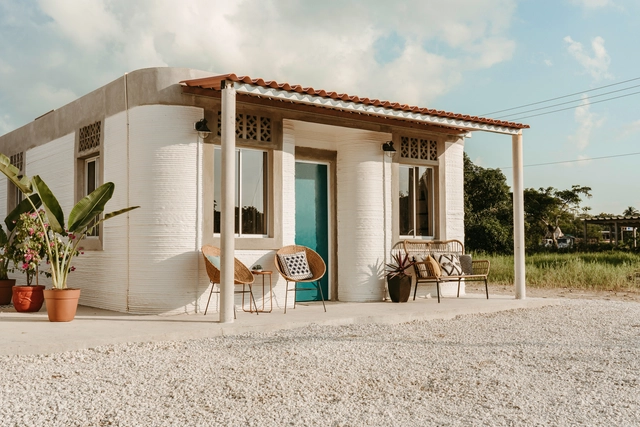
New Story Project - ICON - Mexico. Image Courtesy of ICON
BIG - Bjarke Ingels Group has joined a series of investors and partnered up with ICON, in order to push forward the use of 3D printing robotics to deliver dignified, resilient homes around the world. Aiming to contribute actively in the ongoing transformation, Bjarke Ingels, Founder and Creative Director of BIG stated that “additive manufacturing will play a transformative role in the future of construction”.
Our cities, vulnerable by nature and design, have generated the biggest challenge that humankind has to face. With the vast majority of the population expected to settle in urban agglomerations, rapid urbanization is going to raise the issue of adaptability with future social, environmental, technological and economic transformations.
In fact, the main problematic of the decade questions how our cities will cope with fast-changing factors. It also looks into the main aspects to consider in order to ensure long-term growth. In this article, we highlight major points that help future-proof our cities and create a livable, inclusive and competitive fabric that adapts to any unexpected future transformation.
When reflecting on recycling, sustainability, measures to take, and innovative technological solutions, one cannot help but think that there are also familiar approaches that should be taken into consideration. In fact, when examining the impact of the built environment on the climate, one notes that in many countries, 80% of the buildings that will exist in 2050 have already been built. The most effective form of sustainability may, therefore, be saving energy by eliminating or minimizing new constructions, and by avoiding the demolition of existing structures.
That is what adaptive reuse stands for: instilling a new purpose on an existing “leftover building.” Nowadays, the refashioning process is becoming essential because of numerous issues related to the climate emergency, plot and construction costs, a saturation of land, and a change in living trends.
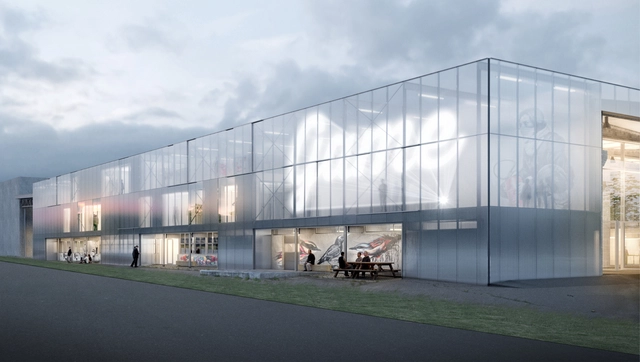
Bjarke Ingels Group and Norwegian manufacturer Vestre have unveiled The Plus, a new project set to become the world’s most sustainable furniture factory. Sited in Magnor, Norway, the factory was envisioned as a village for a community dedicated to the clean, carbon neutral fabrication of urban and social furniture. The Plus aims to be a global destination for sustainable architecture and high-efficiency production.
Netflix released ten of its documentary films, shorts and docuseries free on YouTube for anyone to watch. Included in the set is Abstract: The Art of Design, exploring "the most creative designers" from various fields. The first season of this series goes into the the art, science and philosophy of design. Back in 2017, Netflix launched the documentary series with the aim of demonstrating how design influences all aspects of our lives.
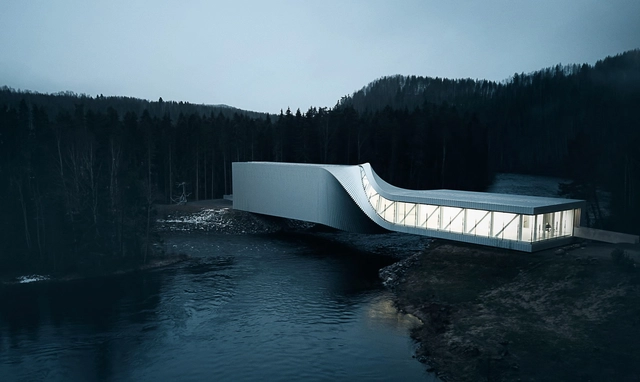
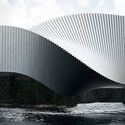
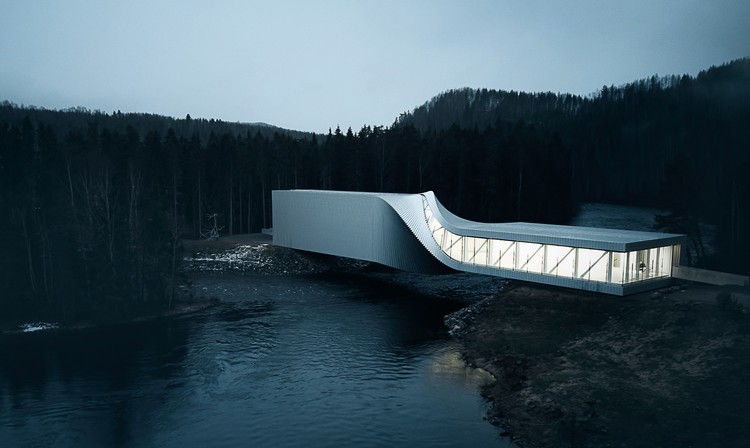
The new Twist Museum by Bjarke Ingels Group is open in Norway. Traversing the winding Randselva river, the inhabitable bridge is torqued at its center, forming a new journey and art piece within the Kistefos Sculpture Park in Jevnaker. The project was recently captured through a series of images by photographer Jacob Due. The photos explore the museum's formal approach and place the design in its larger natural context.
In 2012, Hurricane Sandy struck the eastern coastline of the United States and caused a level of flooding and destruction that was unprecedented for a major, densely populated city like New York. Storm surges brought a terrifying amount of water to the city streets, tunnels and subways; the National Ocean Service reported a 9.4-foot surge over Battery Park. Essential infrastructure was damaged in many areas, homes were flooded and people were trapped.
Highlighting and promoting architecture and design that impacts the educational field, the Design that Educates Awards revealed its list of winners for 2020. A collaboration between Laka Foundation and Solarlux GmbH, this year’s competition theme was inspired by the “Educating Buildings” research paper of Dr. Peter Kuczia.
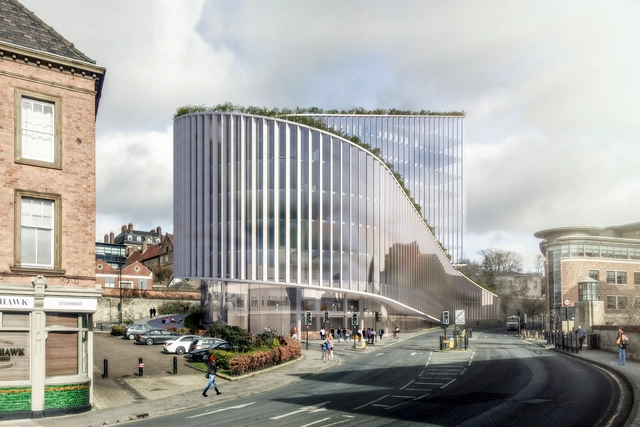
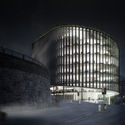
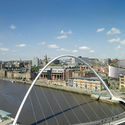
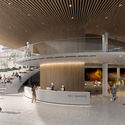
BIG has just released images of No 1 Quayside, its latest office building in Newcastle. Designed in collaboration with local studio Xsite Architecture, the project’s curvature is directly inspired by the bridges over the River Tyne and the sloping neighboring hills.
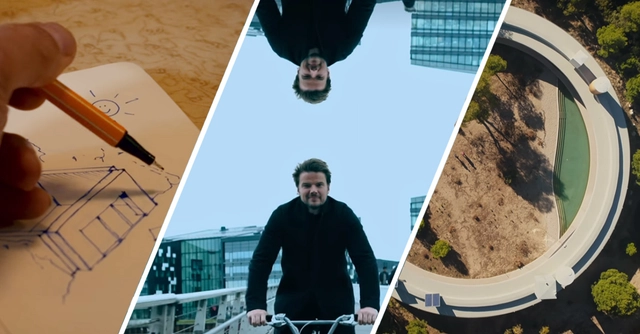
Copenhagen-based architect Bjarke Ingels is not one to shy away from big ideas. Founder of the aptly named BIG (Bjarke Ingels Group), he eschews cohesive style in favor of flexible urban environments — something he believes is vital in a constantly changing world. In a new video produced for the Time Space Existence video series by PLANE -- SITE, Ingels unpacks his approach to design, incorporating humor, surprise and sustainability.
Open More Doors is a section by ArchDaily and the MINI Clubman that takes you behind the scenes of the world’s most innovative offices through exciting video interviews and an exclusive photo gallery featuring each studio’s workspace.
In this installment of the series, we talked with Kai-Uwe Bergmann, a partner at Bjarke Ingels Group (BIG). Despite the size and fame of the firm – BIG has around 500 employees and maintains offices in Copenhagen, New York, Barcelona, and London – he emphasized camaraderie and connection as the most defining characteristics of the company. These traits are doubly emphasized in the open, nonhierarchical layouts of their offices.
https://www.archdaily.com/932400/open-more-doors-bjarke-ingels-groupLilly Cao
Bjarke Ingels is one of the most well-known architects of our time. During a conversation in Copenhagen between Ingels and Sky-Frame, he discussed his point of view, creating reality, immense courage and the secret behind his unwavering pragmatism.
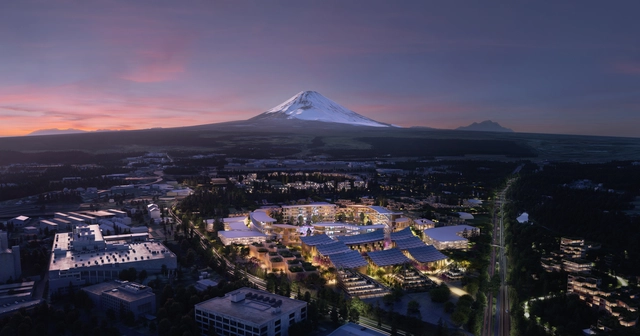
BIG unveiled its latest intervention, the Toyota Woven City, the company's first venture in Japan. Nestled at the foothills of Mt. Fuji, the project, in collaboration with Toyota Motor Corporation, is the world’s first urban incubator pushing forward the development and progress of mobility.
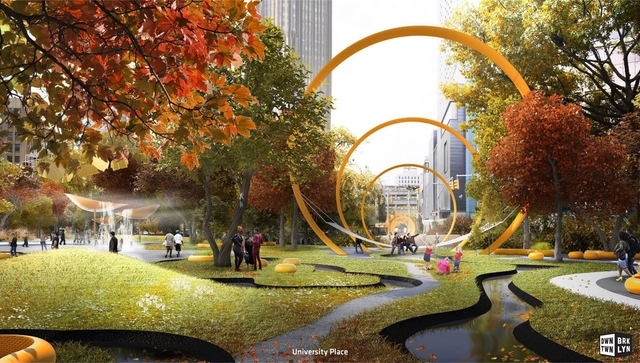
Bjarke Ingels Group and WXY architecture + urban design, in collaboration with the Downtown Brooklyn Partnership, imagined a new future for Downtown Brooklyn. The proposal introduces a greener, safer approach for a pedestrian-friendly neighborhood.
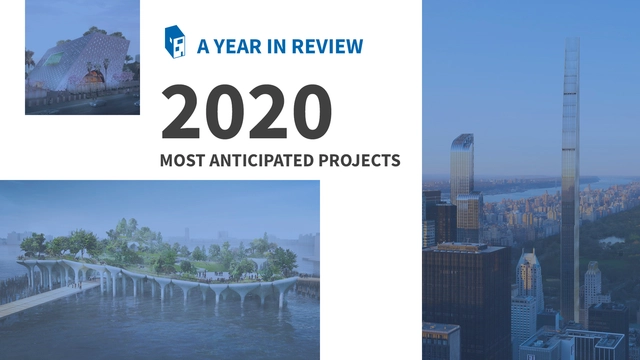
As 2019 winds down, we're taking a look ahead to the projects we're most looking forward to in 2020. With a mix of cultural and commercial programs, the designs are located across five continents, with many under construction for multiple years. Designed across a wide range of scales, they represent a mix of interconnected landscapes, museums, and the world's newest skyscrapers.
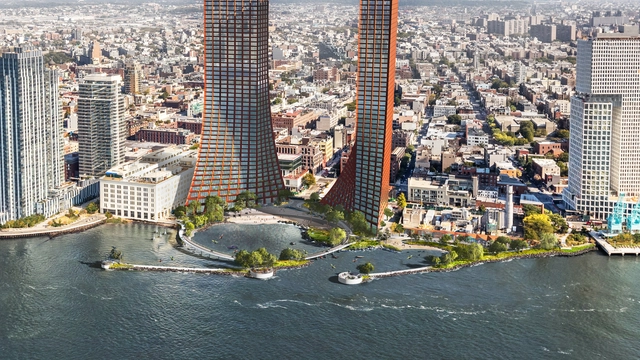
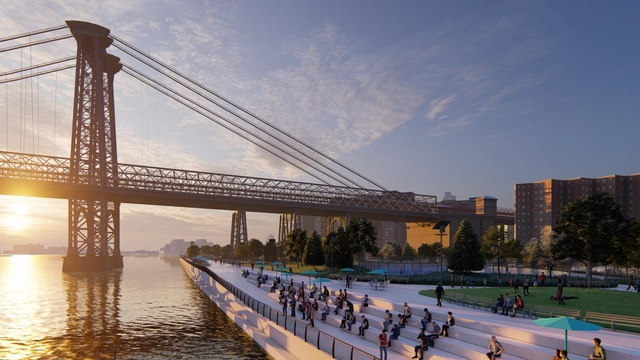
Two Trees Management Company, a New York-based real estate development firm, has presented a master plan for the Northern Brooklyn waterfront, a new approach to urban resiliency. Designed by BIG and Field Operations, the project puts in place a mixed-use development and a resilient park.















.jpg?1584441338&format=webp&width=640&height=580)


_9372.jpg?1579675860&format=webp&width=640&height=580)
_9441.jpg?1579675926 "© Laurian Ghinitoiu")
_9439.jpg?1579675907 "© Laurian Ghinitoiu")
_9550.jpg?1579676083 "© Laurian Ghinitoiu")
_9372.jpg?1579675860 "© Laurian Ghinitoiu")
_9372.jpg?1579675860)