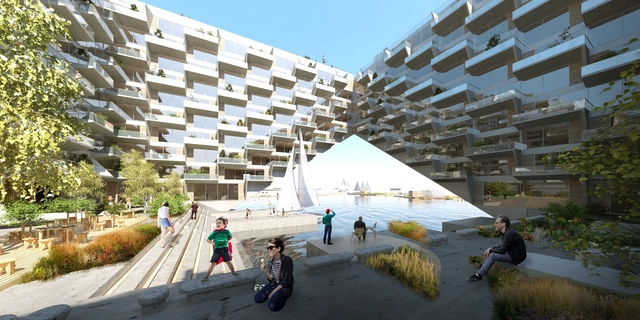
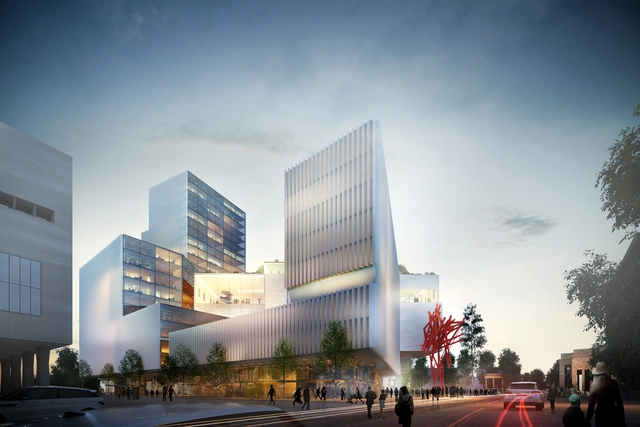
BIG and Barcode Architects have been selected as the winning team in a competition to design a new mixed-use building in the emerging district of IJburg Steigereiland in Amsterdam. To be known as Sluishuis (Lock House), the building will serve as a new icon connecting the neighborhood to Amsterdam’s historic center while providing 380 zero-energy residences, 4,000 square meters of commercial and public space, and a marina with space for up to 30 houseboats.
JAJA Architects has been announced as the winners of an open international competition to design a new parish church in the Sydhavnen (South Harbor) district of Copenhagen. When completed, it will be the first new church built in Copenhagen since 1989.
The competition, organized by The Danish Association of Architects, sought proposals for a 3,200 square meter church to be located on a waterfront site in the revitalized district of Sydhavnen that could be used for a range of religious, social, cultural and musical events. Construction of the church is expected to be completed in 2019.
Continue reading to see the winning proposal as well as several additional entries.
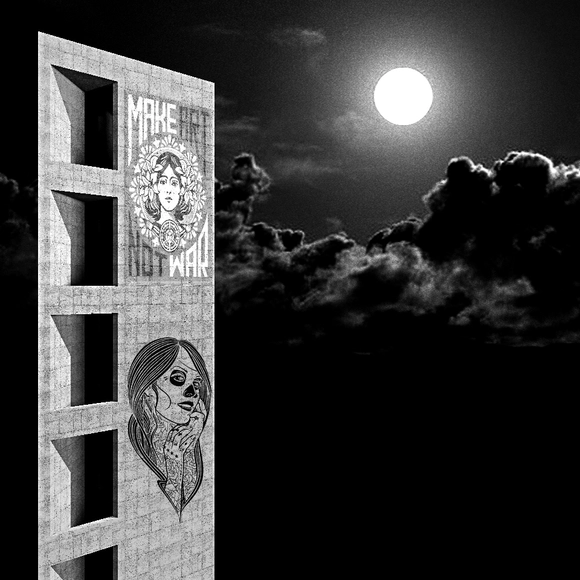
Architectural competition organizer Bee Breeders has announced the winners of the international Melbourne Tattoo Academy competition, which sought to “recollect and [postulate] principles of architectural humanism in contemporary culture,” asking entrants to consider disciplinary introspection into spatial and material issues concerning culture, society, and individuality.
Successful entries to the competition thus challenged personal and social conceptions of the tattoo as an art form, as well as the cultural and philosophical implications of tattoos in architecture.
Notable among the relationships and juxtapositions established include: critiques on permanence and longevity; the irreversible transformation of flesh and nature; correlation between graphic and retinal expression, graffiti and street art, the scenographic and decorated shed; lastly, body art as boutique parlor fashion, and high couture - noted the compatition organisers.
The winners of the Melbourne Tattoo Academy competition are:
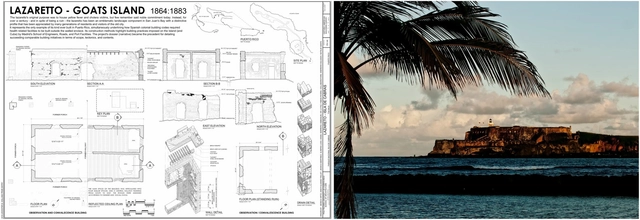
The Library of Congress has announced the winners of the 2016 Holland Prize, which recognizes the best single-sheet, measured drawing of a historic building, site, or structure, completed to the standards of the Historic American Building Survey (HABS), Historic American Engineering Record (HAER), or the Historic American Landscapes Survey (HALS).
The prize is awarded annually to “increase awareness, knowledge, and appreciation of historic resources throughout the United States while adding to the permanent HABS, HAER, and HALS collection at the LOC, and to encourage the submission of drawings among professionals and students. By requiring only a single sheet, the competition challenges the delineator to capture the essence of the site through the presentation of key features that reflect its significance.”
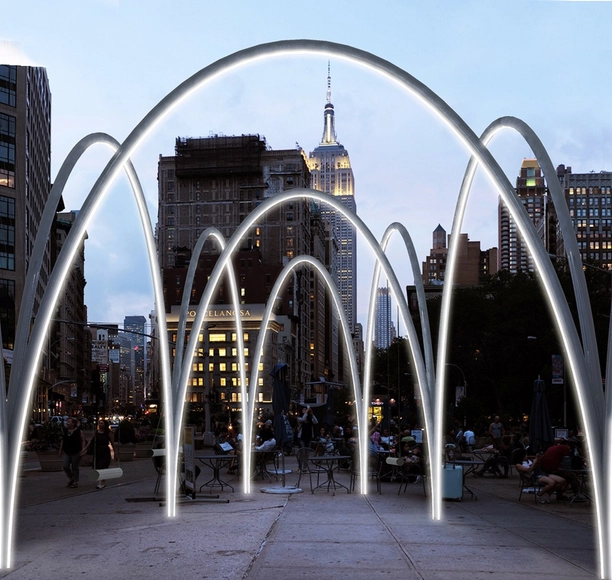
The winning proposal, titled “Flatiron Sky-Line,” consists of a series of 10 large contiguous arches, constructed out of white powder-coated steel tubes housing LED lights, from which an array of hammocks will be suspended to allow visitors to rest and take in the surrounding landmarks such as the Met Life Tower and Empire State Building.
Architectural research initiative arch out loud has announced the winners of Tokyo Vertical Cemetery, its international open ideas competition that sought solutions to Tokyo’s rising issue of burial space.
Sited in the Shinjuku district of Tokyo, the competition challenged architects and designers to develop proposals for a vertical cemetery that explores the relationship between life and death in the city while taking into account the cultural identity that is tied to death.
From 460 proposals representing 54 countries and six continents, one winner and three runners-up were selected by a jury including David Adjaye, Tom Wiscombe, Alison Killing, and more.
The winners of the Tokyo Vertical Cemetery competition are:
The American Institute of Architects (AIA) has selected this year's winners for the TAP/CCA Innovation Award, which highlights new practices and technologies that advance project delivery and life-cycle management of buildings. Categories for the awards, conferred by the AIA's Technology in Architectural Practice (TAP) Knowledge Community and the Construction Contract Administration (CCA) Knowledge Community), include Stellar Design, Project Delivery & Construction Administration Excellence, Academic Program/Curriculum Development, and Exemplary Use in a Small Firm. Voting is open from now until November 18th for favorite projects among the winners.
109 Architectes has released its proposal for the Beirut Museum of Modern Art (BeMA), for which a competition was recently held. The proposal was shortlisted, but did not ultimately win. In this proposal, BeMA is a box—“a generic form that belongs to everyone”—based on a scene in The Little Prince, where a traveler is asked to draw a sheep. The Prince rejects each sheep drawing until the traveler draws a box, inside of which a sheep is hidden. “The cube is a neutral form in the Little Prince’s search for identity. Within it, he sees what he wants to see.”
Within this generic box, visitors will thus be able to project their views of Beirut—the city’s chaos, diversity, creativity, history, streets, people, and more.
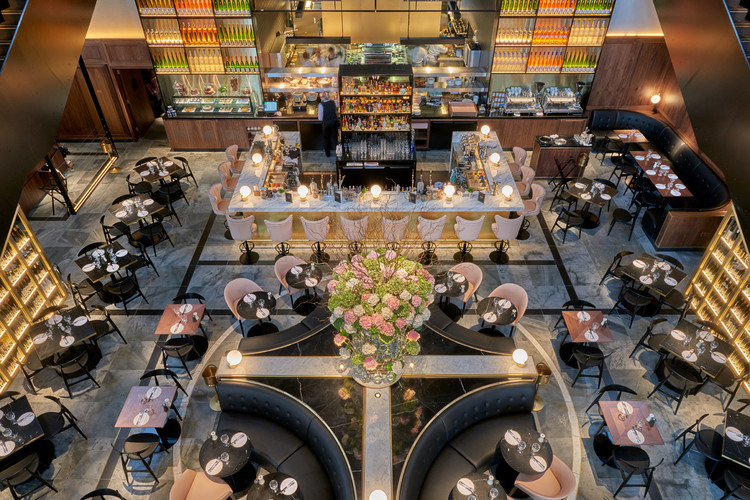
The winners of the 2016 Restaurant & Bar Design Awards have been announced. Now in its eighth year, the global competition seeks the best of food and beverage spaces, and “covers every imaginable space, from ships to airports, museums to burger vans, and from revered Michelin-starred establishments to the fleeting dynamism of pop-ups.”
This edition of the annual Awards attracted 1,000 entries from the UK and 70 other countries, and was judged by a panel of influential design personalities.
The winners of the 2016 Restaurant & Bar Design Awards are:
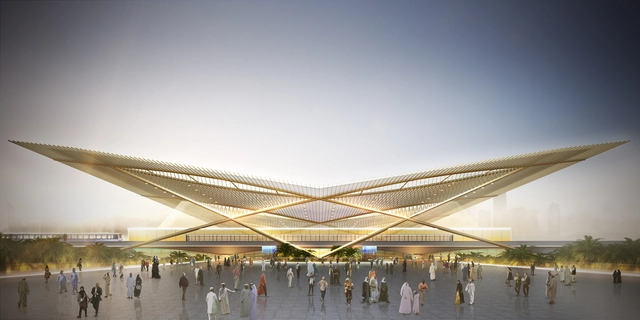
Working in collaboration with global engineer CH2M, Alstom, and Acciona and Gulermack, the firm was selected ahead of ten rival bids for the high-profile project, which will connect Nakheel Harbor & Tower with the World’s Fair site.
The winning proposal, entitled Elytra, is an “eye-catching, cutting-edge, [and] unconventional” design that will tower over Moscow’s Tverskoy District, an area which features a burgeoning artistic scene.
Inspired by the forewings of insects—called elytra—the project opens upwards as a protective shell, and will feature both public and private space.
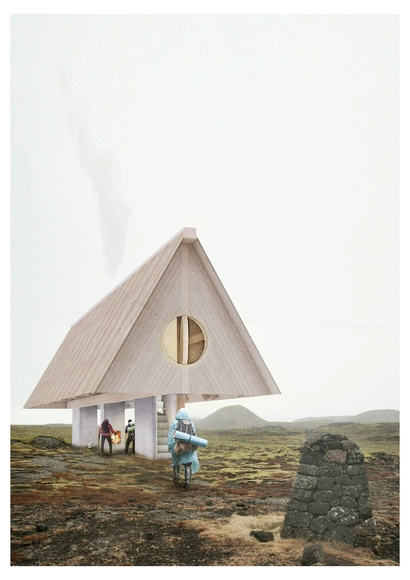
Architecture competition organizer Bee Breeders has announced the winners of the international Iceland Trekking Cabins competition, which called for entries to design a cabin with provision for enclosure, place, and social collectivity. As a structure for nomads and backpackers, Iceland Trekking Cabins are associated with cultural folklore and exist within the context of fjords, lava fields, glaciers, mountains, and the respective trekking ethos.
The competition furthermore sought projects that are “a supple and dexterous yet protected architecture, sensitive to the landscape though guarded against its severity, accommodating for the community, but in the company of strangers.”
The winners of the Iceland Trekking Cabins Competition are:
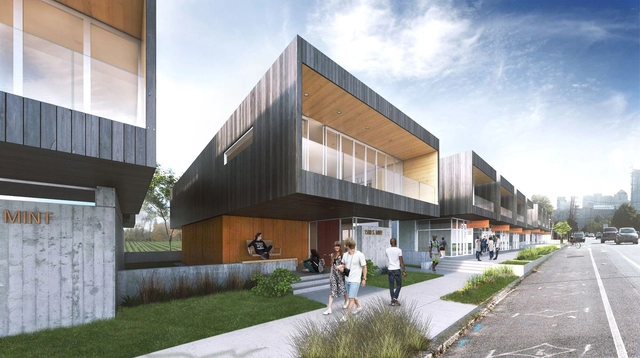
Clark Nexsen has won the international Activate Urban Housing Design Competition with its proposal for an urban dwelling on South Mint Street in downtown Charlotte, North Carolina. The design, entitled Mint, focuses on connectivity and neighborhood and includes residential, retail, and open green spaces.
Conceived as a catalyst for a culinary district, Mint aims to create a new urban living and working space, in which the connectivity of food-centered entrepreneurial enterprises fosters a sense of community.
feld72 has won the competition for the design of the Neu Leopoldau, a Youth Living residential complex in Leopoldau, a post-industrial area on the outskirts of Vienna. Based on the idea of creating community, the project utilizes overlaying, staggered, and connected spaces and communication areas to facilitate the feeling of a village.
Courtesy of University of Washington: Buddy Burkhalter, Mingjun Yin, Connor Irick, Richard Mohler and Elizabeth Golden
The Association of Collegiate Schools of Architecture (ACSA) has announced the winners of the Timber in the City: Urban Habitats Competition, a student competition exploring wood as an innovative building material. Out of more than 850 architectural student entries, three winners have been selected, along with two honorable mentions, with prizes totaling $40,000.
The competition focused on a site in the Lower East Side of Manhattan, and asked for designs for inhabitation, repose, recreation, and local small-scale commercial exchange, all while embracing the possibilities of wood and a variety of wood technologies.
Today, timber is being used in new, innovative ways to help address the economic and environmental challenges of the build environment,” said Cees de Jager, executive director of BSLC. “This competition brought to life the way the design community is recognizing the benefits of wood–from reduced economic and environmental impact to enhanced aesthetic value and structural performance–to design buildings and communities of the future.
The winners of the Timber in the City: Urban Habitats Competition are:
Courtesy of Selyong Kim, Yongwon Kwon, Seongyen Hwang, and Wonyang Architecture
The collaboration of Seiyong Kim, Yongwon Kwon, Sungyeon Hwang and Wonyang Architecture has won second place in the International Ideas Competition for Establishing Busan Station as The Cub of Creative Economy in Busan, Korea. The competition sought out proposals to revitalize the original downtown area, Busan Station is the starting point for a larger Busan North Port redevelopment project.
MOR Architects has won first prize in the competition to design the Konaki Averof Cultural Center in Thessaly, Greece. The competition sought out proposals to convert an existing complex with historic importance into a modern socio-cultural multiplex.
In an effort to reinterpret the relationship between the building and its urban environment, the winning proposal reintroduces the horizontality of the landscape, before human intervention.
The design not only provides maintenance and restoration of the existing external shells of the complex but additionally creates a “new, free-standing longitudinal roof with extensive cantilevers on both sides.”
Sponsored by Queens Borough President Melinda Katz, the competition called for creative ideas to reimagine Philip Johnson’s New York State Pavilion, a “forgotten star” of the 1964-65 World’s Fair.