At the heart of it, architecture is an inter-disciplinary profession. Ranging from structural engineers to quantity surveyors, a design project thrives from the collaboration of individuals from various fields of work. An often-overlooked connection is the link between the fields of architecture and archaeology, which in more ways than one have a lot in common. In a time of increased awareness on issues of sustainability and heritage, the expertise present in the field of archaeology plays a vital part in the preservation of architectural landmarks of historical significance. This expertise can also play a significant part in creating sensitive architectural interventions suitable for their context, contemporary in their design while responding to historical precedents.
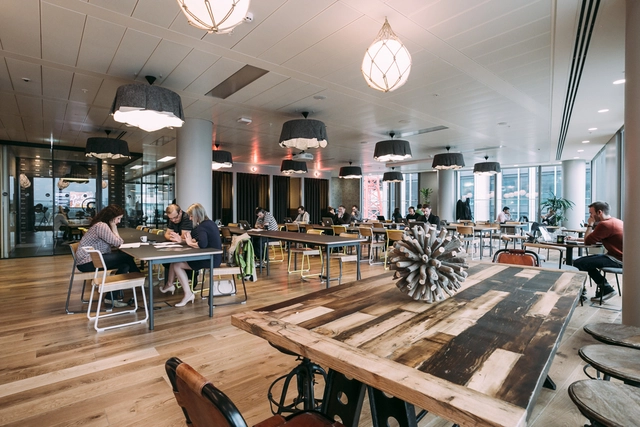
As we begin to emerge from the COVID-19 pandemic, there has been much speculation and debate about whether we will return to our old habits of working in the office 5 days a week, or if working from home creates equal or greater productivity. However, many believe that the future of the workforce will largely be focused on a balance between in-person and in-office working, and a form of remote working, that summates into a new, hybrid model. But if you’re not at home, and you’re not working, then you must be somewhere else- exploring the true in-between of a public and a private space. Enter the concept of the “third” place, which is used to describe everything from coffee shops to banks, and even co-working spaces. If you’ve ever studied for an exam at a bookstore, or even dropped into an airport restaurant to catch up on some work, then you too, have visited a “third” place.
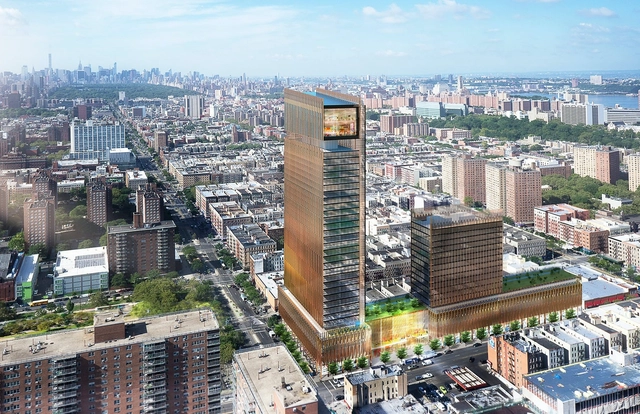
SHoP Architects has designed a new mixed-used development and tower that will also house the Museum of Civil Rights in West Harlem. Combined, the project could total nearly one million square feet of office, residential, and retail space with the cultural program. SHoP submitted a draft scope of work for the project, dubbed One45, that was made in collaboration with Judge Jonathan Lippman and Reverend Al Sharpton.
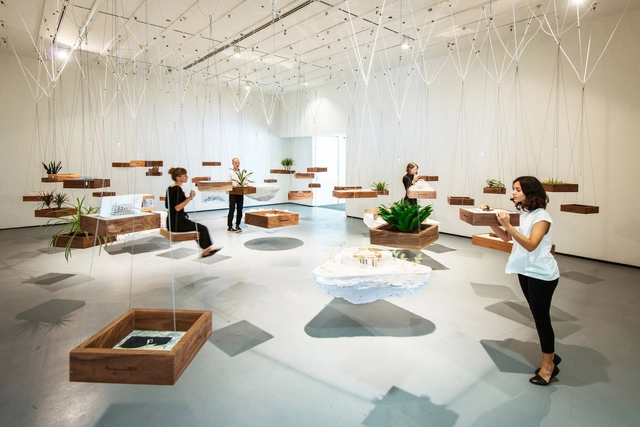
New Investigations In Collective Form, 2018. Image Courtesy of The Open Workshop
The ChicagoArchitecture Biennial (CAB) has announced the list of contributors for its 2021 edition The AvailableCity, selected by Artistic Director David Brown. Bringing design perspectives from around the world, the list of 29 contributors includes the global perception of cities such as Cape Town, Caracas, Chicago, Copenhagen, Dublin, Paris, Basel, and Tokyo.
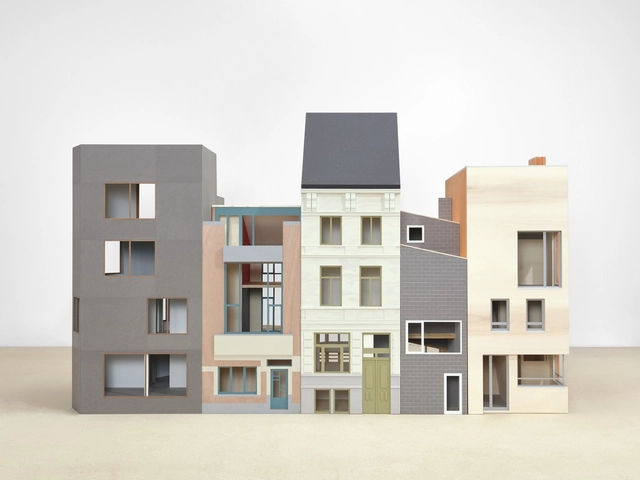
Titled "American Framing", the United States pavilion at the 17th International Architecture Exhibition – La Biennale di Venezia, will explore the omnipresence and creative power of wood-framed construction in American architecture, an overlooked structural element. Curated by Paul Andersen and Paul Preissner, the exhibition will be on display at the Giardini della Biennale from May 22 through November 21, 2021.
The Fundació Enric Miralles has launched MIRALLES, a series of exhibitions and events celebrating the work of the influential Catalan architect, whose passing marked twenty years in 2020. Curated by Benedetta Tagliabue and Joan Roig i Duran, the program will unfold over the course of this year in different emblematic venues in Barcelona. The first three exhibitions of the circuit inaugurated this month showcase the multiple facets of Enric Miralles through archival materials ranging from drawings and collages to photography and models, exploring his legacy in architecture and artistic creation.
The distribution of natural light, improved ventilation, and the propensity to connect living spaces with the outdoors while maintaining the privacy of the inhabitants have made courtyards a go-to in architectural design around the world over the centuries.
Courtyards are characterized as outdoor or semi-outdoor spaces that are enclosed within the walls of a house or building.
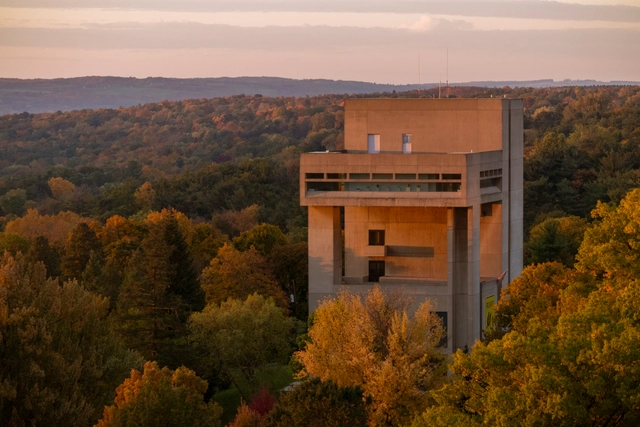
On the week commemorating American-Chinese architect I.M Pei’s birthday, Delhi-based photographer and photojournalist, Nipun Prabhakar, has shared with us a series of images of I.M Pei & Partners’ building, the Herbert F. Johnson Museum of Art. The firm was commissioned in 1968 by Cornell University to build the university’s museum that would also serve as a teaching facility and cultural center for the educational community. The building was completed in 1973 and was awarded the American Institute of Architects Honor Award in 1975.
Two years ago, Nathaniel Rich published Losing Earth, his account of the pivotal decade from 1979 to 1989 when the political consensus around climate change somewhat miraculously formed and then collapsed, hardening into an impasse that’s now more than three decades old. Though not explicitly a sequel, Rich’s new book, Second Nature: Scenes From a World Remade, is a follow-up of sorts.
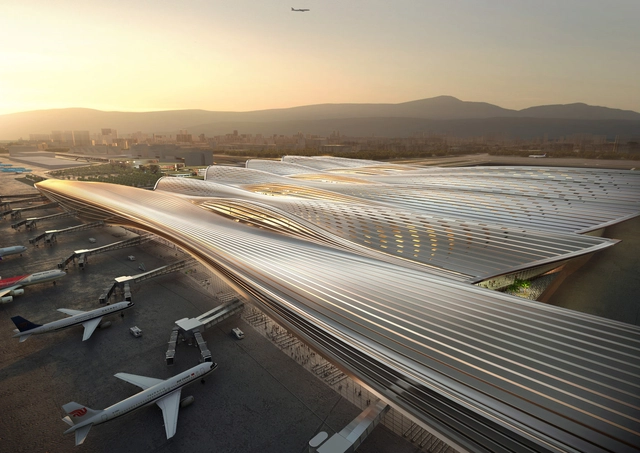
In a competition organized by Shenzhen Airport, Rogers Stirk Harbour + Partners (RSHP) and China Northeast Architectural Design & Research Institute (CNADRI) have won a competition to design the Terminal 4 Bao’an International Airport in Shenzhen, China. The winning design offers a new 400,000 sqm building with connections to existing and new transport infrastructure, as well as a space that promotes passenger interaction and wellbeing, all while maintaining a safe post-pandemic environment.
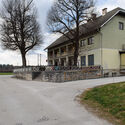
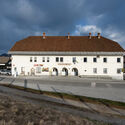
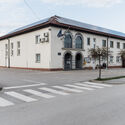
Slovenia's contribution to the 17th Venice Architecture Biennale explores interior public spaces as vital social infrastructure through the lens of the local cooperative centre typology. Titled "The Common in Community", the exhibition curated by Blaž Babnik Romaniuk, Martina Malešič, Rastko Pečar and Asta Vrečko details the architectural spaces of social interaction built after WWII in rural and suburban Slovenia, which continue to serve their purpose as local community centres to this day.
The Golden Lion for Lifetime Achievement of the 17th International Architecture Exhibition of La Biennale di Venezia was awarded to Spanish architect, educator, critic, and theoretician Rafael Moneo. Selected by the Board of Directors of La Biennale di Venezia, upon recommendation of the Curator of the Biennale Architettura 2021, Hashim Sarkis, the acknowledgment will be awarded to the architect on Saturday, May 22nd, 2021 together with the Special Golden Lion for Lifetime Achievement in memoriam to Lina Bo Bardi.
“No, I’m not homeless. I’m just houseless. Not the same thing, right?" Questioning the notion of home and house, Nomadland tells the story of a sixty-year-old woman who loses everything during the great recession, leaving her hometown after the collapse of the sole industry that supported the rural settlement and the death of her husband. She decides consequently to embark on a journey and experience life as a modern-day nomad, setting off in her van through the vast landscape of the American West.
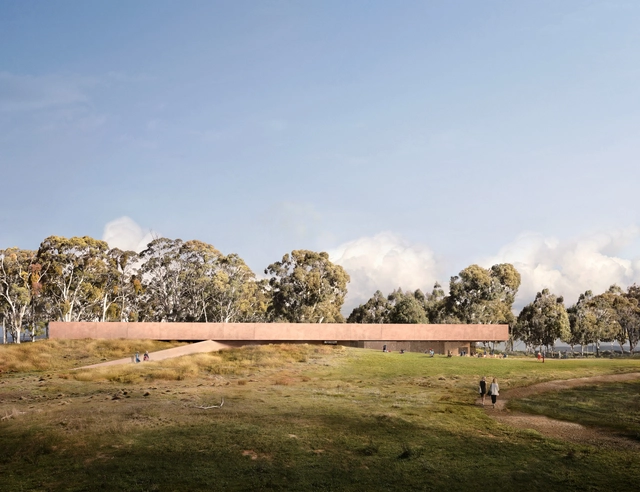
The internationally-acclaimed architecture firm Snøhetta has recently been selected to design two new art spaces in Australia and United States. Snøhetta will create the new Heysen Art Gallery in Adelaide- a rammed earth structure blending into the landscape and housing the works of renowned artists Hans and Nora Heysen. The studio was also selected to lead the expansion and re-design project for Dartmouth College Hopkins Center for the Arts, a vital creative hub for the New England Region.
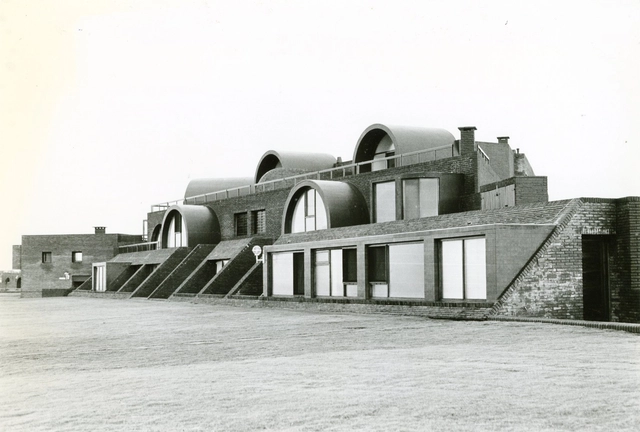
Designed in the late 70s by MSGSSV, the Terraces of Manantiales (Terrazas de Manantiales) is a summer house complex by the Atlantic Ocean built in Punta del Este, Uruguay.
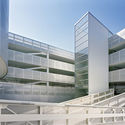
In theory, parking spaces serve only one function: park a car safely until it is used again, and in terms of design, car garages are flexible and straightforward, requiring minimal design interventions. However, parking spaces nowadays are no longer considered one-function buildings. The emptier the space, the more potential it has to integrate additional functions. Architects and urban planners have redefined traditional parking lots, adding recreational and commercial facilities to the structure. Instead of a typical structured grid plan with yellow and white markings on the floor, we are now seeing inviting structures that incorporate green facades and rooftop playgrounds, car washes, cafeterias, and work/study zones.
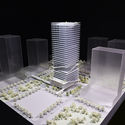
Ennead Architects have won the international competition to design a dynamic 32-floor commercial tower in the heart of Shenzhen’s high-tech Nanshan District. The architecture studio’s aim was to create a platform that “embraces creative exchange and the sharing of human experiences and ideas”, so they developed a design that offers a flexible working environment with a subtle use of color and materials, complimenting the spatial and functional needs of Chinese tech company ByteDance. The tower, which is expected to be completed by 2024, will employ co-working spaces, commercial, and recreational facilities in a dynamic-looking structure overlooking Shenzhen Bay.

























.jpg?1619608987 "Columbia University Northwest Corner Building. Image. Image © Michael Moran Studio")

.jpg?1619608951 "Beirut Souks. Image © Bahaa Ghoussainy")













.jpg?1619505254&format=webp&width=640&height=580)
.jpg?1619505121 "© Ennead Architects")
.jpg?1619505163 "© Ennead Architects")

.jpg?1619505254)


