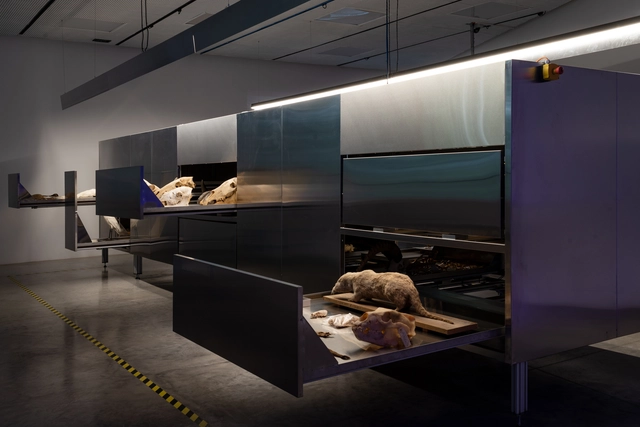
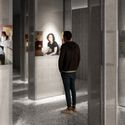
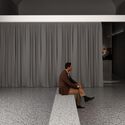
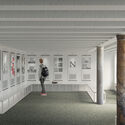
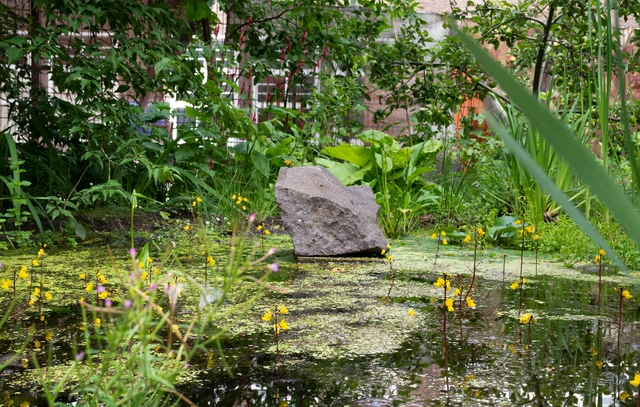
Israel’s Pavilion for the 17th Venice Architecture Biennale highlights the impact of intensive mechanized agriculture on landscapes and ecosystems, as well as the disruption caused to local communities. Titled Land. Milk. Honey and curated by an interdisciplinary team comprising Dan Hasson, Iddo Ginat, Rachel Gottesman, Yonatan Cohen and Tamar Novick, the exhibition portrays the fundamental changes experienced by the region through the stories of local animals, constructing a history of the 20th-century development.
The Ministry of Culture of the Government of Mexico and the National Institute of Fine Arts and Literature (INBAL) have unveiled the Mexican pavilion at the Venice Biennale 2021 entitled Displacements("Desplazamientos"), a curatorial work led by Isadora Hastings, Natalia de La Rosa, Mauricio Rocha, and Elena Tudela.
https://www.archdaily.com/961998/mexican-pavilion-at-the-2021-venice-biennale-explores-the-value-of-mexican-contemporary-architectureArchDaily Team
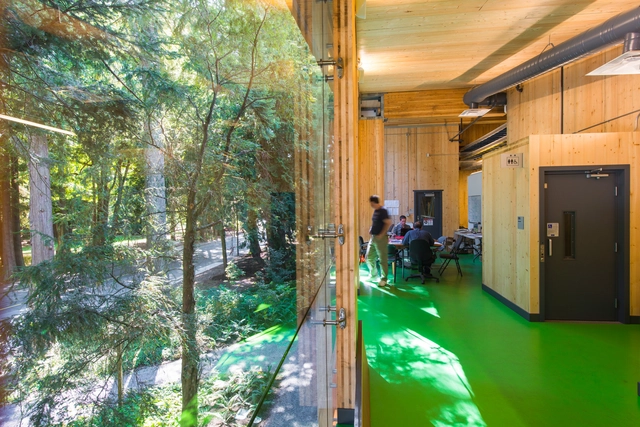
Yes, we know. We have been talking a lot about carbon. Not only here, but everywhere people seem to be discussing the greenhouse effect, carbon dioxide, fossil fuels, carbon sequestration, and several other seemingly esoteric terms that have increasingly permeated our daily lives. But why is carbon so important and why do we, as architects, architecture students, or architecture enthusiasts, have to care about something that seems so intangible?
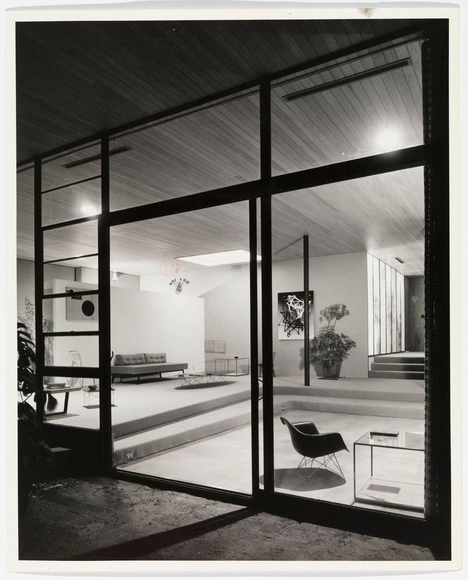
The Case Study Houses (1945-1966), sponsored by the Arts & Architecture Magazine and immortalized by Julius Shulman’s iconic black-and-white photographs, may be some of the most famous examples of modern American architecture in history. Designed to address the postwar housing crisis with quick construction and inexpensive materials, while simultaneously embracing the tenets of modernist design and advanced contemporary technology, the Case Study Houses were molded by their central focus on materials and structural design. While each of the homes were designed by different architects for a range of clients, these shared aims unified the many case study homes around several core aesthetic and structural strategies: open plans, simple volumes, panoramic windows, steel frames, and more. Although some of the Case Study Houses’ materials and strategies would become outdated in the following decades, these unique products and features would come to define a historic era of architectural design in the United States.
https://www.archdaily.com/961900/how-did-materials-shape-the-case-study-housesLilly Cao
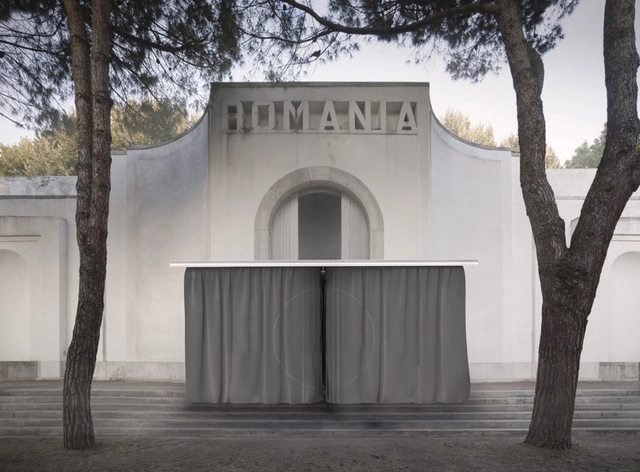
Romania’s contribution to the 17th Venice Architecture Biennale showcases a new perspective on mass migration, a phenomenon with a wide array of causes, ranking high on the international public agenda. Titled Fading Borders and curated by architects Irina Meliță and Ștefan Simion, the exhibition explores the challenges and opportunities of migration and its consequences on the built environment. Using Romania as a study case, where three million people have left the country in the last decade in pursuit of a better life abroad, the curatorial project frames a conversation around the role of architecture in the successful management of the migration phenomenon, as territorial boundaries continue to fade around the globe.
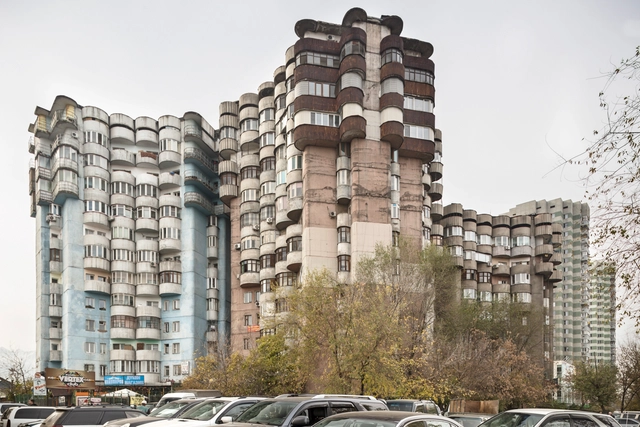
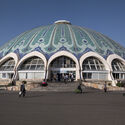
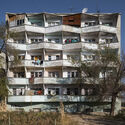
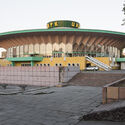
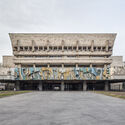
In the second half of the 20th century, Soviet architecture has spread a common aesthetic across highly diverse environments, being an integral part in promoting the totalitarian ideology that disregarded local cultures, envisioning a unified, homogenous society. Nevertheless, in practice, the architecture proved itself susceptible to adaptations and local influences, perhaps nowhere more than in Central Asia. The article looks at the architectural heritage of a geographical area largely excluded from the Western-centric narratives on Soviet Modernism, encouraging a re-reading of a layered and nuanced urban landscape, with images by Roberto Conte and Stefano Perego.
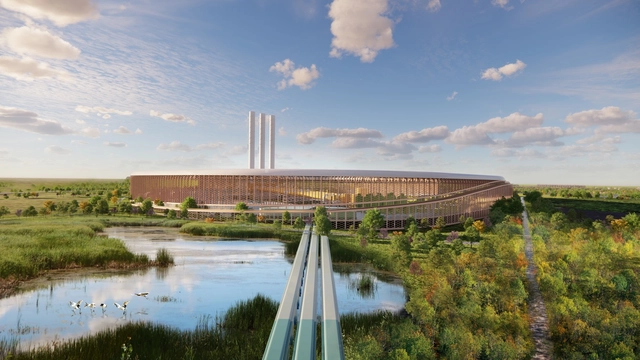
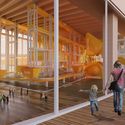
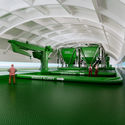
Award-winning architecture firm Bjarke Ingels Group has collaborated with lower-impact battery metals developer The Metals Company to reimagine a traditional metal production facility in a new contemporary and sustainable context. The firm designed a circular zero-solid-waste metallurgical plant that includes manufacturing, processing, and storage facilities, along with offices, visitor centers, and innovation facilities.
The Architecture Film Festival London, now at its third edition, fosters conversations around architecture, society and the built environment through the medium of film. Along with the International Film Competition, the 2021 programme, debuting on June 2nd and held online, will feature a collection of diverse thematic screenings, essays and events titled "Capsules", which offer a platform to multiple curatorial voices.
Videos
Toronto's Dundas and Ossington intersection, re-imagined as 1962 Baltimore by special effects studio MR. X for the film The Shape of Water. Image Courtesy of The Canadian Pavilion
Canada’s contribution to the 17th Venice Architecture Biennale explores Canadian cities’ established “career” in cinema as stand-ins for the world’s metropoles, raising questions of authenticity, architectural identity and the collective understanding of the built environment. Curated by David Theodore of McGill University and realized by Montréal architecture and design practice T B A / Thomas Balaban Architect, the exhibition Impostor Citieshighlights the diversity and versatility of Canada’s cityscapes as portrayed on film.
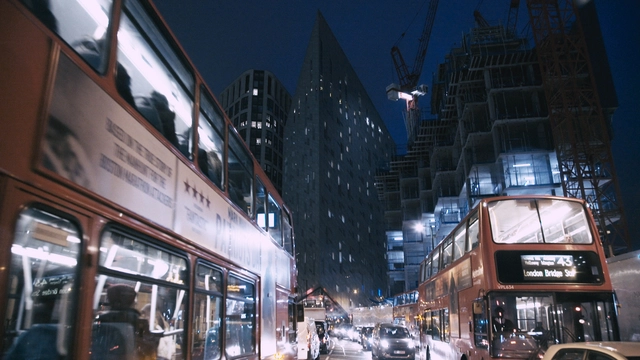
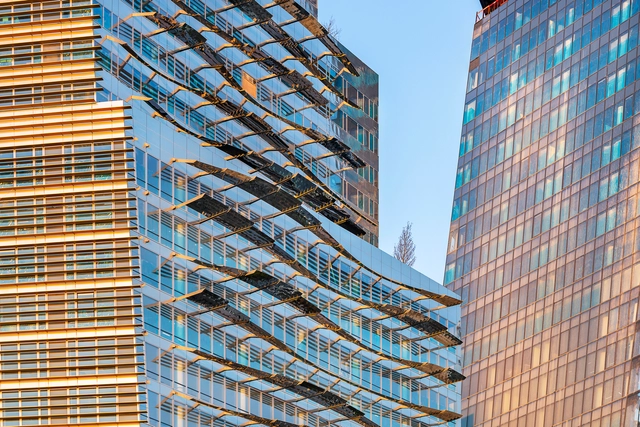
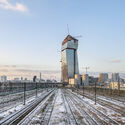
Carefully placed within the urban context and the product of searched perspectives and precise gestures, Ateliers Jean Nouvel's mixed-use project Tours Duo is set to become a landmark for Eastern Paris. Located close to the Paris ring boulevard and in the vicinity of a vast expanse of railway infrastructure, the project's site was the main driving point for the design, giving it its iconic shape. The project featuring two inclined towers nears completion, and photographer Jad Sylla shows the structures changing the Parisian skyline.
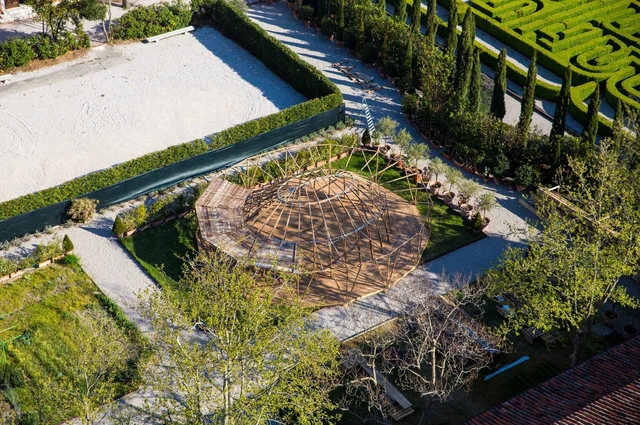
The Majlis undergoing construction at San Giorgio Maggiore. Image Courtesy of Caravane Foundation
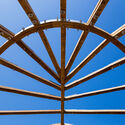
Part of the official collateral events of the 17th International Architecture Exhibition of la Biennale di Venezia, Caravane Earth Foundation will bring a unique bamboo Majlis, to the gardens of the Abbazia di San Giorgio Maggiore in Venice. Designed by internationally acclaimed bamboo architects Simón Vélez and Stefana Simic, the project will be on display from 22 May to 21 November 2021.
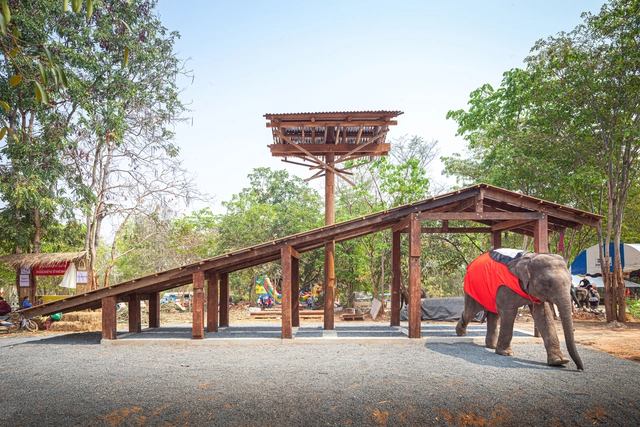
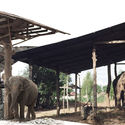
Titled "elephant", the Thai pavilion at the 17th International Architecture Exhibition - La Biennale di Venezia answers the question of how architecture can promote the way human beings and other species live together naturally and culturally based on the culture of Kuy and their elephants. Curated by Apiradee Kasemsook and designed by Boonserm Premtada of Bangkok Project Studio, the Thai pavilion will be on display at the Sale d’Armi, Arsenale, from May 22nd to November 21st.
A sneak peak of Uncertainty, the highlight of the Spanish Pavilion at the 2021 Biennale of Venice taking place from May 22 to November 21 of this year.
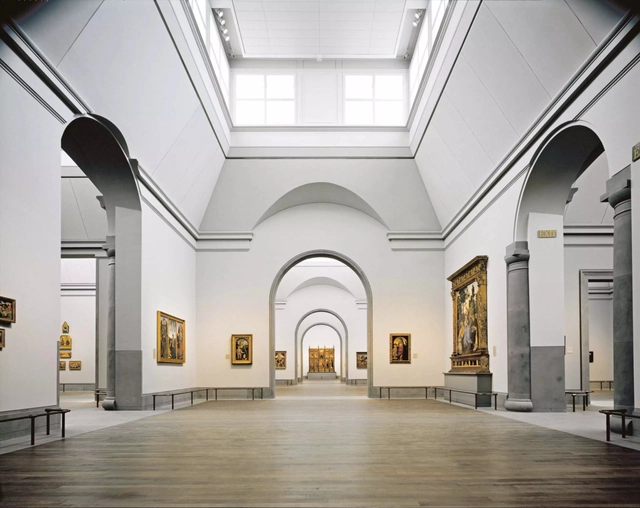
"Is a museum defined by its collection? Or by its architecture? In The Art Museum in Modern Times, Charles Saumarez Smith suggests it is both and still something more". Lauren McQuistion, an architectural designer and Ph.D. Candidate in the Constructed Environment at the University of Virginia School of Architecture discusses in her Architect's Newspaper piece, Saumarez's book, exploring the notion of a modern museum.
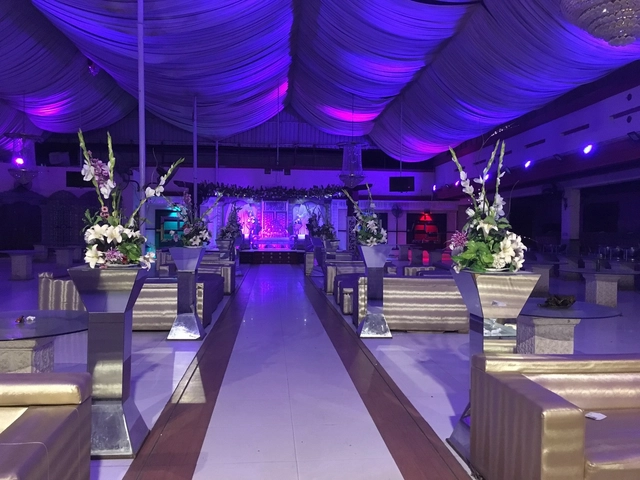
Titled "Mapping Festivities", the Pakistan Pavilion at the 17th International Architecture Exhibition – La Biennale di Venezia, explores the national wedding hall as an architectural typology of post-colonial Pakistan. Curated by Sara M. Anwar, the pavilion will be on display on the second floor of the Palazzo Mora from May 22nd until November 21st.
It would be an understatement to say that architecture is a profession that closely mirrors economic conditions. In this practice, we’ve all heard the stories or felt the experiences of recessions that were quickly followed by projects put on hold, a decreased pipeline of new business, and the unfortunate impact of layoffs and furloughs. The cyclical nature of the design field, paired with the pressure to meet the spatial needs for a growing global population in a time where the value of land has continued to sky-rocket means that architecture is naturally subjected to economic impacts in a significant way. But some economic theories predict that instead of the economy dictating the ebbs and flows of the design profession, architecture might be one of the influences causing economic downturns.