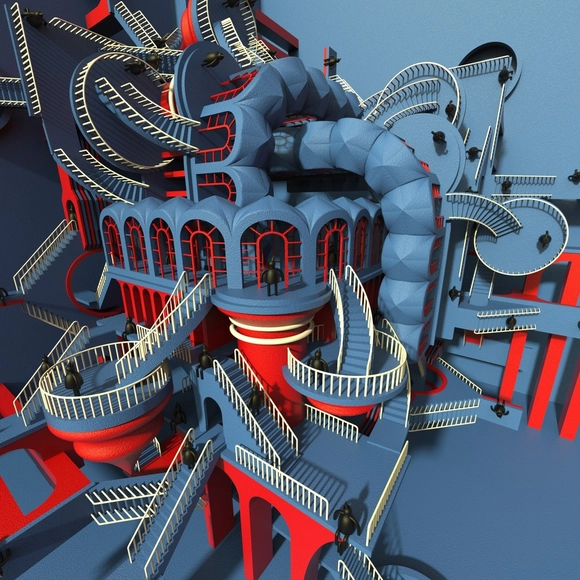
In this episode of “Behind the Scenes”, where we showcase the work of visionary artists and ask about their experiences beyond what is seen by the public, we are presenting Nicolás Sánchez: a designer from Pehuajo, Buenos Aires (Argentina). Nicolás defines himself as an eccentric person with a strong obsession with symmetry and mathematics applied to the objects and spaces that surround him, which awakens in him the curiosity of wanting to understand everything and to find the reason for things. Through his illustrations and animations, he transmits and shares everything he perceives and feels with playful, surreal, and impossible spaces.
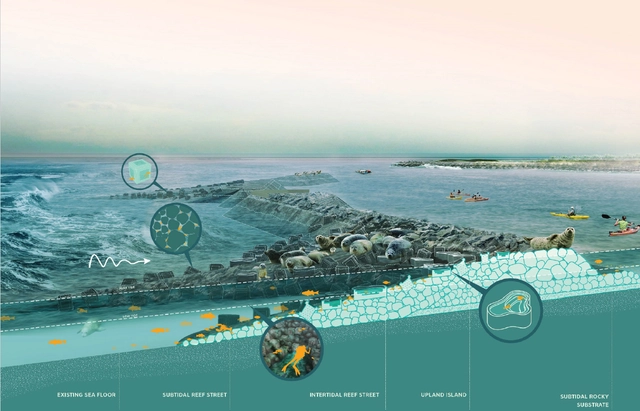
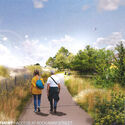
Living Breakwaters, Staten Island, NYC. Image Courtesy of SCRAPE
“Superstorm Sandy in 2012 was a wake-up call for NYC and made the city realize it needed to better prepare for climate change,” said Adrian Smith, FASLA, vice president at ASLA and team leader of Staten Island capital projects with NYC Parks. Due to storm surges from Sandy, “several people in Staten Island perished, and millions in property damage were sustained.”
On the 10th anniversary of Sandy, Smith, along with Pippa Brashear, ASLA, principal at SCAPE, and Donna Walcavage, FASLA, principal at Stantec, explained how designing with nature can lead to more resilient shoreline communities. During Climate Week NYC, they walked an online crowd of hundreds through two interconnected projects on the southwestern end of the island: Living Breakwaters and its companion on land — the Tottenville Shoreline Protection Project.
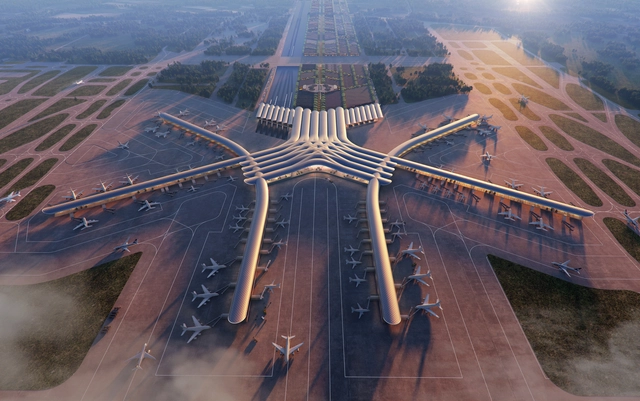
A Foster + Partners and Buro Happold consortium has been announced as the winners of the competition to design the new CPK airport, situated between Warsaw and Łódź, in Poland. The project is envisioned as a 21st-century transport interchange, bringing together air, rail, and road. The design seeks to strike a balance between operational efficiency, environmental responsibility, and a symbolic expression that reflects the country’s national identity. Initially, the airport will serve up to 40 million passengers but is planned to easily expand to meet the 65 million passengers target in 2060.
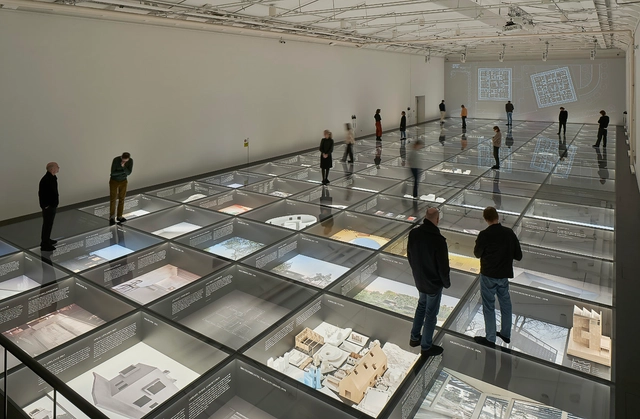
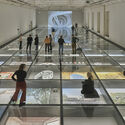
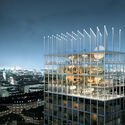
The Swedish architecture firm Tham & Videgård exhibits a broad selection of projects celebrating over twenty years in practice at the ArkDes—Centre for Architecture and Design in Stockholm, Sweden. For the first time, the studio’s work is being presented in its entirety, displaying in detail acclaimed buildings like the winning proposal for the Denfert art center in Paris and the 150-meter-tall +One Tower for the Swedish Exhibition in Gothenburg. From November 2022 to August 27, 2023, On: Architecture offers visitors a full-scale spatial experience involving models, new photography, and films – all set within a glass ground showroom.
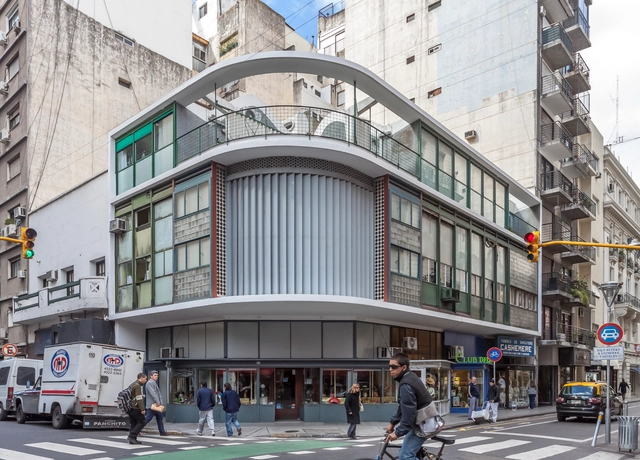
The building on the corner of Suipacha and Paraguay Streets in the city of Buenos Aires, designed by the Spanish architect Antonio Bonet, established from its realization the basis to begin certain reflections on international modern architecture in the Argentinian context of the 1930s.
A Hungarian proverb says "Aki tagadja a múltat, az nem talál jövőt", telling of the importance of using our past experiences to write our future, but balancing these two endless worlds – the traditions and culture of one, with the technology and innovation of the other – is often key to creating timeless design.
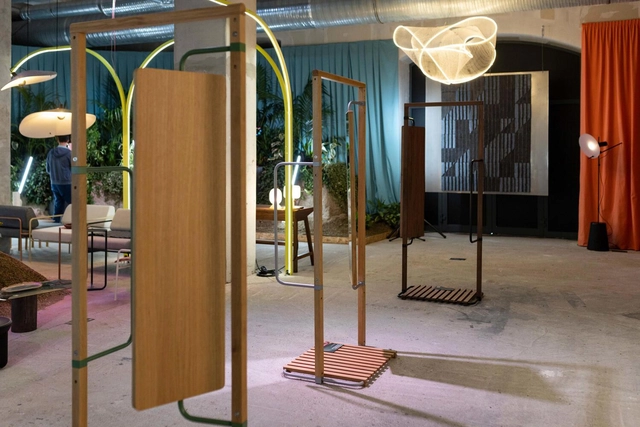
At the annual 360 Design Budapest event, Hungary’s most important cultural showcase of emerging and existing homegrown talent, the interconnectedness of both time and art inspired three key themes of storytelling (history and tradition), education (youthful talent and sustainability) and digitalization (technology and innovation).
Here are some of the standout designers, manufacturers, and their products from the week:
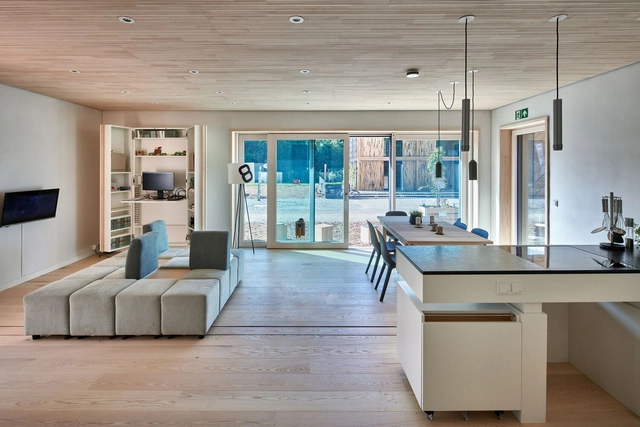
The motto of the Solar Decathlon Europe 21/22 was to convert and expand rather than to demolish and reconstruct. Recycling windows, using biodegradable materials for luminaires and connecting light with sensors represented just some innovative examples of the international university-level student competition in Wuppertal, Germany. For the first time, the competition presented an award for sustainable architectural lighting. This was a question of quality as much as quantity, and that applies equally to daylight and artificial light.
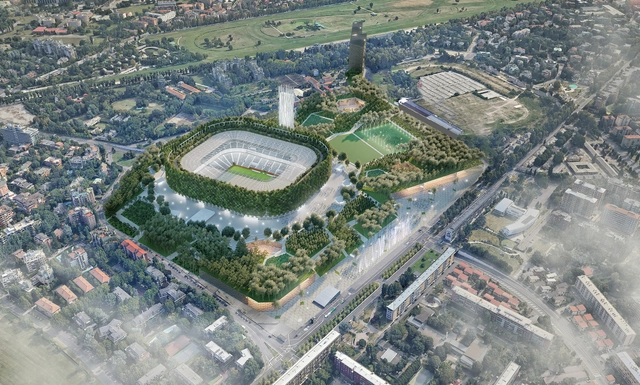
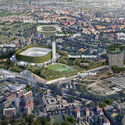
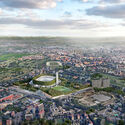
Stefano Boeri Architetti, together with a multidisciplinary team including ARUP, Fabio Novembre, and Balich Wonder Studio, has unveiled the design for the new Milan Stadium, named the International Forest Stadium. The project, located in the San Siro area of the city, was presented to the public on the occasion of the competition announced in 2019 by the Inter and Milan teams. The stadium is envisioned as an integral part of the “Sport and leisure district” system, an extensive masterplan measuring over 800 hectares, planned to transform the San Siro district into a center for excellence in the context of European sports.
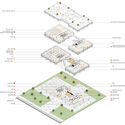
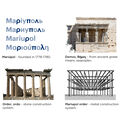
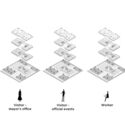
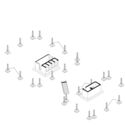
Emerging Ukrainian architecture firm NOVA - New Office of Vital Architecture- designed the new Mariupol City Hall as a proposal to reconstruct the city, almost devastated during the current war in Ukraine. The project seeks to open the discussion on urban democracy and civic life through architecture by replacing traditional hierarchical schemes with an open and accessible government building.
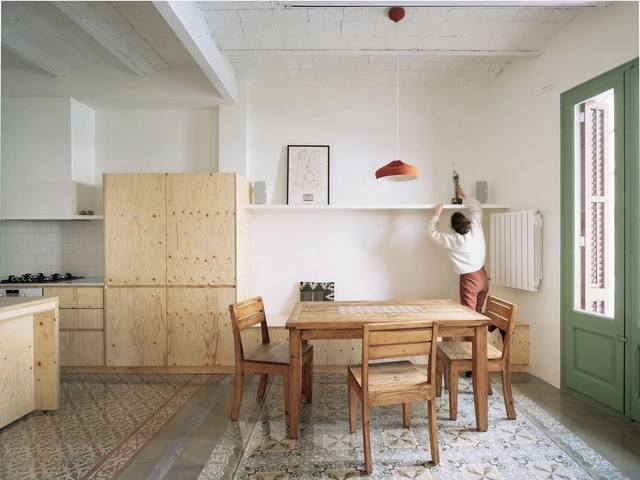
Reflecting on what the materials of the future will be like, we will talk about a material that is booming in Barcelona and which perhaps leads us to respond by suggesting that, as always, everything comes back.
For some years now, hydraulic mosaics have been back on trend, generating interest due to their high artisan value and their diverse designs, perfect for combining traditional environments with avant-garde details.
The architectural practice has always been rooted in what people now call “human-centered design”. The term, coined by Irish engineer Mike Cooley in his 1987 publication “Human-Centred Systems” describes a design approach around identifying people’s needs and solving the right problem with simple interventions. Architecture balances between being aesthetic art and practical design. With multiple collaborators and goals for the project, the needs of the end-user often get compromised in the design process. To help architects better design for people, new methodologies may be inspired by human-centered design techniques developed by user experience (UX) designers.
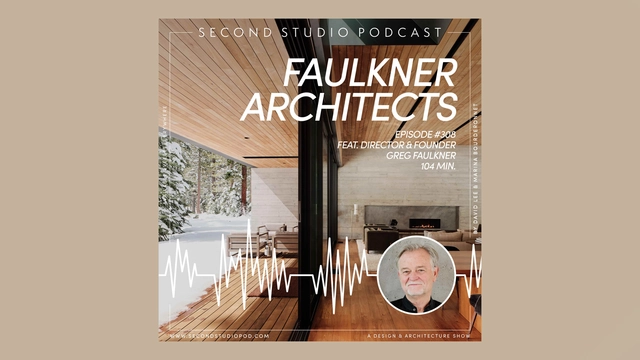
The Second Studio (formerly The Midnight Charette) is an explicit podcast about design, architecture, and the everyday. Hosted by Architects David Lee and Marina Bourderonnet, it features different creative professionals in unscripted conversations that allow for thoughtful takes and personal discussions.
A variety of subjects are covered with honesty and humor: some episodes are interviews, while others are tips for fellow designers, reviews of buildings and other projects, or casual explorations of everyday life and design. The Second Studio is also available on iTunes, Spotify, and YouTube.
This week David and Marina are joined by Architect Greg Faulkner, founder & director of Faulkner Architects to discuss his background as a design engineer in the aircraft industry; his tools and process; working with the site; his design philosophies and architectural truths; running and maintaining a small-sized practice; collaborating with Tom Kundig to design his house; and more.
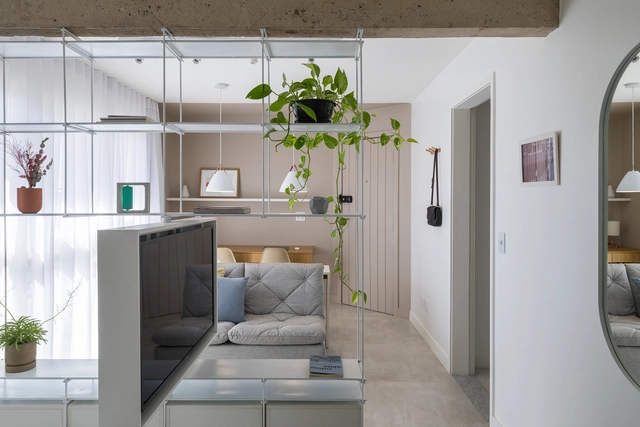
Designing a living room is not just about deciding on the sofa and rug set. Often, because it is the main environment of the house, it is connected with other programs of more public use, such as kitchens and offices - or even private, such as dormitories, in the case of apartments with a reduced area -, therefore, in order to conceive greater spatial flow, it is necessary to think of different strategies that help design a more comfortable and pleasant space.
Aranya Community Housing / Vastu-Shilpa Consultants . Image Courtesy of Vitra Design Museum
In almost every Indian language, a colloquial term for “family” - ghar wale in Hindi, for example - literally translates to “the ones in (my) house”. Traditionally, Indian homes would shelter generations of a family together under one roof, forming close-knit neighborhoods of relatives and friends. The residential architecture was therefore influenced by the needs of the joint family system. Spaces for social interaction are pivotal in collective housing, apart from structures that adapt to the changing needs of each family. The nuanced relationship between culture, traditions, and architecture beautifully manifests in the spatial syntax of Indian housing.
When developing a project, an architect needs to deal with numerous decisions: Does the building correspond with the client's requirements? Can the contractors build it without problems? Are the costs what were initially expected? Does the project have a good relationship with its surroundings? How will it age? To figure all of this out, the professional must take into account several issues that will both influence each other and directly affect the final product. Among these, the chosen materials and constructive techniques play an essential role, as these elements are what give shape to the designer's vision and can influence factors such as the accessibility or the environmental impact of a building.
However, being well-versed in all the options, advantages and disadvantages of each decision is a herculean task that demands resources, research and time - factors that are usually scarce in our profession. Under the motto “What is good architecture”, we have compiled a series of articles that exemplify best practices in the use of constructive materials and techniques, seeking to cover as much ground as possible for all types of questions:
Once Upon a Forest / OBMI. Image Courtesy of Dubai Design Week
One of the most significant cultural events in the Middle East, Dubai Design Week represents a platform that offers individuals and companies the opportunity to showcase their design experience and to open conversations about the most pressing issues of our times. Developed in a strategic partnership with Dubai Design District (d3), the event presents a series of immersive, large-scale installations that highlight the festival’s theme: Design with Impact.
This year’s program is focused on designing a sustainable future. To promote this, Dubai Design Week has invited international and regional architects and designers to create installations that demonstrate creative design thinking, to introduce innovative materials, and spark conversations about the ways in which design can have a positive impact on the environment.
Videos
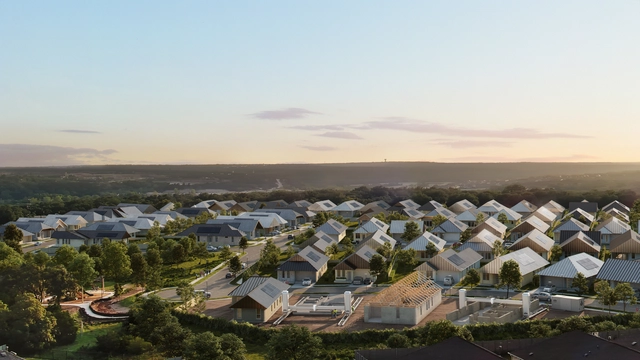
Concept Renders. Image Courtesy of ICON Build
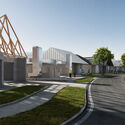
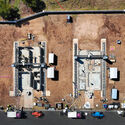
Pioneer in large-scale 3D printing, ICON announced the construction of a 3D-printed 100-Home Community co-designed by BIG – Bjarke Ingels Group and developed by Lennar. Located north of Austin, in the city of Georgetown, "The Genesis Collection at Wolf Ranch" will become the first and largest house estate in the world built by a fleet of robots integrating additive construction techniques.
Combining the digital possibilities of 3d printing with sustainable features at an affordable price, the project aims to support the housing crisis in Austin, one of the U.S.A's most dynamic and growing cities, home to the new Tesla Gigafactory and other giants such as Apple, Google, Microsoft, and Oracle.
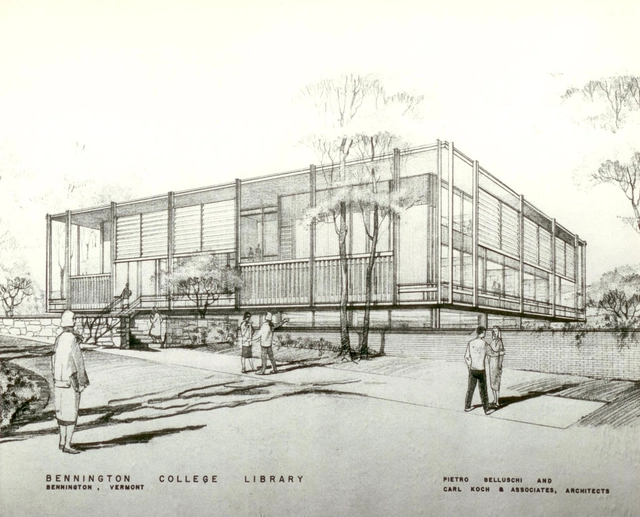
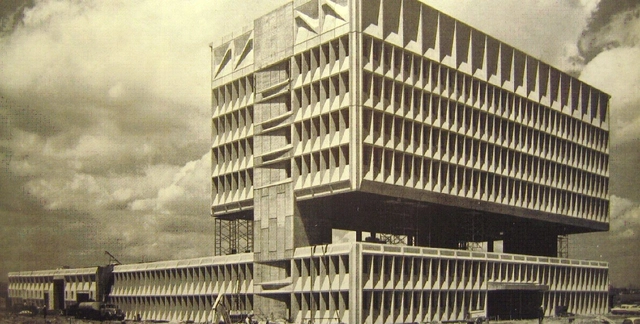
Theodore Prudon, the founding president of Docomomo US, recently stepped down as the organization’s head. (Robert Meckfessel is the new president.) “Docomomo” is shorthand for the group’s mission: the documentation and conservation of buildings, sites, and neighborhoods of the Modern movement. Prudon has had a storied career as a preservationist, architect, and educator, heading his own practice and teaching at Columbia University. In October, he was presented with the Connecticut Architecture Foundation’s Distinguished Leadership Award at the newly reborn Marcel Breuer building in New Haven, which began its life in 1970 as the Pirelli Tire Building and is now the Hotel Marcel (designed, planned, and developed by architect Bruce Redman Becker).
https://www.archdaily.com/992013/theodore-prudon-modernism-has-never-been-a-popular-movementMichael J. Crosbie