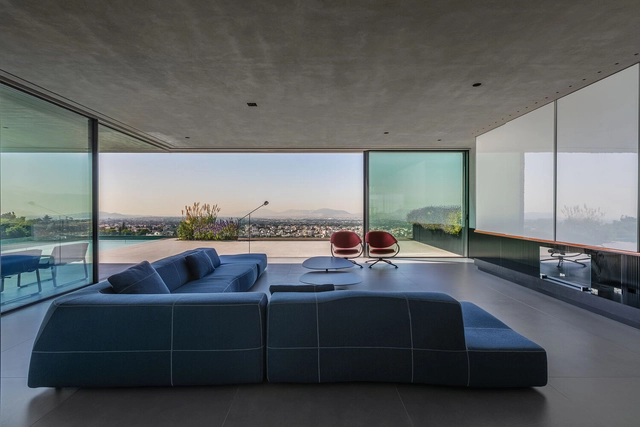
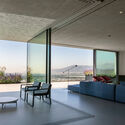
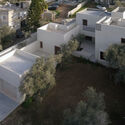
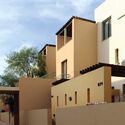
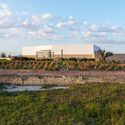
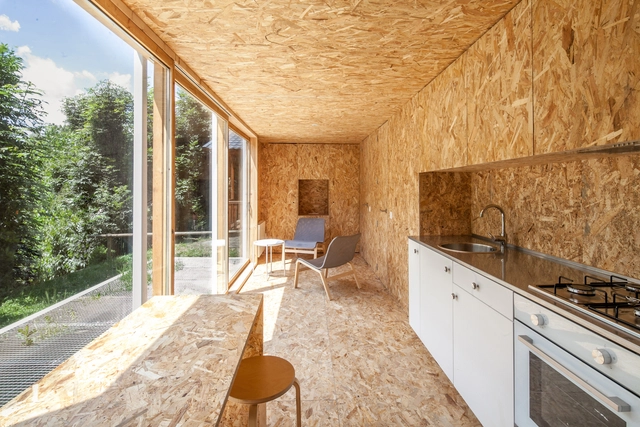
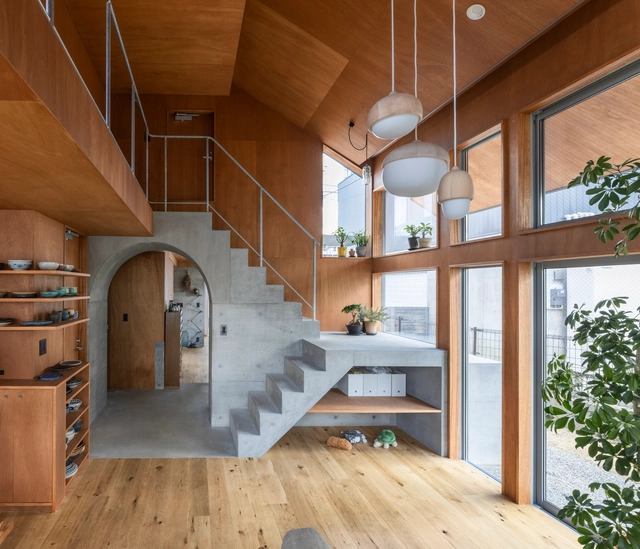
Windows serve multiple essential functions in any project, from framing views to providing daylight and natural ventilation. As human needs have shifted and technology has advanced significantly throughout the years, these have evolved in character, shape, and use of materials. What began as small arrow loops used for defense in medieval fortifications later transformed into wider openings that exemplified status and wealth. The Romans were the first to use glass, but it was considered a precious commodity for centuries. Intricate stained-glass panels adorned countless of medieval churches and cathedrals, while most home dwellers had to settle for covering their “windows” with wood, fur and other materials.
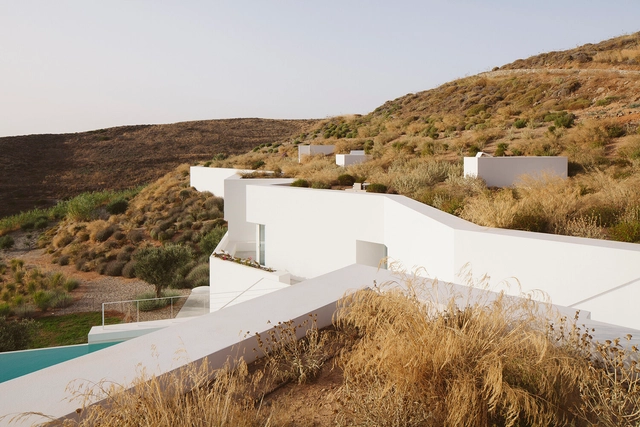
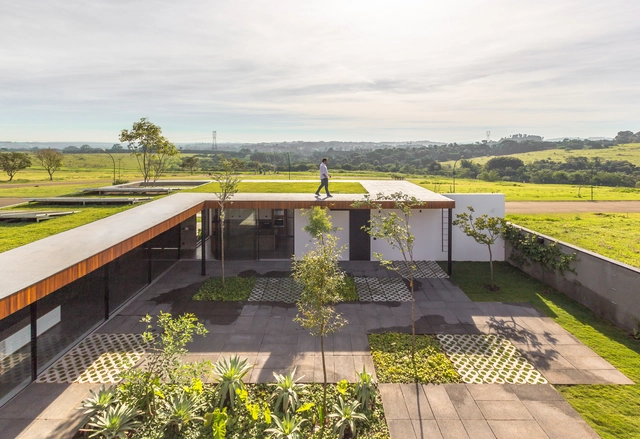
As a starting point for architectural projects, the terrain and its topography point out the directions that the distribution of the program can follow. Among them, one solution stands out for the continuity between topography and architecture: lowering the level of construction and advancing the land over the roof. From this roof garden created with the same characteristics as the surroundings, the result gives the impression of an almost non-existent intervention.
The incorporation of the land as an architectural element takes up, in a certain way, the concept of caves, reinforcing an idea of shelter and reception from a hybrid between the initial and natural configuration and the architectural intervention.
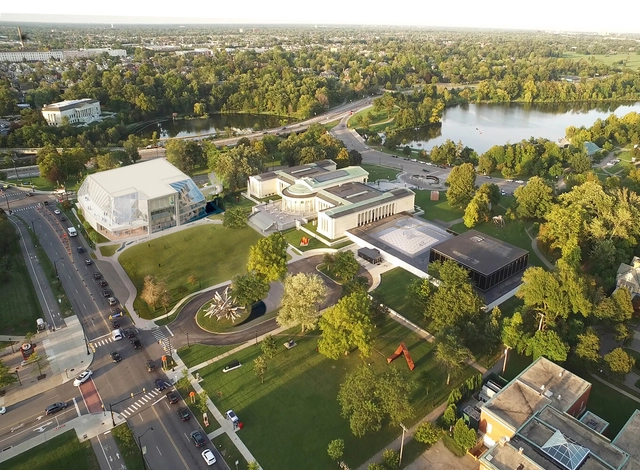
The Buffalo AKG Art Museum (formerly known as the Albright-Knox Art Gallery) has announced that it will welcome its first visitors on the 25th of May, 2023. Revamped and expanded, the new campus designed by OMA/Shohei Shigematsu in collaboration with Cooper Robertson features “new work of signature architecture, the Jeffrey E. Gundlach building, and extensive renovation to existing buildings”.
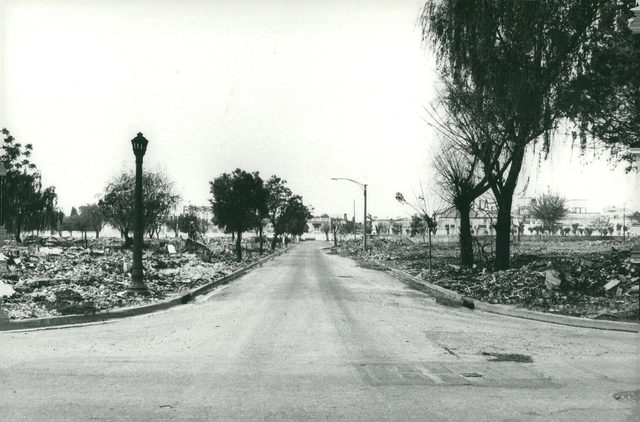
"History of the villas in the city of Buenos Aires. From the origins to the present day" is the book by Valeria Snitcofsky that reconstructs the historical background of the villas in the city of Buenos Aires based on research that began in 2003 and whose advances were expressed in a bachelor's and a doctoral thesis. It is framed within the objective of the Tejido Urbano Foundation, which is focused on promoting research and the generation of knowledge on the problems of habitat and housing.
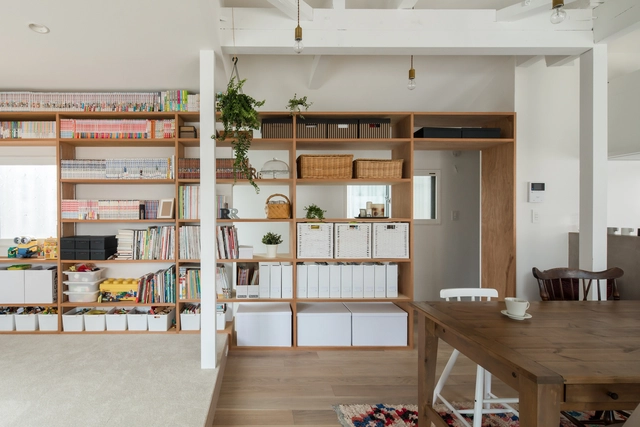
Shelves have a clear function: to organize, store and display. This simple, yet vital role has made them a must in every household, keeping the place neat and tidy by holding books, clothes, toys or any other items that would otherwise be scattered on the floor. Although usually found in closets, bedrooms, bathrooms and kitchens, shelves are useful wherever the extra storage is necessary. They are especially ideal for making the most out of small rooms, which will always benefit from having cleaner, clutter-free floor space. Responding to this crucial storage need and following a strict 'form follows function' approach, traditional shelves are often comprised of minimal, flat horizontal planes attached to a wall –a simple layout that is not particularly meant to draw attention. Hence, people don’t tend to think about shelving ideas beyond storage, and in that sense, the countless design possibilities they offer are often overlooked.
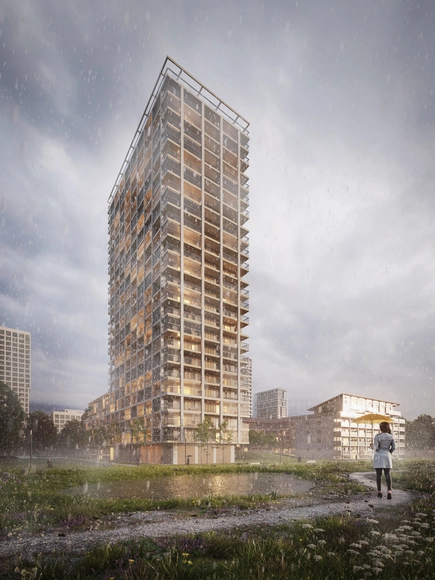
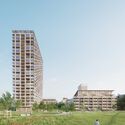
Shigeru Ban has just launched the office’s most recent project in Nieuw Zuid in Antwerp, Belgium. Named Ban, after its creator, and in collaboration with Bureau Bouwtechniek, the complex puts in place a 25-story residential tower and a separate building, creating a total of 295 residential units. During the breaking ground ceremony, the architect also inaugurated an exhibition of images highlighting his humanitarian work in conflict and disaster areas, in near proximity to the construction site.
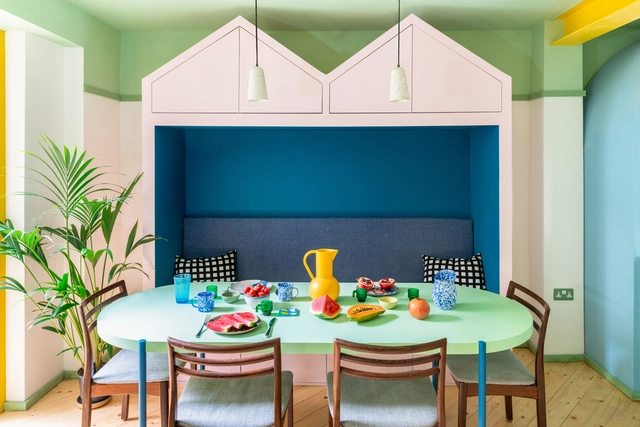
Playfulness is a concept often attributed to children and hardly connected with adult life. In architecture, projects dedicated to childhood propose a combination of objects, colors and solutions to encourage imagination and break the rigidity of spaces. In contrast, most conventional projects are limited to regularity and stamp the sobriety of adult life.
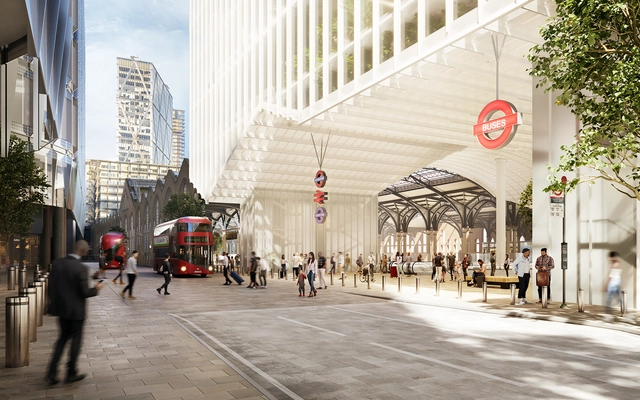
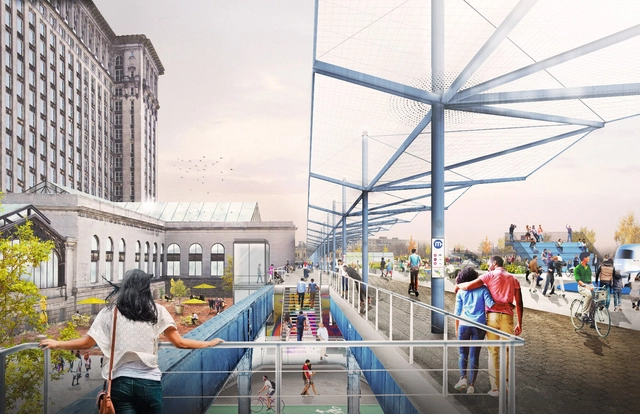
Architecture office Herzog & de Meuron has unveiled plans to revamp the Liverpool Street station in London. The scheme includes “vital upgrades” aimed at transforming the Victorian-era station into a fully accessible transportation hub fit to accommodate the 135 million people using the station annually. It also includes the addition of 840,000 square feet of offices and a 190,000 square feet hotel in two new structures, 10 and 6 stories high, respectively. These new interventions have attracted criticism from conservation groups. The proposal is currently undergoing its first round of public consultation. The development is overseen by Stellar, working with MTR, the operator of rail transport services and Network Rail.
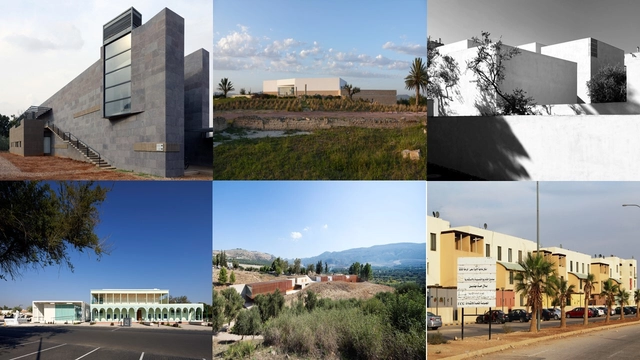
The Association of Arab Architects has announced the winners of the 2022 Arab Architects Awards. This year’s winning architectural projects highlight the importance of inclusive design, taking into account sustainability and designing with a sensible response to the local communities and landscapes they inhibit. The two-day ceremony was held in Amman, Jordan on November 16-17, 2022, and gathered hundreds of regional architects, urban planners, engineers, and designers of all demographics to explore and engage in discussions about architecture and the future of the built environment in the Arab region.
In interior design – and many other design disciplines – it is much easier to be unsustainable. Buying or developing custom solutions for a room often requires less time and research than purchasing second-hand materials or concern for waste flow and the circular economy.
But the construction and decoration industry can no longer afford the luxury of ignoring the environmental impacts caused by their activities.
The standards for classifying good or terrible architecture are usefulness and beauty, or what we commonly refer to as practicality and aesthetics. However, practicality might quickly direct us toward functionalism, which is the only viable option, or toward the design of sculptural structures. The architect Le Corbusier once stated, "If you create a house with stone, wood, and concrete, that's just a building; if you touch my heart, that's architecture." However, perhaps the readability of architecture might serve as a criterion for good architecture: Reading architecture as a book with complete words and sentences that stand up to careful consideration.
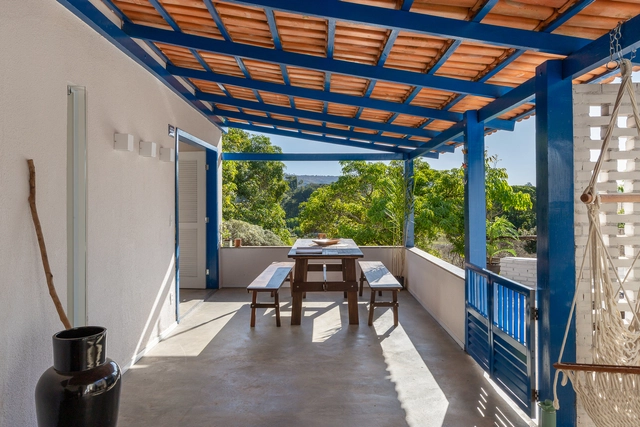
Brazil is one of the largest countries in the world, covering an area that goes from the Equator to beyond the Tropic of Capricorn, presenting a wide variety of climates and vegetation, which implies in the diverse natural landscape, flora and fauna for which the country is known. Residential architecture, when considered from its location, must adapt to the conditions of the surroundings, transforming its design according to the climate and morphology. We have gathered below a selection of Brazilian houses that respond to the natural environment in which they are located.
The advantages of a courtyard house are well known. In addition to bringing closer contact with the outside from the inside, it substantially improves comfort by providing more natural lighting and ventilation. This typology goes through time being reinvented from different ways of thinking not only its architecture, but also the landscaping of its external area. Therefore, we have gathered different ways of conceiving the garden and other elements that can make up that space.
The Second Studio (formerly The Midnight Charette) is an explicit podcast about design, architecture, and the everyday. Hosted by Architects David Bruce Lee and Marina Bourderonnet, it features different creative professionals in unscripted conversations that allow for thoughtful takes and personal discussions.
A variety of subjects are covered with honesty and humor: some episodes are interviews, while others are tips for fellow designers, reviews of buildings and other projects, or casual explorations of everyday life and design. The Second Studio is also available on iTunes, Spotify, and YouTube.
This week David and Marina answer two questions from listeners: How to cope with the feeling of failure in architecture school and whether or not architecture is hard and stressful. The two cover why freshmen often have false expectations of success, embracing failure, not seeking approval from teachers or clients, dealing with ‘dumb’ design assignments, overcoming paralysis, the main reasons why being an architect is challenging, and more!
https://www.archdaily.com/992767/the-second-studio-podcast-overcoming-failure-in-architecture-schoolThe Second Studio Podcast
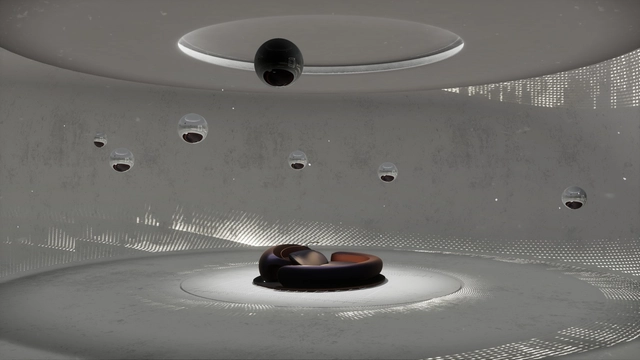
The undisputed protagonist of the last few years has been the Metaverse. The news is already flooding the world of video games and technology. Today, architects and designers are increasingly aware of the responsibility they have in leading this construction of the virtual environment. But what is the architecture of the Metaverse, how is it designed, how is it built?
Fundamental for the development of large metropolises as we know them today, cement is a material used historically, whose technological advances have revolutionized construction technique and technology of civil construction, enabling the verticalization of construction and the densification of urban centers. Cement, both added to water and sand to make mortar and combined with steel and aggregate to form concrete, performs different functions in a work, from structure to finish.