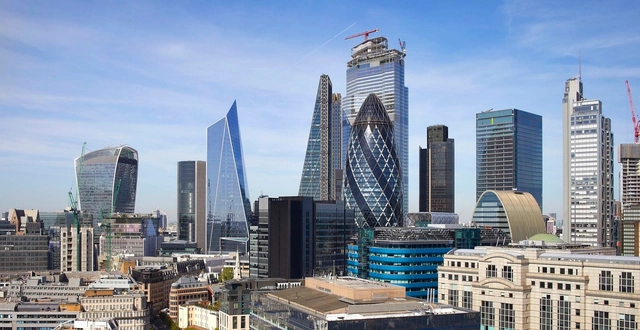
When lockdowns first hit and retailers were forced to shut up shop, many took to the digital high street instead, with those investing hardest and quickest in their online personas invariably winning the battle for our bookmarks. As the world opened again, some kept both their physical and digital presence in a hybrid model, while others chose to remove themselves from bricks and mortar altogether.
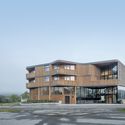
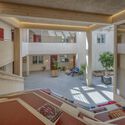
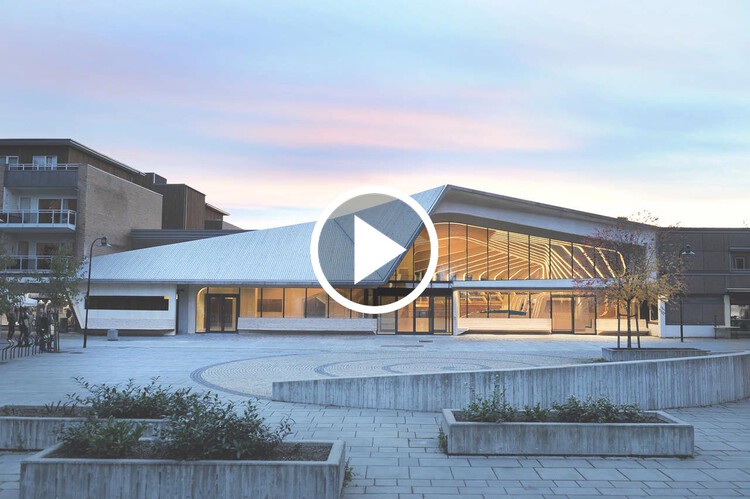
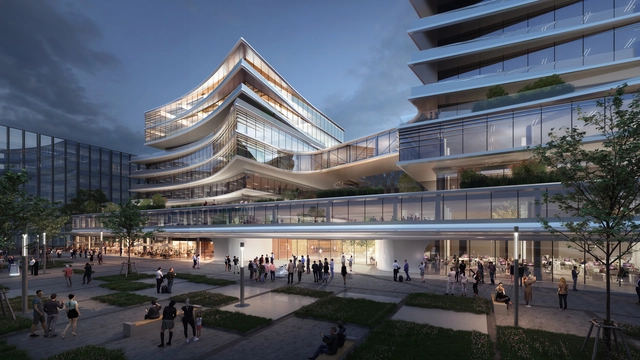
As we become more accustomed to using both models together, it’s clear that physical retail spaces can offer sensorial experiences that the digital simply can not – yet. These four projects buck the online retail trend and encourage consumers – and therefore other retailers, too – to move back into the physical, by turning the act of shopping into an exciting, invigorating, or relaxing luxury pastime, rather than a chore.
Architects’ registration boards in UK and US have reached an agreement that enables architects to benefit from a more straightforward process to get licensed in both countries. The Mutual Recognition Agreement results from a negotiation between the National Council of Architectural Registration Boards (NCARB) in the United States and its United Kingdom counterpart, the Architects Registration Board (ARB). This week, the two organizations announced that the agreement has been signed by both parties. It will become active on April 25, 2023, allowing architects to apply for reciprocal licensure in the US and the UK.
This agreement is the result of over nearly four years of research and negotiation between NCARB and the ARB. In 2018 NCARB initiated a process of evaluating the requirements for registration in the United Kingdom, comparing it to the licensing process in the US. The analysis found a substantial overlap between the standards in both countries. These similarities form the base of the mutual agreement, which will provide a streamlined path for architects seeking reciprocal licensure in the two countries, along with the subsequent professional opportunities that could come with it.
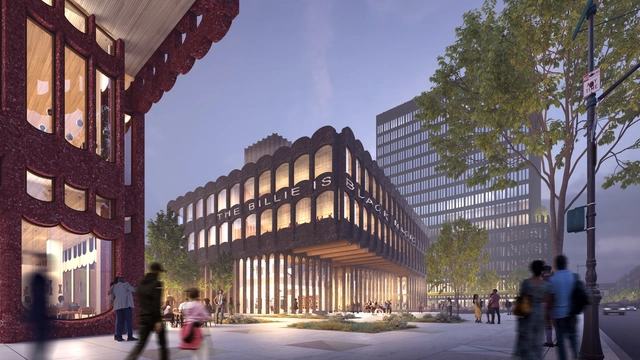
Sir David Adjaye unveils new plans for the new Bedford Stuyvesant Restoration Corporation in Central Brooklyn. This center is the first-ever community development institution in the country, established in 1967. The scheme envisions a space that accelerates wealth creation and closes the racial wealth gap that has affected the United States.
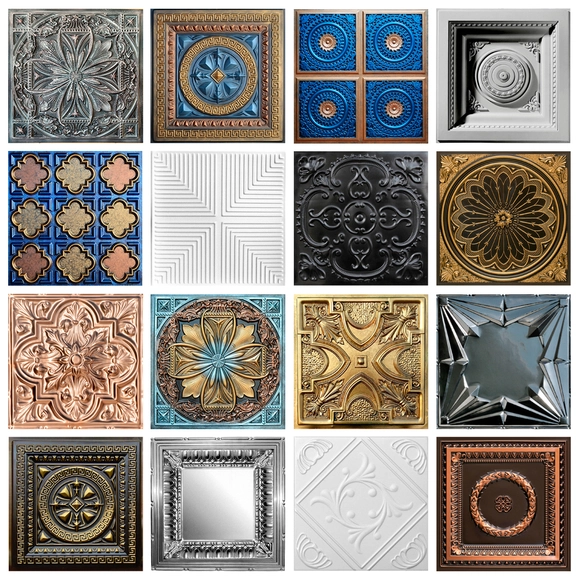
Ceilings were once a symbol of grandeur and opulence, adorning grand buildings, churches and palaces with their intricate and elaborate designs. We still find ourselves looking up in awe at these mesmerizing historical buildings, with our eyes drawn to their magnificent vaulted ceilings, remarkable truss structures or distinctive works of art depicting mythology, historical events and landscapes. Contemporary design, on the other hand, has shifted towards a sleek, minimalistic aesthetic; one where plain white ceilings have become the norm in most modern buildings. As Rasmus Wærn and Gert Wingårdh suggest in their book What is Architecture? And 100 Other Questions, “Ceilings have devolved from being the focal point of a room to being a zone for mechanical equipment.” And yet they have extraordinary creative potential.
Korean Museum of Urbanism and Architecture | South Korea. Image Courtesy of Atelier of spatial matters
This week's curated selection of Best Unbuilt Architecture highlights cultural centers by the ArchDaily community. From a spiral- gallery symbolizing the Jinju culture in South Korea, a building devoted to Irish culture to a gallery to serve as a cultural incubator for Indonesia, this round-up of unbuilt projects showcases how architects, community, and institutions team up to promote culture, arts, history, and reflection.
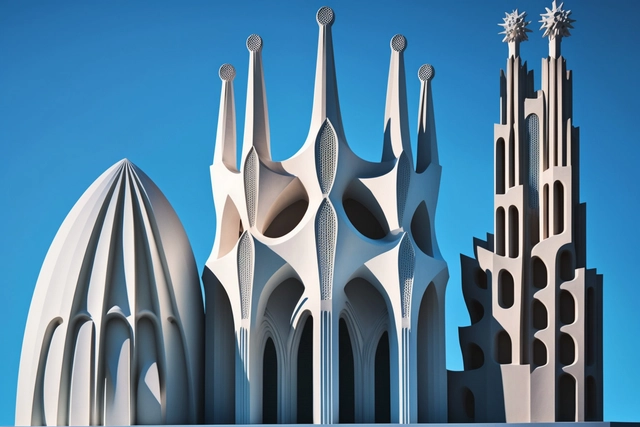
Architecture is a referential discipline. From ziggurats, machines for living, to contemporary biophilic high-rises designs, it is impossible to know whether ideas are genuinely novel or whether they have been conceptualized before. Artificial intelligence has ignited the conversation on intellectual property (IP) even more. As millions generate unique graphic work by typing keywords, controversies have arisen, specifically concerning protecting creative work and the Copyright of architects in their creations. Therefore, understanding the scope of what is protected helps determine whether licenses are sufficient, whether trademark registration's long road is worth it; or perhaps a graphic piece cannot be protected and belongs to the public domain.
Pretentious as it may sound, we can say with certainty that bamboo is one of the most promising materials for the future of the construction industry. Neil Thomas, principal engineer at atelier one, says that if we were to design an ideal building material, it would look a lot like bamboo. This is because it grows very fast, is present in many countries around the world, has a highly efficient cross-section, and has impressive load-bearing strength. But beyond its structural use in its raw form, bamboo is also a material that allows a high level of processing and can be laminated for flooring, fixtures and, as we will see in this article, for Structural Engineered Bamboo (SEB) structures, which are very similar to Engineered Wood. We spoke with Luke D. Schuette, founder and CEO of ReNüTeq Solutions, LLC, a company in St. Louis, Missouri, that has been working with this structural material technology.
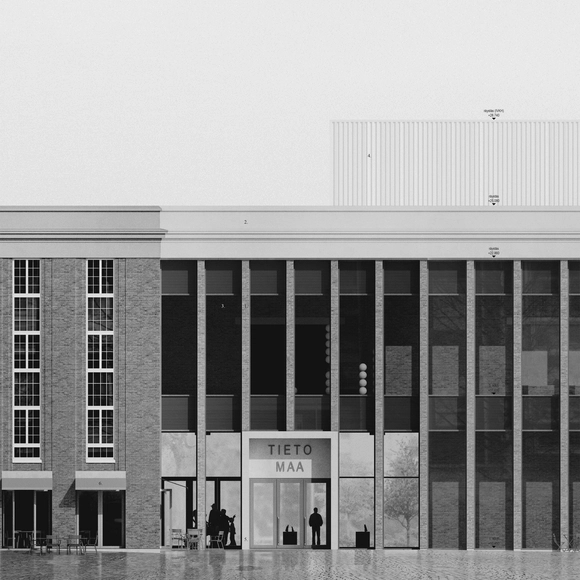
Opus Architecture & Simon Mahringer have just been awarded first prize in an open competition for the new museum and science center in Oulu, Finland. The competition was held in 2022, and the winners were announced on January 12th, 2023, chosen from a total of 95 proposals. The building is situated in the coastal city of Oulu, right at the center of the Myllytulli area, where the current science center Tietomaa is located. The new proposal will house the current science center and the facilities of the Oulu Art Museum.
Snøhetta, the Norweigan-based architecture and landscape practice, has been chosen to re-imagine the French Asylum and Administrative Courts of Montreuil. The proposal puts together both institutions on one site, surrounded by luscious green areas and a biophilic landscape. Set to begin construction in 2024, and be completed by 2026, the project includes the design of the buildings, landscape, wayfinding, interior, and furniture.
Francisco Cadau received the highest award at the recent Buenos Aires 2022 International Architecture Biennial. A recognition of his genuine trajectory that, from technique and materiality, consistently manages to position his favorite location on the map: The city of Campana on the edge of the Parana River in Argentina. His works in this place, such as House of Sieves or Damero Building, are references when it comes to thinking about project models where "construction and technology constitute the ideas themselves".
The philosopher and sociologist Henri Lefebvre coined the notion of "production of space" in 1974, breaking with the vision of space as a container or scenario of objects and social relations, to move towards space understood as a process. From this vision based on the Marxist tradition, space is a product and a producer of social relations and processes.
This week, the Museum of Modern Art officially launches a new series of exhibitions entitled Architecture Now. According to MoMA, “The first iteration of the series, New York, New Publics, will explore the ways in which New York City–based practices have been actively expanding the relationship of metropolitan architecture to different publics through 12 recently completed projects.”
The exhibition will showcase public-facing work, such as parks, community gardens, and pools, by Adjaye Associates, Agency—Agency and Chris Woebken, CO Adaptive, James Corner Field Operations, Kinfolk Foundation, nArchitects, New Affiliates and Samuel Stewart-Halevy, Olalekan Jeyifous, Only If, PetersonRich Office, SO – IL, and SWA/Balsley and Weiss/Manfredi.
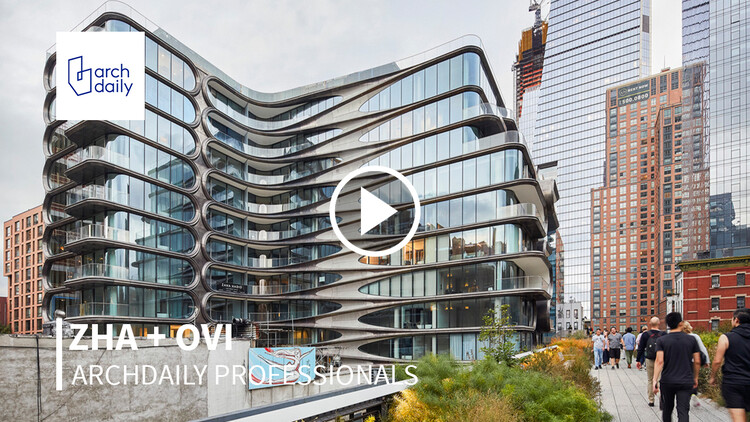
With more than 900 projects in over 40 countries, every project that Zaha Hadid Architects designs and builds has an impact on the narrative of contemporary architecture. At ArchDaily, we know that each architectural project has a team of professionals behind it which makes it possible. In this edition of the ArchDaily ProfessionalsVideo Interviews, we talked to Johannes Schafelner, associate director at Zaha Hadid Architects, and Enrique Peiniger, founder of OVI-Office for Visual Interaction about their long-standing collaboration in projects merging design and lighting.
On February 15, 2023, the Living Places / Simon Architecture Prize 2023 award ceremony was held in Barcelona. An initiative by Simon, with the support of the Fundació Mies van der Rohe, the prize seeks to recognize excellence in architecture from the perspective of the inhabitant. In fact, "it distinguishes those works which strengthen the ability of adaptability of spaces to reach comfort and well-being to its residents".
In a conversation with Louisiana Channel, the founders of the international practice Helen & Hard Architects reaffirm their insistence on community and sustainability. The use of wood, in their practice, has become more than a building philosophy, it has turned into a philosophy. “Trees have a life of their own, and you feel a deep respect for the time it has taken to grow. We work with something alive, an organic material. We can’t do as we please with it. We must interact with the material.”
In August 2022, Siv Helene Stangeland and Reinhard Kropf, the founders of Helen & Hard, were interviewed by Marc-Christoph Wagner at various locations in and around Stavanger, Norway. The area holds special importance for the architects, whose approach was influenced by the culture that permeates Stavanger and the west coast of Norway.
I've been designing websites since 1997, and in that time, websites have changed quite a bit. With all the changes over the years, it's no surprise that I often find some firm owners don't understand how architecture website design really works. While you might know a bad website when you see one, you might not understand what makes a good site work. This article will change that.
The Zaha Hadid-designed Business Stadium Central has been granted approval by the City of Vilnius. In collaboration with Lithuanian developer Hanner, the project seeks to become a new gathering place for the city, creating a variety of new public spaces and amenities with flexible workplaces as well as health and wellness facilities for everyone in Vilnius. Construction is scheduled for the second quarter of this year.