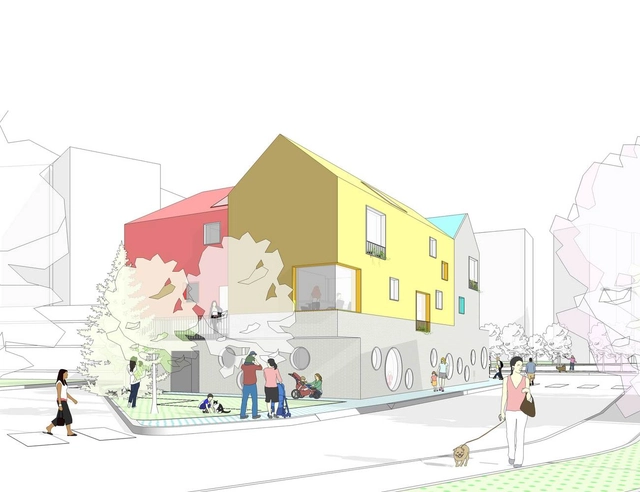
Daniel Valle Architects has been awarded first prize in the public competition to design a kindergarten and senior welfare center in Seoul, South Korea, with its project, Maebong Daycare Center.
Located in the neighborhood of Oksu-dong, the 700-square-meter Center is designed around the idea of shifting the scale of the building, so that children feel more comfortable. For example, the massing of the space is broken down into five units that utilize various colors, geometries, and materials to emphasize smaller units within the whole.
“Interior spaces are designed considering both the adult and the children size. Classrooms and other spaces are provided with smart storage solutions to maximize the usage of space and flexibility. A 'thick wall' will contain most of the items needed in the classroom as well as provide exercise and fun features.”
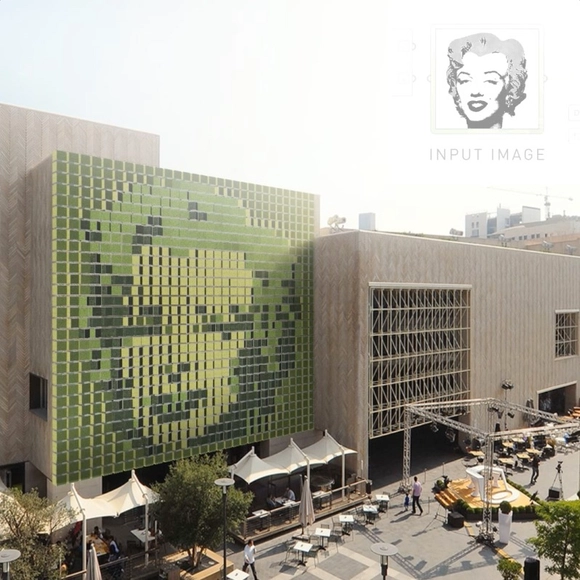
The Canvas consists of individual modules, each of which is a cube made from steel framework, back paneling, L-shaped jambs, secondary structure, waterproofing board, irrigation piping, Green Studios hydroponic skin, and plants. These layered components are assembled on four sides of the cube module, with a motor and water pipe attachment that circulates water throughout.
Imaginative Italian illustrator and architect Federico Babina has unveiled his latest series, ARCHITALE, “a tribute to the fairytale universe where the architectures are reinvented to accommodate the protagonists of the story.”
Through his illustrations, Babina imagines 17 structures that dance between reality and fantasy, with each architectural detail revealing information about the characters and story of the respective fairytale.
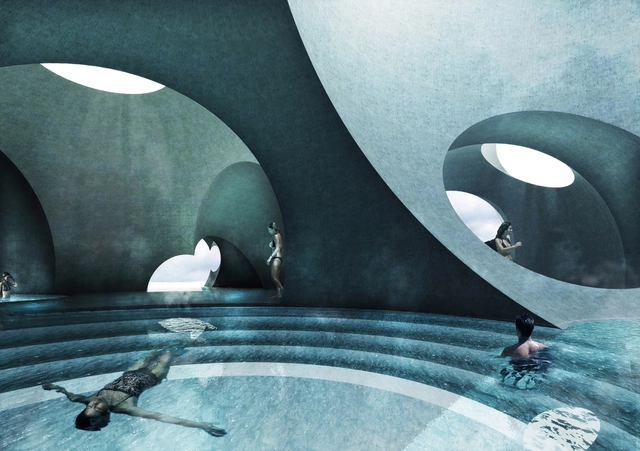
Santa-Monica-based Steven Christensen Architecture has won the 2016 AAP American Architecture Prize for Recreational Architecture, with its design for the Liepāja Thermal Bath and Hotel in Latvia.
In an exploration of the role of the dome throughout the architectural history of public baths, the project utilizes dome shapes—both upright and inverted “as a rhizomatic formal and organizational embodiment of a contemporary public that is democratic, horizontally empowered, and increasingly networked” explained the architects.
In somewhat of a departure from its usual parametric, experimental work, Margot Krasojević Architects has created a recycled, 3D printed LED light, in an investigation of the importance of reappropriating plastics. The project—Lace LED—however, aligns with the firm’s exploration of renewable energy and environmental issues within architecture and product design.
Printed with post-consumer plastics like synthetic polymer packaging from takeout food containers and 3D printer off-cuts, Lace LED is a light diffuser with fractal pattern configurations resembling a piece of woven lace.
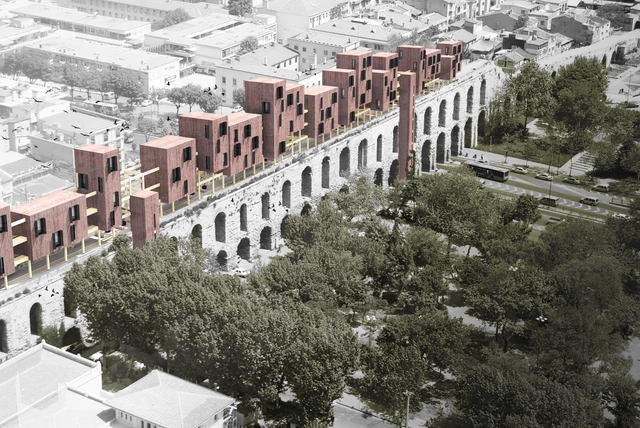
Sinan Günay and Nurhayat Oz of Superspace have won second prize in the MetsäWood competition, The City Above the City, which called for architects to design wooden extensions to city centers. With their project, Colliding Lines and Lives, the team designed a series wooden housing modules to be appended to a fourth-century Roman aqueduct archway in Istanbul.
Built by the Roman emperor Valens, the archway was an important water supply for the Romans and Ottomans but later lost its significance and functionality with technological and infrastructural advancements, leaving it an unutilized landmark in the city.
Entitled “Architecture for the Search for Knowledge,” the lecture is named for Ábalos’ mantra by the same words, which is an aphorism written by Friedrich Nietzsche.
Throughout the event, Ábalos delved into various mixed-use typologies, each of which is in some way related to the basic typology of the medieval monastery.
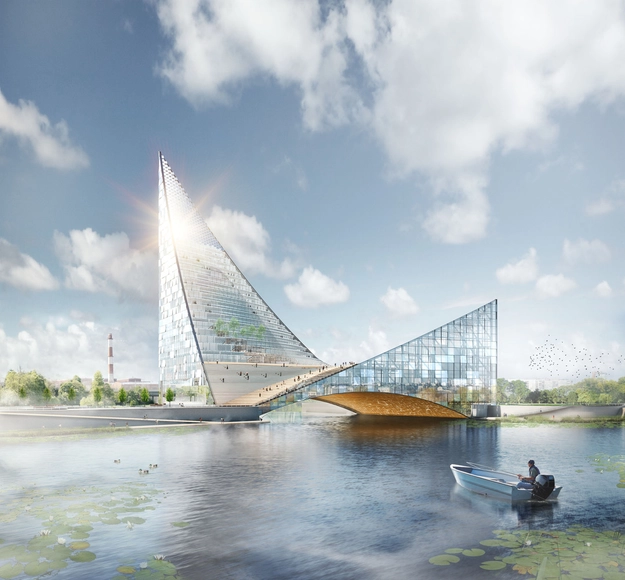
PIARENA has won the Archchel-2020 competition to create a Congress Hall for BRICS and SCO events in central Chelyabinsk, Russia along the Miass River. Separated into two parts by the river, the site will additionally host business meetings, public events, and exhibitions.
In order to emphasize the curve of the river, the new congress hall building will be a solid volume spanning across the river, rectangular in footprint, but curved in a sail shape above.
Rising up to 61 and 150 meters, the building is hoped to become a new urban landmark, as well as a pedestrian crossing over the river.
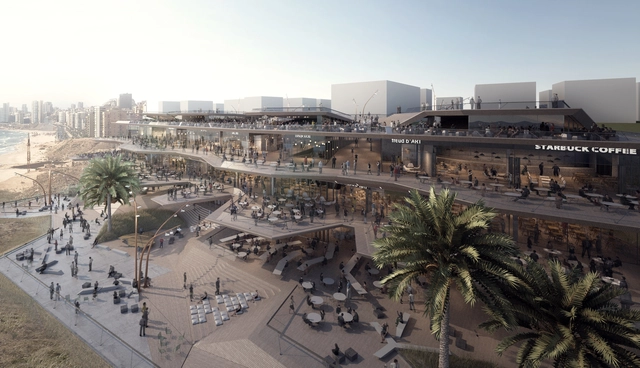
BAD.Built by Associative Data has released its designs for BARCELONA, a new mixed-use development on the Mediterranean coast of Beirut, Lebanon at the Ramlet El Bayda waterfront.
Spanning 18,000 square meters, the project will serve as “a new gastronomic experience, embracing the Mediterranean from a remarkable vantage point,” through a clustered development featuring restaurants, coffee shops, lounges, and event spaces.
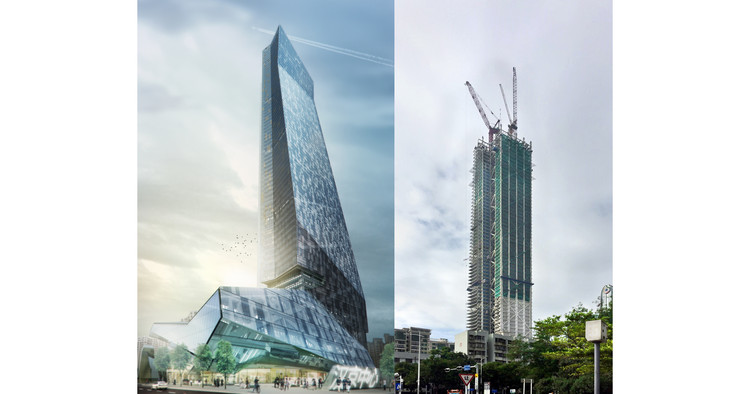
Morphosis Architects’ Hanking Center Tower in Shenzhen, China has recently topped out, with the 62nd floor now in place. Defined by its detached core configuration, the building positions its primary core 9 meters outside its main body, connected by a series of sky bridges and braces, in order to increase flexibility and light penetration into the floor plate.
Two secondary cores in the body of the building provide structural reinforcement and house private elevators for VIP users, as well as freight elevators and mechanical services.
In an effort to serve global professionals and bring density to the suburb of Nanshan, the tower will feature flexible office space on its open floor plate, anchored by high-end retail and dining.
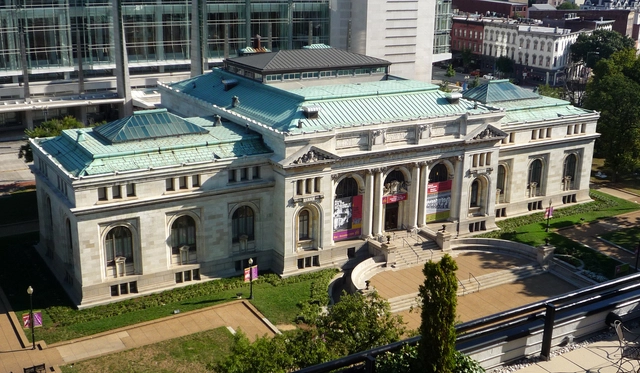
London’sFoster + Partners will likely design a flagship Apple store for the historic Carnegie Library at Mount Vernon Square in Washington, D.C., reports The Architect’s Newspaper. According to Events DC, Apple will lease a portion of the 63,000-square-foot building’s ground floor and basement levels in a ten-year lease, sharing the space with its existing tenant, The Historical Society of Washington.
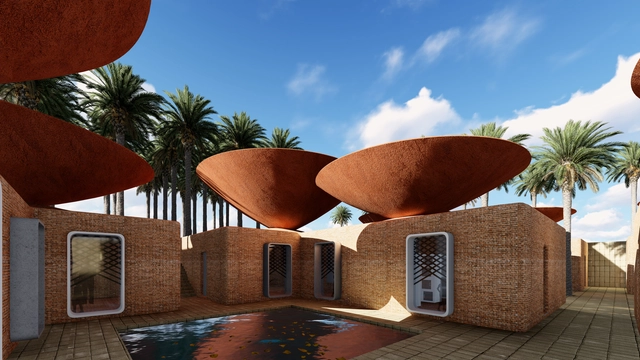
Iran-based BMDesign Studios has unveiled Concave Roof, a double-roof system with steep slopes resembling a bowl for the purpose of rainwater collection in arid climates like Iran, where a lack of water could lead to mass displacement in the future.
Because precipitation in this area is less than one-third of that of the world average, and evaporation is more than three times higher than the world average, the concave roof system is designed to “help [make] even the smallest quantities of rain [flow down] the roof and eventually coalesce into bigger drops, just right for harvesting before they evaporate” explained the architects.
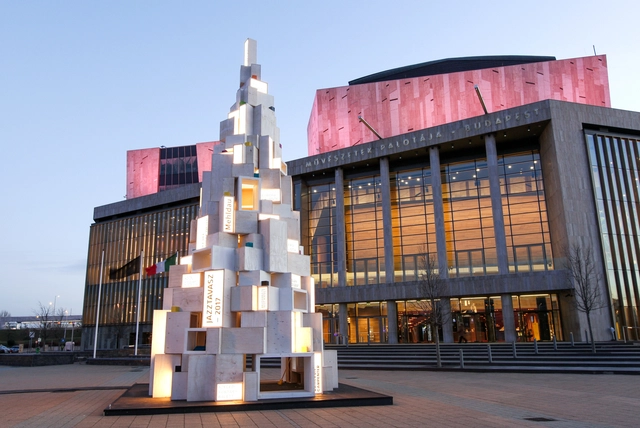
Hello Wood has continued its tradition of building socially responsive Christmas trees in European cities though its latest addition, the Tree of Arts, built in front of Budapest’s largest concert hall, Müpa, also known as the Palace of Arts.
Based on the idea that the spirit of Christmas should live beyond the holiday season and continue to symbolize community-building and sustainability into the New Year, the 11-meter tall tree made from lightboxes will be recycled into display units for the inside of the cultural venue in 2017.
Lightboxes in the installation feature the names of performances that will be visiting Budapest in the coming year, including the New York Philharmonic Orchestra, John McLaughlin, and Cameron Carpenter.
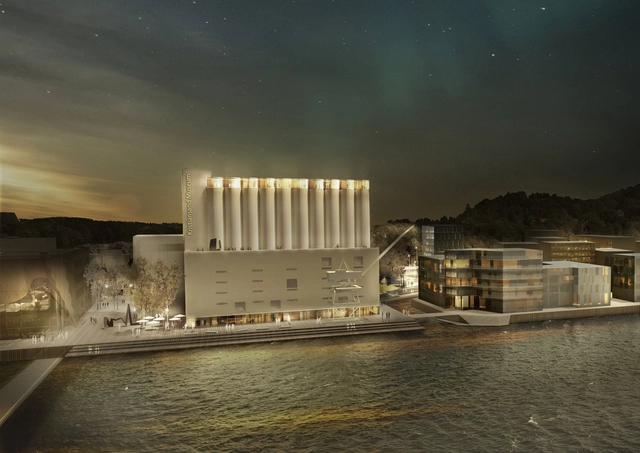
Winning proposal by MESTRES WÅGE ARQUITECTES and MX_SI ARCHITECTURAL STUDIO. Image Courtesy of Kunstsilo
The winners of the Kunstsilo (Art Silo) competition to convert a 1935 harbor-side grain silo into an art museum in Kristiansand, Norway have been announced, with one overall winner and five runners up. MESTRES WÅGE ARQUITECTES and MX_SI ARCHITECTURAL STUDIO, a team from Barcelona, have won the competition, out of 101 proposals, with their concept, SILOSAMLINGEN (“The Silo Collection”), which, according to the jury, “demonstrates a crystal-clear combination of architectural self-assurance and humble respect for the silo building and its newly assigned task.”
London-based Dutch architect Matthijs Ia Roi has won the Belgian Monument Competition with his proposal, Museum of Hospitality, which will be built in Amersfoort, Netherlands.
The museum will serve as a symbol of hospitality for refugees in the Netherlands and will compliment the neighboring World War I monument, which was a gift from Belgium in recognition of the Netherlands hosting Belgian soldiers during the war.
Courtesy of The American Institute of Architects (AIA)
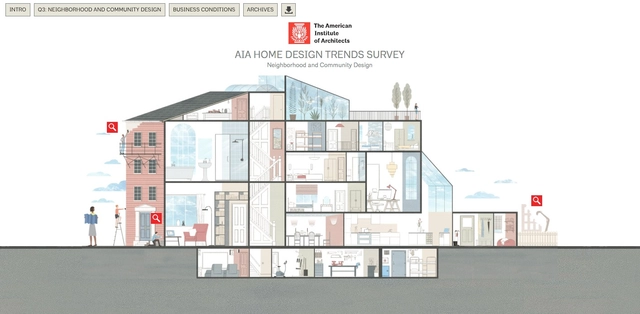
The American Institute of Architects (AIA) has released its Home Design Trends Survey for the third quarter of 2016, which focuses on community and neighborhood design. According to the Survey, homeowners are generally expressing more interest in community development, as indicated by the popularity of thoughtful community design with access to amenities.
There is additionally, according to the Survey, a demand for walkable neighborhoods, access to public transportation, and multi-generational housing, as well as a demand for more and larger glass windows, driven by building technologies like smart glass windows.
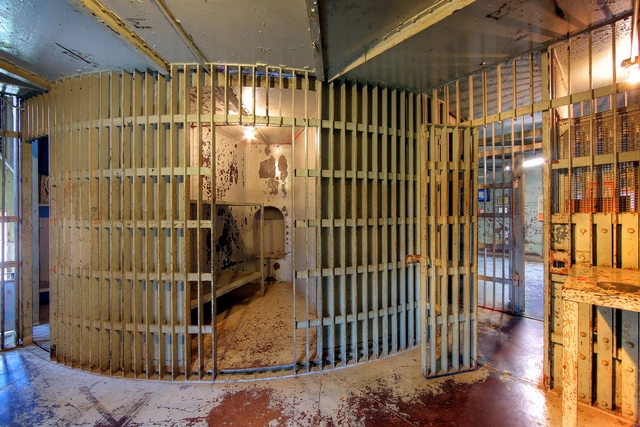
99% Invisible has recently published a review of rotary jails, a strange prison architecture system in which cell blocks turn to align with the position of a single door, in the attempt to create better security. Used around the early 20th century, this odd, carousel-like technology spread across the United States in mainly Midwestern towns.
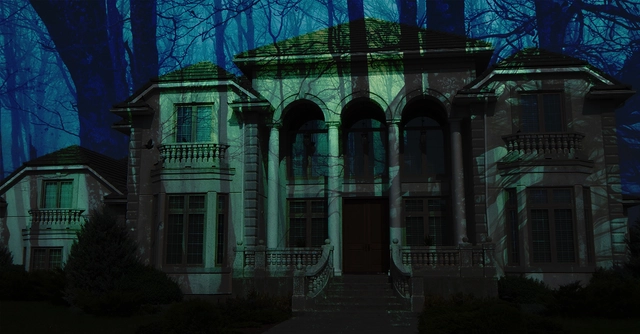
Architecture critic Kate Wagner has collaborated with 99% invisible on a podcast and a guest column delving into the tragedies of McMansions and the representation of evil through architecture in film, respectively.
In the podcast, Wagner, who is the author of McMansion Hell, is interviewed by Roman Mars and explains how the McMansion typology evolved, as well as how it became so despised, delving into topics of architectural history and representations of wealth.
Through her article as a guest columnist, Wagner explores the real-world buildings used in film to depict the evil corporation archetype in movies like Robocop, Blade Runner, and The Matrix.