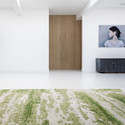
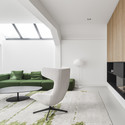
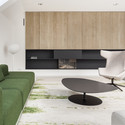

-
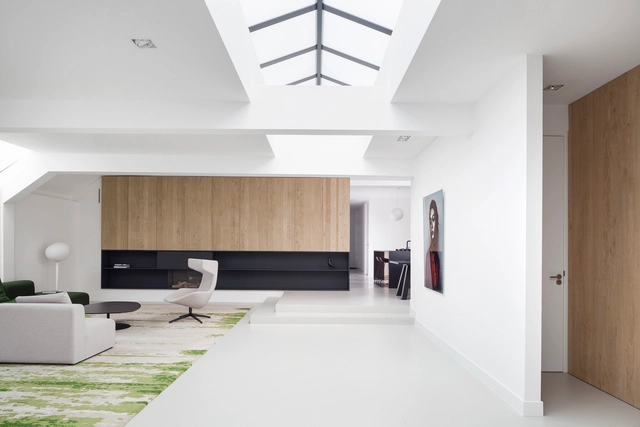
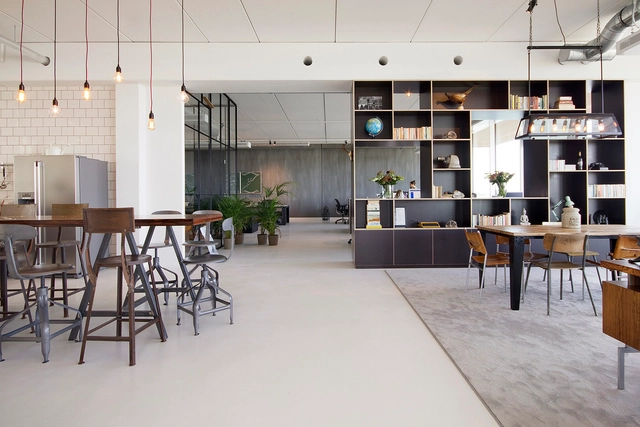
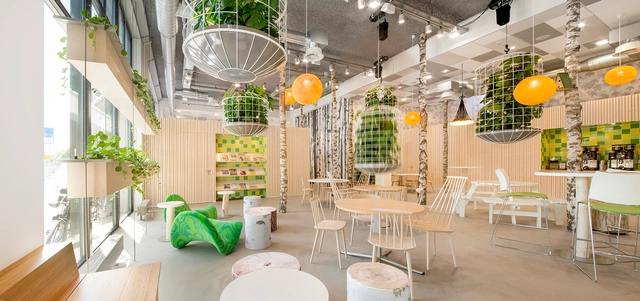
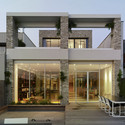
Architects: i29 interior architects
- Area: 230 m²
-
Professionals: KJ Aannemers

matterbetter has launched an international open-ideas competition for a Malaysia Airlines Flight 17 (MH17) Memorial and Park in Amsterdam. MH17 was a scheduled international passenger flight from Amsterdam to Kuala Lumpur that was shot down near the Ukraine–Russia border on July 17, 2014, killing all 283 passengers and 15 crew members on board.
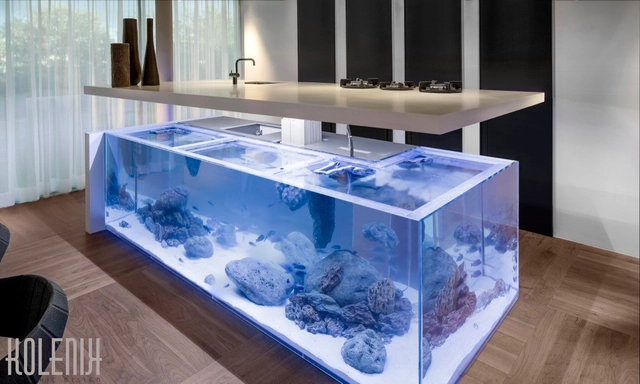
Amsterdam-based design firm Kolenik Eco Chic Design have released designs of their unique Ocean Kitchen, a transformative new take on residential space. The contemporary minimalist kitchen offers a moment of serenity to the viewer through the inclusion of a vast aquarium beneath the island's countertop. Positioned as the architectural centerpiece of the space, the island in Ocean Kitchen gracefully animates the surrounding kitchen.
Immerse yourself in photos of Ocean Kitchen after the break.
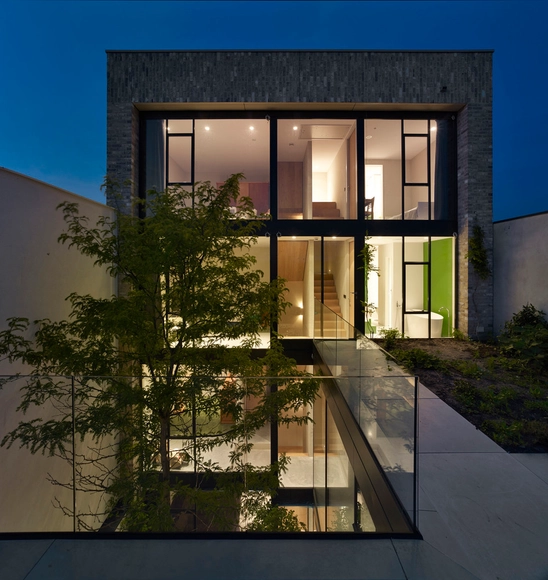

Wim Pijbes, director of Amsterdam's Rijksmuseum, has declared in an open letter to the Dutch newspaper NRC Handelsblad that the Dutch capital is "dirty, filthy, and too full." Complaining primarily about the culture of short-stay accommodation, segways, scooters and canal cruisers in the historic heart of the city, he argues that "the charm and spirited character has long since faded." Amsterdam, an apparent magnet for those who enjoy an "anything-goes atmosphere," faces an uphill battle in order to remold a dwindling reputation.
Initiatives like Project 1012, which seeks to put a cap on (and even shut down) some of the brothels and marijuana 'coffee shops' in the city's historic core, is part of a wide-reaching clean up campaign. For Feargus O'Sullivan however, "if Amsterdam loses its sense of license, its aura of permissiveness, and its immaculate order held in delicate balance, then it will lose some of its delight, its uniqueness - even its Dutchness." Read his article in The Atlantic's Citylab in full here.


.jpg?1400800194&format=webp&width=640&height=580)

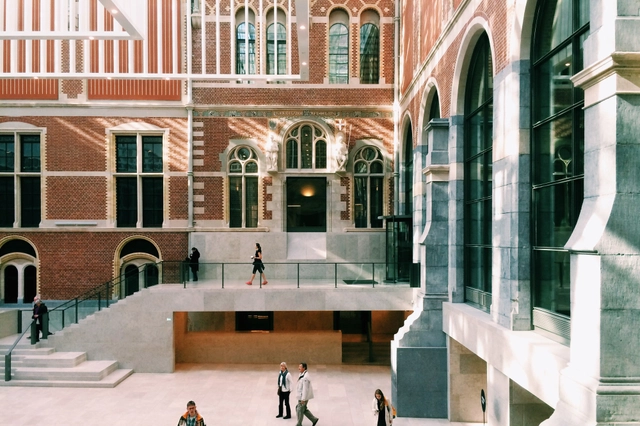
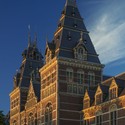
The Rijksmuseum, which reopened last year after a decade of restoration and remodelling, is a museum dedicated to “the Dutchness of Dutchness.” Pierre Cuypers, the building's original architect, began designing this neogothic cathedral to Dutch art in 1876; it opened in 1885 and has stood guard over Amsterdam's Museumplein ever since.
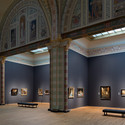
Over the centuries, the building suffered a series of poorly executed 'improvements': intricately frescoed walls and ceilings were whitewashed; precious mosaics broken; decorative surfaces plastered over; and false, parasitic ceilings hung from the walls. Speaking in his office overlooking the Rijksmuseum’s monumental south west façade, Director of Collections Taco Dibbits noted how the most appalling damage was incurred during the mid-20th century: “everything had been done to hide the original building […but] Cruz y Ortiz [who won the competition to redesign the Rijks in 2003] embraced the existing architecture by going back to the original volumes of the spaces as much as possible.”
For Seville-based Cruz y Ortiz, choosing what to retain and what to restore, what to remodel and what to ignore were, at times, difficult to balance. Cruz y Ortiz found their answer in the mantra: 'Continue with Cuypers'. They threw the original elements of the building into relief but did not act as aesthetes for the 'ruin'. In contrast to David Chipperfield and Julian Harrap's restoration of Berlin's Neues Museum, for instance, Cruz y Ortiz rigorously implemented a clean visual approach that favoured clarity over confusion. What is original, what is restored, and what is new mingle together in a melting pot of solid, understated architectural elements. Sometimes this approach contradicted Cuyper's original intentions; however, more often than not it complements them in a contemporary way.


“The building industry is one of the most polluting and inefficient industries out there,” Hedwig Heinsman of Dus Architects tells The Guardian's Olly Wainwright, “With 3D-printing, there is zero waste, reduced transportation costs, and everything can be melted down and recycled. This could revolutionise how we make our cities.”
Working with another Dutch firm, Ultimaker, Dus Architects have developed the KamerMaker (Room Maker), a 3D Printer big enough to print chunks of buildings, up to 2x2x3.5 meters high, out of hotmelt, a bio-plastic mix that's about 75% plant oil. The chunks can then be stacked and connected together like LEGO bricks, forming multi-story homes whose designs can be adapted according to users' needs/desires. For Dus' first project, they've taken as inspiration the Dutch canal house, replacing hand-laid bricks with, in Wainwright's words, "a faceted plastic facade, scripted by computer software."





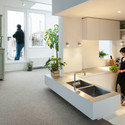
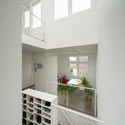
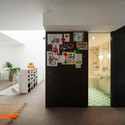


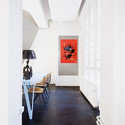
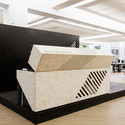

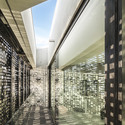
.jpg?1400800377 "© Gerard van Beek")
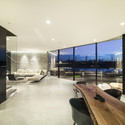
.jpg?1400800988 "© Gerard van Beek")
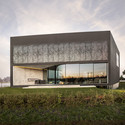
.jpg?1400800997 "© Gerard van Beek")
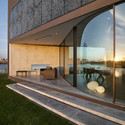
.jpg?1400801035 "© Gerard van Beek")
.jpg?1400800194)

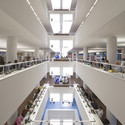

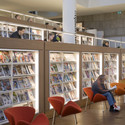

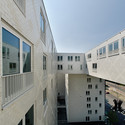








.jpg?1396009493 "Courtesy of OMA - G-Star")