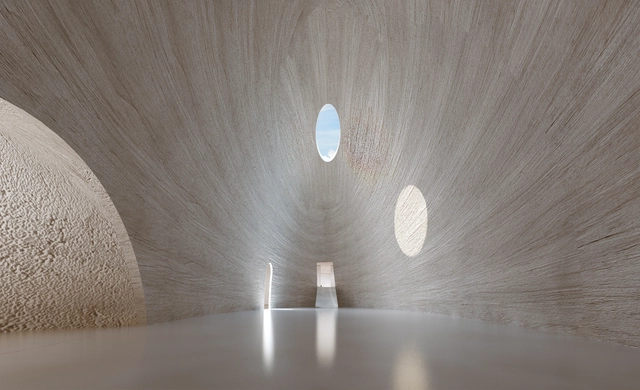
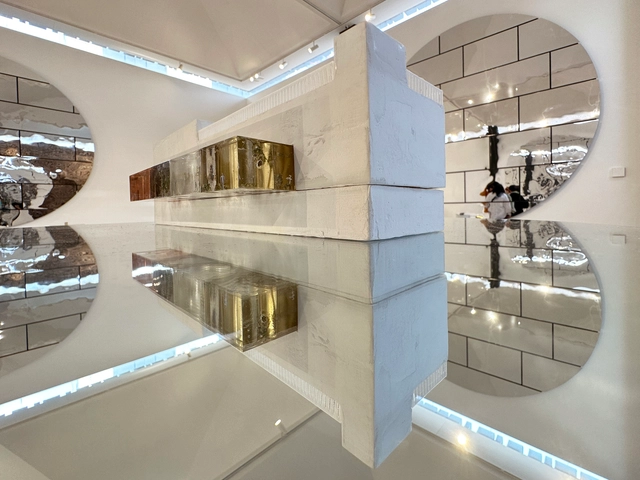
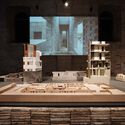
Ahmadreza Schricker is an architect whose journey was shaped by his work with Herzog & de Meuron and his time with the well-renowned OMA. His studio ASA North, is well known for its award-winning adaptive reuse of the Argo Contemporary Art Museum & Cultural Center, a former distillery that was awarded at the 2020-2022 Aga Khan cycle. It is a testament to the work ASA North does, bridging gaps between past and future, traditional and contemporary. The interview also goes beyond ASA North, looking into its sister company, ASA South. Based in the virtual world, ASA South challenges conventional boundaries and reimagines architectural practice in the digital age.
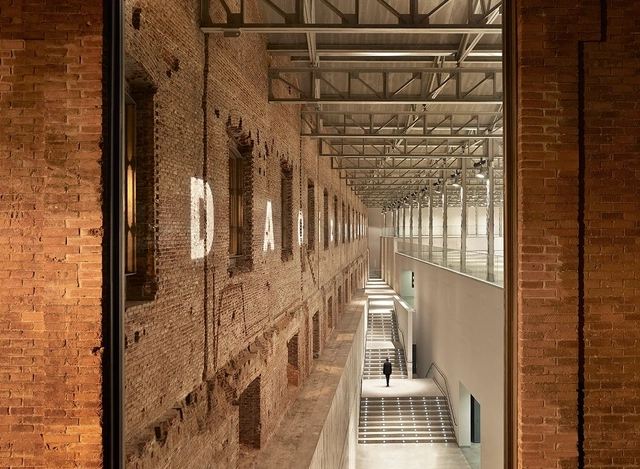
In 2020, Ahmadreza Schricker (ASA North) completed the Argo Contemporary Art Museum & Cultural Center design. Previously a 1920s beer distillery in the heart of Tehran, it has now been converted into a contemporary art center and is now the new home of the Pejman Foundation.ASA North is a studio based in Tehran that was chosen by ArchDaily as part of the 2023 New Practices. ArchDaily selects those practicing within the broadest definition of architecture and its exercise to share their innovative, fresh, and forward-thinking mission with the community. In the summer of 2023, the foundation hosted an exhibition featuring selected works from ASA North while documenting the transformation of the Argo Factory. The exhibition explored the studio’s practice, developing a commentary on their projects and their self-awareness.
When you’ve made a mess, it’s often easier to hold up your hands and start again from scratch. But while it might be a harder way to do it, adaptive reuse – when architecture takes something old and broken and brings it back to life – can have benefits all around.
When planning much-needed social and cultural buildings for public use, instead of using new, virgin materials (or even recycled materials that need to be collected, stripped, reformatted, and transported), there are plenty of pre-made sites already in place. All we have to do is see them.
These adaptive reuse projects take disused buildings, forgotten projects, and unloved environments and transform them into something new, bringing life, positivity, and purpose.
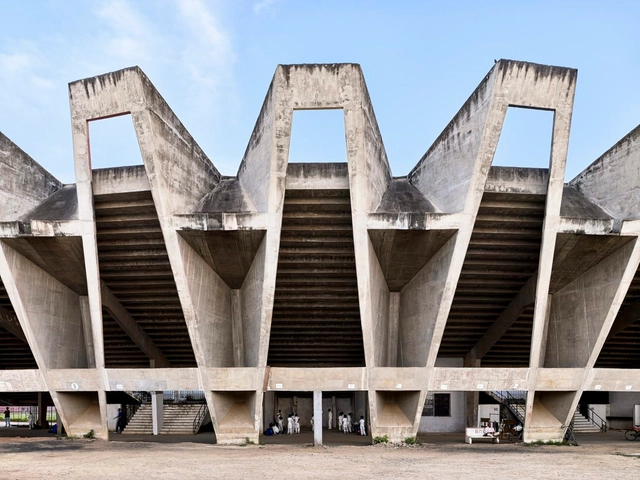
The structure was originally built to host international and domestic cricket matches. In the 1950s, the Cricket Club of Ahmedabad was granted 67,000 sqm of land to construct a Cricket Stadium. It was the country’s first “turf ground,” hosting the first cricket match in India. For the cricket community in the country, the SVP represents a venue that has nurtured and honed young cricketers from all over the state, and it has been graced by several of India's legendary players in both test and one-day cricket matches.
No building stands in isolation. Engaging environmental and cultural networks, architecture is an inherently grounded art. As such, limits, constraints, and restrictions drive the design process forward, engendering solutions that celebrate the world as we find it. Embodying this dynamic, renovations and adaptive reuse projects embrace challenging problems and existing conditions. This is especially true when working with industrial buildings, places where machinery, manufacturing, and power combine.
Amidst the current wave of architectural globalization, the art of crafting designs attuned to specific contexts is fading. This concern is especially significant in countries in crisis, such as Ukraine, where the built environment's history is being eroded by war. In these conditions, the contribution of local architects with an innate grasp of the country's cultural nuances becomes imperative. Leading the charge in the rebuilding of Ukraine is prototype, a pioneering practice that challenges architectural conventions to push the country towards a promising future.
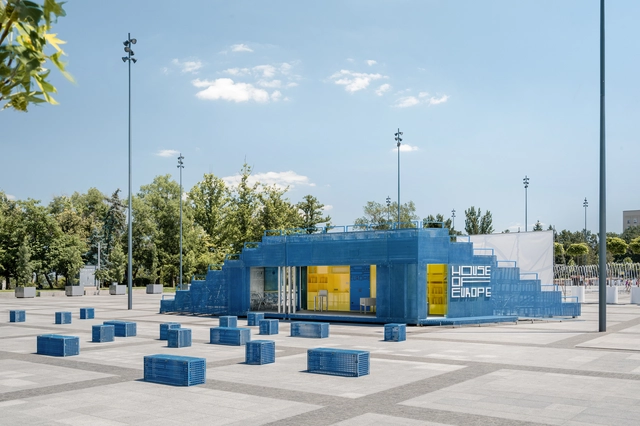
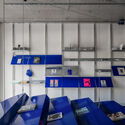
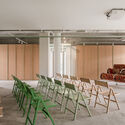
Recognizing their forward-looking vision, ArchDaily has featured prototype as part of the 2023 New Practices, a global annual survey. prototype's outlook on the future of architecture aligns with responsible design that addresses the environmental impact of construction and marries contextual and specific considerations for each project. Their recent accomplishments include the bookstore Readellion, and Ukrainian-Danish Youth House, epitomizing prototype's recurring design principles of mobility, adaptability, dynamic levels, and change of scenarios.
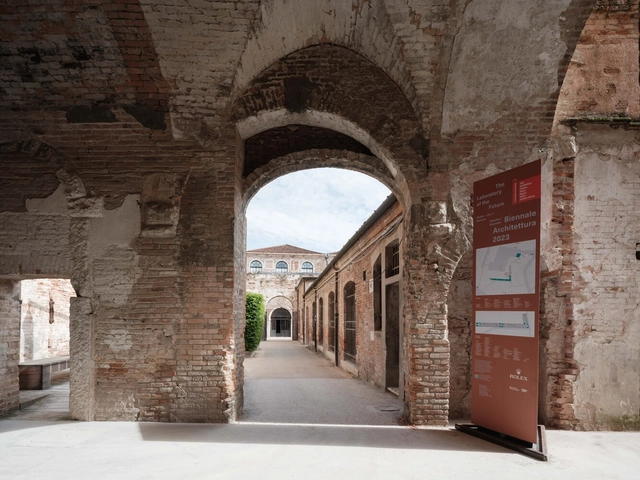
Neri&Hu presented “Liminality”, a multimedia exhibition selected by Lesley Lokko, at the International Architecture Exhibition in Venice. The exhibition took place in the Dangerous Liaisons section of La Biennale di Venezia at the Arsenale. In response to Lokko’s curatorial statement, Neri&Hu’s display explored the concept of liminality, the “zone” between design practice and theoretical exploration. The display consisted of three adaptive reuse projects that represent the practice’s research in “Reflective Nostalgia, Recasting Vernacular, and Ruinophilia/Future Artifact.”
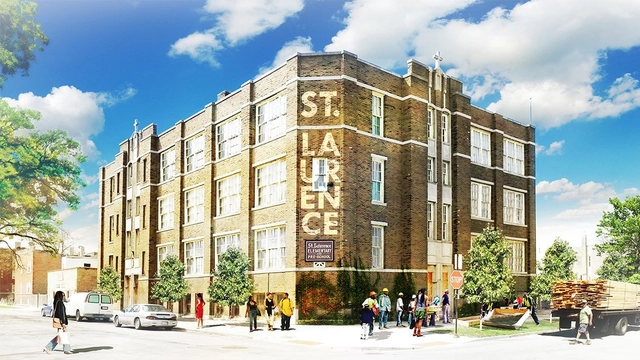
Rebuild Foundation, run by Artist Theaster Gates, is converting the St. Laurence Elementary School into a new 40,000 sq foot arts hub on Chicago’s South Side. The formerly vacant elementary school in Chicago’s local St. Laurence neighborhood has been reimagined to redeem indoor and outdoor spaces, making it a cultural hub. Set to open in 2024, the building's adaptive reuse expanded the program and the landmark into a place of exploration, entrepreneurship, and creative education.
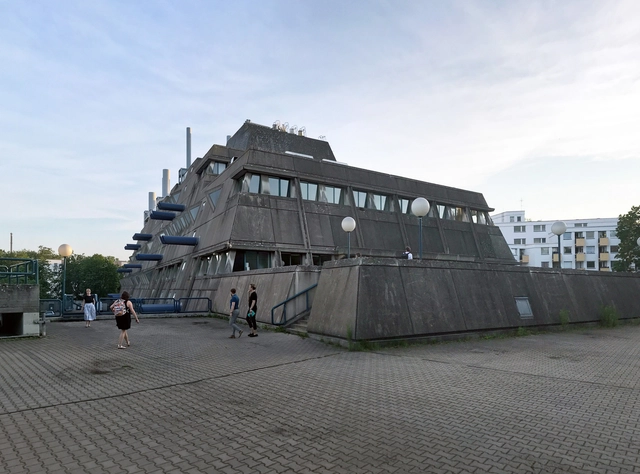
The former animal laboratories of the Charité in Lichterfelde, also known as the Mäusebunker building, have now been placed under monument protection, saving it from the threat of demolition that has been slated since 2010. The brutalist structure was designed by architects Gerd and Magdalena Hänska and built from 1971, and put into operation in 1982. While its strong image, combined with its function as a laboratory for animal tests, resulted in the general public’s distaste for it, the Brutalist building slowly gained acceptance and even a cult status among brutalist fans.
Advancements in technology have paved the way for a revolutionary approach to architecture, one that involves responsiveness and movement. This concept called "kinetic architecture" allows buildings to dynamically adapt to their ever-changing surroundings. As of today, kinetic principles are commonly applied to enhance the environmental sustainability of buildings, especially through facades. However, kinetic architecture has the potential to impact the built environment in other facets as well. In public spaces, kinetic architecture holds immense promise, presenting opportunities to make them more accessible, inclusive, and user-friendly. Introducing kinetic elements into public spaces challenge long-held assumptions about architecture as a passive arrangement, ushering in a new era of interactive and engaging urban environments.
In his latest TED Talk, Thomas Heatherwick decries a condition affecting areas of the city defined by monotonous buildings, or what he calls “an epidemic of boringness.” While recognizing the functionality which drove these designs, he states that functionality alone cannot ensure that the structures become active parts of urban life, as they often fail to provoke an emotional response from passers-by. Heatherwick explains that, in his view, this emotional function, or the ability of buildings to mean something to their users and visitors, is essential. When it succeeds, architecture can positively contribute to the quality of life and well-being of its residents, promote social cohesion and contribute to a sense of identity. So how can architecture provoke a positive emotional connection and provide an enjoyable backdrop to the communities it serves?
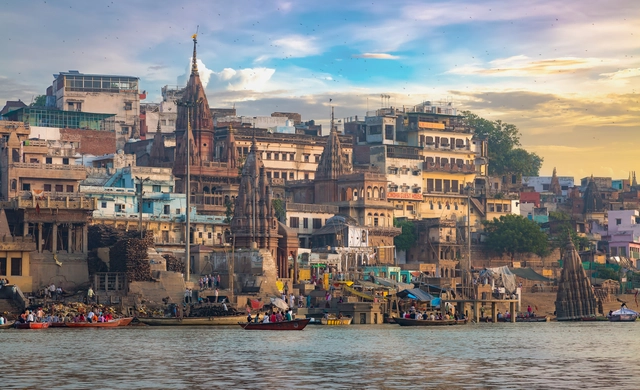
Water, with its religious connotations as a symbol of purification and life, holds great significance in many cultures. Nowhere is this respect for water more evident than in India, a country that reveres its rivers as holy. Water bodies serve as a testament to the veneration and use of water in religious rituals, embodying cultural heritage as public spaces, ritual sites, and places for cremation. Central to daily life in India, water and water architecture intertwine spirituality, and cultural traditions, offering a glimpse into the rich traditions of communities.
Architecture is a continually evolving form of human expression influenced by cultural and contextual factors. While many of the problems we face today aren't directly linked to architecture, it has the ability to provide or facilitate solutions to these challenges. This has been evident throughout history, as societal issues have played a significant role in shaping our built environments. For instance, during the Victorian era, the infamous "Great Stink" led to the modernization of London's drainage system and urban layout. Similarly, the 2008 recession gave rise to the sharing economy and coworking spaces. Nowadays, the climate crisis is transforming the way we conceive architecture, seeking to reduce the carbon footprint of buildings and cities to achieve the Paris Agreement objectives. Given this backdrop, what challenges should we expect in the future?
https://www.archdaily.com/1000810/energetic-retrofitting-a-solution-for-environmental-obsolescence-in-architectureEnrique Tovar
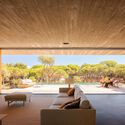
House of the Flying Beds . Image Courtesy of Al Borde
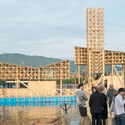
The 2023 Sharjah Architecture Triennial (SAT) will take place from November 11th, 2023 to March 10th, 2024, under the theme "The Beauty of Impermanence: An Architecture of Adaptability". Focusing on how scarcity in the Global South has led to a culture of re-use, re-appropriation, innovation, collaboration, and adaptation, the second edition of the architectural exhibition, curated by Tosin Oshinowo, aims to shift global conversations towards creating a more sustainable, resilient, and equitable future.
Cities need to prepare for a wave of declining houses of worship. While faith institutions, at least the Christian ones, have been asking WWJD (What would Jesus do?), municipalities need to get them to ask another question: WWJJD (What would Jane Jacobs do?). Doing so might lead to a new model for true community houses of worship.
Subscriptions are quickly becoming an integral part of everyday life. For example, streaming platforms have completely replaced the need to own video cassettes, while ride-sharing services partially cover the need to own a private car. Subscriptions have been largely understood as digital services, but a new trend suggests that the same concept could be transferred to physical objects in the near future. Instead of owning a fridge, a washing machine, or even light bulbs, one could acquire a subscription to ensure the freshness of produce, clean clothes, and a well-lit home.
The concept is known as the “subscription-based economy,” a variant of the “circular economy” notion. It postulates that instead of owning some of the objects used every day, one could subscribe to a service to gain access to the same benefits, but without the need to own, maintain or dispose of the object in question. Consumers no longer buy products; they buy access to services. Sometimes, it would mean simply leasing the object instead of purchasing it, but the model goes one step further. It inscribes a shift of responsibility and mentality. Because consumers no longer own the objects, the responsibility to reuse and recycle falls to the producers, who are now in charge of the entire life cycle of the objects they create.
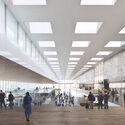
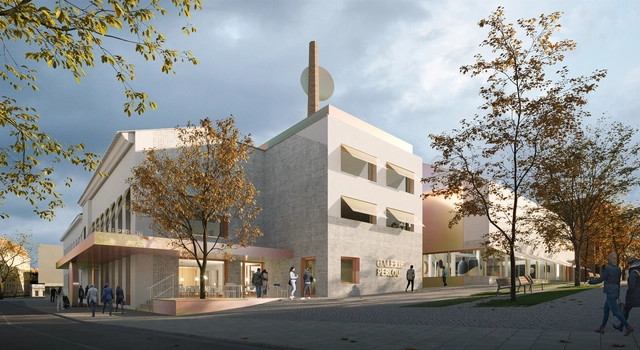
Pearl Gallery Renders. Image Courtesy of CHYBIK + KRISTOF
CHYBIK + KRISTOF architecture studio has been announced as the competition winners for a new cultural landmark that will transform and re-activate public space in Ústí nad Orlicí, Czech Republic. This former textile factory will be converted into a multifunctional cultural hub available to the public. The newly revitalized building will contribute to the existing cultural infrastructure, located near the main square of the city.