Known for his conceptual designs, Japanese architect Toyo Ito is arguably one of the world's most innovative architects. He began his architectural career with a project for his sister in 1976 called "The U House," located in the center of Tokyo. The U House contained windows on the inside facing a courtyard instead of the typical outward-facing windows. This was Ito's first experimentation with the ways that light enters buildings, and he expanded this idea to an even greater extent in his next project: the Silver Hut in Nakano, Tokyo.
gmp Architekten just won the first prize in the competition to design the 1.2 million square-meter Tianjin Exhibition Center. Now the third city where an exhibition center of international importance will be built after Shanghai and Guangzhou, their design concept proposes two almost identical construction phases. They both consist of a central entrance hall roofed over by filigree canopies, 8 exhibition halls on both sides and a main central thoroughfare that connects the entrance halls with the exhibition halls. More images and architects' description after the break.
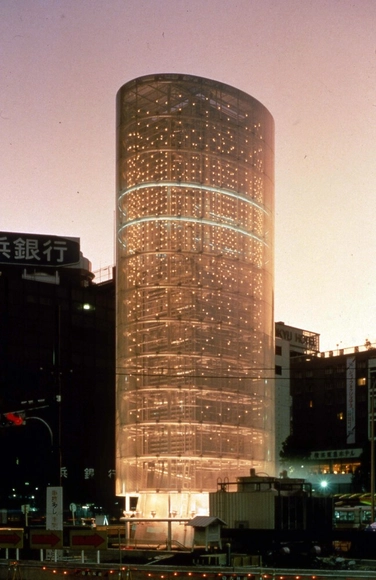
The Tower of Winds is a project largely indicative of Toyo Ito's approach to architecture, particularly his belief in the importance of technology and its vital role in the future of architecture. The project not only embraces technology and involves it in a dialogue with the city, but also establishes a direct symbolic relationship between nature and the installation.
Toyo Ito, recipient of the Pritzker Prize 2013, along with Cecil Balmond and Arup were in charge of the design of the Serpentine Gallery Pavilion back in 2002. What appeared to be an extremely complex random pattern was in fact derived from an algorithm of a cube that expanded as it rotated. The intersecting lines formed different triangles and trapezoids, whose transparency and translucency gave a sense of infinitely repeated motion.
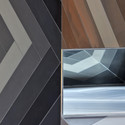
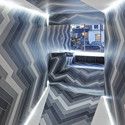
Text description provided by the architects. Designed by Zaha Hadid Architects, the ‘Shop in Shop’ concept for Neil Barrett is based on a singular, cohesive project that is divided into sixteen separate pieces. Specific pieces have then been selected and installed into each of the four Neil Barrett Shop in Shop’s in Seoul, and also into the Hong Kong shop; creating a unique display landscape within each store. The pieces have been carved and molded from the original solid as pairs that define each other to create an artificial landscape that unfolds multiple layers for display. More images and architects' description after the break.




.jpg?1363717376&format=webp&width=640&height=580)

_(23).jpg?1413948175&format=webp&width=640&height=580)












.jpg?1363717376)

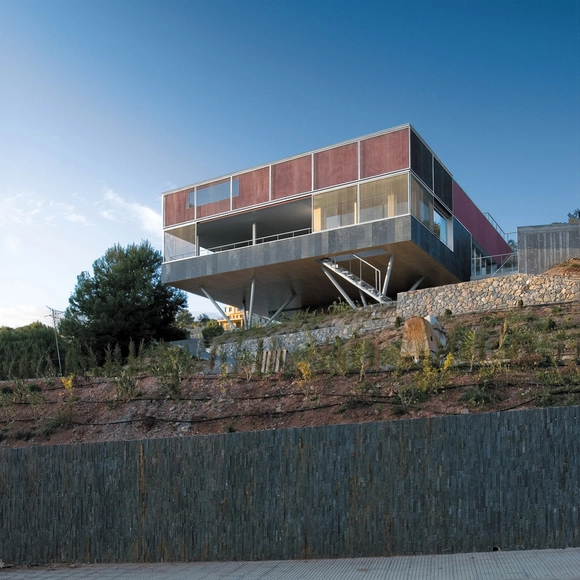
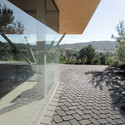
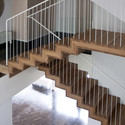
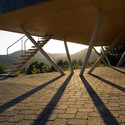


_(22).jpg?1413948159 "© Mito Covarrubias")
_(25).jpg?1413948170 "© Mito Covarrubias")
_(16).jpg?1413948183 "© Mito Covarrubias")
_(11).jpg?1413948194 "© Mito Covarrubias")
_(23).jpg?1413948175)








_m1.jpg?1363547365&format=webp&width=640&height=580)
.jpg?1363547260 "© Nicolas Fussler")
.jpg?1363547266 "© Nicolas Fussler")
.jpg?1363547348 "© Juan Sepulveda")
_m1.jpg?1363547388 "© Juan Sepulveda")
_m1.jpg?1363547365)