Nico Saieh

Architectural Photographer based in Santiago, Chile

BROWSE ALL FROM THIS PHOTOGRAPHER HERE

Inside France's "Modernity, Promise or Menace?" - Special Mention Winner at the Venice Biennale 2014

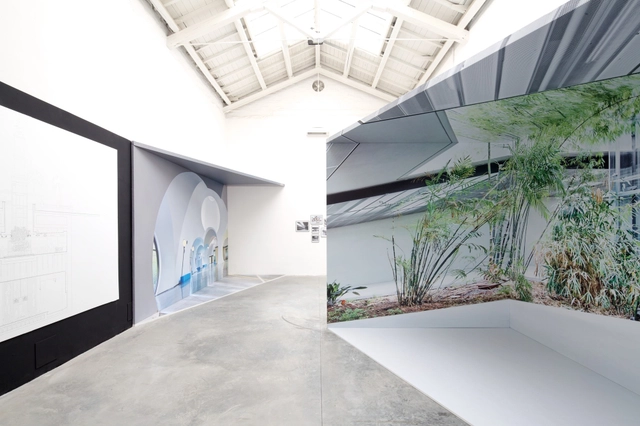
This year's French Pavilion stood out as one of the best pavilions in the Giardini, communicating a clear, engaging thesis and receiving a Special Mention from the jury.

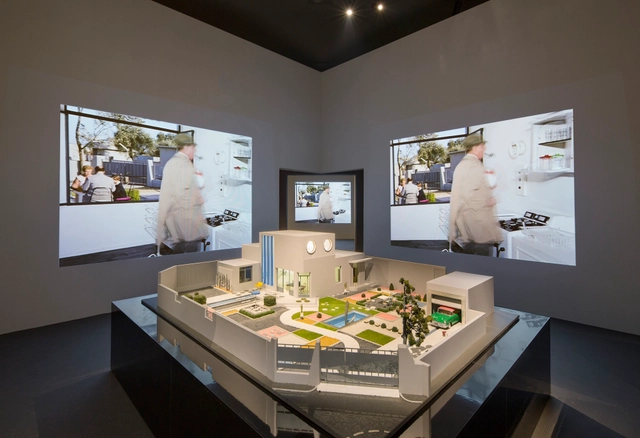
Curator Jean-Louis Cohen poses four questions throughout four galleries, demonstrating the contradictions that fill the story of modernity and architecture in France. The ambivalent responses of architecture to the original promise of modernity is shown through the juxtaposition of a continuous cinematographic montage (playing simultaneously throughout all four galleries) and large-scale objects.

Watch an excerpt from Teri Wehn Damisch's film and read the curator's statement after the break. For a virtual tour of the space designed by Paris-based firm Projectiles, follow this link. And make sure to keep an eye out for our video interview with curator Jean-Louis Cohen (coming soon).

Inside France's Modernity, Promise or Menace? - Special Mention Winner at the Venice Biennale 2014  - More Images+ 23

Critical Round-Up: Venice Biennale 2014

With the first weekend of the Venice Biennale in the books, over the past few days reviews from critics have been flooding in. Each is eager to dispense their opinions on what has been one of the most highly anticipated Biennales in recent memory, and it seems that the event has not disappointed. From reviews of the festival as a whole to individual takes on the National Pavilions, read on after the break as we take a look at some of the most intriguing reviews so far.

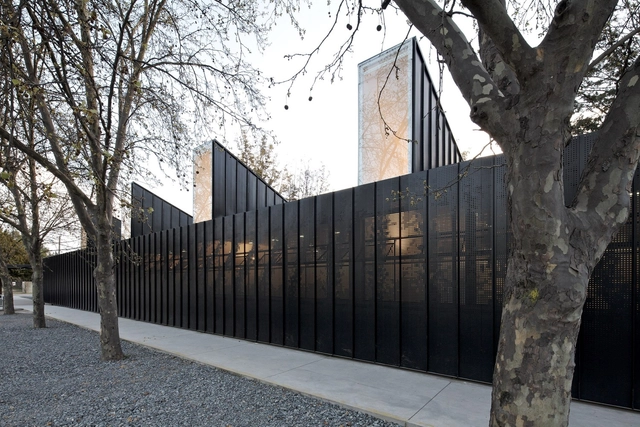
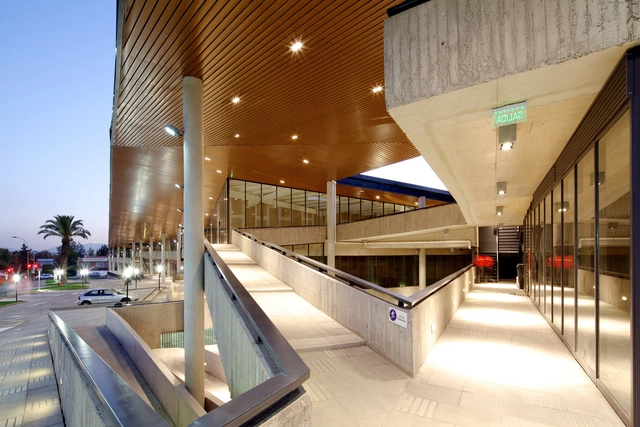
Alianza Francesa Jean Mermoz School / Guillermo Hevia García + Nicolás Urzúa Soler

Alianza Francesa Jean Mermoz School / Guillermo Hevia García  + Nicolás Urzúa Soler - More Images+ 36

  • Architects: Guillermo Hevia García , Nicolás Urzúa Soler
  • Area Area of this architecture project Area:  1660
  • Year Completion year of this architecture project Year:  2012
  • Manufacturers Brands with products used in this architecture project
    Manufacturers:  Armstrong Flooring, Hunter Douglas

Inside Homeland, Portugal’s Pavilion at the US Biennale

 Inside Homeland, Portugal’s Pavilion at the US Biennale  - Featured Image
© Nico Saieh

The Portuguese Pavilion at the 14th edition of the Venice Biennale has created a newspaper, “, News from ,” which covers the last 100 years of architectural, social and economic news from .

Iñaki Ábalos' Spanish Pavilion at the Venice Biennale: "Interior"

By focusing on the architecture of interiors, Inaki Ábalos, the curator of this year's Spanish Pavilion, highlights the spaces within 12 Spanish buildings. These projects, mostly completed within the past three years, serve as specifically important instances of refurbishment and regeneration of Spain's built heritage. The exhibition is a study not only of the architecture itself, but of the cultural material that gave rise to the specific forms. Through large-scale photographs and sections of each of the presented spaces, Interior seeks "the place where life unfolds, the central theme of architecture." Read on to find the rest of the curator's statement.

Iñaki Ábalos' Spanish Pavilion at the Venice Biennale: Interior - More Images+ 15

Venice Biennale 2014: Israel's Tabula Rasa

Israel is a country that was built with modernism as its guide. It flourished in a particular way and resulted in a unique architectural landscape, not only in terms of singular buildings, but also in the way in which the territory itself was planned. Anti-urban in essence, the Sharon Plan from 1951 gave birth to more than 400 new towns scattered across the territory.

This new landscape -a tabula rasa- evolved into a variety of patterns and forms, a landscape that is neither Urban nor Suburban.

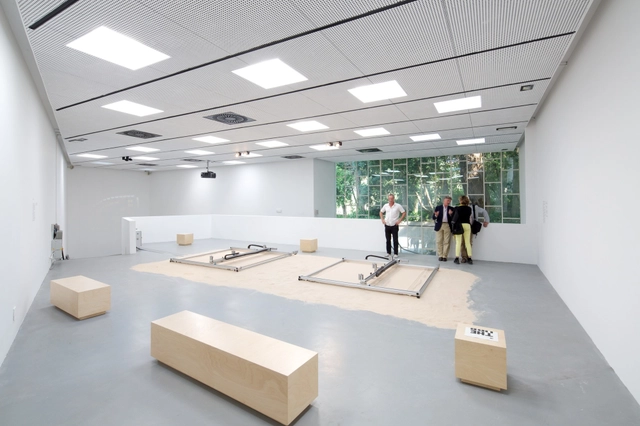
“Urburb” is the title of the Israeli exhibit at the 2014 Venice Biennale. Within the pavilion, a constant robotic performance traces the patterns that resulted from the Sharon plan in the sand, only to erase them after a few minutes and then draw them again. It is a performance that makes one think about the future of new settlements and the possibilities of robotic construction.

The exhibition is curated by Ori Scialom, Dr. Roy Brand, Keren Yeala Golan and Edith Kofsky.

Venice Biennale 2014: Israel's Tabula Rasa - More Images+ 8

Your Virtual Tour of the National Pavilions at the Venice Biennale 2014

Your virtual tour of the Venice Biennale has arrived! Check out each of the national pavilions currently on display for ' chosen theme - Absorbing Modernity, 1914-2014.

Your Virtual Tour of the National Pavilions at the Venice Biennale 2014 - More Images+ 43

First Look Inside OFFICEUS, the US Pavilion at the 2014 Venice Biennale

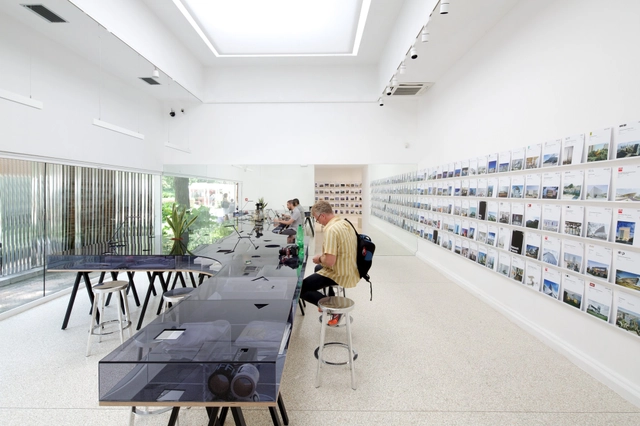
To kick off our coverage of the Venice Biennale, we're bringing you photos of OfficeUS -- the United States' contribution to the national exhibitions organized under the theme of "Absorbing Modernity." The pavilion houses both a repository of information about the history of architectural firms in the US (with a focus on the US's role in exporting architecture) and serves as the base of operations for a new architectural firm that was created solely for this year's biennale. The research, collected into booklets, lines the walls of the space. While visitors mill around the pavilion, the members of OfficeUS work at specially designed tables. The output and deliverables of the office will be determined as the Biennale progresses. We also got the chance to speak to the organizers, so stayed tuned for video interviews with the curators and designers of the US Pavilion (coming soon!). For now, however, read on to the see the curator's statement on the exhibit.

First Look Inside OFFICEUS, the US Pavilion at the 2014 Venice Biennale - More Images+ 19

Boulevard Las Brujas / Mas Fernandez Arquitectos

Boulevard Las Brujas / Mas Fernandez Arquitectos - More Images+ 26

  • Area Area of this architecture project Area:  5001
  • Year Completion year of this architecture project Year:  2012
  • Manufacturers Brands with products used in this architecture project
    Manufacturers:  Budnik

ArchDaily Editors Select 20 Amazing 21st Century Museums

Subscriber Access | 

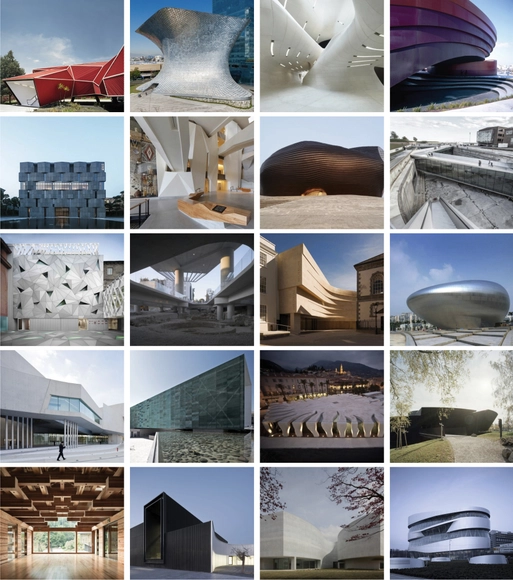
In honor of International Museum Day we’ve collected twenty fascinating museums well worth visiting again. In this round up you’ll find classics - such as Bernard Tschumi Architects' New Acropolis Museum and Zaha Hadid Architects' MAXXI Museum - as well as lesser-known gems - such as Medieval Museum, the Natural History Museum of Utah by Ennead, and the Muritzeum by Wingårdhs. See all of our editors' favorites after the break!

What If MOMA Had Expanded Underground (And Saved The American Folk Art Museum)?

Subscriber Access | 

In January of this year, the latest work by Smiljan Radic, the Chilean architect chosen to design the next Serpentine Pavilion, opened to public acclaim. The Museum of Pre-Columbian Art (Museo de Arte Precolombino), located in Santiago de Chile, is a restoration project that managed to sensitively maintain an original colonial structure - all while increasing the space by about 70%.

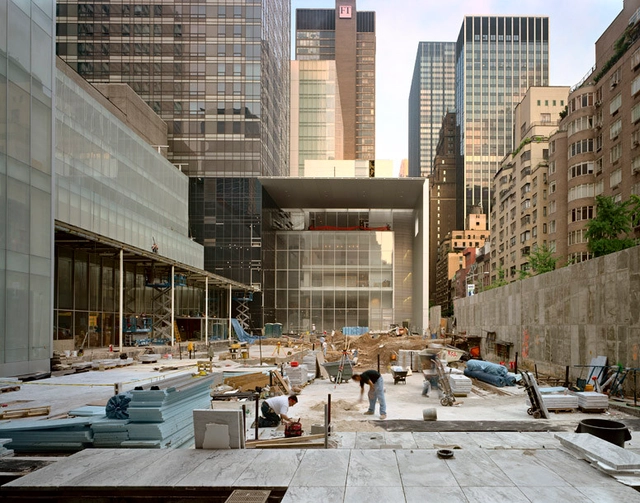
Two days before the The Museum of Pre-Columbian Art opened, the Museum of Metropolitan Art (MOMA) in New York issued a statement that it would demolish the American Folk Art Museum (AFAM), designed by Tod Williams Billie Tsien Architects, in order to accomplish its envisioned expansion. Two weeks ago, preparations for demolition began.

Some background: MOMA had hired Diller Scofidio + Renfro a year earlier to design the expansion. The office asked for a period of six months to consider the possibilities of integrating the American Folk Art Museum into the design. After studying a vast array of options (unknown to the public) they were unable to accommodate MOMA’s shifting program needs with the AFAM building. They proposed a new circulation loop with additional gallery space and new program located where the AFAM is (was) located.

What appears here is not strictly a battle between an institution that wants to reflect the spirit of the time vs a building that is inherently specific to its place. It represents a lost design opportunity. What if the American Folk Art Museum had been considered an untouchable civic space in the city of New York, much like the The Museum of Pre-Columbian Art is for the city for Santiago? Then a whole new strategy for adaptive reuse would have emerged.

What If MOMA Had Expanded Underground (And Saved The American Folk Art Museum)? - More Images+ 10

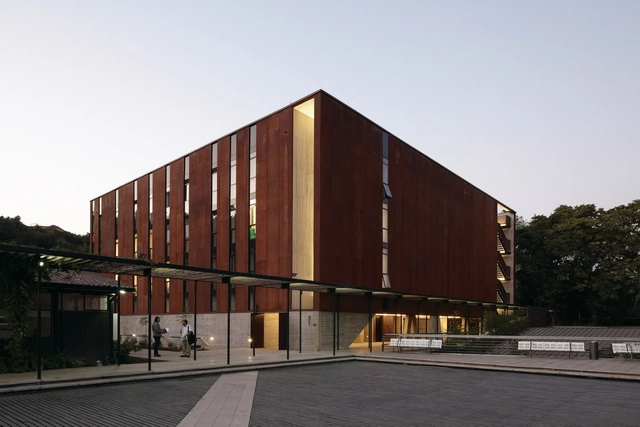
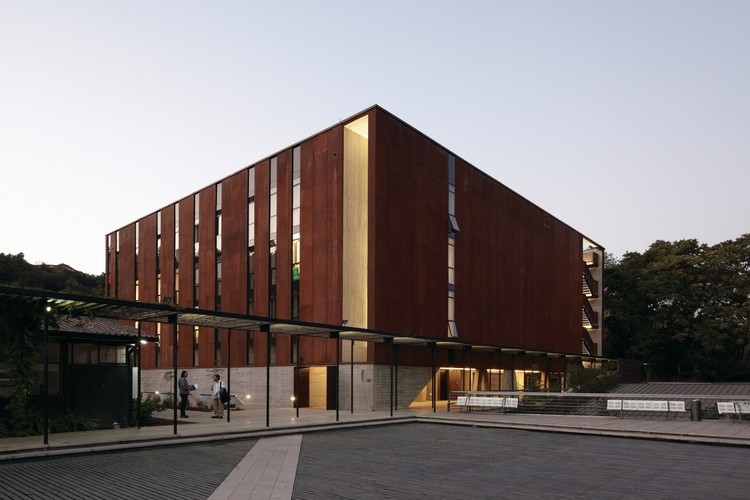
School of Design and Institute of Urban Studies / Sebastián Irarrázaval

School of Design and Institute of Urban Studies / Sebastián Irarrázaval - More Images+ 67

  • Area Area of this architecture project Area:  4716
  • Year Completion year of this architecture project Year:  2010
  • Manufacturers Brands with products used in this architecture project
    Manufacturers:  Arauco, Arteknia, Atika, Grau

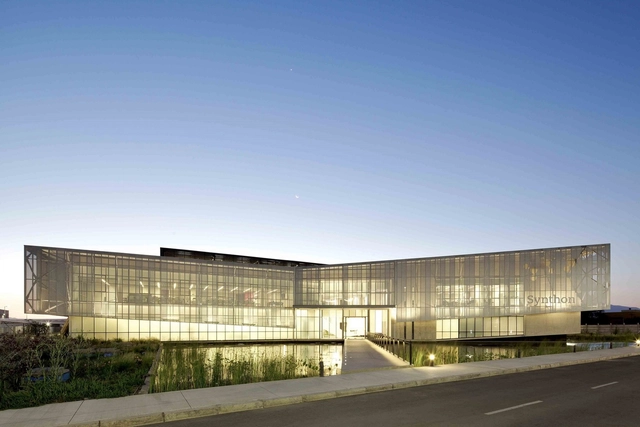
Synthon Laboratory Building / GH+A | Guillermo Hevia

Synthon Laboratory Building  / GH+A | Guillermo Hevia - More Images+ 32

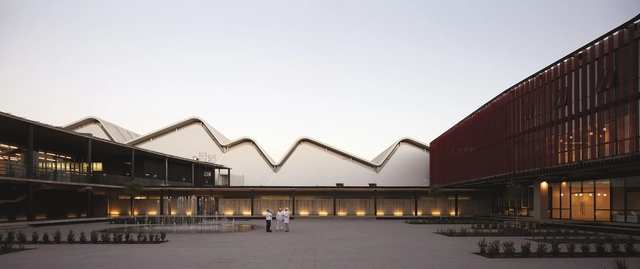
Carozzi Production and Research Food Center / GH+A | Guillermo Hevia

Carozzi Production and Research Food Center / GH+A | Guillermo Hevia - More Images+ 38

  • Year Completion year of this architecture project Year:  2012
  • Manufacturers Brands with products used in this architecture project
    Manufacturers:  Atika, Bash, Brimat, Budnik, Chubretovic, +7

Tunquén House / Mas Fernandez Arquitectos

Tunquén House / Mas Fernandez Arquitectos - More Images+ 22

Algarrobo, Chile
  • Area Area of this architecture project Area:  120
  • Year Completion year of this architecture project Year:  2013
  • Manufacturers Brands with products used in this architecture project
    Manufacturers:  Nuprotec

Venice Biennale 2014: Hans Ulrich Obrist and Herzog & de Meuron Collaborate on Swiss Pavilion

Hans Ulrich Obrist, co-director of London’s Serpentine Gallery, has been chosen as curator for the Swiss pavilion at the 2014 Venice Architecture Biennale. Inspired by director Rem Koolhaas’ theme, “Fundamentals,” Obrist recalled the first architects he ever met, Jacques Herzog and Pierre de Meuron, and invited them to collaborate on the exhibition.

“When I was invited to do the pavilion, I thought working with [Herzog and de Meuron] fit in with the whole idea of the biennale this year – looking to the past, and using the past as a toolbox to create the future,” Obrist told ARTINFO UK.  

Venice Biennale 2014: FAT, Crimson Explore the Foundation of British Modernism

Curators FAT Architecture and Crimson Architectural Historians have released more details on this year’s British Pavilion for the 14th Venice Architecture Biennale. Responding to Rem Koolhaas’ theme, "Absorbing Modernity: 1914-2014,” A Clockwork Jerusalem will “explore the diverse cultural influences that shaped and were shaped by British Modernism in the post war era and over the last 100 years.”

"A Clockwork Jerusalem will offer the opportunity to explore and rethink fundamental aspects of British modernity, beyond architecture,” described Vicky Richardson, Director of Architecture, Design and Fashion at the British Council. “As the Venice Biennale evolves into a global research project, we are keen to make a significant contribution to the cultural debate around the past, present and future of UK and global architecture.”

More from the curators, after the break...

Venice Biennale 2014: Nordic Pavilion to Study Architecture’s Role in East African Independence

The National Museum in Norway has been chosen to curate the Nordic Pavilion for the 2014 Venice Architecture Biennale, in collaboration with the Museum of Finnish Architecture, the Swedish Centre for Architecture and Design in Stockholm, and architectural firm Space Group. The exhibition, “FORMS OF FREEDOM: African Independence and Nordic Models” will study modern Nordic architecture’s role in the liberation of East Africa during the 1960s and 70s.