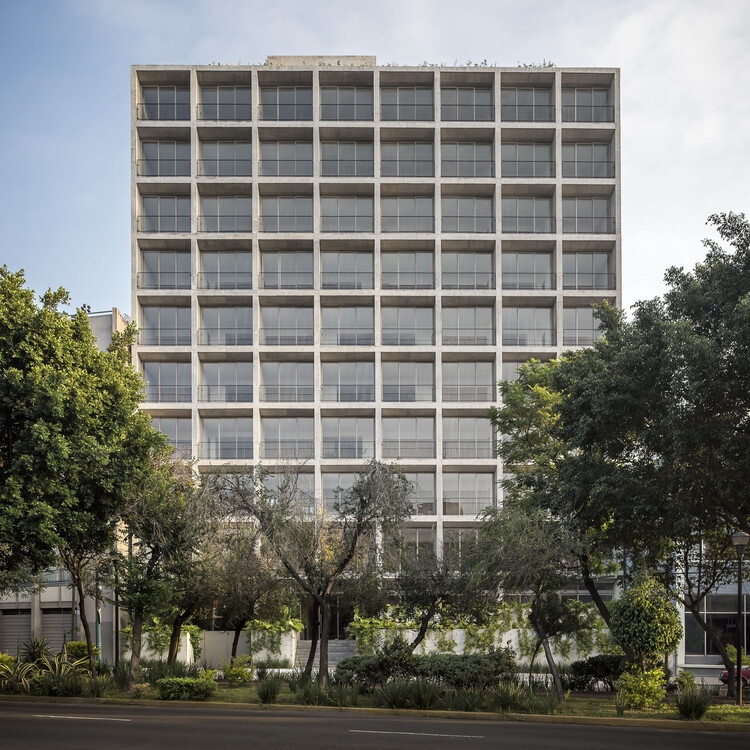
The architecture of cultural centers in Mexico has gained relevance in recent years. There has been a growing interest in providing spaces for recreation and education, transforming them into urban landmarks that attract visitors from all over the country year after year.
The spatial distribution of a restaurant or bar is essential to its success. Faced with this design challenge, several architects have experimented and proposed configurations that both enhance the use of space in different culinary experiences.
With this being said, take a look at 50 gastronomic establishments in plan and section to inspire your next design.
In the architectural world, unestablished practices are often overlooked, yet, by challenging the traditional dogmas of the industry, they can have a significant impact on the built environment. The Young European Architecture Festival (YEAH!) explores the work of these upcoming architectural offices, looking at how they share ideas visions and experiences at the European level. The event is divided in two sections: Habitats, exploring ideas of domesticity and the residential typology, and Hybrids, initiatives that are rethinking the traditional systems of city planning.
The following represents a selection of projects by emerging architectural practices selected by YEAH! For the Hybrids category. Many of these initiatives are challenging the ideas of public space, but in doing so, they are also shedding light on the larger social structures at play in these spaces. The selection includes community spaces, schools, transportation hubs, and even projects initiated by the architects themselves, who have noticed deficiencies in their environment and are working to not only correct them but to enhance their presence and empower the local community through them.
Over the years, interior design has evolved according to the needs that arise, but above all according to the experiences it seeks to evoke in the user. In the last two years we have witnessed a radical change and a special interest in this subject because the pandemic forced us to pay specific attention to the configuration of the places we inhabit. This brought about much more holistic designs that seek to address the wellbeing of the user, combining colours, sensory experiences, technology and natural elements that promote health.
As engines of the economy and production, cities are home to the largest masses of people and it is estimated that by 2050, they will be home to 70% of the world's population. In this context, architects are incorporating the articulation of mixed uses in their buildings on a daily basis, seeking to encourage diversification and avoid mono-functionalisation.
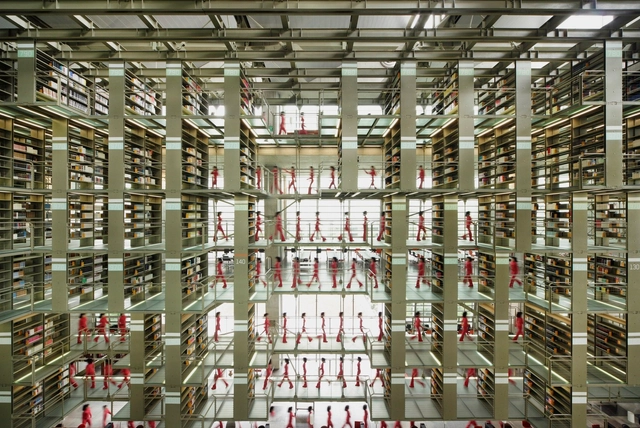
Biblioteca Jose Vasconcelos / Taller de Arquitectura X / Alberto Kalach. Image Cortesía de Taller de Arquitectura X / Alberto Kalach
Over the years, interior design has evolved according to the needs that arise, but above all according to the experiences we seek to provoke in the user. In the last two years, we witnessed a radical change and a particular interest in this subject because the pandemic forced us to pay specific attention to the configuration of the places we inhabit. This brought about much more holistic designs that cater to the wellbeing of the user, combining colours, sensory experiences, technology and natural elements that promote health.
Few religions have as much history and symbolism as Judaism. As the world's oldest monotheistic religion, it dates back nearly 4,000 years. In Judaism, architecture and houses of worship serve as places not only for liturgical services but also for assembly and study. Today, architects are rethinking the design of synagogues and community gathering spaces to celebrate Judaism, reflection and community.
There are several reasons why Quintana Roo —a state located in the southeastern region of Mexico— has an important cultural wealth. One of them is because of world-class tourism which has led it to have one of the eight international airports in Mexico in addition to being praised by the World Tourism Organization.
Hidalgo is a landlocked state to the north of Mexico City and bordered by the states of San Luis Potosí, Veracruz, Puebla, Tlaxcala, Mexico, and Querétaro. It's territory spans 20,821 km² and it's the sixth smallest state in the country. It's capital and most populous city is Pachuca de Soto. Hidalgo's diverse cultural wealth comes from the various indigenous groups that call the state home, such as the Otomíes, the Nahuas, and the Tepehuas. Hidalgo's cultural heritage centers on the cuisine, the Fiesta de Toros, Huapango and Bandas de Viento music, the Charreria rodeo, and the Xantolo celebration.
There are several reasons why the Estado de Mexico (a state, not the country) is important not only at the national level but also because of its intrinsic relationship with Mexico City since 59 of its municipalities are considered part of the Metropolitan Area of the Valley of Mexico. In this area, there are a large number of industrial plants. In addition, it houses some of the most visited archaeological sites such as Teotihuacán, Tetzuco, Azcapotzalco, Chalco, and Amaquemecan.
Stairways are central to access and mobility within a space, and yet, they often take a backseat to other elements of design within a work of architecture. However, Mexican firm PRODUCTORA has put them at the forefront of many of their projects, notably the Teopanzolco Cultural Center.