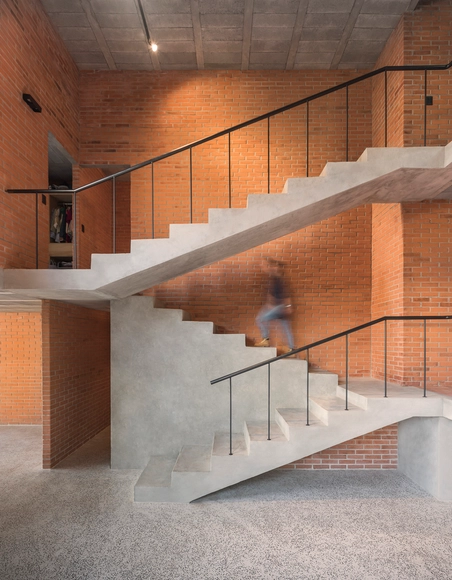


-
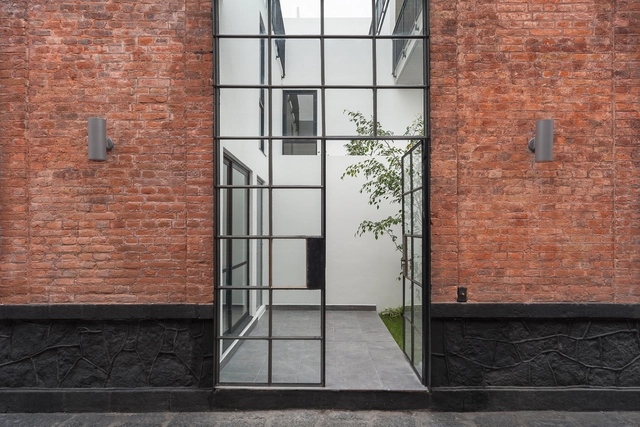
Architects: PRODUCTORA
- Area: 180 m²
- Year: 2016
-
Manufacturers: Novaceramic, Premex



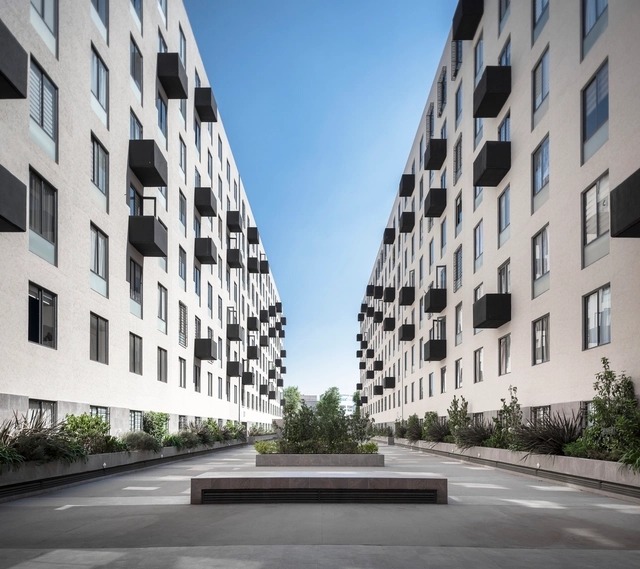
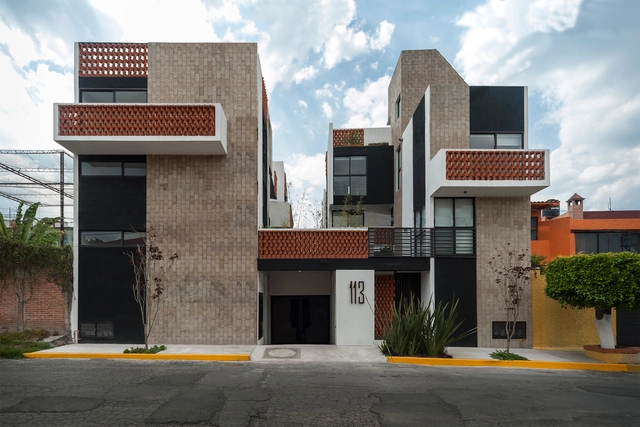
![LC 843 Building / Escala Arquitectos + A+[eu] Arquitectura y estrategias urbanas - Exterior Photography, Apartments, Facade](https://snoopy.archdaily.com/images/archdaily/media/images/5d6f/fea3/284d/d102/9500/05e0/slideshow/Foto_1_PP.jpg?1567620752&format=webp&width=640&height=580)
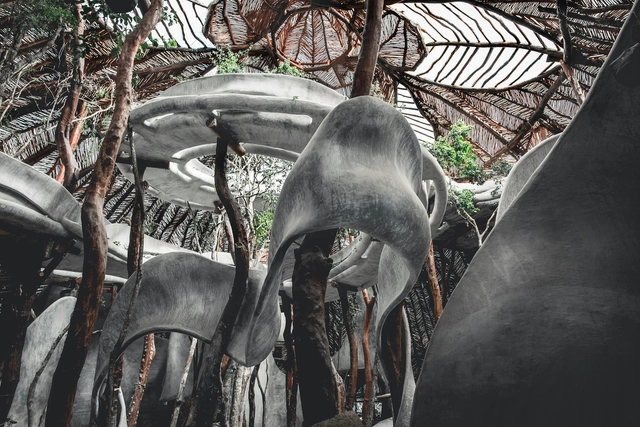
Concrete, a material commonly used in the construction industry, is made of a binder combined with aggregates (or gravels), water, and certain additives. Its origins reach back as far as Ancient Egypt, when the construction of large structures created the need for a new kind of material: one which was liquid, featured properties of natural stones, could be molded, and communicated a sense of nobility and grandeur.
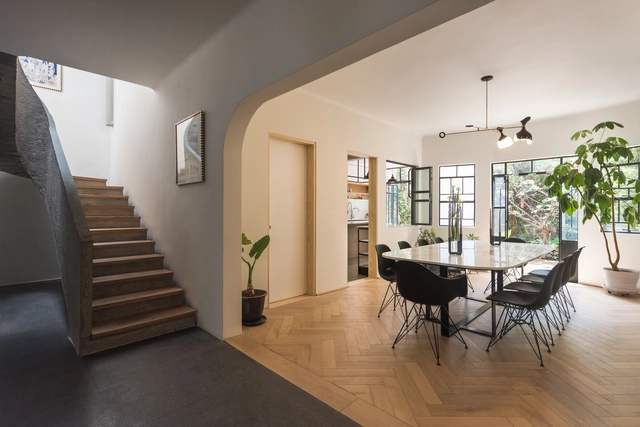

One of the most important factors when designing is the specific climate of the site, this can represent a difficulty when dealing with extreme climates and it is necessary to use insulating materials that adapt to changing conditions. However, when talking about Mexico and its privileged climate, this becomes an advantage for architects, allowing the creation of microclimates and spaces that fade into the transition of what is the inside and the outside.
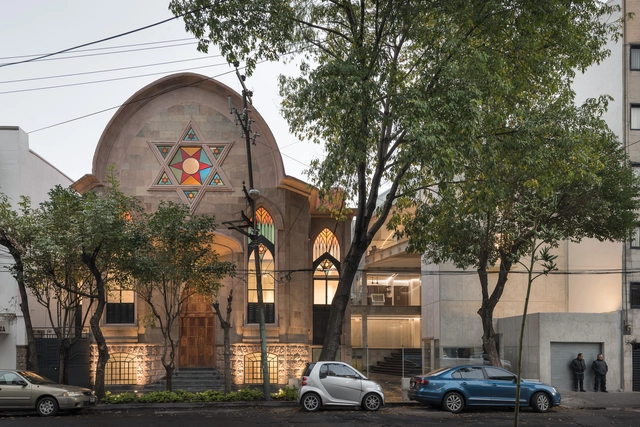
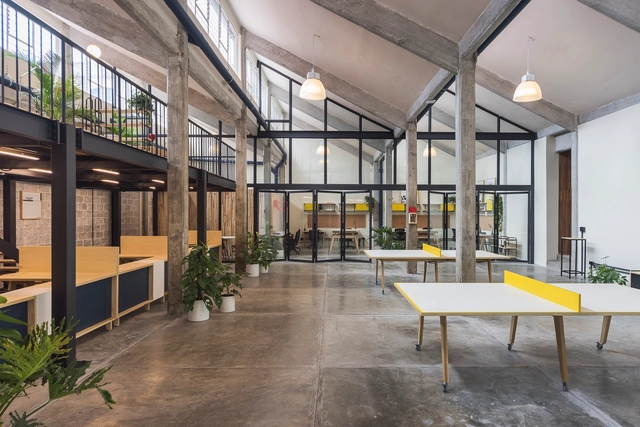
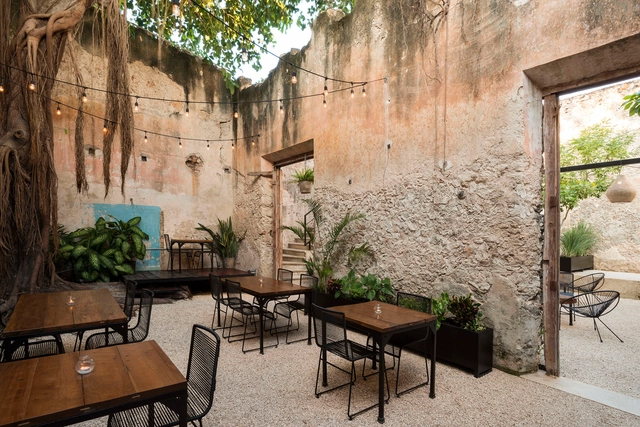
The architectural history of Mexico bears with it a wealth of symbolism that gives insight into the different time periods that have played host to contemporary cultural movements throughout the country's history.
Today, it's common to hear well-known architects calling for, not the creation of new spaces, but for the restoration of already existing ones. This stance insists that it is one's duty as an architect to rescue a site's memory by bringing it into the here and now.
As philosopher Jean Paul-Sartre put it, "what is important is not what happens to us, but what we do with what happens to us." In keeping with Sartre's phrase, we have compiled a list of 6 restoration projects that aim to rescue sites and show the interconnectedness of different time periods in Mexican history.
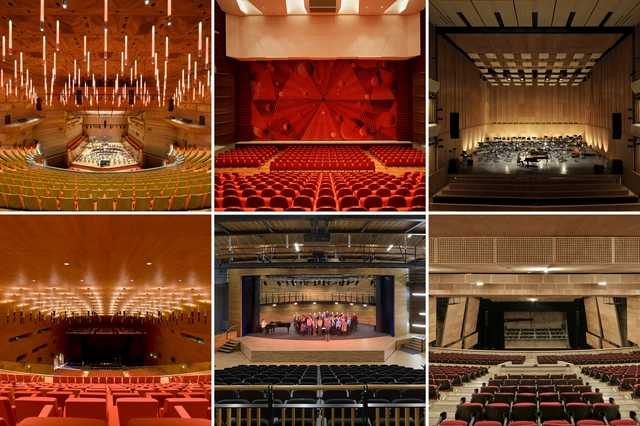
Seeing the space of an auditorium in section is a key tool in allowing us to approach a design's of acoustics, accessibility, and lighting. These components are what make the design of an auditorium a complex task, requiring detailed and specific studies.
There are a number of ways to design an auditorium that offers multiple responses to these challenges. For this reason, we have selected a number of sections from different auditoriums that can help you understand how other architects have solved the challenge.
Check out the 30 auditorium sections below, they are sure to inspire you!
This article was originally published by Metropolis Magazine as "The Build Up."
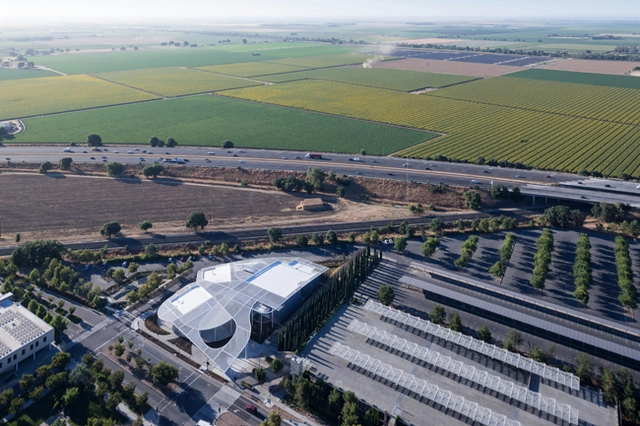
This November, the Manetti Shrem Museum on the University of California, Davis, campus opened to the public. Designed by New York City–based SO-IL with the San Francisco office of Bohlin Cywinski Jackson, the museum pays homage to the agricultural landscape of California’s Central Valley with an oversize roof canopy. The steel members of the 50,000-square-foot (4,650-square-meter) shade structure, nearly twice the size of the museum itself, reference the patterning of plowed fields and create a welcoming outdoor space for visitors. It is both expressive and practical, but getting that balance wasn’t easy.
SO-IL, founded by Florian Idenburg and Jing Liu in 2008, has a portfolio filled with smaller projects, installations, and exhibition-related work. The Manetti Shrem Museum is easily the firm’s largest work to date, demanding a rigorous design-build process while maintaining a strong conceptual vision. In short, it required architecture.

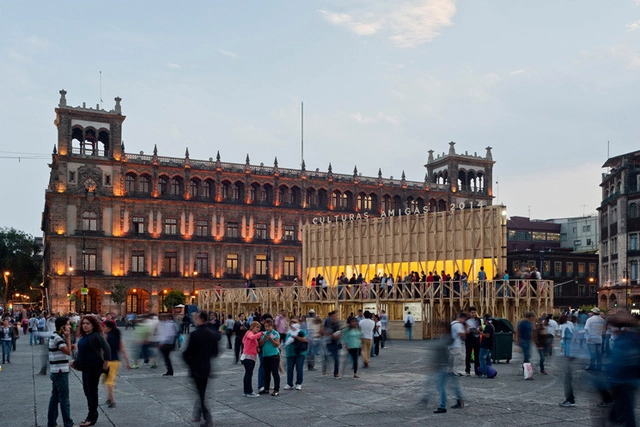
Yesterday during the Mies Crown Hall Americas Prize (MCHAP) ceremony, Mexico's most prominent public square, the Pavilion at the Zocalo by Mexico City's PRODUCTORA won the MCHAP.emerge 2014/2015 award, deeming it the best new architecture in the Americas by an emerging practice.
The MCHAP.emerge prize is awarded biennially by the College of Architecture at Illinois Institute of Technology (IIT). As winner, PRODUCTORA will be given the opportunity to lead a research studio in 2017 related to 'rethinking metropolis' along with $25,000 of funding.
PRODUCTORA was a finalist among practices from Canada, the United States, Chile and Paraguay. The decision was made by Jury President Stan Allen, architect and former Dean of Princeton University’s School of Architecture (New York); Florencia Rodriguez, editorial director of Piedra, Papel y Tijera publishers (Buenos Aires); Ila Berman, Professor of Architecture, University of Waterloo (Waterloo); Jean Pierre Crousse of Barclay & Crousse (Lima), and Dean Wiel Arets (Chicago).




![LC 843 Building / Escala Arquitectos + A+[eu] Arquitectura y estrategias urbanas - More Images](https://images.adsttc.com/media/images/5d6f/fea3/284d/d102/9500/05e0/newsletter/Foto_1_PP.jpg?1567620752)